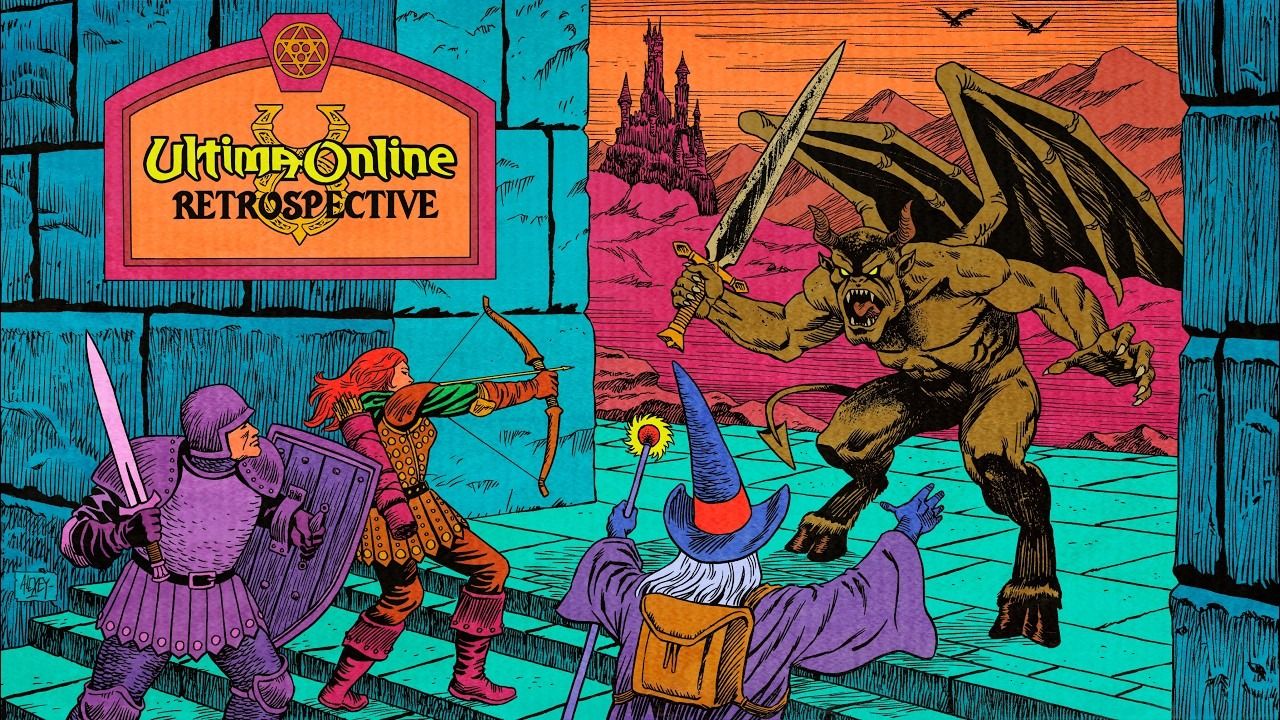
Clear your weekend plans and stock up on caffeine, because the sprawling, nostalgic deep-dive into late-90s PC gaming history you didn’t know you needed has finally arrived. Six months in the crafting, renowned YouTube video essayist Majuular has returned with the penultimate chapter of his multi-year magnum opus: a staggering four-and-a-half-hour documentary dedicated entirely to Ultima Online.
The video marks another milestone in a project that has quietly transformed Majuular from an ambitious creator into one of the most respected historical chroniclers on the platform, boasting a dedicated following of over 200,000 subscribers. For enthusiasts of classic role-playing games (RPGs) and early Massively Multiplayer Online Role-Playing Games (MMORPGs), this latest release is nothing short of mandatory viewing.
Main Facts: Deconstructing a Genre-Defining Release
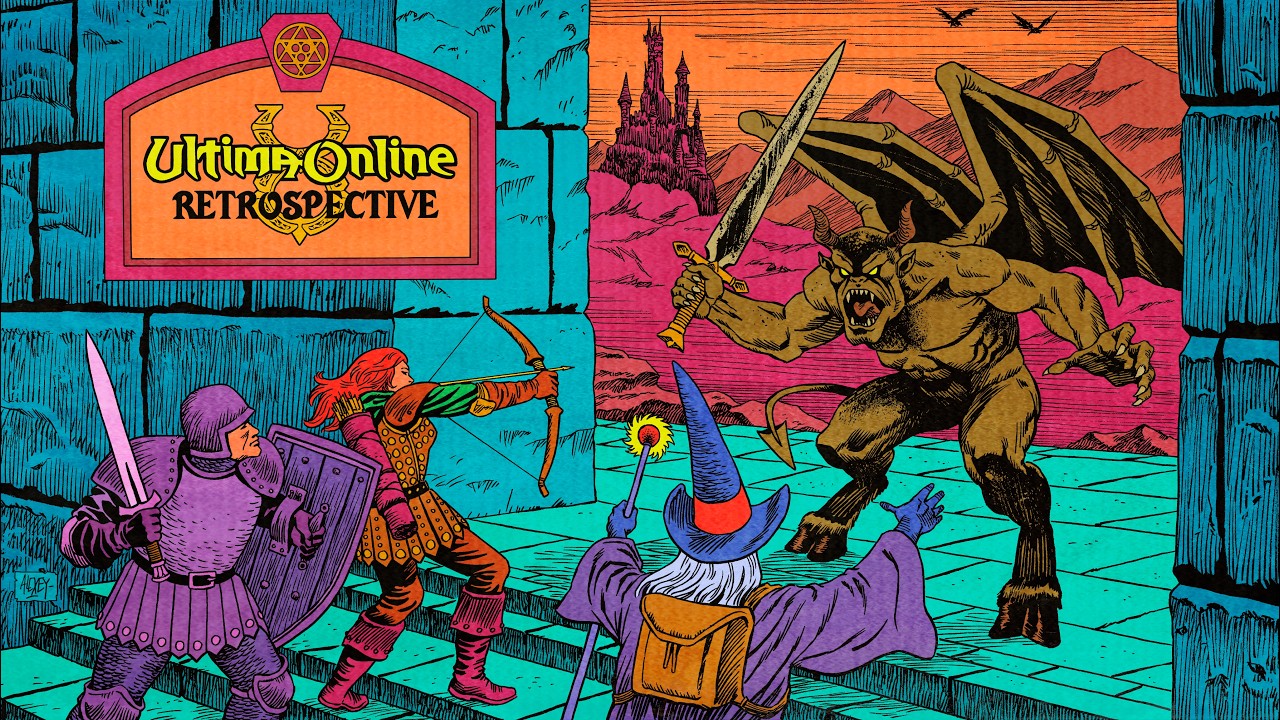
At its core, Majuular’s latest video essay acts as a comprehensive autopsy and celebration of Ultima Online (UO), the 1997 title that essentially birthed the modern commercial MMORPG landscape.
The documentary covers a vast amount of ground:
- The Runtime: A monumental 4.5 hours of meticulously researched history, analysis, and personal reflection.
- The Scope: Tracing the project from its unlikely inception under industry pioneers Richard Garriott and Starr Long to the iterative design work of Raph Koster and his team of Multi-User Dungeon (MUD) enthusiasts.
- The Legacy: Examining UO’s identity shifts under aggressive market competition, its profound influence on both Western and Japanese RPG design, and its lasting cultural footprint.
As Majuular notes in the video’s description: "From its unlikely formation at the behest of Richard Garriott and Starr Long, to its tempering at the hands of Raph Koster and his team… to its incalculable influence, this is the story of Ultima Online."
For viewers inspired by the documentary to experience the phenomenon firsthand, Majuular provides a practical path forward. Ultima Online remains remarkably accessible today through both official servers and dedicated fan-run communities. Notably, the creator highlighted In Mani Ylem, a fan server explicitly engineered to recapture the authentic, unyielding flavor of the late ’90s UO experience.
Chronology: From Pixelated Dreams to Digital Realities
To understand the weight of Majuular’s newest documentary, one must understand the timeline of both the subject matter and the creator’s monumental journey to document it.
The Origins of Ultima Online (1995–1997)
Before Ultima Online launched in September 1997, persistent multiplayer worlds were largely confined to text-based MUDs played by university students and tech enthusiasts on academic mainframes. Richard Garriott, the legendary creator of the single-player Ultima series, envisioned a virtual world where thousands of players could inhabit a living, breathing fantasy realm simultaneously.
Collaborating with producer Starr Long and systems designer Raph Koster, Origin Systems attempted something that had never been done on a commercial scale. They built a seamless, tile-based open world featuring simulated ecosystems, player housing, an open economy, and a controversial full-loot Player Versus Player (PvP) system. It was chaotic, deeply ambitious, and completely unprecedented.
The Majuular Phenomenon (2023–2025)
Majuular’s journey to chronicle this era began years ago, morphing into an obsessive, multi-part retrospective covering the entirety of the Ultima franchise. What started as a passion project snowballed into more than 20 hours of deeply researched documentaries.
In late 2025, retrospective coverage highlighted how Majuular’s uncompromising dedication—fueled by endless drive and substantial amounts of Diet Pepsi—unexpectedly catapulted him into YouTube prominence. His ability to blend historical context, human interest stories, and the grueling groundwork of actually playing decades-old titles set a new benchmark for video essays.
The Release of "The Last Hurrah" (Present)
The latest installment represents the culmination of half a year of intense production. Described by the creator as a "doozy" to put together, it serves as the penultimate chapter in his grand exploration of the Ultima lineage, setting the stage for a grand finale to a project that has consumed years of his life.
Supporting Data: The Anatomy of a Masterpiece
To appreciate the cultural impact of Majuular’s work, it helps to examine the metrics and reception surrounding the Ultima Retrospective series:
- Total Project Duration: Over 2 years of continuous research, scripting, recording, and editing.
- Total Runtime Across Series: Exceeds 20 hours of finished documentary content.
- Audience Growth: Propelled the channel past the 200,000-subscriber milestone.
- Methodology: Unlike surface-level video summaries, Majuular engages in the "dirty work" of playing through the entirety of the games he covers, analyzing lore on its own terms while contextualizing development hurdles with developer interviews and contemporary primary sources.
+-------------------------------------------------------------+
|               MAJUULAR'S ULTIMA RETROSPECTIVE               |
+--------------------+----------------------------------------+
| Total Runtime      | 20+ Hours across multiple parts        |
| Production Time    | 2+ Years                               |
| Focus Areas        | Western & Japanese RPG influence,      |
|                    | developer stories, direct gameplay     |
| Latest Chapter     | Ultima Online (4.5 Hours)              |
+--------------------+----------------------------------------+
Industry and Community Responses
The release of the Ultima Online retrospective has sent ripples through classic gaming communities, prompting widespread discussion across forums, social media, and Reddit.
Veteran developers and online gaming historians have praised the series for capturing nuances of early MMO design that are frequently glossed over by mainstream gaming retrospectives. The focus on Ultima Online‘s sociological experiments—such as Lord British’s infamous assassination during the game’s beta test and the unintended consequences of the game’s open economic structures—resonate deeply with modern designers grappling with community management in live-service titles.
Meanwhile, the community surrounding fan-run servers like In Mani Ylem reported an immediate, noticeable influx of curious players logging in to experience the unforgiving mechanics of 1997 firsthand. For many older gamers, the documentary acts as a portal to a bygone era of internet culture characterized by dial-up tones, message board theorycrafting, and the wild-west ethos of early virtual spaces.
Implications: Why Ultima Online Still Matters Today
As the lines between virtual worlds, social spaces, and gaming continue to blur, looking back at Ultima Online offers critical lessons for the modern industry.
- The Blueprint of Emergent Gameplay: UO proved that players could create their own narratives when given systemic freedom. The game’s economy, guild politics, and territorial control mechanisms laid the groundwork for sandbox titles like EVE Online and Minecraft.
- The Perils of Unbridled Freedom: The chaos of UO’s early days—where griefers and murderers roamed unchecked until the controversial introduction of the Trammel/Felucca facet split—remains a foundational case study in game balancing and player psychology.
- The Power of Long-Form Archival: Majuular’s success underscores a growing hunger for slow, thoughtful, long-form journalism and media criticism on digital platforms. In an age of short-form, algorithmic content designed for instant gratification, a 4.5-hour deep dive into a 27-year-old MMO proves that audiences will readily invest time if the storytelling is passionate and rigorous.
Whether you spent your nights navigating the dangerous forests of Britannia in the late ’90s or have only ever read about the game in history books, Majuular’s latest video is an essential expedition into the roots of modern digital interaction. You can find the complete, highly recommended playlist of the retrospective series directly on YouTube.