For most Path of Exile 2 players, the end of a league is a melancholy affair. The excitement of the initial launch wanes, the min-maxing hits a plateau, and the "grind" loses its luster, leading to a natural exodus as the player base logs off to wait for the next season’s content. However, for content creator and theory-crafter Empyriangaming, the end of a league is not a time for rest; it is an invitation to perform the digital equivalent of stress-testing a skyscraper with a wrecking ball.
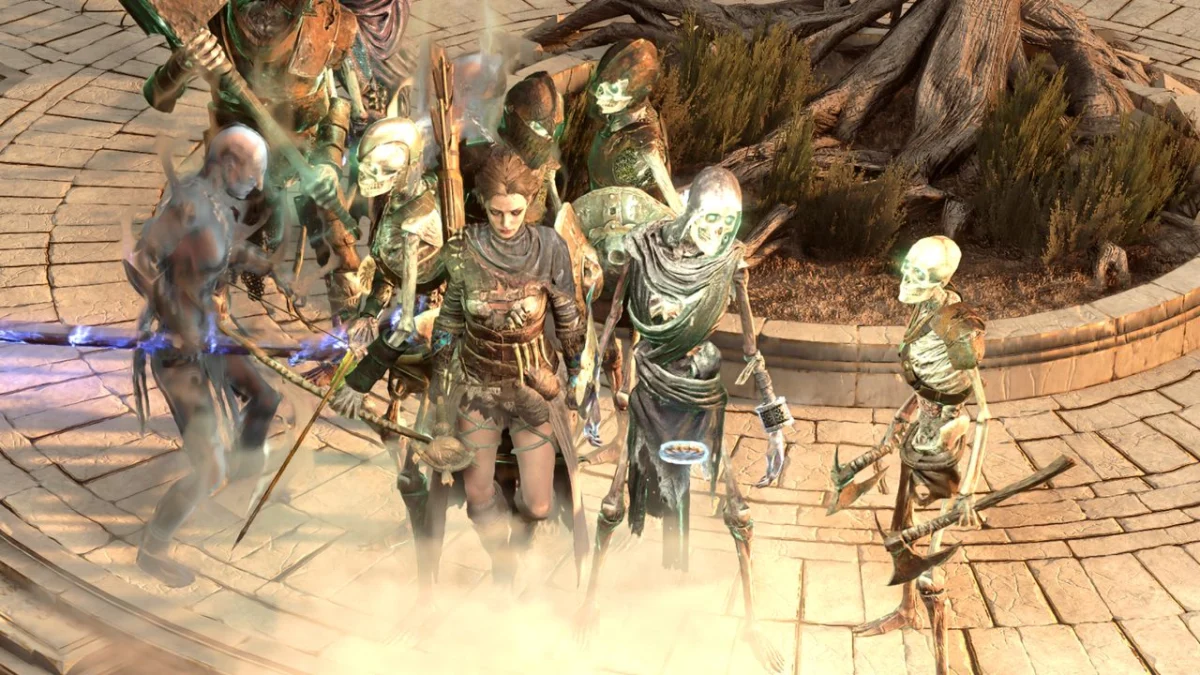
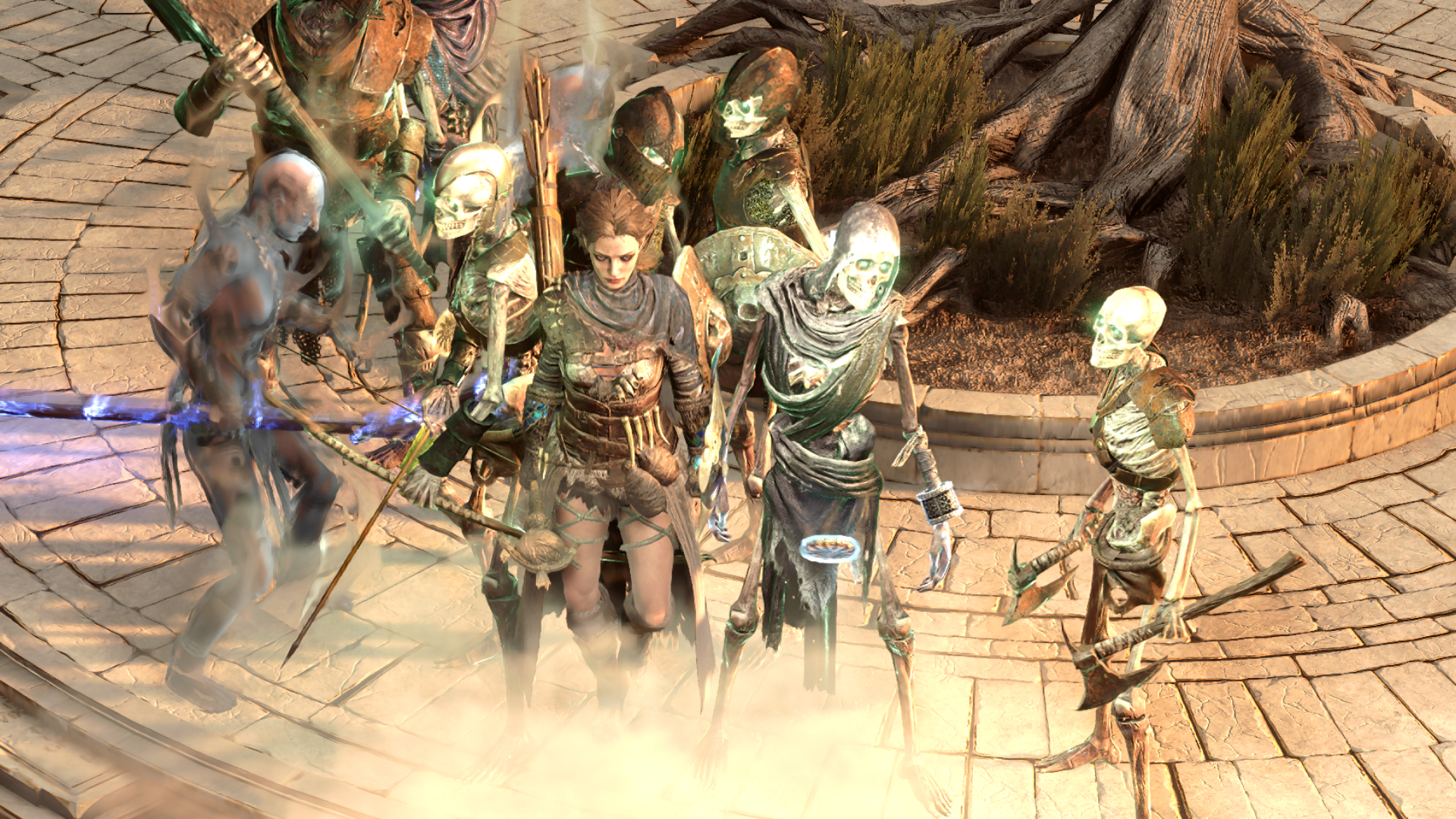
In a recent, highly publicized experiment, Empyriangaming attempted to push the boundaries of Grinding Gear Games’ engine by constructing the most prohibitively expensive and computationally taxing minion build in the game’s history. By assembling a team of six players, each equipped with gear that would make a casual player’s bank account weep, the group succeeded in summoning an army of 2,000 skeletons. The result was not merely a feat of character building; it was a masterclass in breaking the game’s technical limitations.
The Anatomy of an Overkill Build
To understand the sheer scale of this endeavor, one must first appreciate the economics of Path of Exile 2. A standard, well-optimized minion build typically manages between 10 and 15 skeletons. This is considered a "comfortable" threshold for maintaining screen clarity and frame rate stability. Empyriangaming’s "Project Minionmaxxing," however, aimed for a number that would make the game’s server architecture shudder: 2,000 active units.
The strategy required a rigorous, mathematical approach to the game’s resource management systems. To achieve this, the team focused on two primary variables:
- Resource Cost Reduction: Each player had to source or craft gear that reduced the resource cost of summoning a single skeleton to the absolute minimum—a single digit.
- Resource Stacking: Players had to maximize their total resource pools, allowing for the rapid-fire deployment of units without exhausting their mana or energy reserves.
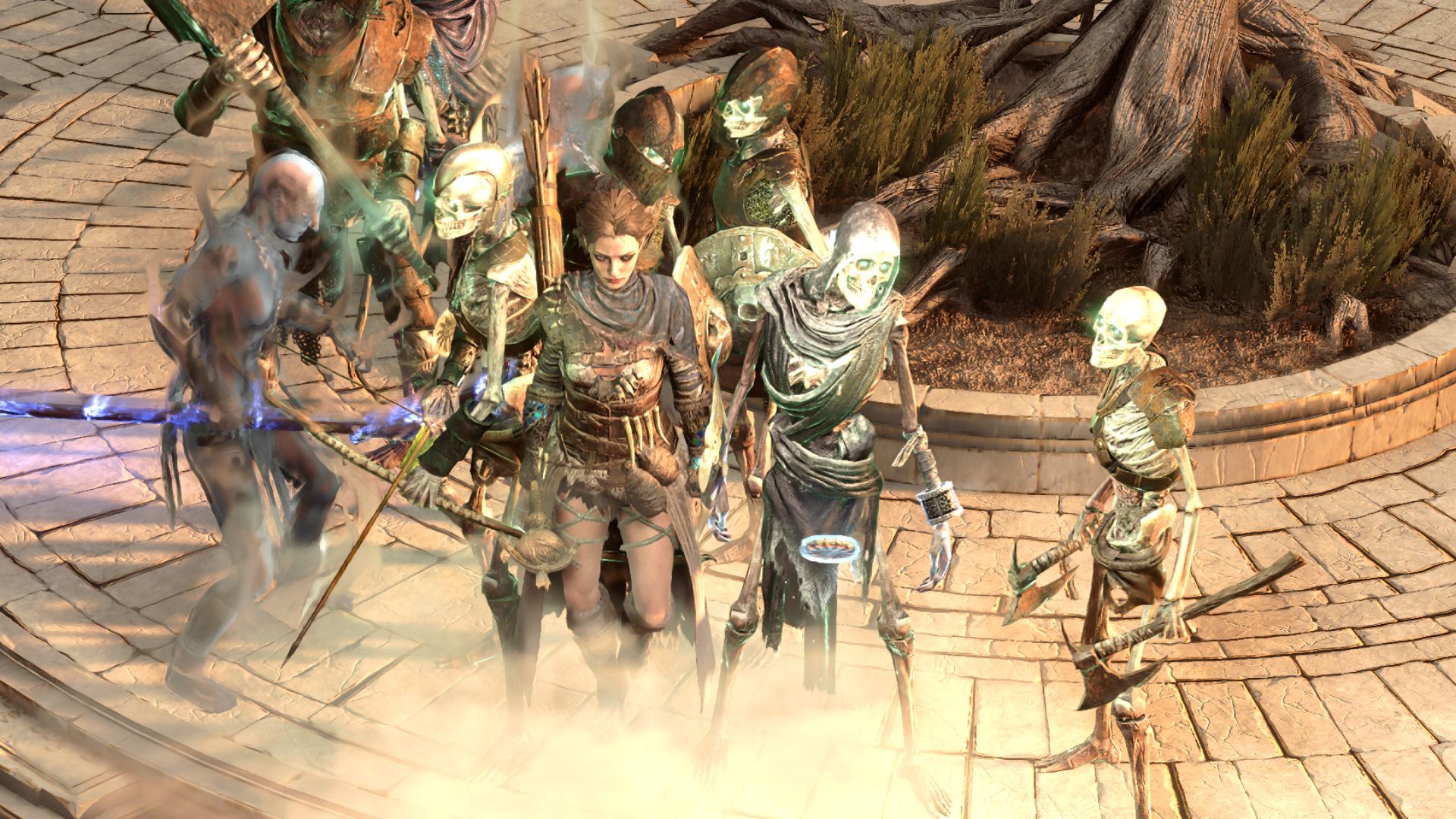
Even with these optimizations, the game has hard-coded safeguards. Path of Exile 2 imposes a cap of 255 of any single minion type per player. Once this threshold is crossed, the game engine automatically prunes the oldest units to maintain the cap. To circumvent this, Empyriangaming recruited five other players, each running their own iteration of the build, creating a combined, decentralized legion that bypassed individual player limits.
Chronology of a Technical Meltdown
The experiment took place in stages, moving from controlled environments to the chaotic, unscripted reality of the game’s multiplayer instances.
Phase 1: The Solo Stress Test
Initially, Empyriangaming attempted to hit the 255-unit cap alone. As the skeletal priests began to materialize, the game’s performance plummeted. The frame rate, usually buttery smooth in modern builds, devolved into a sequence of static images reminiscent of early 20th-century stop-motion animation. Every command issued by the player—movement, attacking, or summoning—was delayed by seconds as the server struggled to calculate the pathfinding and AI states for hundreds of individual entities simultaneously.
Phase 2: Scaling in the Trial of the Sekhemas
The group moved to the game’s "Trial of the Sekhemas" roguelike mode. This specific game mode is famous for providing powerful, temporary modifiers that only persist within its confines. One such modifier offered a significant boon to minion capacity. With the combined efforts of the six-man party and these specialized buffs, the total count hit 2,000.
At this juncture, the game became functionally unplayable. Dodge-rolling, a core defensive mechanic, took roughly 60 seconds to execute from the moment the button was pressed. The group observed the skeletons shifting in erratic, rhythmic patterns as the server attempted to reconcile the positioning of 2,000 independent models in a confined space.
Phase 3: The Hideout Trap
The final stage of the experiment was social, not mechanical. The group returned to Empyriangaming’s hideout. To add a layer of chaos, Empyriangaming listed a highly coveted, valuable item for an absurdly low price on the trade market. The goal was to lure unsuspecting players into his hideout. When these players arrived, expecting a simple transaction, they were instead greeted by a massive, lag-inducing wall of thousands of skeletal warriors.
Supporting Data and Engine Constraints
While the experiment was comedic in nature, it provides significant data regarding how Grinding Gear Games handles high-density object spawns.
- The 255-Cap Logic: The hard limit of 255 minions is likely a safeguard against memory overflows and network packet congestion. In modern ARPGs, each entity requires data packets to be sent to and from the server regarding position, health, and state changes. Multiplying this by 2,000 entities, multiplied again by six players, creates a data load that the current netcode was never designed to handle.
- Pathfinding Failures: The "lag" observed by the group is partially a result of the game’s pathfinding engine (the A* algorithm or its proprietary equivalent). When 2,000 units attempt to pathfind around a boss or terrain, the CPU cost increases exponentially rather than linearly.
Official Responses and Developer Perspective
Grinding Gear Games has not issued a formal statement regarding Empyriangaming’s specific exploit, but they have historically been transparent about the performance trade-offs in Path of Exile 2. Lead developers have often cited that the game’s "crunchy" nature—the ability to stack multiple layers of complexity—is both its greatest strength and its greatest technical risk.
Historically, the developers have implemented "chase" mechanics or performance throttles when the game detects that the client is falling behind. The fact that the game continued to run—albeit at a frame rate lower than a slide projector—speaks to the robustness of the engine, even if it wasn’t designed to handle such deliberate abuse.
Implications for the ARPG Genre
Empyriangaming’s experiment raises an interesting question regarding the future of the genre: where is the line between "player agency" and "system stability"?
- The Limits of Theory-Crafting: For the most dedicated players, the game is no longer about beating the content, but about breaking the content. As players find ways to exploit the math behind the game, developers are forced to choose between "nerfing" fun interactions or upgrading the underlying infrastructure to support extreme scenarios.
- Emergent Gameplay: The "hideout trap" incident highlights how a game’s social hub can become a place for emergent, player-driven content. The interaction between the trader and the victims was a form of improvised performance art that could only happen in a game as complex as Path of Exile 2.
- Future Balancing: It is highly probable that future patches will introduce stricter limits on minion density in multiplayer environments to prevent the type of server-wide degradation experienced during this event.
Ultimately, while the 2,000-skeleton army was a chaotic mess, it served as a testament to the depth of Path of Exile 2. Most developers would prefer their games stay "on the rails," but for a community that prides itself on finding the hidden limits of character growth, moments like these are exactly what make the grind worthwhile. Whether or not these players were terrified by the sudden onset of a skeleton-induced horror show, they were undoubtedly witnesses to one of the most absurd, resource-intensive, and technically fascinating spectacles in modern gaming history.