Main Facts
The contemporary landscape of American journalism is navigating a treacherous intersection of political hostility, massive corporate consolidation, and the enduring power of grassroots investigative reporting. Recent weeks have underscored this volatile climate across three distinct fronts. First, the White House press corps achieved an unprecedented level of collective solidarity—staging a near-total blackout and filing coordinated legal challenges—after the Trump administration banned several major news organizations. Second, state attorneys general finalized a controversial antitrust settlement allowing a corporate entity controlled by the Ellison family to absorb Paramount and Warner Bros. Discovery, bringing outlets like CNN and CBS under a single umbrella and sparking deep industry-wide skepticism over editorial independence. Finally, a remarkable six-year journalistic journey culminated in the conclusion of HBO’s A Killer Story, a documentary spotlighting how a stay-at-home true-crime enthusiast prodded a prominent journalist into unraveling a profound miscarriage of justice in Kansas.
Chronology
The White House Press Crisis
- July: The White House Correspondents’ Association (WHCA) drew sharp criticism—and a metaphorical "dart" from media watchdogs—for pushing ahead with its annual dinner just weeks after the Trump administration subpoenaed New York Times journalists, prioritizing access over collective defense.
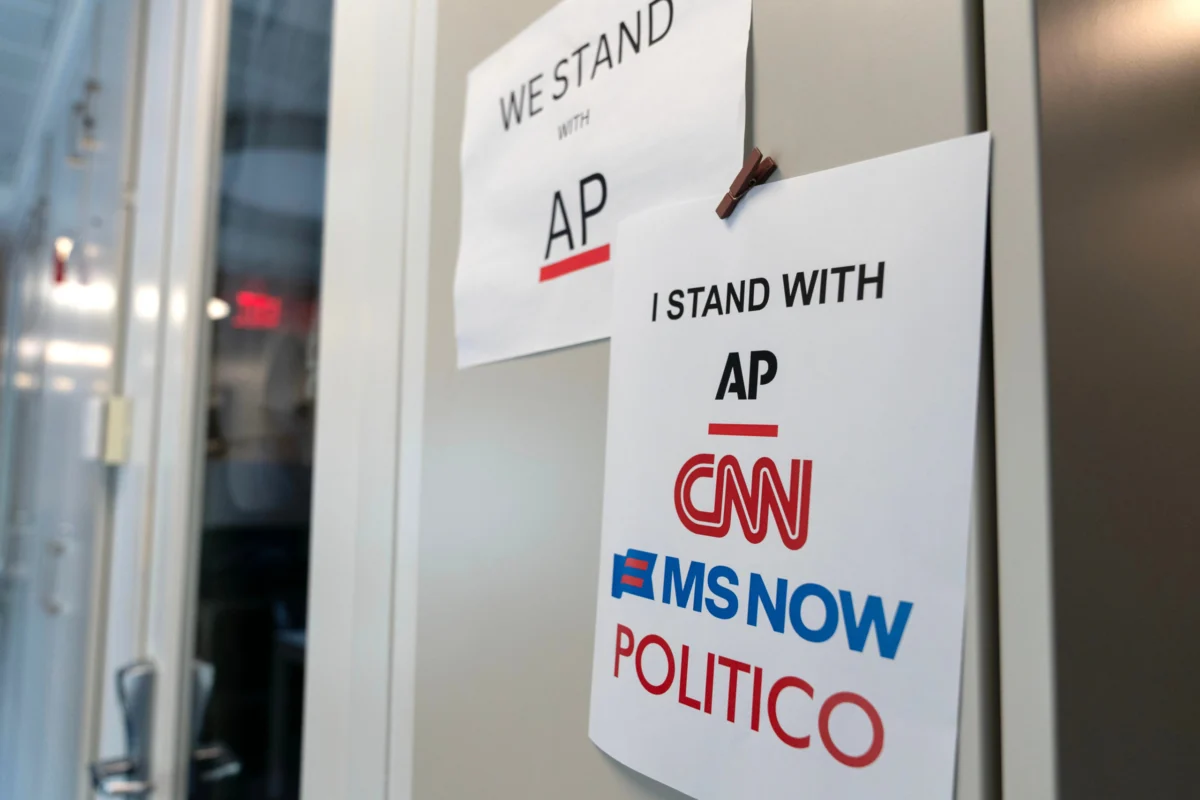
- Fall: Tensions escalated when President Trump banned CNN, MS Now, and Politico from the White House grounds.
- Monday: In a historic show of unity, competing network news crews from ABC, CBS, Fox News, and NBC refused to backfill CNN’s rotation, effectively suspending standard television coverage of the president’s daily actions. Other outlets, including NPR and major print publications, similarly withheld audio and photo assets.
- Wednesday & Thursday: A federal judge issued a temporary restraining order demanding access be restored within fourteen days, deeming the bans unconstitutional. The administration’s subsequent initial defiance gave way to partial compliance by midday Thursday, though certain journalists remained barred from evening events.
The Paramount-Ellison Merger
- Tuesday: State attorneys general, led by California’s Rob Bonta, announced a settlement in their antitrust challenge against Paramount.
- Subsequent Days: Media analysts and press freedom advocates heavily criticized the settlement’s primary safeguard—an "Editorial Independence Board"—arguing that it serves as a performative firewall incapable of preventing corporate and political interference.
A Killer Story
- 2017: Former ProPublica reporter Joe Sexton received his first of thousands of emails from Eileen Umbehr, an Alma, Kansas homemaker, regarding the wrongful conviction of Dana Chandler for a 2002 double homicide.
- Intervening Years: After dismissing early warnings, Sexton eventually took notice when the Kansas Supreme Court unanimously overturned Chandler’s conviction. This sparked a six-year collaborative investigation.
- Recent: The final episode of the HBO documentary series A Killer Story, chronicling Sexton and Umbehr’s joint quest for truth, aired to critical acclaim.
Supporting Data
The depth of the crisis facing the American press is measurable through specific institutional reactions and industry metrics:
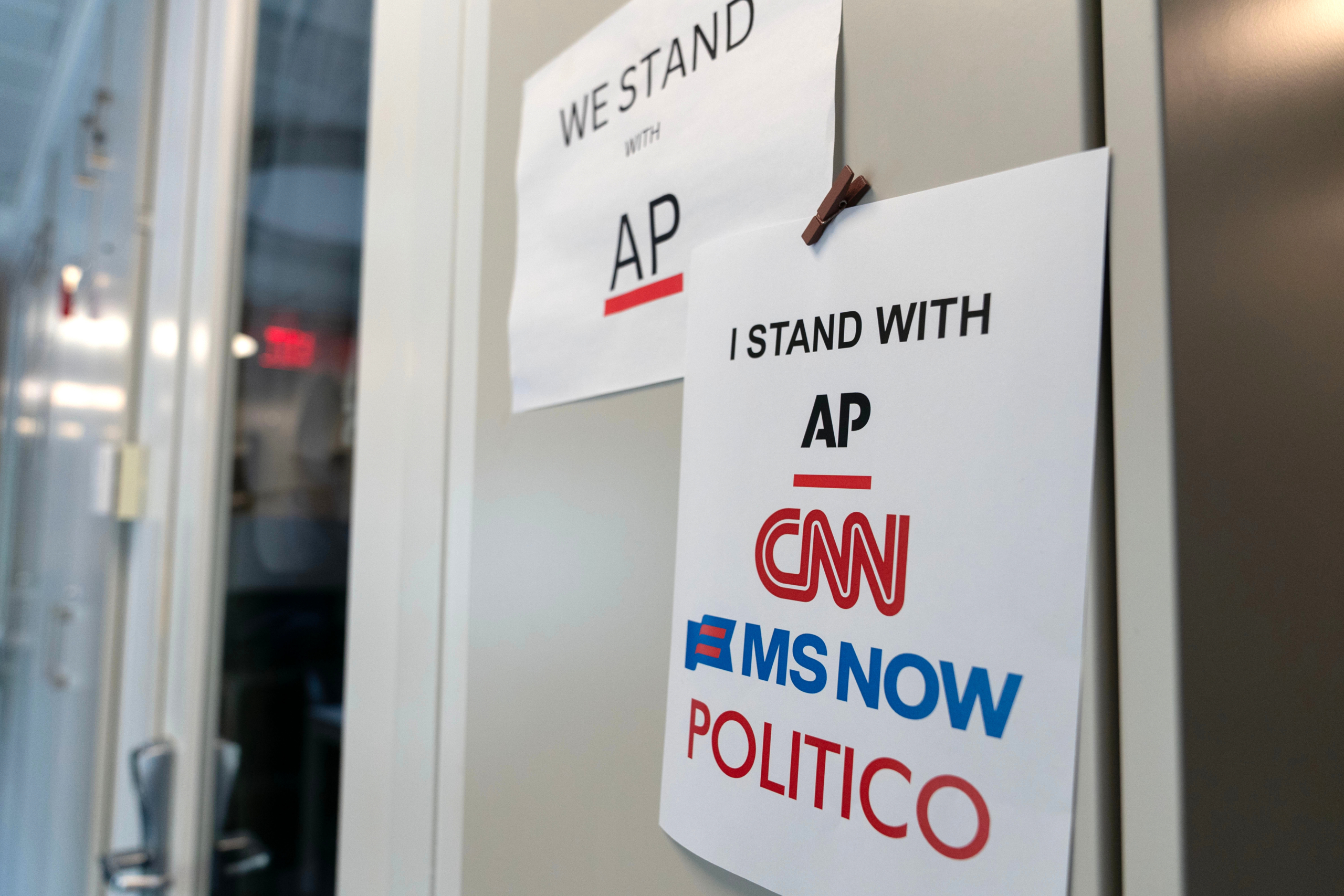
- Forty-nine: The number of media organizations that filed an amicus brief supporting the banned outlets (CNN, MS Now, and Politico).
- Thirty: The number of years Peter Baker, chief White House correspondent for the New York Times, has covered the executive branch—noting that the recent blackout marked the first time in his career that a president lacked a daily network television camera crew covering official actions.
- Twenty-eight: The number of newsrooms that signed an open letter organized by the Committee to Protect Journalists condemning government restrictions on press access.
- Two,714: The approximate number of emails sent by Eileen Umbehr to journalist Joe Sexton before he fully engaged with the Dana Chandler wrongful conviction case.
- Five: The designated number of "established journalists" required to sit on the newly proposed Paramount-Warner Bros. Editorial Independence Board, a panel intended to oversee reporting fairness standards.
Official Responses
The reactions from institutional leaders, journalists, and public officials reflect a profound anxiety regarding the future of a free press:
- Jacqui Heinrich (Fox News correspondent and WHCA President): Defending the targeted outlets, Heinrich issued a statement emphasizing that "The Constitution protects the freedom of the press from government interference… The WHCA stands in defense of our colleagues."
- William Tong (Attorney General of Connecticut): Expressing frustration over the Paramount settlement terms to media analysts, Tong admitted, "I was pushing for a spin-off of CNN, untethered from the mother ship," and characterized the management style at CBS under Ellison as "pretty ugly."
- Kara Swisher (Journalist and CNN Contributor): Voicing sharp opposition to the merger on social media and her podcast, Swisher announced her departure, writing, "CNN is not going to be protected. As someone recently told me: Always some fuckery," and labeling the Ellisons "terrible media owners."
- Jessica J. González (Co-Chief Executive of Free Press): Condemning the corporate restructuring, González stated, "A fake bipartisan oversight committee won’t save CNN. We have all the evidence we need from the Ellisons’ destruction of CBS about what they do to warp journalism at Donald Trump’s request."
- Joe Sexton (Journalist): Reflecting on his unexpected partnership with an amateur investigator, Sexton noted, "I’m unashamed of saying that the whole story begins with a moment of personal embarrassment… I gave this woman short shrift," before pivoting to the broader ethical dilemmas raised by society’s true-crime obsession.
Implications
The convergence of these events paints a complex and precarious picture of journalism today. On one hand, the unprecedented solidarity displayed by the White House press corps—refusing to cross picket lines and standing united against arbitrary exclusions—demonstrates that collective action remains a potent deterrent against government overreach. When networks, print publications, and photo agencies lock arms, the executive branch is forced to confront a united front rather than isolated, competing entities.

Conversely, the corporate arena presents an existential threat that is perhaps harder to combat with traditional solidarity. The consolidation of major entertainment and news properties under the Ellison family banner, despite regulatory settlements and superficial oversight boards, signals a troubling drift toward corporate-political alignment. Critics and insiders alike view structures like the "Editorial Independence Board" as toothless theater designed to mask the inevitable erosion of hard-hitting investigative journalism. If networks like CNN begin to mirror the perceived compromises at CBS News, the structural independence of the American fourth estate faces a danger from within its own boardroom that matches, if not exceeds, external government pressure.
Ultimately, these developments—ranging from the corridors of executive power to corporate mega-mergers and the dogged persistence of an amateur archivist in Kansas—remind us that journalism relies on both institutional backbone and relentless individual curiosity. Whether the current display of press fellowship can permanently alter the calculus of hostile administrations and monolithic corporations remains to be seen. What is certain, however, is that the defense of a free press requires constant vigilance, unwavering solidarity, and a refusal to trade core principles for temporary access.