Main Facts
For decades, the global arcade landscape was dominated by a handful of familiar titans—Capcom, Konami, Sega, and SNK. Yet, outside of these Japanese powerhouses and their American counterparts, regional developers operated in fascinating isolation, creating unique cultural artifacts that rarely found their way beyond local borders. Among these was the Spanish developer Gaelco. Active throughout the 1990s, Gaelco is best remembered globally for its breakout racing hit, World Rally, but the studio’s catalog runs much deeper—and stranger—than a single drift-heavy racing game.
Now, retro preservationist and publisher QUByte Interactive is stepping in to rescue two of Gaelco’s most obscure titles from historical oblivion. The Thunder Hoop Collection, scheduled for release on Steam on October 8, brings together Thunder Hoop (1992) and its utterly unhinged sequel, TH Strikes Back (1994).
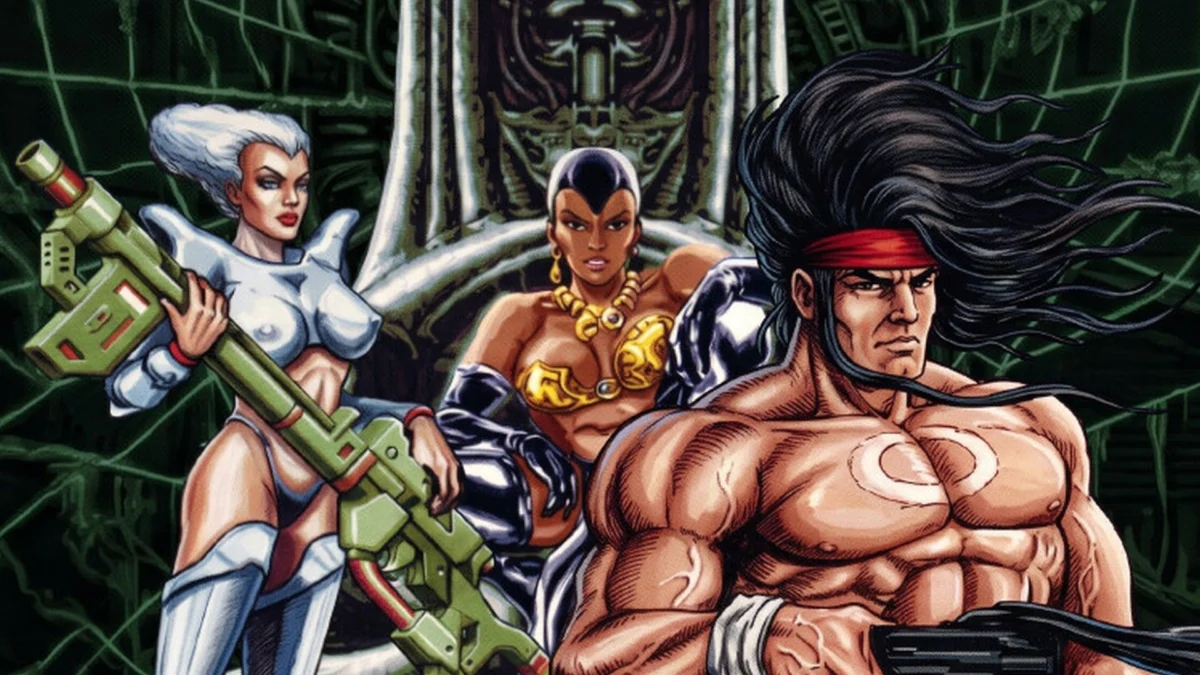
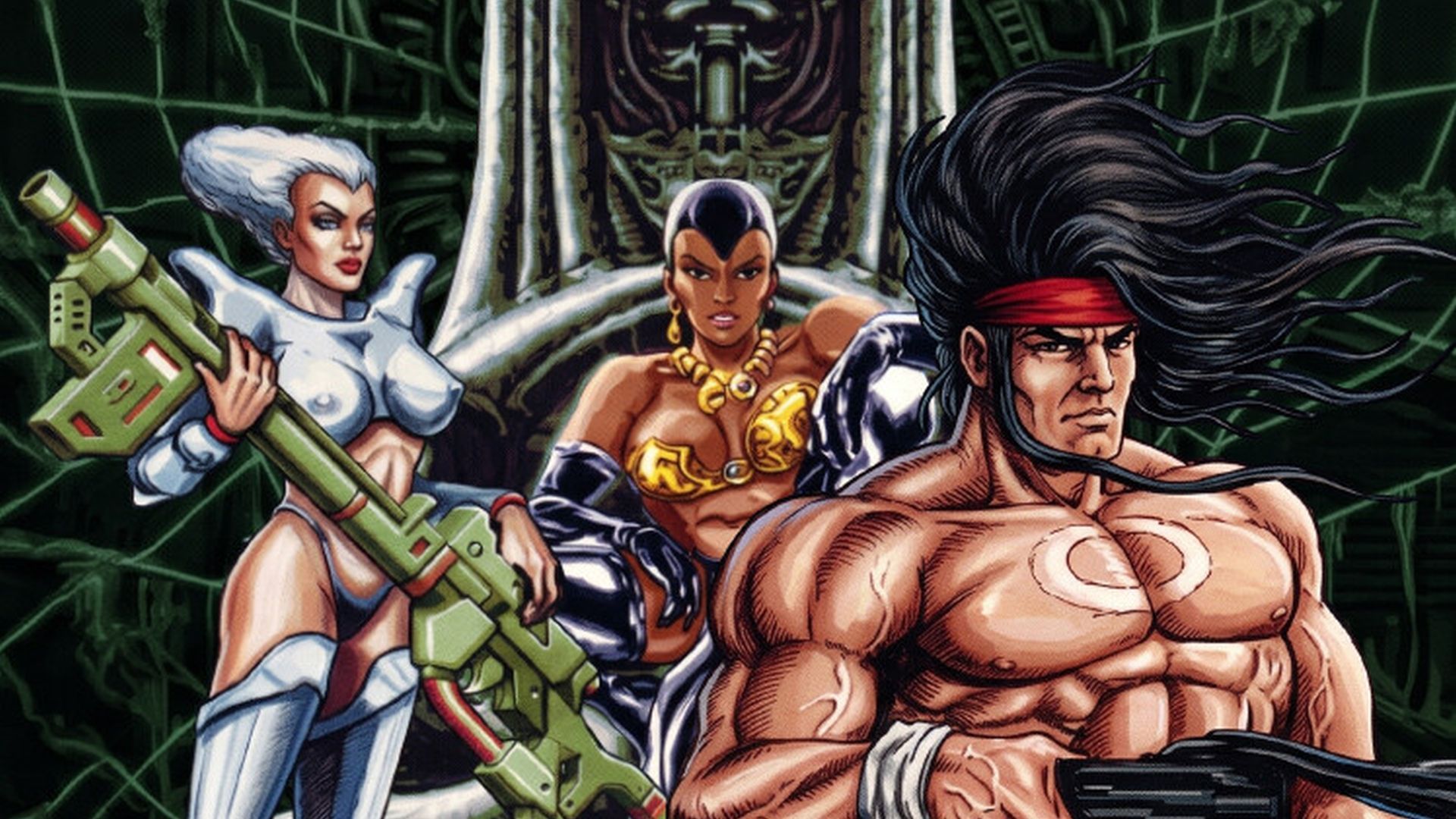
Described by retro enthusiasts as a bizarre stylistic collision between Dragon Ball Z and Alien, the Thunder Hoop series encapsulates the wild, uninhibited creative energy of early 1990s arcade development. The titular protagonist, Thunder Hoop—a genetically engineered warrior capable of launching destructive energy blasts from his hands—must wage a relentless war against waves of grotesque mutants unleashed by the malevolent Dr. Genbreak.
The upcoming Steam release is not merely a bare-bones ROM dump; it is a carefully curated package designed for modern hardware. It includes standard quality-of-life enhancements such as save states, a rewind feature, and customizable CRT screen filters to capture the authentic scanline aesthetic of vintage arcade cabinets. While the first game features alternating-turn multiplayer, the 1994 sequel introduces full local co-op, allowing two players to unleash chaos side by side.
Chronology of an Arcane Franchise
To understand the cultural and design trajectory of the Thunder Hoop series, one must trace its evolution across a two-year span that saw monumental shifts in arcade game design, character tropes, and technological capabilities.
1992: The Birth of Thunder Hoop
When Gaelco released the original Thunder Hoop in Spanish arcades in 1992, the platformer genre was enjoying a golden age, heavily influenced by console hits and arcade action-platformers alike. In this inaugural outing, the protagonist is depicted as a teenage hero navigating a quintessential 90s urban wasteland.
The gameplay loop of the first title is classic arcade fare: players traverse hazard-filled cityscapes, subterranean sewers, and underwater stages, battling a rogues’ gallery of cartoonish, bio-mechanical monsters. While mechanically sound, the original game heavily reflected the cautious design philosophies of early 90s European arcade developers trying to capture the lightning-in-a-bottle success of Japanese contemporaries like Capcom’s Final Fight or Sega’s Golden Axe. It was colorful, moderately difficult, and largely confined to standard terrestrial environments.
1994: TH Strikes Back – The Evolution of Excess
If the 1992 original played it relatively safe, its 1994 sequel, TH Strikes Back, threw caution to the wind and embraced the most flamboyant excesses of 90s pop culture.
Thunder Hoop himself received a dramatic redesign. Gone was the modest teenager; in his place stood a towering, muscular adult who apparently considered shirts to be an impediment to high-velocity combat. The enemy designs similarly escalated, trading cartoonish monsters for latex-clad dominatrices, alien abominations, and heavily armed biomechanical troopers.
The most memorable aspect of TH Strikes Back, however, is its structural audacity. Midway through the game, Thunder Hoop visibly channels the explosive energy transformations popularized by Akira Toriyama’s Dragon Ball Z—going "Super Saiyan" before launching himself directly into outer space. The game dramatically shifts gears, transforming from a ground-based run-and-gun action game into a vertical or horizontal scrolling shooter clearly paying homage to Konami’s classic Gradius series. This jarring, genre-shifting pivot remains one of the most distinctive moments in Spanish arcade history.
Supporting Data: The Enigmatic Legacy of Gaelco
To truly appreciate the significance of the Thunder Hoop Collection, one must examine the broader context of Gaelco’s corporate history and the economic realities of the European arcade market in the 1990s.
Based in Barcelona, Spain, Gaelco (Nueva G.A. E. C. L. O., S.A.) was founded in 1985. While initially known for manufacturing electronic dartboards—a staple of European pubs and amusement arcades—the company quickly transitioned into video game development as arcade technology advanced into the 16-bit and 32-bit eras.
| Game Title | Release Year | Genre | Distinctive Features |
|---|---|---|---|
| Thunder Hoop | 1992 | Action Platformer | Teenage protagonist, urban/sewer/water settings, alternating multiplayer. |
| World Rally | 1993 | Racing | Breakout global hit, real-world vehicle licensing aesthetic, isometric perspective. |
| TH Strikes Back | 1994 | Run-and-Gun / Shmup | Adult beefcake protagonist, latex-clad enemies, Super Saiyan transformation, space shmup stage, local co-op. |
| Radikal Bikers | 1998 | Arcade Racing | Dual-handlebar cabinet, chaotic urban courier gameplay. |
Despite producing mechanically refined and visually striking games, Gaelco faced significant hurdles in global distribution. Major Japanese manufacturers dominated international arcade distribution networks, leaving European developers fighting for shelf space in overseas markets. Consequently, games like Thunder Hoop and TH Strikes Back became localized legends—widespread and beloved within Spain and parts of Southern Europe, but virtually unheard of in North American arcades or Japanese game centers.
QUByte Interactive’s decision to digitize these titles represents a growing movement within the games industry: digital archiving as a form of cultural rescue. Without companies actively licensing, cleaning up, and porting these legacy ROMs to platforms like Steam, decades of interactive art risk being lost to hardware degradation and corporate obscurity.
Official Responses and Industry Reception
The announcement of the Thunder Hoop Collection has sparked a wave of nostalgia across retro gaming communities, content creators, and preservation forums. While Gaelco as a traditional arcade manufacturer dissolved long ago, the modern embrace of its catalog highlights the enduring appeal of 90s sprite-based artistry.
Industry observers have noted that QUByte Interactive has carved out a specialized niche in rescuing forgotten regional arcade catalogs. By partnering with rights holders, the publisher bridges the gap between eras when regional exclusivity meant total international invisibility.
Early previews of the Steam port have focused heavily on the inclusion of modern quality-of-life adjustments. Retro purists often debate the inclusion of features like rewind functions and save states, but preservationists widely agree that these tools are essential for modern audiences accustomed to the punishing, coin-guzzling quarter-eater balance of 90s arcade design.
Furthermore, the inclusion of custom CRT filters has been praised for honoring the original artistic intent. Pixel art designed in the 1990s was meticulously crafted to take advantage of the natural blending, scanlines, and soft glow of cathode-ray tube monitors. Presenting these sharp, high-contrast pixels without filters can often strip away the atmospheric grit that developers originally intended; offering customizable visual options ensures both purists and newcomers can tailor the experience to their preferences.
Implications for Retro Preservation and Indie Publishing
The impending release of the Thunder Hoop Collection on October 8 carries broader implications for the future of video game preservation, commercial indie publishing, and the rediscovery of lost gaming histories.
1. Combating Geographic Blind Spots in Gaming History
For decades, video game historiography has suffered from a profound geographic bias, focusing almost exclusively on products originating from Japan and the United States. Important regional hubs—such as the thriving arcade scenes in Spain, the UK, Italy, and Brazil—are frequently overlooked. By bringing titles like Thunder Hoop to a global digital storefront, publishers like QUByte are actively rewriting game history to be more inclusive of international contributions.
2. The Commercial Viability of Obscurity
Historically, publishers hesitated to fund ports of games that lacked recognized global brand recognition. Why spend resources licensing a game nobody outside of Barcelona remembers? However, the modern digital marketplace—specifically platforms like Steam, Nintendo Switch, and PlayStation Network—thrives on niche curation. Retro enthusiasts are increasingly hungry for "new-old" experiences. Discovering an utterly bizarre, forgotten 1994 arcade game featuring a shirtless psychic warrior fighting latex-clad aliens and transforming into a spaceship pilot provides a level of novelty that mainstream franchises struggle to replicate.
3. Setting a Standard for Preservation Standards
As emulation software improves, the grey market for ROMs has always existed. However, authorized commercial releases establish legal, stable, and consumer-friendly ways to access archival material. When companies provide clean ports complete with achievements, developer interviews, and modern accessibility features, they validate the labor of the original creators—many of whom received little global recognition during their active years.
When Thunder Hoop Collection launches on Steam, it will do more than just give PC players a quirky afternoon of chaotic 90s action. It will serve as a testament to the boundless, unbridled creativity of an era when developers could mash together anime tropes, science-fiction horror, and high-octane arcade design into a single, cohesive fever dream—proving that brilliant arcade history is waiting to be uncovered in every corner of the globe.