Main Facts
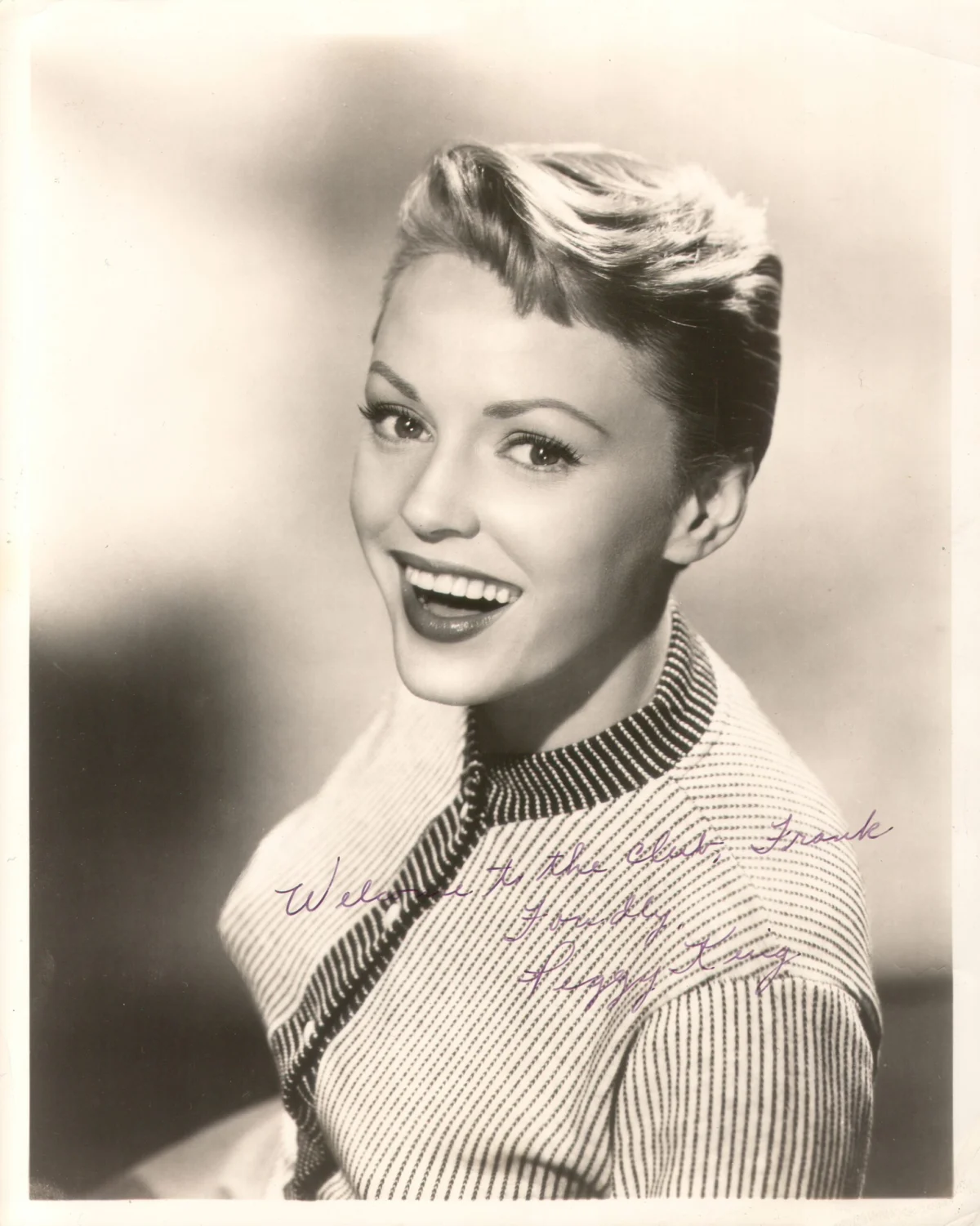
Peggy King, the effervescent vocalist, recording artist, and television luminary whose radiant smile and vibrant stage presence defined the golden age of 1950s broadcasting, passed away on Sunday. She was 96 years old. According to her publicist, Alan Eicher, King died at the Saunders House Assisted Living facility in Wynnewood, Pennsylvania, following a battle with Alzheimer’s disease.
For millions of Americans tuning in during the mid-20th century, King was more than just a singer; she was the physical embodiment of postwar optimism. Affectionately dubbed "Pretty Perky Peggy King" by comedian George Gobel—a moniker that stuck with her for the entirety of her decades-long career—she became a ubiquitous presence on household television screens. Her talents transcended musical variety hours, encompassing dramatic acting, silver-screen cameos, high-profile award show hosting duties, and iconic commercial campaigns.
King’s death marks the passing of one of the last true utility players of early television—performers who could sing a soaring ballad, deliver sharp comedic timing, and charm live audiences effortlessly. She is survived by her daughter, Suzy Rudofker, and son-in-law, Dwain Goforth.
Chronology: From Greensburg to the Golden Age of Television
Early Life and Mid-Century Beginnings
Born on February 16, 1930, in Greensburg, Pennsylvania, to parents Floyd Henry King and Margaret Finan, Peggy King displayed an innate musical inclination from an early age. After graduating from Ravenna High School, she wasted no time breaking into the entertainment industry. She began her professional journey singing on regional radio broadcasts out of Cleveland, Ohio, honing the vocal agility and poise that would soon capture national attention.
Her early breakout included a coveted regular slot on CBS’s The Mel Torme Show, where she performed alongside the legendary velvet-voiced crooner. This high-profile exposure paved the way for a major career pivot in 1952 when she signed a lucrative contract with Metro-Goldwyn-Mayer (MGM). Her studio deal yielded a memorable cameo in Vincente Minnelli’s critically acclaimed drama The Bad and the Beautiful (1952), where her voice graced the soundtrack album. That same year, she made a splash in the cinematic comedy Abbott and Costello Meet the Mummy, showcasing her versatility across genres.
The Television Phenomenon of the 1950s
King’s true cultural impact crystallized during the mid-1950s, a period when television was rapidly expanding into American living rooms. Between 1954 and 1957, she achieved household-name status as a regular cast member on The George Gobel Show. It was during this tenure that Gobel christened her with her career-defining nickname.
Her star continued to ascend meteorically:
- 1955: King received a prestigious Primetime Emmy Award nomination for Best Female Singer. That same year, she graced the Academy Awards stage to deliver a stirring performance of "Count Your Blessings."
- 1957: She stepped into the thriller genre, playing a flight stewardess in Zero Hour!—the suspenseful film featuring Dana Andrews and Linda Danell that later served as the structural blueprint for the comedy classic Airplane!
- 1958: Demonstrating her industry-wide respect and multi-hyphenate appeal, King co-hosted the Primetime Emmy Awards.
Her resume during this golden era reads like a masterclass in mid-century television history. She appeared as a featured guest and performer on virtually every major program of the era, including Bob Hope’s Chevy Show, American Bandstand, The Steve Allen Show, The Kraft Music Hall with Milton Berle, What’s My Line?, The Tonight Show Starring Johnny Carson, The Perry Como Show, The Garry Moore Show, and The Jack Benny Program. She even stretched her dramatic acting muscles with guest roles on popular western and crime series such as Maverick and Dragnet.
Musical Milestones and the "Cry Me a River" Chapter
In addition to her television work, King built a formidable recording career. Legendary music producer Mitch Miller signed her to a long-term contract with Columbia Records, a partnership that produced two best-selling albums and a string of hit singles.
However, one of the most fascinating footnotes in pop music history involves King and the iconic torch song "Cry Me a River." Written specifically for King by composer Arthur Hamilton, the song was primed to be her signature vocal showcase. Yet, in a twist of music industry fate, Mitch Miller famously refused to let her record it. The track was subsequently handed to Julie London, whose smoky 1955 rendition became an immortal jazz and pop standard. Despite missing out on that historic recording, King cemented her musical legacy through numerous television musical adaptations, starring alongside Tab Hunter in Hans Brinker or the Silver Skates and performing in Jack and the Beanstalk alongside Joel Grey, Celeste Holm, and Cyril Ritchard.
Later Years and Continued Performance
Even as television formats shifted in the ensuing decades, King never truly retired from the stage. She maintained an active performance schedule well into her later years, delighting audiences in the Philadelphia area, New York, and Los Angeles as late as 2014. Her passion for the craft resulted in the 2016 release of her final album, Songs a la King, proving that her vocal dexterity and stylistic charm remained intact late into life.
Supporting Data and Career Accolades
Peggy King’s contributions to broadcasting and music have been formally recognized by major cultural institutions. Her remarkable body of work is underscored by several key data points and milestones:
- Longevity and Output: King’s career spanned more than six decades, stretching from regional radio in the late 1940s to her final album release in 2016.
- Award Recognition: Nominated for the Emmy Award for Best Female Singer in 1955; co-host of the 10th Primetime Emmy Awards in 1958.
- Hall of Fame Induction: In 2010, she was officially inducted into the Broadcast Pioneers Hall of Fame, cementing her status as a foundational figure in early television history.
- Walk of Fame Honor: King was among the very first wave of entertainment figures honored with a star on the Hollywood Walk of Fame, reflecting her massive cultural footprint during the nascent years of commercial television.
- Commercial Crossovers: Beyond television and records, King achieved widespread recognition through popular advertising, most notably starring in a highly successful, cheerful commercial campaign for Hunt’s Tomato Sauce that further embedded her persona into American consumer culture.
Official Responses and Tributes
Following the news of her passing, tributes from entertainment historians, publicists, and fans began pouring in across digital platforms.
Alan Eicher, King’s publicist and spokesperson, released statements highlighting her unmatched warmth and work ethic. "Peggy was a consummate professional who brought joy to millions," Eicher noted, emphasizing that her off-screen personality mirrored the bubbly, optimistic demeanor that captivated audiences on The George Gobel Show.
Cultural preservationists and television historians have also stepped forward to honor her memory, noting that artists of King’s caliber built the structural foundation of modern entertainment. Without the tireless live performances, variety show appearances, and musical revues that King championed, the modern television landscape would look vastly different. Tributes from the Broadcast Pioneers of Philadelphia—where King spent much of her later life—highlighted her grace, humility, and unwavering dedication to her craft long after the peak of her national television fame had passed.
Implications: The Passing of a Golden Era Icon
The death of Peggy King carries profound implications for how contemporary audiences remember and contextualize the mid-20th-century entertainment landscape. As members of the "Golden Age of Television" generation continue to pass away, society loses direct human connections to an era when television served as a singular, unifying hearth for American families.
The Vanishing Archetype of the All-Around Entertainer
King belonged to a distinct species of entertainer: the multi-talented variety star. Unlike modern celebrities who often silo themselves into specific niches—such as film acting, reality television, pop music, or internet content creation—1950s stars like King were expected to master multiple disciplines concurrently. On any given week, King might be required to trade comedic banter with George Gobel, execute complex choreography in a televised musical, belt out a soaring pop standard for Columbia Records, and deliver dramatic dialogue in a gritty police procedural like Dragnet.
The loss of performers like King underscores a structural shift in the entertainment industry. The economic and cultural models that supported weekly variety shows have long since vanished, replaced by fragmented media consumption and niche streaming platforms. Consequently, the skill set that made King a household name—live, unedited versatility—is increasingly rare in the modern media ecosystem.
Preserving the Legacy of Female Pioneers in Early TV
Furthermore, King’s career offers a vital lens through which to examine the role of women in early television. While male comedians and hosts often dominated the marquee billing of 1950s variety programs, performers like King provided the emotional anchor, musical prestige, and comedic foil necessary for these shows to succeed. Her Emmy nomination, her role as an Emmy co-host, and her trailblazing presence on the Hollywood Walk of Fame serve as enduring testaments to the power and influence female entertainers wielded during television’s formative years.
As historians and fans mourn the loss of "Pretty Perky Peggy King," her extensive catalog of recordings, surviving television broadcasts, and rich body of work remain. They stand as a permanent, sparkling reminder of an era when television aimed to dazzle, uplift, and unite viewers through pure, unadulterated talent and charm.