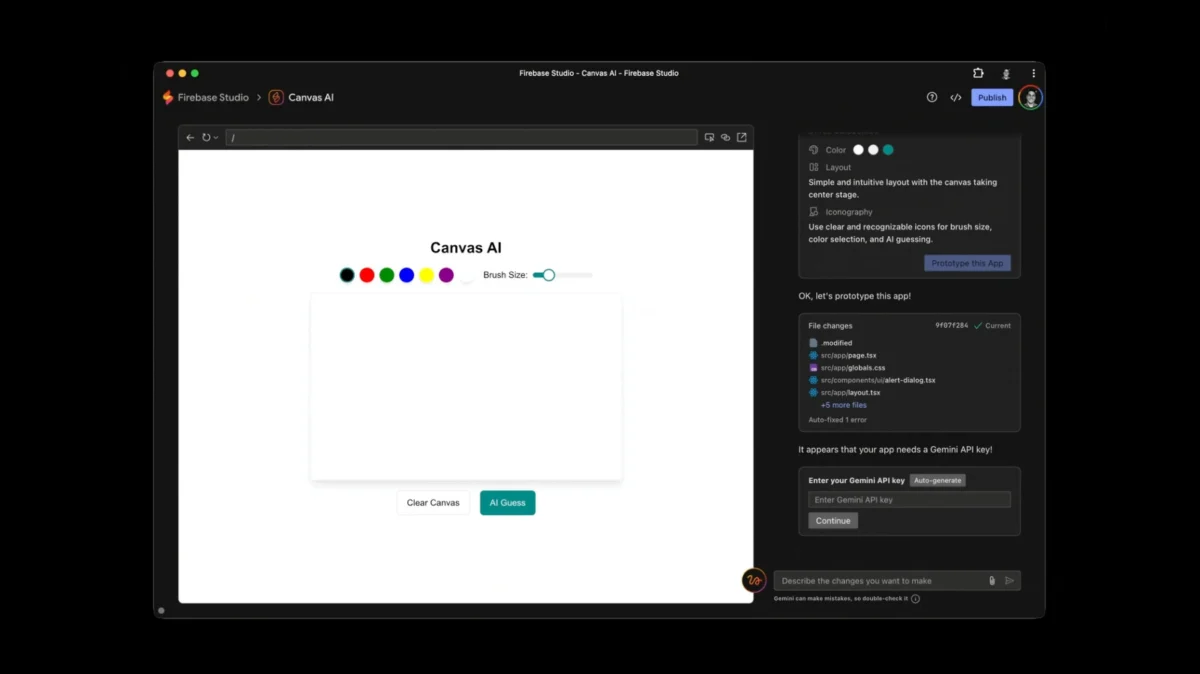
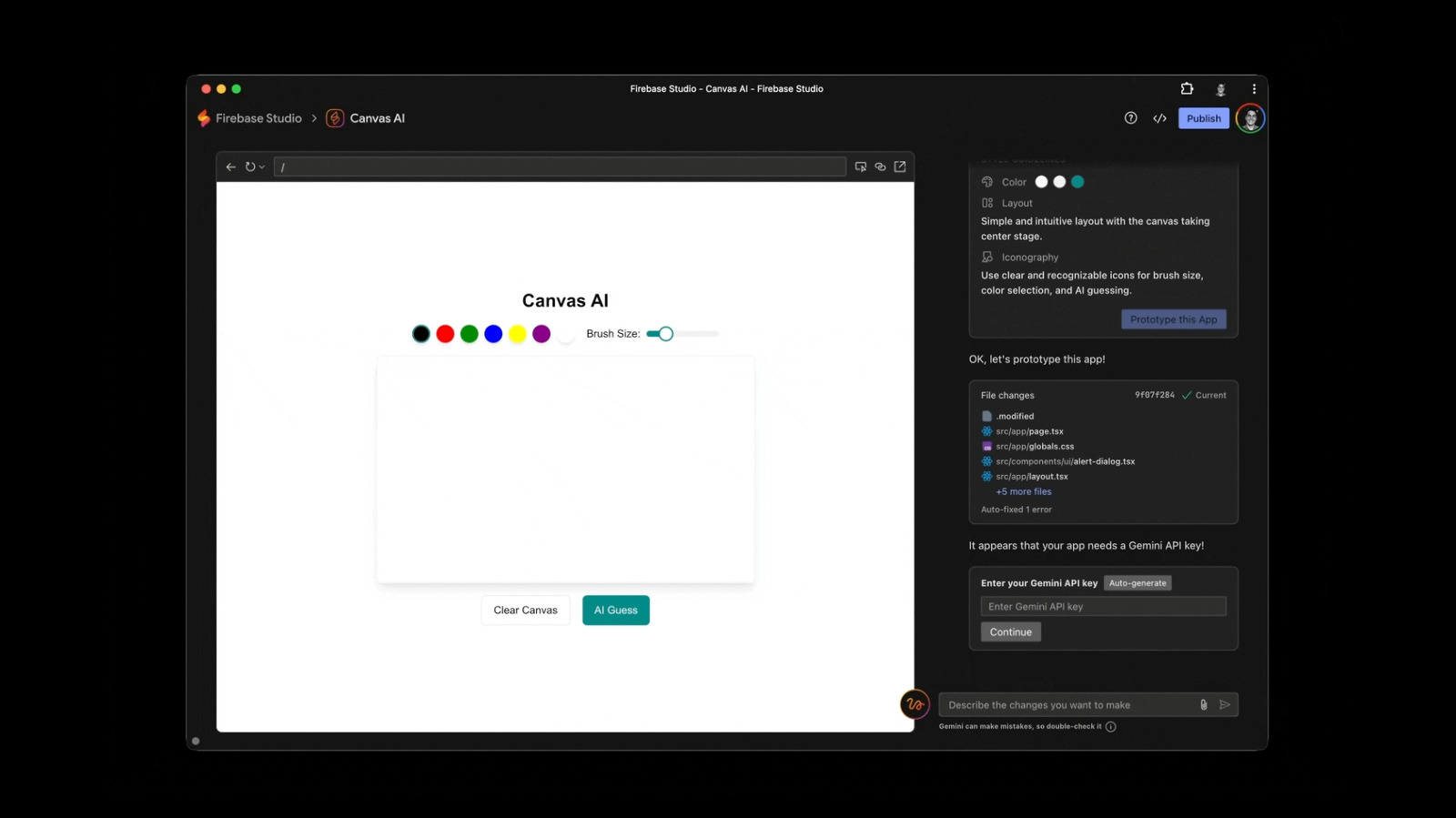
In a significant shift for the software development landscape, Google has officially begun the process of phasing out Firebase Studio, its browser-based integrated development environment (IDE). Announced in March 2026, the decision marks a departure from traditional, code-centric IDEs toward a new paradigm defined by AI-driven agentic workflows. As Google consolidates its resources around its "Gemini-first" ecosystem, developers are being funneled toward two primary replacements: Google AI Studio and the desktop-based Antigravity.
This transition is not merely a product retirement; it is a signal of the industry’s broader move away from manual code authoring toward "vibe coding"—a methodology where natural language prompts and AI agents act as the primary architects of software.
The Chronology of the Transition
The lifecycle of Firebase Studio was relatively short but impactful. Launched in 2025, the tool was envisioned as a bridge between Google’s robust Firebase backend services and a streamlined, cloud-based coding environment. It promised a unified workspace for databases, hosting, and application logic.
- April 2025: Google launches Firebase Studio, emphasizing its integration with Firebase backend services and early AI-assisted coding features.
- March 2026: Google announces the formal "sunsetting" of Firebase Studio, citing a need to streamline its developer tooling portfolio.
- June 22, 2026: Google closes the doors to new workspace creation and sign-ups for Firebase Studio.
- March 22, 2027: The final deadline. Firebase Studio will cease all operations, and any data remaining within the platform will be permanently deleted.
Developers currently utilizing the platform are in a state of transition, with roughly nine months remaining to migrate their projects to alternative environments.
The Strategic Rationale: Why Firebase Studio is Being Retired
The retirement of Firebase Studio is a classic case of product consolidation in the age of generative AI. When Firebase Studio launched, the "AI-in-IDE" market was in its infancy. Today, the landscape is dominated by sophisticated agents capable of writing, testing, and deploying full-stack applications with minimal human intervention.
Google’s stated goal is to "streamline the workflow." By removing a secondary IDE, the company is effectively forcing a choice between two specialized paths: the rapid, prompt-heavy environment of Google AI Studio and the more granular, local control offered by Antigravity.
From Code Editing to Agent Orchestration
The rise of "vibe coding"—where developers focus on the intent and outcome of an application rather than the syntax of the underlying code—has rendered many features of the original Firebase Studio redundant. Where developers once spent hours debugging manual syntax, they now use LLMs (Large Language Models) to generate entire components. Google’s internal data suggests that developers are increasingly bypassing traditional IDE interfaces in favor of tools that treat the AI agent as a collaborator rather than a plugin.
The New Ecosystem: Antigravity vs. Google AI Studio
With the impending closure of Firebase Studio, Google has positioned two primary alternatives that cater to different segments of its user base.
Google AI Studio: The Path of Least Resistance
Google AI Studio is marketed as the "fastest path from prompt to full-stack production app." It is designed for developers who want to stay within a browser-based environment. Its interface is stripped-down, prioritizing the chat interface where prompts are entered and refined. It is the spiritual successor to Firebase Studio’s cloud-based accessibility, offering a seamless way to leverage Google’s latest Gemini models without the overhead of local configuration.
Antigravity: The Local Powerhouse
For developers who require more control, Google is pushing Antigravity. Unlike its web-based sibling, Antigravity is a desktop application that runs locally. This is a critical distinction for professional teams working on complex, high-security, or resource-intensive projects. Antigravity allows developers to manage multiple AI agents simultaneously and, crucially, provides support for third-party AI models, breaking away from the "Google-only" constraint of the company’s other tools.
The Competitive Landscape
The sunsetting of Firebase Studio comes at a time when the developer tool market is more competitive than ever. Google is not alone in its pursuit of the AI-native developer; the market is currently flooded with high-performance alternatives.
- Cursor: Originally a niche tool, Cursor has exploded in popularity, particularly after its acquisition by SpaceX. It provides an intuitive desktop interface that excels at "code-base aware" AI interactions, making it a primary competitor for developers moving away from Google’s proprietary tools.
- Anthropic’s Claude Code: A major challenger, Claude Code is designed to live directly in the terminal, offering deep integration into existing codebases.
- OpenAI’s Codex (and related integrations): OpenAI continues to influence the space by embedding its models into various IDEs, keeping the pressure on Google to prove that its ecosystem provides superior performance for its specific models.
Implications for Developers
For the average developer, the shift creates a "migration tax." Moving projects from one IDE to another involves more than just copying files; it requires recalibrating agent workflows, API keys, and local development environments.
The Cost of Innovation
One of the most significant implications is the financial model. As AI-native tools move toward production-grade maturity, the "free" tiers of these services are becoming increasingly restrictive. Developers must now weigh the cost of subscriptions, token consumption, and API usage. The transition away from Firebase Studio is a forced opportunity for developers to re-evaluate their monthly "AI overhead."
The "Lock-In" Concern
There is also the question of platform dependency. By migrating to Antigravity or Google AI Studio, developers remain firmly within Google’s orbit. While this ensures compatibility with Firebase backend services, it also makes the developer reliant on Google’s specific implementation of AI agents. For teams that prioritize flexibility, the transition might be the perfect catalyst to look toward multi-model platforms like Cursor, which offer greater interoperability.
Conclusion: The Road to 2027
As the March 22, 2027, deadline approaches, the tech industry will be watching to see how many developers transition to Google’s new tools versus how many opt for third-party solutions. The retirement of Firebase Studio is a stark reminder of the velocity of the AI revolution. Features that were considered state-of-the-art just eighteen months ago are now being discarded to make room for more autonomous, agentic workflows.
For developers, the mandate is clear: the focus is shifting away from the interface of development and toward the intelligence of the tools themselves. Whether this leads to a more efficient era of software creation or an era of increased platform lock-in remains to be seen. One thing is certain: in the world of modern development, the only constant is the rapid pace of change.