By PC Gaming Industry Desk
Updated November 2026
1. Main Facts: The New Xbox PC App Update
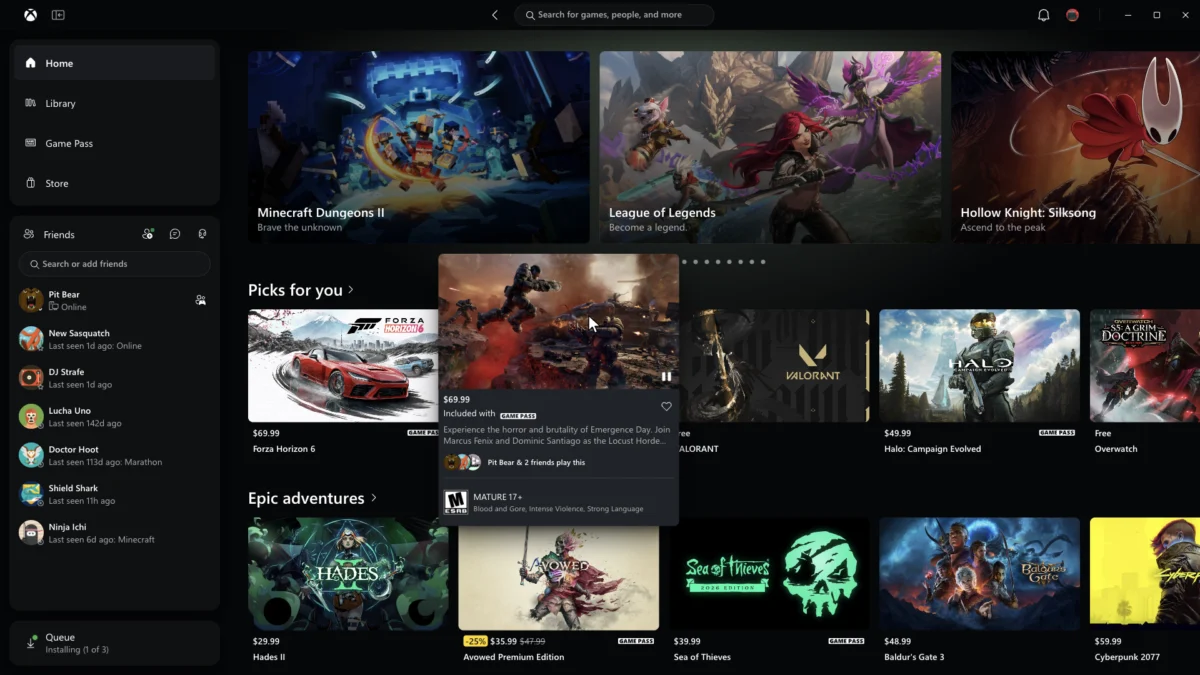
Microsoft has officially joined the fiercely competitive "faster launcher load times" arms race, rolling out a massive performance and structural overhaul for the Xbox PC application. Available initially to members of the Xbox Insiders program, the refreshed software is designed to address longstanding user complaints regarding sluggish performance, clunky navigation, and a lack of fluid social integration.
According to preliminary data released by Microsoft, the headline-grabbing feature of this update is a staggering 60% reduction in initial app launch times. Beyond simply booting up faster, the ecosystem has received a comprehensive tune-up across the board:
- Core Pages: Home, Store, and Xbox Game Pass tabs now load up to 50% faster.
- In-App Windows: Subsidiary windows and auxiliary menus open up to 65% faster.
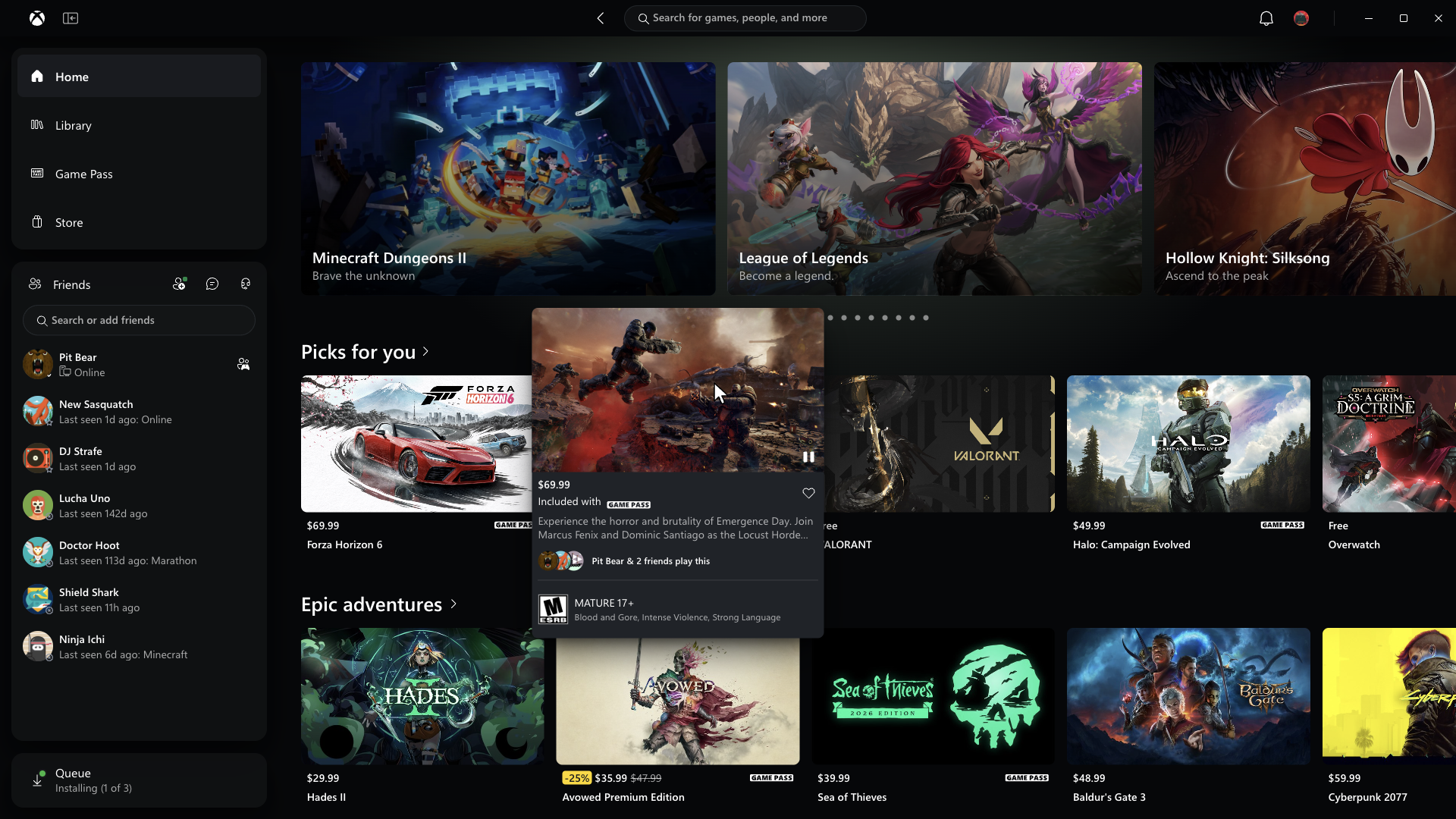
- Social Integration: Friends and social interaction windows are no longer siloed behind obscure menus; they are now seamlessly integrated directly into the main navigational window.
- UI/UX Refinements: The update introduces simplified library navigation, vastly improved search functions, and updated filters designed to help users organize massive digital game collections with minimal friction.
Simultaneously, Microsoft announced that a refreshed Xbox web experience is rolling out concurrently. This web iteration features an improved library tab, a more efficient layout that maximizes screen space, and support for light, dark, and high-contrast visual modes.
2. Chronology: The Evolution of PC Launchers and the Quest for Speed
To understand the significance of Microsoft’s latest move, one must examine the broader historical landscape of desktop gaming launchers and the recent industry-wide obsession with optimization.
- The Early Decades: For years, Valve’s Steam reigned as the undisputed king of the PC storefront ecosystem. While functional, Steam faced historical criticisms regarding its resource usage, prompting competitors to look for alternative ways to capture market share.
- The Fragmented Era (2018–2023): As publishers like Epic Games, EA, Ubisoft, and Microsoft launched their own proprietary software clients, PC gamers increasingly voiced frustration. Desktops became cluttered with heavy, resource-hungry launchers that required constant updates, separate friend lists, and distinct log-ins just to play games. The Xbox app on PC, in particular, was frequently criticized for feeling bloated, sluggish, and overly dependent on background Windows services (such as the Microsoft Store and Xbox Gaming Services).
- The "Speed Race" Culmination (Late 2025–2026): Optimization became the primary battleground for digital storefronts. In late 2025 and 2026, rivals began aggressively benchmarking their software against market leaders. Most notably, the Epic Games Store made waves by rolling out a redesigned, "vibe-coded" launcher that aggressively marketed its superior execution speed compared to legacy builds of Steam.
- The Valve Counter-Offensive: Recognizing the shift in consumer priorities, Valve rolled out its own comprehensive performance updates to Steam, directly targeting memory footprint reduction and startup acceleration.
- The Xbox Intervention (November 2026): Entering the fray, Microsoft deployed its most aggressive software optimization pass for the Xbox PC app to date, bringing it to Xbox Insiders to test the real-world viability of these monumental performance gains.
3. Supporting Data and Technical Realities
While percentage metrics like "60% faster" sound phenomenal on paper, tech industry analysts and consumer advocates frequently emphasize the asterisk attached to these claims: performance gains are inherently variable.
Microsoft’s internal documentation notes that individual user experiences will vary heavily based on a multitude of system-specific factors, including:
- Hardware Configurations: Solid-state drive (SSD) read/write speeds, available RAM, and CPU single-core performance remain primary bottlenecks for Electron- and web-view-based applications.
- Internet Connectivity: Because the Xbox app relies heavily on cloud-syncing, live store inventories, and Game Pass catalog updates, local broadband speeds and latency heavily influence initial asset rendering times.
- Background Processes: Systems running multiple competing background clients (such as Discord, Steam, Epic Games Launcher, and Riot Client simultaneously) will experience different resource constraints than a freshly booted Windows environment.
Furthermore, context is vital. On the exact same day that competing storefronts aggressively marketed their own speed enhancements, Valve’s engineering team pushed out backend patches designed to speed up Steam’s client responsiveness. Consequently, while Microsoft’s performance boost closes the gap between the Xbox app and its rivals, it arrives in a market where everyone is getting faster, muting the unique selling proposition of sheer velocity alone.
4. Official Responses and Developer Perspectives
The reception to the update from both official channels and independent commentators highlights a complex mix of relief and skepticism.
Microsoft’s Official Stance
In a joint statement released via the official Xbox Wire, Microsoft engineers emphasized that the redesign was built from the ground up to listen to player feedback. "We know that time spent waiting for an app to load is time taken away from gaming," representatives noted. "Our goal with this update was not just to make the app faster, but to fundamentally simplify how players discover, organize, and play games across PC, web, and cloud."
Industry Commentary and Real-World Friction
Industry critics have pointed out that while speed is a welcome metric, the true historical barrier for the Xbox app on PC has never been merely waiting a few extra seconds for the store page to render. Instead, it has been the human element of friction.
For instance, consider the experience of jumping back into cooperative multiplayer games like Sea of Thieves. Under previous iterations of the software, coordinating cross-platform sessions, managing Xbox Live/Microsoft accounts on Windows, and inviting friends via the fractured overlay often felt unintuitive compared to Steam’s frictionless ecosystem.
By relocating friends and social elements directly into the primary navigation window, Microsoft has directly addressed this friction point. Long-time PC gamers who previously treated the Xbox app as a necessary evil—installed exclusively to run a handful of Game Pass titles or specific multiplayer games—may finally find the social experience tolerable, if not genuinely pleasant.
5. Implications: Will Speed Drive Adoption?
The ultimate question facing Microsoft’s updated PC application is not whether it is faster—the data clearly shows that it is—but whether speed alone is enough to change consumer habits in a mature, heavily entrenched market.
The Steam Hegemony
For the vast majority of PC gamers, Steam is the default operating environment. It holds the library history, the community forums, the user reviews, the mod workshops, and the social graphs accumulated over nearly two decades. A launcher being 50% or 60% faster does not inherently incentivize a user to migrate their purchases or alter their gaming habits if they already own a game on Steam, or if they simply prefer Valve’s feature-rich ecosystem.
The Game Pass Anchor
The primary driver of Xbox app usage on PC remains, and will likely continue to be, Xbox Game Pass. Millions of subscribers open the application not out of brand loyalty to the launcher itself, but to access a rotating library of high-profile day-one releases, indie gems, and EA Play integrations. For this audience, a faster, cleaner, more responsive app directly improves the quality-of-life of their subscription. They don’t have to love the launcher; they just have to suffer through it less.
The Broader Ecosystem Strategy
Microsoft’s dual approach—upgrading both the desktop application and the web-based experience—signals a wider ambition. By making the web experience more efficient with light, dark, and high-contrast modes, and by optimizing memory usage on desktop, Microsoft is positioning its ecosystem to be frictionless anywhere a user encounters it, whether on a high-end gaming rig, a handheld PC like the ASUS ROG Ally or Lenovo Legion Go, or through a browser.
Summary
Ultimately, the newly optimized Xbox PC app represents a maturing piece of software. It fixes what was broken, smooths out the social rough edges, and brings performance metrics up to par with modern industry standards. While it may not dethrone Steam overnight, it ensures that when players open the app to claim their next Game Pass adventure or sail the digital seas with friends, the software gets out of the way and lets them play.
How to Get Early Access
For PC users eager to experience these improvements firsthand, the updated app is currently rolling out exclusively to members of the Xbox Insiders ring. To participate:
- Download and install the Xbox Insider Hub application from the Microsoft Store.
- Navigate to the "Previews" tab within the app.
- Select and join the Windows Gaming or Xbox App preview group to receive the updated client build automatically.