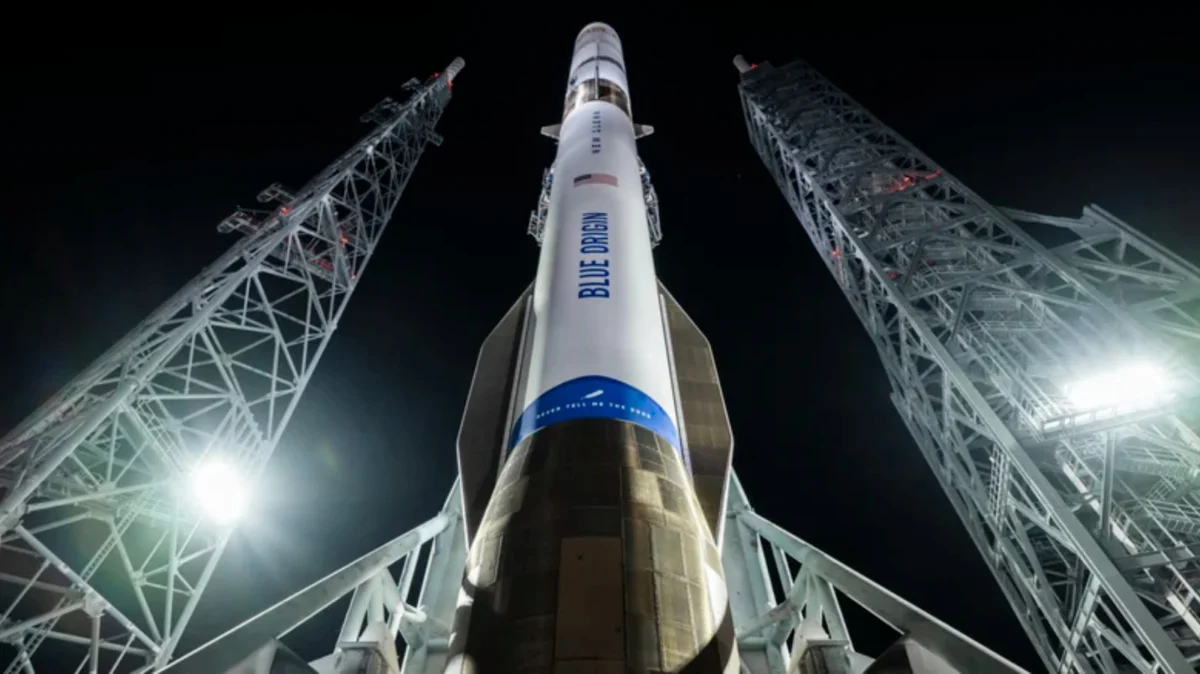
The ambitious trajectory of Blue Origin, the aerospace company founded by Jeff Bezos, has encountered a significant obstacle. Following a high-profile explosion during a ground test earlier this year, the company has officially confirmed that the maiden flight of its massive New Glenn rocket will not take place in 2026 as originally projected. Instead, the launch window has been pushed into January 2027. This development, first reported by the Financial Times, highlights the immense technical and logistical challenges inherent in developing next-generation orbital launch vehicles.
The Chronology of a Setback
The sequence of events leading to the current delay began in May 2026, when a New Glenn rocket suffered a catastrophic failure during a "hot-fire" test on its launchpad at Cape Canaveral, Florida. The incident, which resulted in a spectacular explosion, sent shockwaves through the aerospace industry. While no personnel were injured, the blast inflicted substantial damage on the ground support equipment and the critical infrastructure surrounding the launchpad.
In the immediate aftermath, Blue Origin’s leadership, including CEO Dave Limp, maintained a posture of aggressive optimism. Initial public statements suggested that the damage was localized and that the company possessed the engineering agility to complete repairs within months. At the time, internal projections hinted at a "return to flight" before the conclusion of the 2026 calendar year.
However, as the summer months turned to autumn, the complexity of the restoration effort became more apparent. The integration of high-pressure fueling systems, cryogenic infrastructure, and launch tower stability required more than just rapid repairs; they required rigorous safety validations. By early November 2026, internal memos from CEO Dave Limp confirmed that the original timeline was no longer tenable. The company officially re-baselined its launch schedule, settling on a January 2027 target.
Engineering Realities: The Repair Process
The restoration of the launch site was a monumental task that involved more than simply replacing scorched steel. According to internal updates, the Vehicle Access Tower—the primary interface between the ground crew and the rocket—had to be entirely restacked to ensure structural integrity. Furthermore, the launch bridge, which facilitates the rapid loading of propellants and payload integration, required extensive refurbishment.
In his correspondence with staff, Dave Limp acknowledged that external factors, specifically adverse weather conditions, played a significant role in the slower-than-expected progress. Florida’s volatile climate, characterized by frequent storms and high-humidity environments, hampered the delicate work of repairing precision electronics and sensor arrays embedded within the launch facility.
Despite the delay, Limp praised the resilience of his workforce. "Your collective work on our return to flight has been nothing short of remarkable," Limp noted in his memo. "In just six months, Team Blue has accomplished what many thought would take years." This sentiment attempts to reframe the delay not as a failure of engineering, but as a testament to the team’s ability to rebuild complex infrastructure under immense pressure.
Strategic Implications for Blue Origin
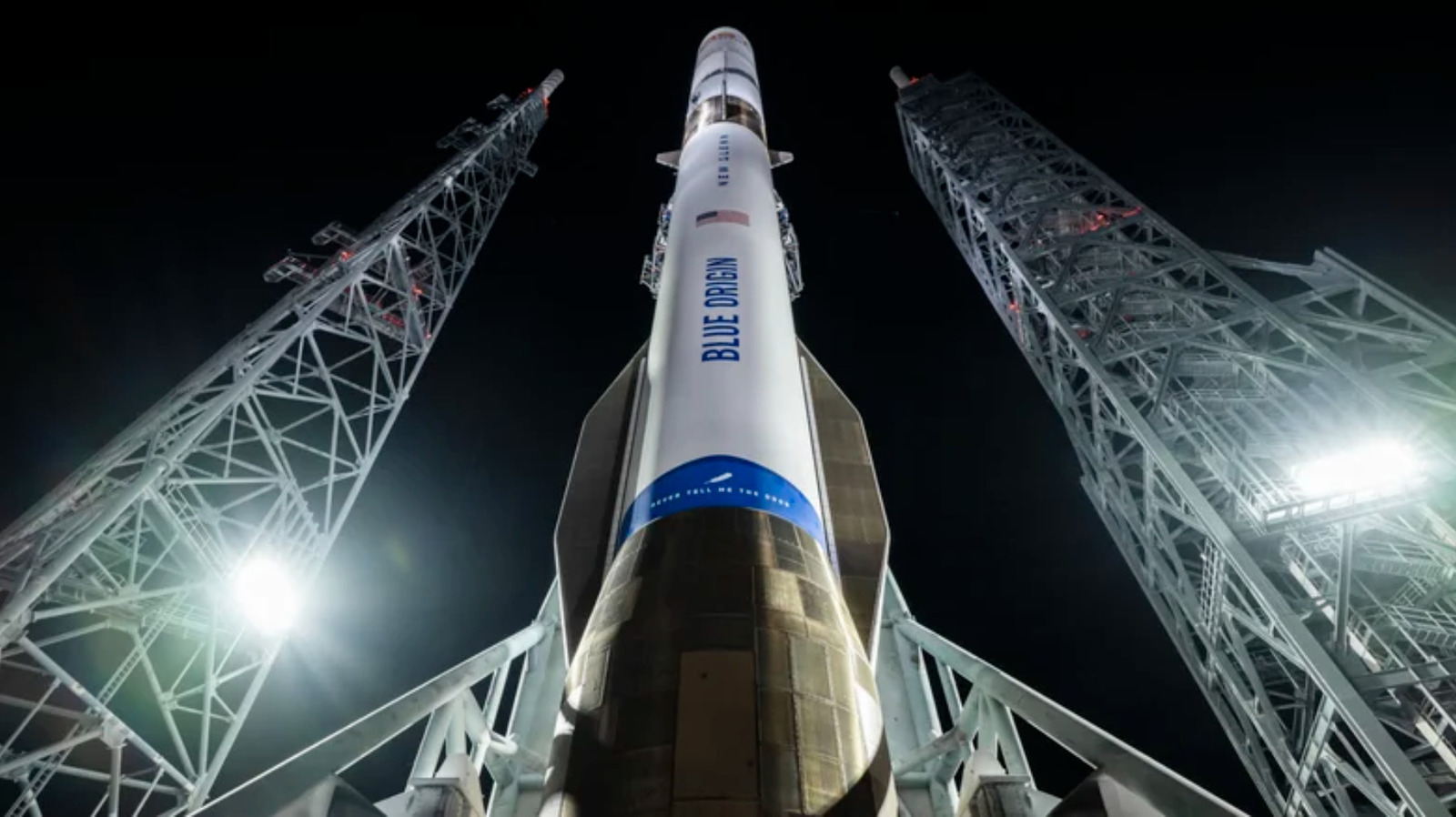
The New Glenn rocket is the cornerstone of Blue Origin’s long-term strategy to compete in the heavy-lift launch market, currently dominated by SpaceX’s Falcon 9 and Falcon Heavy. Designed as a reusable, two-stage rocket, New Glenn is intended to carry heavy payloads to low Earth orbit (LEO), medium Earth orbit (MEO), and geostationary transfer orbit (GTO).
The Mars Connection
The stakes for the success of New Glenn extend far beyond basic satellite delivery. In September 2026, Blue Origin secured a prestigious contract from NASA to develop a telecommunications and navigation network around Mars. This "Mars infrastructure" project is vital for future robotic and potentially human exploration of the Red Planet. Any delay in the New Glenn launch platform risks impacting the development timeline for the hardware needed to support NASA’s deep-space communications goals.
The Amazon Project Kuiper Factor
Perhaps the most immediate commercial pressure on Blue Origin comes from its internal relationship with Amazon. The New Glenn rocket is a critical vehicle for the deployment of Project Kuiper, Amazon’s satellite broadband constellation. With SpaceX’s Starlink already well-established, Amazon is under immense pressure to launch its own satellites at scale to capture market share in the global internet service sector. A delay in New Glenn’s flight readiness forces Amazon to rely on third-party launch providers, potentially inflating costs and reducing the frequency of constellation deployment.
Official Responses and Industry Context
The aerospace industry is notoriously unforgiving when it comes to deadlines. The history of rocket development is littered with "expected" dates that were repeatedly pushed back due to technical anomalies. Industry analysts note that Blue Origin’s decision to delay to 2027 is a calculated move to ensure total mission success. In the wake of the May explosion, a second failure would be a devastating blow to the company’s reputation and its ability to secure lucrative government and commercial contracts.
By taking the extra time to verify the launchpad’s safety, Blue Origin is signaling that it prioritizes vehicle safety and mission assurance over meeting public-facing deadlines. This is a common, if frustrating, pivot for aerospace companies in the "New Space" era, where the public and investors expect the rapid iteration cycles seen in software development applied to the unforgiving physics of rocket science.
The Road Ahead: 2027 and Beyond
As Blue Origin moves toward the January 2027 launch date, the focus will shift from repair to validation. The company must conduct a series of pre-launch tests that include:
- Cryogenic Load Tests: Ensuring the newly repaired fuel lines can handle the extreme temperatures of liquid oxygen and liquid methane without leakage.
- Systems Integration: Verifying that the launch tower’s control systems communicate flawlessly with the flight computer.
- Static Fire Trials: A controlled ignition of the BE-4 engines while the rocket is held down, serving as the final "dress rehearsal" before the actual launch attempt.
The delay of New Glenn also provides a moment for the company to refine its organizational structure. Following the leadership transition to Dave Limp, Blue Origin has moved toward a more operational, delivery-focused culture. The pressure is on to prove that the company can transition from an R&D-heavy laboratory to a high-cadence launch provider.
Conclusion
The postponement of the New Glenn maiden flight to 2027 is an undeniable disappointment for those tracking the progress of the commercial space industry. However, it is also a reminder of the inherent volatility of spaceflight. Whether the company can successfully navigate the complexities of its launchpad restoration and achieve a successful flight in early 2027 remains the most critical question for Blue Origin’s future.
If the first mission is successful, the delay will likely be viewed as a prudent decision—a necessary pause to ensure the safety of a multi-billion-dollar asset. If further issues arise, however, the pressure on the company to justify its massive investment and its strategic role in both NASA’s and Amazon’s future will reach an inflection point. For now, all eyes are on the Cape, where the quiet launchpad serves as a symbol of both the setbacks of the past and the high-stakes ambitions of the future.