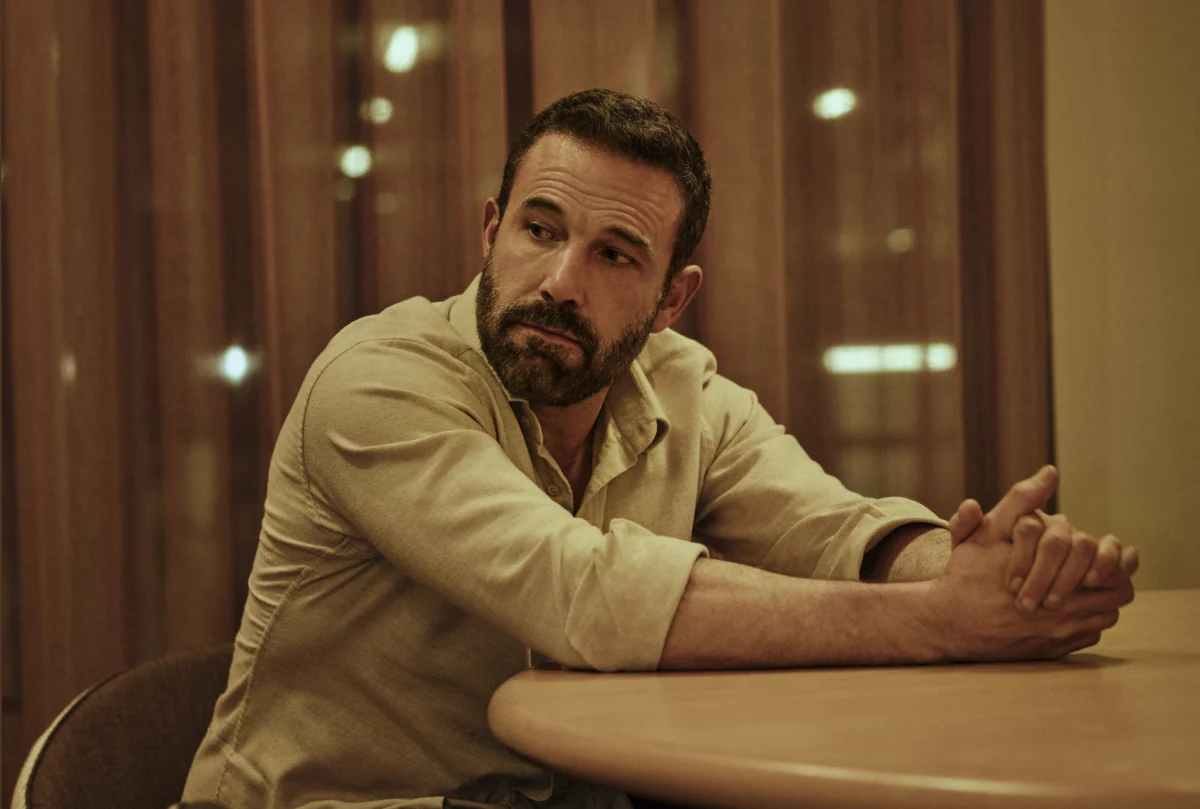
In a move that underscores the rapid fusion of Silicon Valley technology and Hollywood creative muscle, Netflix has officially confirmed the acquisition price of InterPositive, an artificial intelligence firm founded by Oscar-winning filmmaker Ben Affleck. According to recent SEC filings, the streaming titan paid $587 million to bring the startup under its corporate umbrella, a figure that solidifies the deal as one of the most significant tech-driven investments in the history of the platform.
The confirmation ends months of speculation within the industry regarding the exact valuation of the "surprise deal" first reported in early 2026. By integrating InterPositive’s proprietary generative AI tools directly into its production pipeline, Netflix is signaling a fundamental shift in how global content is conceived, produced, and scaled.
Main Facts: The Architecture of the Deal
The acquisition of InterPositive is not merely a talent grab; it is a strategic infrastructure play. While the $587 million price tag initially raised eyebrows, the details emerging from Netflix’s second-quarter financial disclosures reveal a calculated effort to insource the future of digital production.
The Financials
Initial reports from Bloomberg in March 2026 estimated the deal at approximately $600 million. The official SEC filing on Friday clarified the amount at $587 million, a slight adjustment that nonetheless represents a massive exit for a company that was quietly formed only four years prior. This disclosure was part of a comprehensive overview of Netflix’s Q2 financial health, following a more concise shareholder letter released the previous day.
The Company: InterPositive
Founded by Ben Affleck in 2022, InterPositive was established with a singular mission: to reduce the friction and skyrocketing costs of high-end film production through artificial intelligence. Affleck, who served as the sole founder and CEO, built the company away from the public eye, focusing on "generative AI workflows" that could handle complex tasks from pre-visualization to final post-production.
The Terms
Under the agreement, Netflix has absorbed InterPositive’s specialized staff, a lean team of engineers and creative technologists. While the firm will no longer operate as an independent entity, Ben Affleck will remain involved in an advisory capacity, ensuring that the tools developed under his leadership are effectively translated into the creative language of Netflix’s vast roster of directors and showrunners.
Chronology: From Stealth Startup to $587 Million Exit
The timeline of InterPositive reflects the broader acceleration of AI in the entertainment sector. To understand the significance of this acquisition, one must look at the trajectory of the company alongside the evolving priorities of Netflix.
- 2022: The Foundation: Ben Affleck quietly forms InterPositive. Leveraging his experience as both a director (Argo, The Town) and a producer, Affleck identifies a gap in the market for AI tools that speak "the language of the filmmaker" rather than just the language of the coder.
- 2023–2025: Development and Testing: InterPositive begins developing specialized algorithms for visual effects (VFX), virtual production, and "pre-vis" (pre-visualization). During this period, Netflix begins experimenting with third-party AI tools, leading to an internal push for a proprietary solution.
- March 2026: The Announcement: Reports surface that Netflix has reached a deal to acquire InterPositive. The industry is caught off guard by the $600 million valuation, particularly given the sensitive climate surrounding AI and labor in Hollywood.
- July 2026: Q2 Earnings and SEC Confirmation: Netflix Co-CEO Ted Sarandos addresses the acquisition during a quarterly earnings interview. Shortly after, an SEC filing confirms the $587 million price tag, providing a detailed look at the company’s broader strategy for AI integration.
Supporting Data: The Impact of AI on the Production Pipeline
During the Q2 earnings call, Ted Sarandos provided rare insight into the data driving Netflix’s AI ambitions. The motivation behind the $587 million investment is rooted in measurable efficiency and the ability to produce "higher-quality output more quickly."
Scaling Across Productions
According to Sarandos, generative AI (Gen-AI) is no longer a fringe experiment for the streamer. It has already been integrated into the workflows of approximately 300 titles. These titles range from small-scale documentaries to high-budget tentpoles. The "largest concentration" of these tools is currently in post-production, where AI is used to automate labor-intensive tasks that previously required thousands of man-hours.
The "American Experiment" Case Study
One of the most compelling data points shared by Netflix involves the documentary series The American Experiment. The production utilized 17 minutes of AI-enhanced footage. The results were stark:
- Production Speed: The footage was produced twice as fast as traditional methods.
- Cost Efficiency: The sequences were delivered at half the cost of previous technological options.
Complex Shot Preservation
Sarandos highlighted that AI is often the difference between a shot being included or cut. In traditional production, complex battle scenes or massive crowd shots are frequently removed from scripts due to budgetary constraints. By using InterPositive’s tools, Netflix can now generate these "really complicated shots and sequences" without the prohibitive costs of hiring thousands of extras or commissioning months of manual VFX work.
Official Responses: Navigating the Creative Minefield
The integration of AI into Hollywood is a "loaded" topic, as Sarandos acknowledged. Following the industry-defining strikes of 2023, where AI was a central point of contention for both the Writers Guild of America (WGA) and the Screen Actors Guild (SAG-AFTRA), Netflix is treading carefully with its public messaging.
The "Artist-First" Narrative
Sarandos was careful to frame the acquisition of InterPositive as an enhancement for artists rather than a replacement. "It takes great artists to make something great, and AI is not changing that," he reaffirmed during the earnings interview. The company’s stance is that AI handles the "heavy lifting" of technical execution, allowing directors and creators to focus on the narrative and emotional core of their work.
The Reinvestment Flywheel
A key component of Netflix’s official response is the "revenue/profit flywheel." Sarandos explained that the savings generated by InterPositive’s technology would not simply disappear into the bottom line. Instead, these funds are slated for reinvestment. "Those dollars will likely be reinvested into more content on the service, which fuels higher-quality engagement," Sarandos stated. This strategy aims to appease investors by promising higher margins while simultaneously reassuring the creative community that more projects—and thus more jobs—will be greenlit as production becomes more efficient.
Implications: A New Era for Studio Economics
The acquisition of InterPositive marks a turning point for the entertainment industry, with several long-term implications for how movies and television will be made in the coming decade.
1. The End of the "Middle-Budget" Crisis?
For years, Hollywood has struggled with the "hollowing out" of middle-budget films—projects that are too expensive to be indies but not "safe" enough to be blockbusters. If InterPositive’s tools can truly cut production costs in half, it could lead to a resurgence of diverse, mid-budget storytelling that was previously deemed financially unviable.
2. Vertical Integration of Tech and Content
By owning the AI firm rather than licensing the technology, Netflix gains a significant competitive advantage. They can tailor the AI’s development to their specific "Eyeline" virtual production shops and internal animation labs. This vertical integration makes it harder for traditional studios, who may still be relying on expensive third-party VFX houses, to compete on both price and volume.
3. The Role of the "Technologist-Director"
Ben Affleck’s role as the founder of InterPositive suggests the rise of a new type of Hollywood power player: the Technologist-Director. As AI becomes a standard tool in the director’s kit, the line between "creative" and "technical" roles will continue to blur. Affleck’s involvement provides Netflix with a bridge between the engineering world of Silicon Valley and the artistic world of Hollywood.
4. Labor and Ethical Considerations
Despite Sarandos’ reassurances, the confirmation of a $587 million price tag for an AI firm will likely reignite debates within labor unions. As AI workflows scale to 300+ titles, the demand for traditional VFX artists, background actors, and post-production specialists may shift. The industry will be watching closely to see if the "reinvested dollars" actually result in more human employment or if they primarily serve to pad the margins of the streaming giant.
Conclusion
Netflix’s $587 million acquisition of InterPositive is more than a headline-grabbing deal involving a movie star; it is a declaration of intent. By confirming the price and outlining the successes of the "American Experiment," Netflix is signaling that the era of AI-assisted filmmaking is no longer a future prospect—it is the current standard. As the company continues to refine its "flywheel" of efficiency and reinvestment, the rest of the industry must now decide whether to follow suit or risk being left behind in a more expensive, less efficient past.