
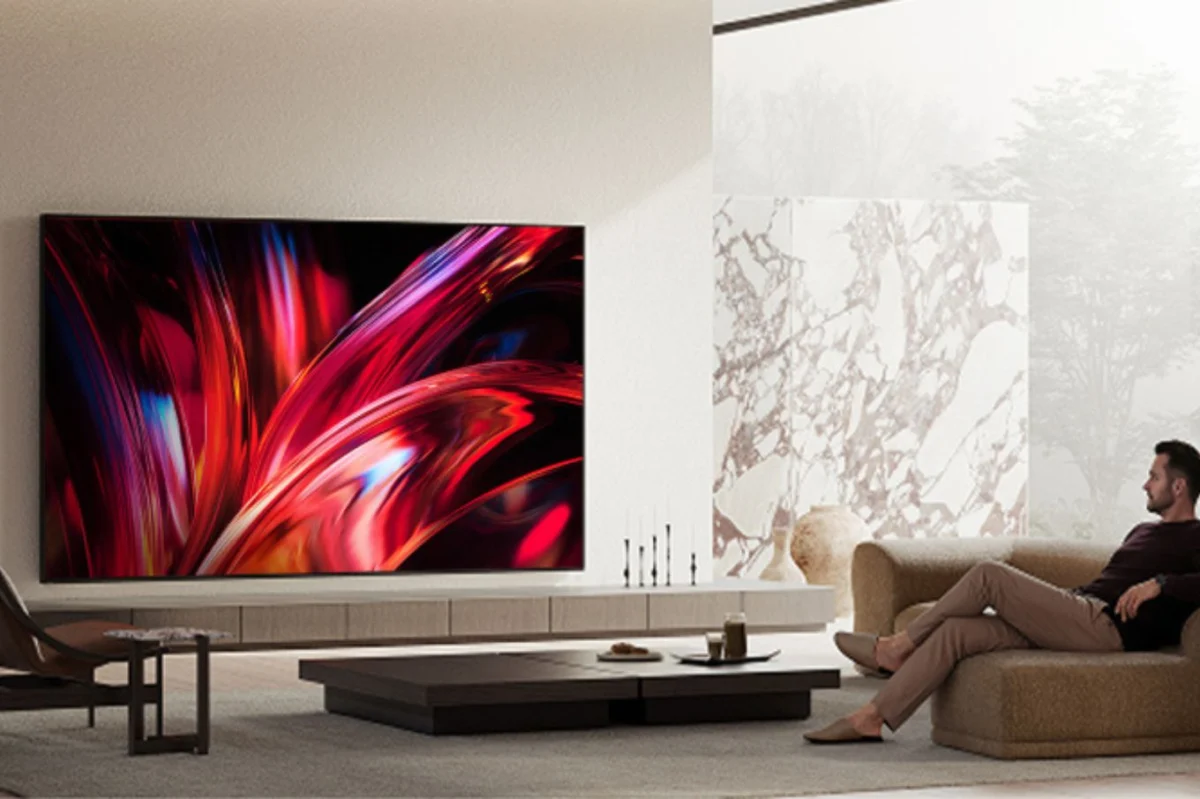
The home entertainment landscape in 2026 has reached a critical inflection point. No longer is the purchase of a television merely a choice of screen size and basic resolution. Today, the 4K TV market is highly fragmented, characterized by complex panel architectures, competing high-dynamic-range (HDR) standards, advanced artificial intelligence integration, and high-frequency refresh rates designed to blur the line between television and high-end gaming monitors.
In this comprehensive market analysis, we evaluate the premier 4K television offerings of the year—headlined by major manufacturers including Sony, Samsung, LG, TCL, and Hisense—while contextualizing the technological advancements, consumer buying patterns, and industry implications shaping the display market.
1. Main Facts: The Current Paradigm of the 4K TV Market
The modern television market is no longer defined by a singular, dominant display technology. Instead, a tri-fold rivalry exists between advanced Organic Light-Emitting Diode (OLED) systems, high-density Mini-LED configurations, and emerging specialized LED backlight arrays. While early 4K televisions relied on basic edge-lit or direct-lit LCD panels with limited contrast ratios, the consumer of 2026 demands perfect black levels, high peak brightness to combat ambient glare, and intelligent operating systems capable of aggregating content across multiple streaming platforms.

According to retail data and industry testing compiled by Variety, the premium segment of the market is currently led by Sony’s sophisticated "True RGB" Bravia lineup and Samsung’s QD-OLED flagships. Simultaneously, a highly competitive mid-range tier, championed by brands like TCL and Hisense, has democratized advanced features like Mini-LED backlighting and 144Hz-to-165Hz refresh rates, making high-end cinematic and gaming experiences accessible for under $1,500.
The key market segments identified in this year’s assessment reveal that manufacturers are tailoring their hardware to highly specific use cases:
- Premium Reference Displays: Designed for home theater enthusiasts who prioritize color accuracy and black-level depth above all else.
- Aesthetic and Lifestyle Integrations: Targeted at consumers wishing to minimize the visual clutter of traditional black-slab televisions.
- Interactive Gaming Hubs: Outfitted with low-latency hardware, variable refresh rates, and cloud-gaming integrations to bypass traditional console hardware.
2. Chronology: The Evolution of Display Technology (2020–2026)
To understand the sophisticated engineering of the 2026 television lineup, it is necessary to trace the rapid technological milestones of the first half of the decade:

[2020–2021] ----------------> [2022–2023] ----------------> [2024–2025] ----------------> [2026]
Standard OLED & Early         QD-OLED & Mini-LED          Generative AI OS             True RGB Backlighting,
Mini-LED; HDMI 2.1            Peak Brightness Wars;       (Google Gemini);             165Hz Refresh Rates,
Becomes Common. 144Hz Gaming Panels. Lossless Wireless Hubs. Consoleless Cloud Gaming.- 2020–2021: The Standardization of HDMI 2.1 and Early Mini-LEDs. Driven by the launch of ninth-generation gaming consoles (PlayStation 5 and Xbox Series X), manufacturers rushed to implement HDMI 2.1 ports capable of delivering 4K resolution at 120Hz. Early Mini-LED models began to challenge traditional OLEDs by offering thousands of local dimming zones, though they suffered from noticeable "blooming" (light bleed around bright objects).
- 2022–2023: The QD-OLED Revolution and Peak Brightness Wars. Samsung and Sony introduced Quantum Dot OLED (QD-OLED) technology, combining the self-emissive pixel advantages of OLED with the vibrant color volume of quantum dots. Concurrently, Mini-LED manufacturers pushed peak brightness levels beyond 2,000 nits, igniting a industry-wide race to deliver visible HDR under direct sunlight.
- 2024–2025: The Integration of Generative AI and Wireless Control Hubs. Smart TV operating systems underwent a paradigm shift. Traditional tiled interfaces were replaced by AI-driven recommendation engines. LG pioneered the integration of advanced conversational AI (such as Google Gemini) directly into its webOS architecture. Meanwhile, proprietary wireless transmission protocols allowed manufacturers to separate physical input ports from the display panel itself, giving rise to clean, single-cable, and completely wireless wall installations.
- 2026: The Era of True RGB Backlighting and Consoleless Gaming. Today, the market has realized the potential of specialized backlighting architectures, such as Sony’s "True RGB" LED system, which targets individual red, green, and blue light components to achieve unprecedented color fidelity. High-refresh-rate panels running at 165Hz have transitioned from niche PC monitors to mainstream living room displays, while integrated cloud-gaming hubs have begun to challenge the necessity of physical gaming consoles.
3. Supporting Data: Technical Deep Dive of the 2026 Lineup
To assist consumers and industry analysts in navigating this complex marketplace, we analyze the performance metrics, hardware configurations, and value propositions of the top-performing 4K TVs currently available.
Sony 85-Inch BRAVIA 9 II "True RGB" 4K TV (Best Overall)
- Market Position: Ultra-Premium Flagship
- Retail Price: Starting at $3,599.99 (Best Buy)
- Key Specifications: True RGB display technology, advanced cognitive processing, multi-channel acoustic surface audio.
- Analysis: Sony’s Bravia 9 II represents the zenith of liquid-crystal-based display technology. By moving away from standard blue-LED-pumped quantum dot filters and instead utilizing a dedicated True RGB light source, this model achieves near-perfect color volume. The red, green, and blue sub-pixels receive pure, dedicated light, resulting in a dramatic reduction in chromatic distortion. For home theater environments, this translates to incredibly vivid color representation and deep, highly controlled black levels that rival self-emissive OLED panels without sacrificing the high peak brightness required for daytime viewing.
Samsung 77-Inch OLED S90H 4K Smart TV (Best OLED)
- Market Position: Premium Self-Emissive Display
- Key Specifications: QD-OLED panel, Dolby Atmos, 165Hz refresh rate, Samsung Vision AI processor.
- Analysis: The S90H represents Samsung’s commitment to refining organic light-emitting diode technology. By utilizing a 77-inch QD-OLED panel, the S90H completely eliminates blooming and haloing—the visual artifacts common in backlit TVs when bright subtitles or stars appear on a black background. Powered by the Samsung Vision AI processor, the television excels at upscaling legacy 1080p and 720p content. Furthermore, its native 165Hz refresh rate ensures that fast-moving objects in action sequences and live sports remain exceptionally sharp.
LG 77-Inch LG OLED evo AI G6 4K Smart TV (Best for Wide Viewing Angles)
- Market Position: Premium Family and Living Room Display
- Key Specifications: OLED evo panel, webOS 26 with Google Gemini integration, Dolby Vision, HDR10, HLG.
- Analysis: For open-concept living rooms and large family seating arrangements, the LG G6 is the industry benchmark. Traditional displays suffer from color shifting and contrast degradation when viewed from off-center angles; the LG G6’s OLED evo technology preserves complete color accuracy and luminance even at extreme angles. Out of the box, the G6 runs webOS 26, which features an operating system deeply integrated with Google Gemini. This allows users to search for content using natural, contextual voice commands (e.g., "Find that sci-fi movie from the 90s with a red poster") rather than rigid keyword searches.
TCL 75-Inch QM7L Series SQD-Mini-LED QLED Smart TV (Best Value)
- Market Position: Mid-Range Budget-Friendly
- Retail Price: $1,498.00 (Amazon)
- Key Specifications: Mini-LED backlighting, thin-bezel design, Google TV, Bang & Olufsen integrated audio system, HDR10+ and Dolby Vision.
- Analysis: TCL has consistently disrupted the pricing structure of the television market, and the QM7L is no exception. At a highly accessible sub-$1,500 price point, this 75-inch model delivers high-zone Mini-LED backlighting, producing deep contrast and impressive high-dynamic-range performance. Rather than cutting corners on audio, TCL partnered with legendary audio brand Bang & Olufsen to deliver an integrated soundstage that surpasses the tinny, downward-firing speakers typical of budget displays.
Hisense 75-Inch U7 Mini-LED ULED 4K Smart TV (Best for Versatility)
- Market Position: Mid-Range Multi-Purpose Display
- Key Specifications: Dolby Vision IQ, HDR10+ Adaptive, IMAX Enhanced, DTS:X and Dolby Atmos audio, native 165Hz refresh rate, Google TV.
- Analysis: The Hisense U7 is engineered for the household that demands a television capable of wearing multiple hats. It supports virtually every modern HDR format, including Dolby Vision IQ and HDR10+ Adaptive, which utilize ambient light sensors to automatically adjust the picture quality based on the lighting conditions of the room. Its native 165Hz refresh rate and low input lag make it an exceptional secondary gaming monitor, while DTS:X and Dolby Atmos decoding provide a highly versatile foundation for external soundbars and home theater receivers.
Samsung 85-Inch "The Frame Pro" LS03HW Neo QLED 4K Smart TV (Best for Style)
- Market Position: Premium Lifestyle/Designer Display
- Key Specifications: Matte anti-reflection QLED display, Wireless One Connect box, dedicated Art Mode.
- Analysis: For consumers who object to the aesthetic footprint of a massive black screen on their wall, "The Frame Pro" offers an elegant compromise. Utilizing a highly advanced matte, non-glossy QLED panel, the display disperses reflected light, making it look remarkably like real canvas or paper. When not in use, its Art Mode displays high-resolution digital reproductions of classical and contemporary art. Crucially, Samsung has offloaded all power, HDMI, and processing components to a separate "Wireless One Connect" box. This box transmits data wirelessly to the screen, allowing for a completely flush wall mount with zero visible hanging wires.
Samsung 77-Inch OLED S95H 4K Smart TV (Best for Gaming)
- Market Position: Dedicated Gaming Display
- Key Specifications: Four HDMI 2.1 ports (all supporting ALLM and VRR up to 165Hz), HDR10+ Dynamic Metadata, integrated Cloud Gaming Hub (Xbox Game Pass Ultimate, NVIDIA GeForce Now).
- Analysis: The S95H is the ultimate television for the modern interactive entertainment enthusiast. While many premium televisions offer only one or two HDMI 2.1 ports, all four of the S95H’s ports support full HDMI 2.1 bandwidth, enabling Auto Low Latency Mode (ALLM) and Variable Refresh Rate (VRR) up to 165Hz. For households looking to transition away from physical console hardware, the television’s built-in cloud gaming hub allows users to connect a Bluetooth controller directly to the TV and stream high-fidelity titles via Xbox Game Pass and NVIDIA GeForce Now without any external console or PC.
4. Official Responses: Manufacturer Strategies and Technical Insights
To understand the engineering priorities driving these products, we examine the official design philosophies and corporate strategies articulated by the major manufacturers for the 2026 product cycle.
Sony: "Preserving the Filmmaker’s Intent"
Sony’s engineering division has maintained a strict adherence to reference-quality color accuracy. In press releases detailing the development of the Bravia 9 II and its True RGB backlighting, Sony engineers emphasized that their primary objective is to recreate the mastering monitors used in professional Hollywood editing suites.

By utilizing cognitive processing algorithms that mimic human visual focus, Sony’s processors dynamically analyze the screen to ensure that skin tones, textures, and depth of field match the exact creative intent of the director, avoiding the over-saturated colors often used by competitors to catch eyes on showroom floors.
LG: "The AI-Centric Smart Home Hub"
LG’s corporate roadmap has shifted focus toward software and services, utilizing its webOS platform as a central hub for the connected home. In technical briefings for webOS 26, LG highlighted its deep collaboration with Google to integrate Gemini.
According to LG’s product development team:

"The television is no longer a passive display device; it is an active assistant. By embedding conversational generative AI into the core architecture of webOS, we allow the television to understand complex user intent, manage smart home devices, and provide highly customized content discovery without requiring tedious manual navigation."
Samsung: "The Lifestyle and Gaming Convergence"
Samsung’s market strategy focuses on lifestyle integration and the elimination of traditional hardware barriers. Through the expansion of "The Frame" series and the integration of the Wireless One Connect box, Samsung is targeting a premium demographic that views technology through the lens of interior design.
Simultaneously, Samsung’s aggressive partnerships with Microsoft and NVIDIA for cloud gaming represent a strategic bid to capture the casual-to-hardcore gaming market, positioning the smart TV as the only gaming console a household needs.

5. Implications: The Future of Home Entertainment
The technological landscape of 2026 carries profound implications for consumers, content creators, and the broader consumer electronics industry.
The Democratization of High-End Display Technology
Perhaps the most significant economic implication of the current market is the narrowing performance gap between entry-level premium displays and ultra-luxury reference models. As demonstrated by TCL and Hisense, consumers can now acquire a 75-inch Mini-LED display with advanced gaming features and premium audio for under $1,500—a level of performance that would have cost upwards of $4,000 just four years ago. This rapid price compression is forcing premium manufacturers like Sony and Samsung to innovate constantly in specialized areas like True RGB backlighting, lifestyle aesthetics, and wireless connectivity to justify their premium pricing.
The Death of the Traditional Console?
The integration of high-bandwidth Wi-Fi protocols, low-latency Bluetooth controller pairing, and robust cloud gaming services directly into the television operating system poses a direct threat to traditional gaming console hardware. As cloud infrastructure continues to mature, a growing segment of consumers may decide that purchasing a dedicated $500 console is redundant when a television like the Samsung S95H can deliver high-fidelity, low-latency gaming experiences directly through an integrated app.

Interior Design and Technology in Harmony
The success of lifestyle products like Samsung’s "The Frame Pro" indicates a permanent shift in how consumers view home technology. The historical expectation that a high-performance home theater requires a complex web of black boxes, heavy cables, and imposing speakers is being systematically dismantled. The future of the television lies in its ability to blend seamlessly into the home environment—acting as a piece of art by day, and a high-performance, AI-driven entertainment center by night.