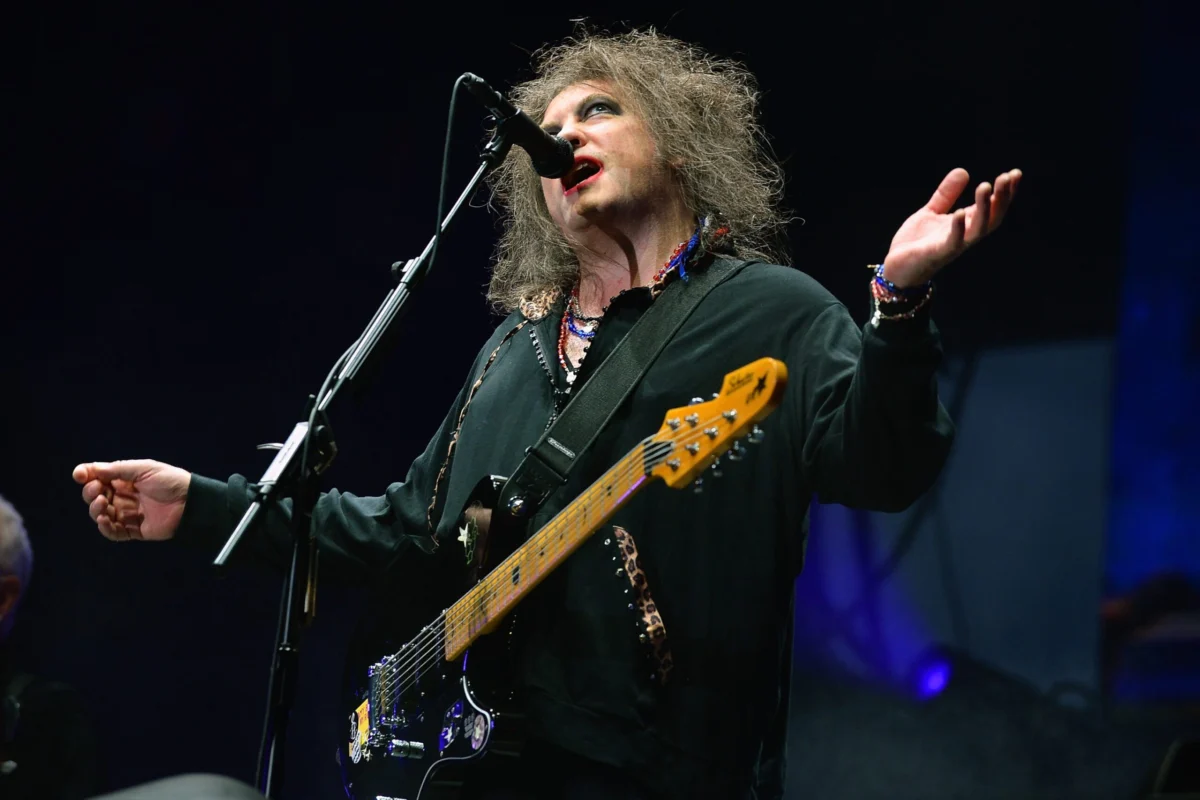
The intersection of global sport and corporate entertainment has reached a historic—and highly contentious—milestone. Following the announcement that the FIFA World Cup final will, for the first time in its history, feature a massive, American-style halftime show, a wave of debate has erupted across the sports and music industries. Leading the charge against this unprecedented move is Robert Smith, the iconic frontman of the British post-punk band The Cure. Known for his fierce independence and vocal opposition to corporate overreach in the entertainment industry, Smith took to social media to deliver a scathing critique of the decision, igniting a broader conversation about the commercialization of the world’s most popular sport.
Main Facts: A Star-Studded Lineup Meets Visceral Resistance
The controversy stems from FIFA’s decision to introduce a mid-game musical performance during the World Cup final, a format heavily inspired by the NFL’s Super Bowl halftime show. Historically, major international football tournaments have restricted musical performances to pre-match opening ceremonies or post-match celebrations, preserving the traditional 15-minute interval strictly for player recovery and tactical adjustments.
The Halftime Show Concept and Curatorial Vision
The inaugural halftime spectacle is set to be curated by Coldplay’s frontman, Chris Martin. The lineup features some of the biggest names in global pop music, including:
- Madonna: The legendary "Queen of Pop."
- Justin Bieber: The Canadian pop superstar.
- Shakira: A veteran of World Cup anthems (famous for 2010’s "Waka Waka").
- BTS: The South Korean K-pop phenomenon.
In addition to these pop icons, the performance will feature a collaborative segment by the New York Philharmonic and the Simón Bolívar Symphony Orchestra of Venezuela. The two world-renowned orchestras are scheduled to perform a joint tribute to Venezuela, following the devastating earthquakes that recently impacted the region.
FIFA President Gianni Infantino championed the initiative in an official statement, describing the halftime special as a "groundbreaking spectacle" designed to celebrate "football, music, and our shared values, ensuring a legacy that transcends the final whistle."
Robert Smith’s Unfiltered Reaction
The corporate enthusiasm of FIFA’s leadership stood in stark contrast to the reaction of Robert Smith. Writing on The Cure’s official Instagram account, the singer posted a visceral, capitals-locked rejection of the announcement:
"AAAAAAAAAAAAAAAAAAGH… #Breadandcircuses #MUGWANK #pleasejustfuckoff"
The post immediately went viral, drawing thousands of comments from football traditionalists and music fans who shared Smith’s disdain for what they view as the "Americanization" of the beautiful game.
Chronology of the Dispute
The public dispute unfolded rapidly over a matter of hours, highlighting the deep cultural divide between sports executives and traditional fanbases.
[FIFA Halftime Show Announcement]
               │
               ▼
[Robert Smith's Initial Instagram Outburst]
("AAAAAAAAAAAAAAAAAAGH… #Breadandcircuses")
               │
               ▼
[Global Media & Fan Reaction / Debate on "Mugwank"]
               │
               ▼
[Smith's Clarifying Post]
(Targeting the *concept* and "Janny + Donny + $$$")
               │
               ▼
[Logistical Reports Surface (BBC)]
(Discrepancy: 25-minute show vs. 15-minute player break rule)
1. The Announcement
FIFA, in partnership with major entertainment stakeholders, officially announced the halftime show format for the upcoming World Cup final. The press release emphasized global unity, high production values, and the curation by Chris Martin.
2. The Initial Outburst
Shortly after the press release circulated, Robert Smith published his initial Instagram post. By using the hashtag #Breadandcircuses (a reference to the Roman formula panem et circenses, used to describe superficial appeasement to distract a populace from structural issues), Smith framed the event as a hollow distraction designed to maximize corporate revenue at the expense of sporting integrity.
3. The Clarification
As media outlets and fans began debating his comments—some accusing him of criticizing the individual artists involved—Smith returned to Instagram a few hours later to clarify his target. He made it clear that his grievance was with the institutional decision-making of FIFA and its leadership, rather than the performers themselves:
"IT IS ABOUT THE #MUGWANK I D E A OF A FOOTBALL WORLD CUP FINAL HALF TIME SHOW… IF YOU NOW UNDERSTAND MY ‘AAAAAAAGH!’ A BIT BETTER, BUT STILL DON’T AGREE, PLEASE ADJUST YOUR RED CAP, YOUR ‘I 🖤 JANNY + DONNY + $$$’ TSHIRT AND… KNOCK YOURSELF OUT? ONWARDS," he wrote.
In this follow-up, Smith used pointed political imagery. "Janny" is a derogatory shorthand for FIFA President Gianni Infantino, while "Donny" and the "red cap" refer to former U.S. President Donald Trump, drawing a direct line between right-wing populism, American hyper-commercialism, and FIFA’s financial motives.
Supporting Data: The Logistical and Physiological Dilemma
Beyond the cultural debate, the introduction of a major halftime show presents severe logistical and physiological challenges that have alarmed team managers, sports scientists, and regulatory bodies.
The 15-Minute Rule vs. the 25-Minute Spectacle
According to sources speaking to BBC News, the proposed halftime show could extend the mid-game interval to up to 25 minutes. This projection directly conflicts with the established Laws of the Game.
| Metric | FIFA Tournament Regulations / IFAB Law 7 | Proposed Halftime Show Projection |
|---|---|---|
| Interval Duration | Maximum 15 minutes | Up to 25 minutes |
| Primary Purpose | Player recovery, hydration, tactical briefing | Large-scale musical production, stage assembly/disassembly |
| Physiological Impact | Maintains muscle warmth, controlled heart-rate descent | Muscle cooling, increased risk of injury upon restart |
The International Football Association Board (IFAB) Law 7 states clearly that "players are entitled to an interval at half-time, not exceeding 15 minutes." Any extension of this break requires a formal regulatory amendment, which has met with resistance from purists who argue that changing the flow of the game for commercial purposes compromises the sporting integrity of the final.
Physiological Concerns for Elite Athletes
Sports scientists have long warned against extending halftime intervals in professional football. During a standard 15-minute break, players undergo a rapid cool-down but maintain enough muscle temperature to resume high-intensity sprinting with minimal warm-up.
An extension to 25 minutes risks:
- Acute Muscle Cooling: Increasing the susceptibility to hamstring, calf, and groin strains during the opening minutes of the second half.
- Disrupted Tactical Rhythm: Managers have highly calibrated 10-minute briefing windows; an extended break alters the psychological tension of a high-stakes final.
- Pitch Damage: The rapid assembly and disassembly of massive stage equipment, combined with the foot traffic of hundreds of production crew members, poses a significant threat to the quality of the playing surface for the second half.
Official Responses and Corporate Silence
As the controversy gathered momentum online, the response from the organizing bodies and involved parties remained highly controlled.
- FIFA: Representatives for football’s global governing body did not immediately respond to requests for comment regarding Robert Smith’s remarks or the logistical conflict over the halftime duration. Historically, FIFA has avoided engaging directly with public criticism from counter-culture figures, preferring to focus on corporate partnerships and broadcast metrics.
- Chris Martin and Performers: No official statements have been released by Chris Martin, Madonna, Justin Bieber, Shakira, or BTS regarding the backlash.
- The Orchestras: Representatives for the New York Philharmonic and the Simón Bolívar Symphony Orchestra of Venezuela emphasized the humanitarian importance of their performance, steering clear of the athletic and corporate debates to keep the focus on raising awareness and aid for Venezuelan earthquake victims.
Implications: The "Super Bowl-ization" of Global Football
The introduction of a halftime show at the World Cup final is emblematic of a broader, structural shift in global sports marketing—often referred to by critics as the "Super Bowl-ization" of football.
Cultural Clash: American Entertainment vs. Global Football Tradition
For decades, global football culture has prided itself on its distinct identity, which favors continuous play, minimal commercial interruptions during the match, and a deep-seated connection to local working-class communities. The Super Bowl, conversely, is an American cultural event where the commercials and the halftime show are often prioritized as highly as the game itself.
By bringing this model to the World Cup final—particularly with the tournament being hosted across North America (the United States, Canada, and Mexico)—FIFA is signaling a deliberate transition toward a highly commercialized entertainment product designed to capture casual viewers and maximize television advertising revenue.
       Traditional Football Culture              Modern Corporate Entertainment
   ┌───────────────────────────────────┐      ┌───────────────────────────────────┐
   │ • 15-minute functional break      │      │ • 25-minute commercial spectacle  │
   │ • Continuous, uninterrupted play  │  vs  │ • Integrated brand advertisements │
   │ • Focus on sporting integrity     │      │ • Focus on cross-platform metrics │
   │ • Localized fan identity          │      │ • Global pop-culture appeal       │
   └───────────────────────────────────┘      └───────────────────────────────────┘
Robert Smith as the Voice of Anti-Corporate Activism
This is not the first time Robert Smith has leveraged his platform to fight corporate practices in the entertainment industry. In 2023, Smith famously took on Ticketmaster over its "dynamic pricing" model and excessive service fees during The Cure’s North American tour, successfully forcing the ticketing giant to issue partial refunds to fans.
Smith’s outrage over the World Cup halftime show aligns with his career-long defense of fan culture against corporate exploitation. By targeting "Janny + Donny + $$$," Smith highlighted what he perceives as a transactional alliance between corrupt sporting institutions, political populism, and unchecked capitalism.
As The Cure continues their European tour—having recently delivered a highly acclaimed performance in Plovdiv, Bulgaria—and as Smith enjoys contemporary relevance through collaborations like his recent duet "What’s Wrong With Me" on Olivia Rodrigo’s new album, his voice remains a potent force in the cultural landscape. His refusal to stay silent on the corporatization of football ensures that as FIFA marches toward its "groundbreaking spectacle," it will do so under the critical gaze of both traditional sports fans and legendary artists alike.