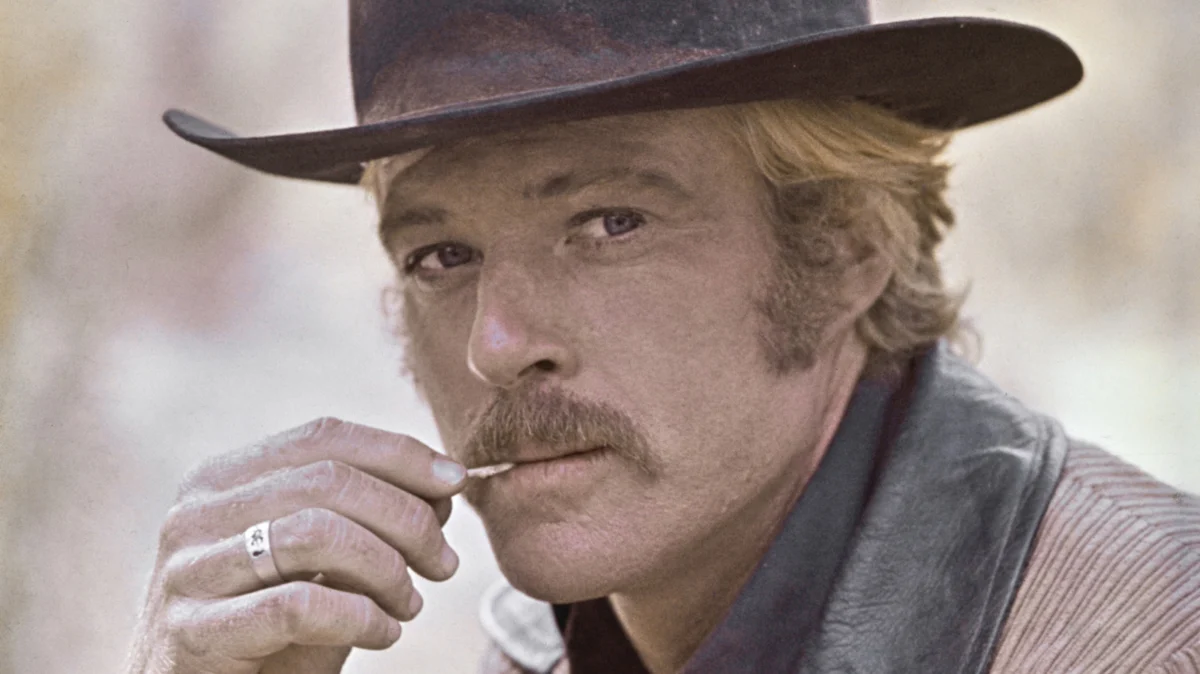
Before the global stardom of Butch Cassidy and the Sundance Kid, before the prestige of All the President’s Men, and long before the founding of the Sundance Institute, a young Robert Redford was a working actor navigating the churn of 1960s television. While modern audiences celebrate his iconic turns in The Twilight Zone—specifically the chilling episode "Nothing in the Dark"—few remember his participation in a failed, historically sanitized NBC drama from 1961 titled The Americans.
This series, which attempted to capitalize on the centennial of the American Civil War, serves as a fascinating case study in mid-century television production, risk-averse corporate sponsorship, and the struggle to depict history in a fractured political climate.
The Genesis of a Historical Gamble
On January 23, 1961, NBC launched The Americans with high hopes. The premise was conceptually ambitious: the show centered on the Canfield brothers, Ben (Darryl Hickman) and Jeff (Dick Davalos), who hailed from the historically volatile Harpers Ferry. The narrative hook was rooted in the classic trope of a "house divided," with the brothers finding themselves on opposite sides of the Mason-Dixon line as the conflict erupted.
The show’s structure was unique for its time. Each episode alternated its focus, with one week following Ben’s service for the Union Army and the following week tracking Jeff’s experiences within the Confederate ranks. This "see-saw" approach was intended to provide a panoramic view of the conflict, balancing the perspectives of both Northern and Southern soldiers. However, the logistical and creative strain of maintaining this equilibrium proved to be the show’s undoing.
Robert Redford and the Penultimate Performance
It was in the show’s 16th episode, titled "The Coward," that a young Robert Redford made his mark. Playing the titular character, George Harrod—a Confederate soldier facing the grim reality of a firing squad—Redford delivered a performance that showcased the burgeoning intensity that would later define his career.
The episode is also a historical curiosity for film buffs because it featured a co-starring role for Carroll O’Connor. A full decade before O’Connor would become a household name as the cantankerous Archie Bunker in All in the Family, he was playing alongside a pre-fame Redford in a dusty, low-budget historical drama. At the time, neither man could have known they were standing on the precipice of cultural icons; they were simply two actors working through a short-lived production that would be canceled just one episode later.
A "Neutral" Narrative in a Polarized Century
The decision to produce The Americans in 1961 was not merely an artistic choice; it was a response to the Civil War Centennial. However, the producers faced an immediate dilemma: how to dramatize a war defined by the brutal institution of slavery without alienating the Southern television market.
The result was a form of historical neutrality that, by modern standards, feels jarringly sanitized. In a candid interview with the Sarasota Journal at the time, star Darryl Hickman revealed the creative shackles placed upon the cast and crew. "We don’t deal with the issues of economics or slavery," Hickman admitted.
This omission was not a creative oversight but a calculated business strategy. The show’s very title was a compromise. Originally slated to be called The Blue and the Gray, the title was scrapped after sponsors expressed anxiety that the moniker alone would signal a bias or incite controversy in the South.
The Politics of Production: Censorship and Sponsorship
The constraints placed upon The Americans provide a stark look at the influence of advertising agencies on television content in the 1960s. Hickman noted that the producers were terrified of depicting the reality of combat if it resulted in "rebel" deaths. He frequently complained that the scriptwriters were barred from including action sequences where Confederate soldiers were killed, fearing that such imagery would cause an exodus of Southern viewers.
Consequently, the narrative weight often shifted toward the Confederate brother, Jeff, who was afforded more "glory" and agency, while the Union-aligned Ben was sidelined. This led to a strange, hollow version of history where the war was stripped of its moral stakes and its political causes. By trying to please everyone, The Americans ended up pleasing no one. Northern viewers found the lack of moral clarity frustrating, while the sanitized version of the South failed to ring true to historical reality.
Chronology of a Failed Venture
- January 23, 1961: The Americans premieres on NBC.
- Spring 1961: Production struggles mount as the show navigates the pressures of sponsors and the delicate balance of the "two-brother" narrative.
- April 1961: Robert Redford appears in the penultimate episode, "The Coward," alongside Carroll O’Connor.
- May 1961: After 17 episodes, NBC cancels the series due to low ratings and poor critical reception.
- 1969: Robert Redford stars in Butch Cassidy and the Sundance Kid, cementing his status as a Hollywood legend.
The Post-Mortem: Why Did It Fail?
Following the cancellation, the show’s executive producer, Frank Telford, was quick to point fingers at the scheduling. He argued that the 7:30 p.m. Monday time slot was far too early for the "heavy" content of a historical drama, suggesting that the audience for such material was simply not present during prime family viewing hours.
However, historical hindsight suggests a more profound issue: the failure of the show’s central premise. By attempting to wash the Civil War of its ideological conflict, the producers robbed the drama of its stakes. Without the mention of slavery or the political economic divide, the war was reduced to a series of skirmishes between brothers, lacking the gravity required to sustain a long-running television series.
Implications for Modern Historical Drama
The trajectory of The Americans serves as a warning for modern media creators. While the temptation to "neutralize" history for the sake of mass appeal remains, the enduring success of historical dramas—from Roots to The Underground Railroad—shows that audiences are more interested in the raw, messy, and uncomfortable truths of history than in sanitized, "both-sides" retellings.
Robert Redford’s brief stint on the show remains a footnote in his illustrious career, a reminder that even the greatest stars often began their journeys in the "failed" experiments of their era. For the viewer today, The Americans exists not as a piece of quality television, but as a fascinating relic of a time when the television industry was still trying to figure out how to address the most painful chapters of the American story without upsetting the advertisers who paid the bills.
Ultimately, the show is remembered—if at all—for the talent that briefly passed through its doors. It stands as a testament to the fact that while a production may be forgotten, the actors who populate it continue to evolve, eventually leaving their mediocre beginnings far behind in the dust of history.