In the rapidly evolving landscape of artificial intelligence, a fundamental shift is occurring. For the past two years, the industry has been dominated by the "chatbot paradigm"—a model where users engage in a back-and-forth dialogue with an AI, essentially acting as the project manager for a digital assistant that requires constant supervision. You provide the prompt, the AI provides the content, and you provide the manual labor to copy, paste, and execute the final output.
But what if the AI didn’t just offer advice? What if it possessed the agency to execute multi-step processes autonomously?
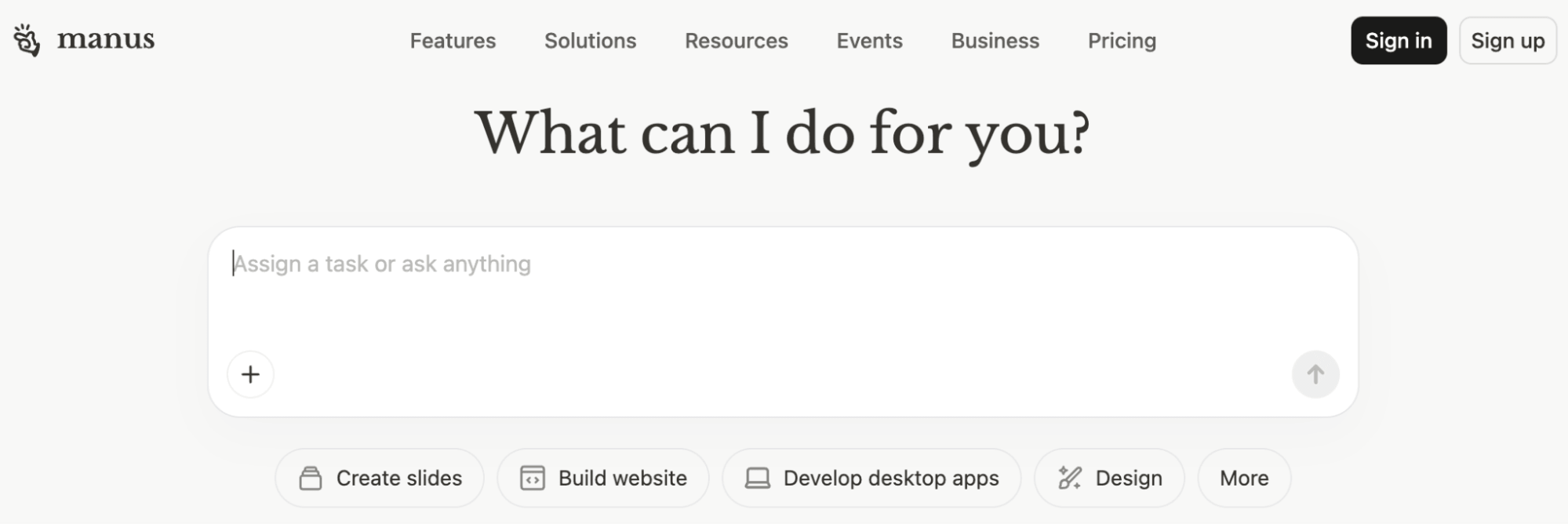
Enter Manus, an emerging force in the agentic AI space that is redefining how professionals interact with technology. Unlike traditional large language models (LLMs) that respond to prompts, Manus is designed to execute workflows. As Kate vanderVoort, a pioneer in applying agentic AI to marketing, explains: “Standard chatbots ask, ‘How can I help you?’ which really means, ‘Tell me what you want, I’ll show you what to do, but you still have to do the work.’ Manus asks, ‘What can I do for you?’ and then it actually goes and does it.”
The Evolution: From Passive Assistance to Autonomous Execution
The transition from generative AI to agentic AI marks a critical juncture for business productivity. While platforms like ChatGPT or Claude excel at ideation, writing, and coding, they remain constrained by a lack of real-world connectivity. They are "boxed in" by the chat interface.
Manus breaks this container. It possesses the ability to access the web independently, log into external platforms (such as CRMs or social media accounts), and manage multi-step sequences without human intervention at every junction. Crucially, this level of automation does not require a background in software engineering. Because Manus operates via natural language, it remains accessible to marketers, business owners, and administrative professionals who need efficiency without the overhead of coding.
The Chronology of an Agentic Workflow
To understand the power of this shift, one must look at how a task like client proposal generation has changed. Previously, a consultant might spend three to four hours manually navigating a gauntlet of tools:
- Perplexity: To generate a research prompt.
- Gemini Deep Research: To pull 30–40 pages of background data on a prospect.
- Gemini Canvas: To map products to KPIs and draft conversation starters.
- Claude: To synthesize the final call transcript into a formal proposal.
Each step was a manual hand-off, prone to human error and inefficiency. With Manus, this entire sequence is collapsed into a single agentic workflow. The user initiates the process, and Manus handles the research, the dashboard construction, and the proposal drafting. The only human touchpoint is the initial upload of the call transcript. The cost? Approximately $5 in compute credits, compared to hours of billable human time.
Supporting Data: The Economics of Agency
Manus operates on a credit-based subscription model, which reflects the intensive nature of agentic tasks. While simple queries consume minimal credits, autonomous workflows that require deep web navigation and data synthesis carry a higher "burn" rate.
- Baseline Plans: Starting at $20/month for 4,000 credits, users can scale up to $200 for 40,000 credits.
- The "Burn" Reality: A simple query might cost 5–10 credits, whereas a complex, multi-day research project can exceed 900 credits.
- The "Always-On" Advantage: The most significant efficiency gain comes from the Manus Cloud Computer. Unlike standard sessions that dissolve after a task, the Cloud Computer persists, maintaining a database that grows more intelligent over time. This is the difference between a "disposable" intern and a permanent, evolving digital employee.
Access Modes: A Tool for Every Complexity
Manus provides four distinct ways to access its intelligence, ensuring that whether a user is in the office or on the move, their workflows remain uninterrupted.
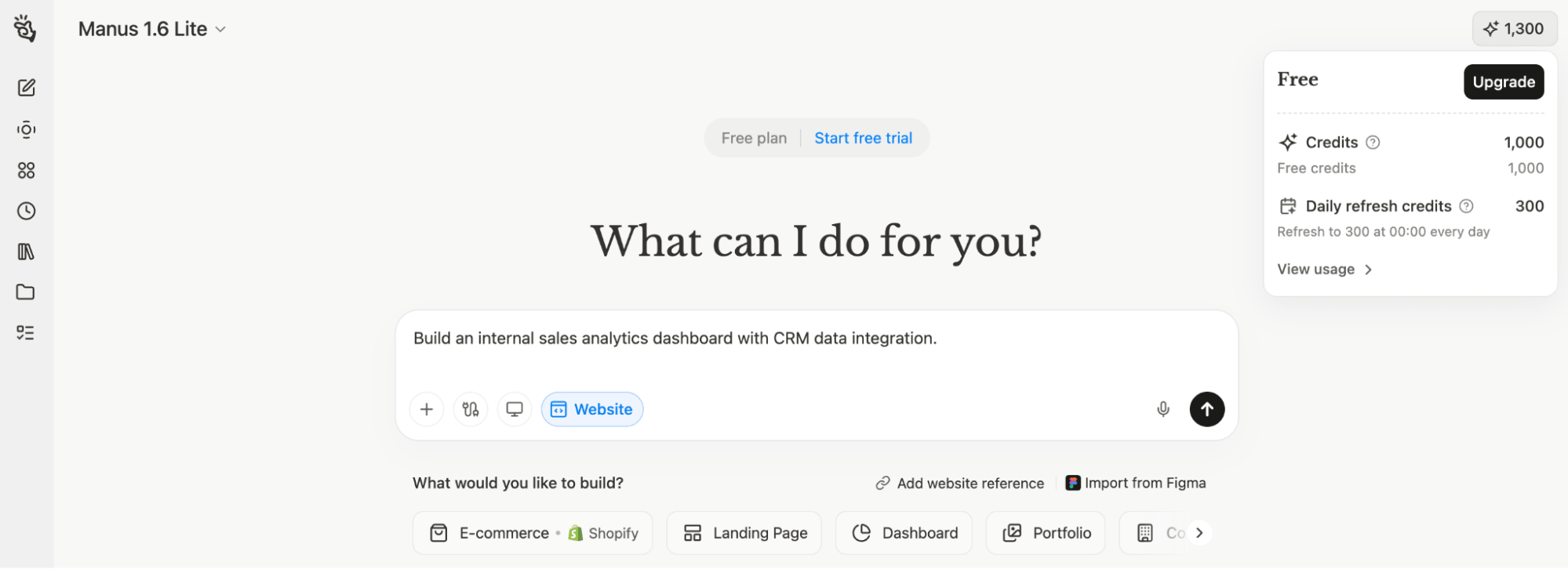
- Browser-Based Access: The standard entry point. It allows Manus to act as the user within online platforms—logging into LinkedIn, managing CRM entries, or conducting research—without ever exposing the user’s actual login credentials.
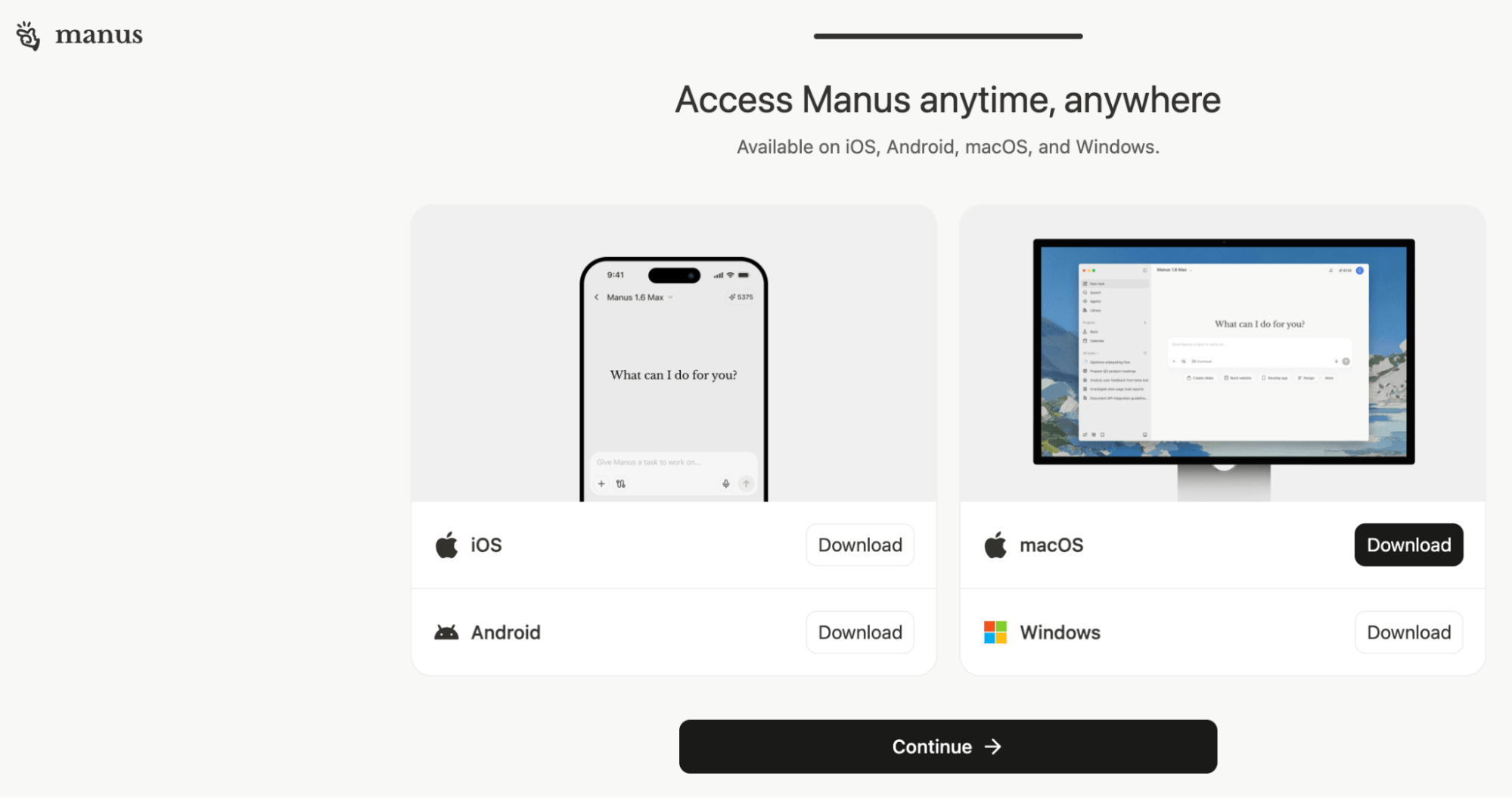
- Desktop Application: By installing the app locally, Manus gains the ability to interact with files directly on your machine. This eliminates the need to manually upload documents, effectively turning your local computer into a workspace for the agent.
- Telegram Integration: This mobile-first mode is a lifeline for long-running tasks. If an agent is executing a 50-minute workflow, the user can monitor progress and provide critical inputs via Telegram while away from their desk.
- Cloud Computer: The pinnacle of current agentic capability. It handles its own CLI configuration and code deployment. Users like Kate vanderVoort utilize this for 24/7 social media management, continuous competitor scanning, and automated content database population.
The Strategy: Prompting for Results, Not Dialogue
One of the most significant hurdles for new users is the "chatbot mindset." If you treat an agent like a $500-per-hour consultant, you don’t brainstorm out loud with them—you provide a comprehensive brief.
The most successful Manus users utilize an "AI-writes-for-AI" strategy. They use a secondary LLM (such as Perplexity) to draft a highly optimized, structured prompt for the Manus agent. By using a voice-to-text tool for a "brain dump" and instructing the secondary AI to "not do the task, but write the prompt for it," the user ensures that the final brief is detailed, logic-checked, and ready for execution.
The Role of "Skills" in Scalability
"Skills" are the backbone of a reusable agentic system. A skill is essentially a package—often a zip file—that contains instructions, context (like brand voice guidelines), and examples of successful outputs. Once a workflow is executed successfully, Manus allows the user to save it as a "Skill."
This creates a compounding return on investment. If you build an SOP (Standard Operating Procedure) for a specific business process, that SOP becomes a permanent asset. The system can then sort this input across various categories, ensuring the AI’s output is rooted in the specific logic of your business rather than generic web-based templates.
Implications for the Modern Enterprise
The implications of adopting agentic workflows are profound. As seen in the case of the food and beverage manufacturer that spent two years on an L&D project only to be finished by Manus in under an hour, the gap between traditional manual workflows and agentic execution is widening.
Strategic Recommendations:
- Audit Your Processes: Identify tasks that are "repeatable with predictable outcomes." These are your primary candidates for automation.
- Standardize Your SOPs: If you cannot document a process clearly, an AI cannot execute it. Use voice-to-text to capture your internal logic and convert those into Manus Skills.
- Prioritize Security: Only use Skills from trusted sources. Because agents have the power to interact with your digital accounts, rigorous vetting of third-party tools is non-negotiable.
- Shift from "Doing" to "Directing": The future of work is not in the execution of repetitive tasks, but in the architecture of the systems that perform them.
Conclusion: The New Era of Productivity
We are moving past the era where AI is a glorified search engine. With platforms like Manus, the technology is becoming an active participant in the workplace. For the entrepreneur or marketer, this is not just about saving time; it is about scaling capability. By offloading the "how" to an agentic system, humans are finally free to focus on the "why"—the high-level strategy, creative vision, and business relationships that no amount of automation can replace.

As we look toward the future, the question is no longer "Can AI do this?" but rather, "Have I built the right workflow to let the AI do it for me?" Those who master the art of the agentic workflow today will be the ones defining the industry standards of tomorrow.