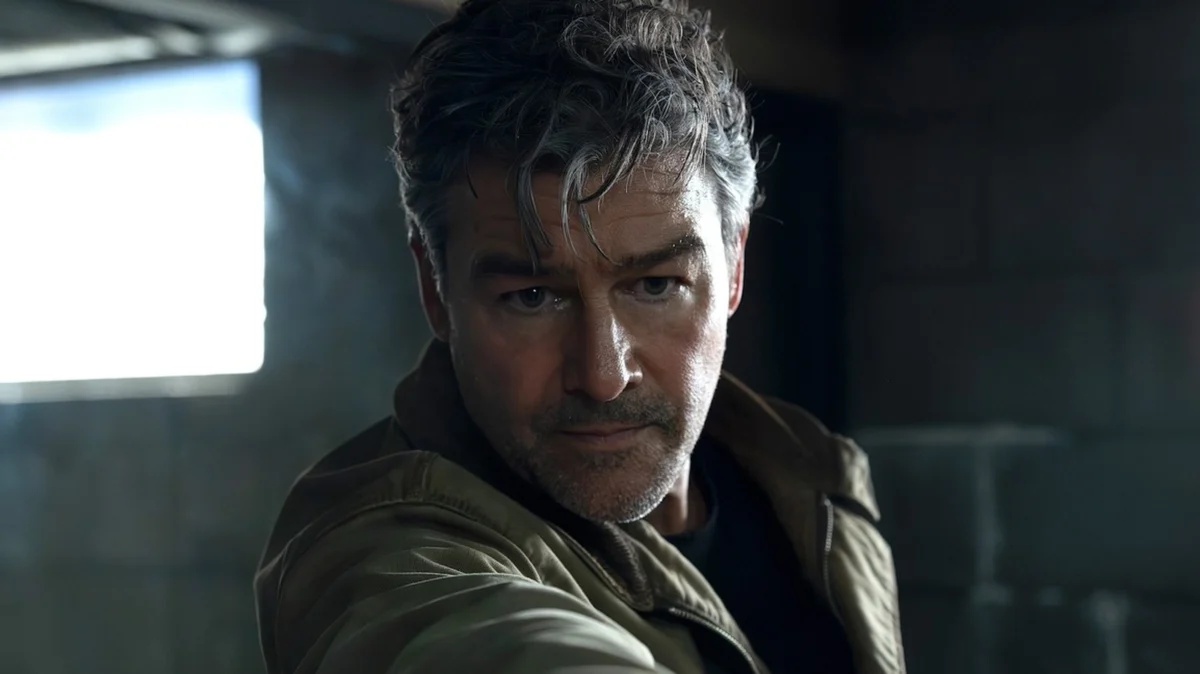
The debut of HBO’s highly anticipated series Lanterns has sent shockwaves through the comic book community, not only for its high-production value and critical acclaim but for a narrative decision that has left a segment of the fanbase in an uproar. At the heart of the controversy is the premiere’s cliffhanger: the apparent death of Hal Jordan, the iconic Green Lantern portrayed by Kyle Chandler.
As the DC Universe (DCU) prepares to enter a new era under the leadership of James Gunn and Peter Safran, the decision to seemingly sideline one of DC’s most historically significant characters has ignited a fierce debate regarding creative liberty, comic accuracy, and the trajectory of the newly minted cinematic universe.
The Catalyst: A Shocking Premiere and Fan Outcry
For decades, Hal Jordan has served as the bedrock of the Green Lantern mythos. First introduced in Showcase #22 in 1959, Jordan is the quintessential intergalactic peacekeeper. When HBO’s Lanterns aired its first episode, many viewers expected a traditional hero’s journey. Instead, they were met with a narrative trajectory that culminated in the apparent demise of the titular hero.
The reaction was immediate and polarized. While many critics have lauded the series as one of the most sophisticated and compelling live-action adaptations in the history of the DC catalog, a vocal contingent of comic book purists expressed profound frustration. To these fans, removing a flagship character—the "face" of the Green Lantern Corps—at the very inception of the new DCU felt like a miscalculation, a bold move that risked alienating the very audience the franchise needs to secure long-term success.
Official Response: James Gunn Sets the Record Straight
In an era where fan discourse often occurs in real-time, DC Studios co-chairman James Gunn took to the social media platform Threads to address the backlash directly. Rather than dismissing the concerns, Gunn opted to provide context, urging fans to look beyond the immediate shock of the episode’s conclusion.
"Hal’s the star of [the] TV series, and he’s in all the episodes so far," Gunn stated. "It’s more live-action screen time than all the live-action screen time he’s had combined throughout history. Us knowing the time of his death, if that’s exactly what that is, is absolutely not the same thing as killing him off right away."

Gunn’s defense centers on two distinct arguments: the value of the actor’s presence and the nature of nonlinear storytelling. By highlighting that Kyle Chandler’s performance is a cornerstone of the show’s success, Gunn effectively reminds fans that the Lanterns creative team understands the weight of the character. Furthermore, he implies that the narrative structure of the show is playing a "long game," suggesting that the audience’s perception of "death" may be incomplete or subject to future revelations.
Addressing the frustration directly, Gunn offered a brief, if blunt, apology to those who found the creative direction unpalatable: "Sorry if you don’t like it."
Contextualizing the Adaptations: The "Gunn" Philosophy
Gunn’s perspective on the Lanterns controversy is rooted in his unique experience as a filmmaker who has successfully navigated the creative landscapes of both Marvel and DC. He argues that the rigid adherence to specific comic book continuities is a misunderstanding of how successful adaptations function.
The Evolution of Source Material
Gunn draws a parallel between the DCU’s approach and the history of Marvel Studios’ MCU. He points out that the MCU famously blended elements of the Ultimate universe, the traditional 616-continuity, and entirely original concepts to build a cohesive narrative. For Gunn, the source material is a tapestry of inspiration rather than a strict manual.
"Whether it’s the DCU or Earth 0 or the Absolute Universe, they all pay homage to these iconic characters, retelling their stories in different ways," Gunn explained. He emphasizes that if fans expect the DCU to replicate their favorite comic book run panel-by-panel, they will inevitably be disappointed. "If you want the DCU to take the exact trajectory of whatever your favorite comics continuity is, that’s probably not going to happen."
The Multi-Era Approach
This philosophy is not merely about narrative convenience; it is about viability. The comic book medium has been running for nearly a century, with countless retcons, reboots, and multiverse variations. To capture a modern, global audience, the DCU must be allowed to synthesize these eras, picking the strongest narrative beats regardless of whether they appear in the Silver Age or the Modern Age of comics.

Implications for the DCU and the Audience
The controversy surrounding Lanterns serves as a litmus test for the DCU’s relationship with its fanbase. As the franchise grows, the tension between "comic book accuracy" and "cinematic innovation" will continue to be a defining struggle.
The Burden of Expectations
The expectation that a studio should cater to the specific nostalgic desires of long-term readers is a byproduct of the modern "fandom" culture. However, studios like DC are tasked with a broader mission: creating a sustainable, long-term cinematic ecosystem that can attract casual viewers who have never read a comic book. By "killing" or pivoting the status of a major character, the showrunners are asserting their right to control the narrative stakes, ensuring that the audience remains in a state of suspense rather than relying on prior knowledge of the comics.
Reconsidering the "Grounding" Criticism
Some critics have pointed out that Lanterns feels "too grounded" for a cosmic-level property. For those seeking the high-octane, space-faring adventures of the Green Lanterns, Gunn suggested a return to the critically acclaimed Green Lantern: The Animated Series. It is a reminder that the DC brand is large enough to contain multiple interpretations simultaneously—a gritty, investigative drama for HBO, and a classic space-opera aesthetic in animation.
Conclusion: A Call for Patience
As the season progresses, the narrative arc of Lanterns will likely clarify the true nature of Hal Jordan’s status. If Gunn’s comments are any indication, the "death" of the character is a narrative pivot rather than an exit.
For the dedicated fanbase, the situation offers a moment of reflection. The history of superhero media is paved with risky creative choices—from the transformation of the Joker in various iterations to the reimagining of Batman’s origin. These choices have often been met with skepticism at the time, only to be embraced as definitive versions years later.
Ultimately, Lanterns represents the maturation of the DC Universe. It is a project that is not afraid to challenge its audience, to subvert expectations, and to treat its source material with both reverence and necessary irreverence. Whether this strategy will pay off in the long run remains to be seen, but for now, it is clear that James Gunn is steering the ship with a focus on narrative integrity over the comfort of established tropes. For those willing to stick with the journey, the payoff may be something far more rewarding than a predictable adaptation.