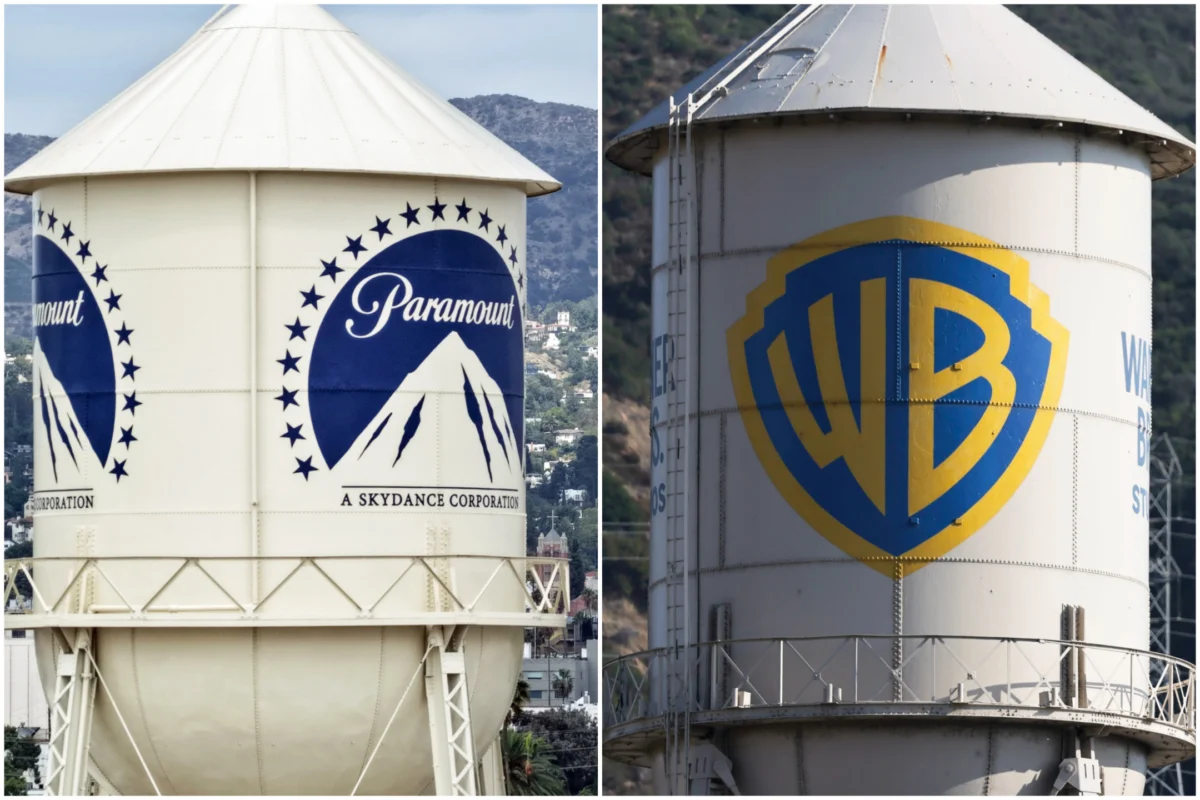
NEW YORK — The media and entertainment landscape stands on the precipice of its most transformative epoch in decades. Paramount Skydance is aggressively laying the logistical, financial, and regulatory groundwork for the finalization of its colossal $111 billion mega-merger with Warner Bros. Discovery (WBD). While corporate executives and Wall Street analysts eye a potential closing window within the next few weeks, both media giants are navigating a complex labyrinth of stock exchanges, regulatory hurdles, structural financial maneuvers, and eleventh-hour political friction.
Recent Securities and Exchange Commission (SEC) filings indicate that the monumental transaction is gathering structural momentum. However, executives at both companies remain measured, acknowledging that despite the frantic pace of preparatory administrative actions, the mega-deal is still subject to final judicial approvals and remaining closing conditions. As multi-billion-dollar stakes hang in the balance, the industry watches intently to see how the merger will reshape the future of Hollywood, streaming, and global media.
Main Facts
The core of this corporate earthquake is the massive $111 billion transaction designed to weld together two of Hollywood’s most storied and historic studios: Paramount Skydance and Warner Bros. Discovery. To facilitate this unprecedented consolidation, both entities have initiated sweeping administrative updates, most notably shifting their trading operations and reorganizing debt structures.
Key highlights of the ongoing corporate restructuring include:
- Stock Exchange Relocation: Paramount Skydance’s board formally resolved to voluntarily withdraw the listing of its Class B common stock from the Nasdaq Global Select Market—where it traded under the ticker symbol "PSKY"—and transfer it to the New York Stock Exchange (NYSE).
- Target Transition Timeline: The transition is engineered to be seamless for traders, with Nasdaq trading ending at market close on or about October 5, and NYSE trading commencing at market open on or about October 6.
- Warrant Distribution Contingency: Paramount has established a record date of October 5 for a previously announced distribution of warrants. These instruments will give eligible holders the option to purchase shares of Class B Common Stock on the NYSE, with those shares slated to begin trading around October 13. Crucially, this warrant distribution is strictly contingent upon the formal closing of the WBD acquisition.
- Debt Restructuring: In a parallel move, Warner Bros. Discovery announced its intent to voluntarily delist its "Euro Notes" (specifically, the 4.302% senior notes due 2030 and the 4.693% senior notes due 2033) from Nasdaq, filing official notifications with the SEC around October 6.
- The "Ticking Fee" Clock: Starting October 1, Paramount began accruing a hefty $7-million-per-day "ticking fee" payable to Warner Bros. Discovery shareholders, creating intense financial pressure to bring the transaction across the finish line as swiftly as possible.
Chronology of Events
The road to this $111 billion consolidation has been marked by high-stakes negotiations, regulatory skirmishes, and meticulous corporate planning. Understanding the precise timeline of events illuminates the sheer complexity of orchestrating a deal of this magnitude.
Late September: Regulatory Breakthroughs and Board Decisions
- September 25: Paramount Skydance’s board of directors takes official action via an SEC filing to withdraw its Class B common stock from Nasdaq and transition to the NYSE. Simultaneously, WBD announces its plans regarding the delisting of its Euro Notes.
- Late September: Paramount reaches a breakthrough settlement with a coalition of 12 Democratic state attorneys general who had previously filed an antitrust lawsuit to block the merger. This development clears what was widely considered the final major regulatory hurdle for the transaction.
- September 28: A federal judge reviewing the proposed antitrust settlement requests that the involved parties file formal responses by this date. The inquiry follows a petition by Senator Cory Booker (D-N.J.) demanding an independent review of the proposed consent decree.
Early October: The Transition Window
- October 1: Paramount’s daily $7 million ticking fee kicks in, adding immediate financial urgency to finalize the merger before costs mount further.
- October 5: This date serves as a critical operational nexus. It marks the expected end of Nasdaq trading for Paramount’s Class B stock, the record date for the massive warrant distribution, and the anticipated issuance of approximately 470 million warrants.
- October 6: Paramount’s Class B common stock is scheduled to make its debut on the NYSE. Concurrently, WBD is expected to file its paperwork with the SEC to delist its Euro Notes.
- October 13: Warrants and newly enabled shares of Class B Common Stock are projected to begin active trading on the NYSE.
Supporting Data and Financial Mechanics
The financial architecture supporting the Paramount Skydance and Warner Bros. Discovery merger is exceptionally intricate, designed to balance institutional backing with retail shareholder participation.
The Warrant Structure and Shareholder Opportunities
The approximately 470 million warrants expected to be issued on October 5 are designed to give eligible holders of existing Class B Common Stock a unique opportunity. These instruments allow holders to purchase shares of Class B Common Stock in a newly formed corporate entity under terms comparable to those extended to the elite equity syndicate backing the WBD acquisition. This syndicate notably includes media heavyweights such as David Ellison, his father and tech billionaire Larry Ellison, and Gerry Cardinale, head of RedBird Capital Partners.
Under the current framework:
- Each warrant will initially entitle the holder to purchase one share of Class B Common Stock.
- The initial exercise price will be calculated using the average of the daily volume-weighted average price (VWAP) of the Class B stock for the 20 trading days ending on (and including) the third business day prior to the closing of the WBD merger.
- To protect both investors and the company, this purchase price is subject to a strict ceiling of $16.02 per share and a floor of $12.00 per share.
Exemptions and Institutional Holdings
Not all shareholders will navigate the warrant distribution system. Shares of Class B Common Stock held securely within the Paramount Global 401(k) Plan and the Paramount Global Master Trust will bypass the warrant phase entirely. Instead, in lieu of receiving warrants, these institutional and employee retirement holdings will receive direct distributions of Class B Common Stock.
The Cost of Delay: Ticking Fees
The financial stakes of delay are extraordinarily high. With the implementation of the $7-million-per-day ticking fee starting October 1, Paramount faces a mounting financial liability for every day the transaction remains unclosed. This mechanism guarantees compensation to WBD shareholders while acting as an aggressive forcing function for Paramount executives, legal teams, and regulators to finalize the paperwork without unnecessary delays.
Official Responses and Regulatory Landscape
While corporate boardrooms are actively preparing for integration, the merger has faced fierce scrutiny from political figures and antitrust regulators concerned about media consolidation and reduced market competition.
The State Attorneys General Settlement
The most significant legal barrier crumbled this week when Paramount reached a settlement with 12 Democratic state attorneys general. These state officials had previously banded together to file an antitrust lawsuit aimed at blocking the merger outright. The settlement agreement, which is currently awaiting final judicial approval, notably does not require Paramount to make major structural concessions—a major victory for the merging studios.
Congressional Interventions and Judicial Review
Despite the settlement with the state AGs, the judicial path is not entirely clear. The presiding judge in the antitrust case is actively reviewing the proposed consent decree. Adding a layer of political friction, Senator Cory Booker (D-N.J.) formally requested that the court launch an independent review of the settlement terms.
Responding to Senator Booker’s inquiry, the judge requested that all involved parties file formal legal responses by Monday, September 28. While legal experts suggest that such congressional interventions rarely derail advanced corporate mergers unless glaring public interest violations are uncovered, it has introduced a final wave of nervous anticipation among investors.
Furthermore, Paramount has maintained transparency regarding the fluidity of its timeline. In official public disclosures, the company noted that the WBD merger remains "subject to further closing conditions, and the ultimate timing for the closing of the WBD Merger, if any, is not yet certain." Consequently, Paramount explicitly reserved the right to "cancel the Record Date and/or the Issue Date or postpone the Record Date and/or the Issue Date to a later date" should unexpected legal or regulatory roadblocks materialize.
Implications for the Entertainment Industry
The impending merger between Paramount Skydance and Warner Bros. Discovery represents a watershed moment for global entertainment. If completed, the combined powerhouse will command an unprecedented library of intellectual property, film studios, television networks, and streaming assets.
Streaming Consolidation and Market Power
For years, Wall Street and media analysts have predicted a wave of consolidation as legacy media companies struggle to achieve sustained profitability in the hyper-competitive direct-to-consumer streaming ecosystem. By uniting Paramount’s robust vault—spanning CBS, Nickelodeon, MTV, and the Paramount+ platform—with Warner Bros. Discovery’s massive empire—including HBO, Max, Warner Bros. Pictures, CNN, and DC Entertainment—the newly formed entity will emerge as an undeniable titan capable of rivaling tech-backed streaming giants like Netflix, Amazon, and Disney.
Wall Street Reactions and Market Shifts
The decision to transition Paramount’s Class B stock from the Nasdaq to the New York Stock Exchange, alongside WBD’s plans to delist its Euro Notes, signals a broader realignment of capital structures. Institutional investors are positioning themselves for a streamlined, highly liquid trading environment optimized for a newly capitalized media colossus.
At the same time, the inclusion of retail and retirement plan participants via the warrant program and direct stock allocations demonstrates an effort to maintain broad investor goodwill during a period of massive corporate turbulence.
What Lies Ahead
As the calendar ticks toward early October, all eyes remain fixed on the federal courtroom reviewing the antitrust settlement and the final responses due regarding Senator Booker’s inquiry. If the judicial review passes without disruption, the administrative gears set in motion by Paramount and Warner Bros. Discovery will lock into place.
The transition to the NYSE, the issuance of hundreds of millions of warrants, and the activation of the multi-billion-dollar corporate union are poised to rewrite the rules of modern media. Whether the deal clears its final procedural hurdles in the coming weeks will determine the birth of a new entertainment leviathan—or prompt a scramble back to the drawing board for two of Hollywood’s most foundational pillars.