By Jody MacGregor
Published by PC Gamer
Main Facts: Bridging Two Icons of Pop Culture
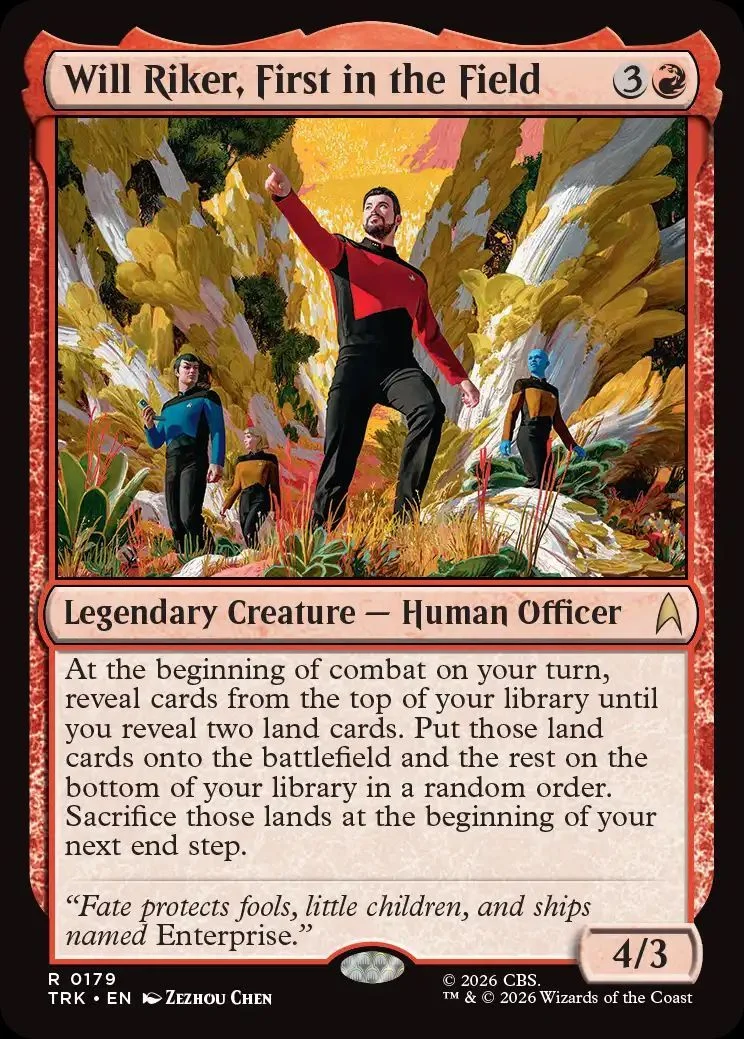
Wizards of the Coast has officially launched its highly anticipated Star Trek crossover set for Magic: The Gathering, bringing the beloved sci-fi franchise to both tabletop formats and MTG Arena. Unlike traditional IP mashups that rely purely on superficial fan-service or cosmetic references, this crossover dives deep into the philosophical and structural cores of Gene Roddenberry’s universe.
The expansion features clever mechanics that mirror Star Trek’s core themes of exploration, diverse crew dynamics, and tactical cooperation. Key mechanics include Strange New Worlds, which rewards players for cultivating a varied landscape of lands; Federation, which incentivizes a diverse mix of alien creature types; and specialized spacecraft mechanics adapted from Edge of Eternities that require players to "station" their vessels using crew members.
With cards spanning multiple generations of the franchise—from classic iterations of the U.S.S. Enterprise to deep-cut nods like Star Trek: Prodigy and Star Trek Beyond—the set offers a mechanically rich, optimistic experience that resonates with both die-hard Trekkies and seasoned Magic players.
Chronology: From Concept to the Final Frontier
The journey toward bringing Star Trek into the sprawling multiverse of Magic: The Gathering represents a notable milestone in Wizards of the Coast’s Universes Beyond initiative.
- The Evolution of Crossovers: Over the past several years, Wizards of the Coast has expanded Magic’s intellectual property boundaries through Universes Beyond, tackling properties ranging from high fantasy like The Lord of the Rings to sci-fi and comic book icons. However, not all crossovers achieved equal critical acclaim among players; sets like the Spider-Man card adaptations faced criticism for feeling mechanically detached from the source material.
- Designing the Mechanics: Development teams sought to avoid past pitfalls by anchoring gameplay systems directly to narrative identities. Mechanics like spacecraft "stationing"—originally debuted in Edge of Eternities—were repurposed to reflect the meticulous engineering and crew coordination required to operate Starfleet vessels.
- Playtesting and Rollout: Ahead of the launch, early road-tests with dedicated Star Trek enthusiasts revealed immediate appreciation for deep-cut lore references, alongside high praise for how fluidly the franchise’s utopian ideology translated into card text.
- Global Release: The Star Trek set is now live worldwide, accessible to physical card collectors on tabletop and digital competitors via MTG Arena.
Supporting Data: Mechanics and Card Breakdown
To understand why this specific Universes Beyond set succeeds where others have struggled, one must examine how the cards translate narrative tropes into rules text. The expansion utilizes several distinct, highly thematic mechanics:
1. Strange New Worlds & Federation
- Strange New Worlds: A blue-green deck archetype that actively punishes the traditional Magic strategy of stacking identical basic lands (like multiple Islands or Forests). Instead, it rewards players for exploring varied terrains. For instance, playing Deep Space Scan draws a card for each uniquely named land under a player’s control, while also reducing the resource cost required to power up utility cards like the Astute Terraformer.
- Federation: This mechanic provides systemic bonuses when multiple, distinct alien species—such as Vulcans, Klingons, and Romulgans (though notably excluding the Borg)—occupy the battlefield simultaneously. It mechanically reinforces the message that diversity is a strategic asset.
2. Starfleet Vessels and the "Redshirt" Economy
- Spacecraft Stationing: Building upon the mechanics introduced in Edge of Eternities, starships enter the battlefield with baseline, limited capabilities. Players must "station" these vessels by tapping active crew members to generate charge counters, unlocking high-tier abilities such as flight and combat offense.
- Engineers and Combos: Characters like Lt. Cmdr. Geordi La Forge act as powerful force multipliers, doubling incoming charge counters to get flagship vessels like the Enterprise airborne twice as fast.
- U.S.S. Enterprise-A, Free Spirit: One of the set’s standout cards. Upon deployment, it generates three red 1/1 officer tokens. These tokens serve a dual purpose: they accelerate the ship’s stationing process and provide disposable, thematic fodder for "chump blocking"—a clever mechanical nod to the infamous expendability of Starfleet’s redshirt personnel.
3. Assimilation and Teamwork
- Beam Me Up: A graveyard-recursion mechanic allowing players to retrieve a card from their discard pile by paying the cost of returning an active card from the battlefield back to their hand.
- Assimilate: Tailored specifically for Borg-themed deck archetypes, this mechanic strips enemy creatures of their native creature types and converts them into under-control artifacts.
- Combined Offense: Cards like Common Goal and tactical team-up requirements reward players who coordinate attacks with a cumulative total power of 8 or higher. Iconic characters like Worf, Honor-Bound Warrior utilize these thresholds, doubling their own power when participating in coordinated assaults.
Official Responses and Industry Reception
The reception from the gaming and sci-fi communities has been overwhelmingly positive, particularly regarding the set’s tone. While franchise crossovers in collectible card games often risk feeling like cynical marketing ploys, critics and players alike have praised Wizards of the Coast for capturing the optimistic ethos of Gene Roddenberry’s creation.
Industry reviewers noted that even casual viewers of the franchise can appreciate the design choices. Rather than relying solely on surface-level visual recognition—such as dropping familiar names onto generic stat blocks—the design team built an environment where cooperative play mimics the ideals of Starfleet. The emphasis on mutual support, crew synergy, and peaceful exploration provides a stark, refreshing contrast to the often combative, zero-sum nature of standard competitive Magic.
Furthermore, Wizards of the Coast representatives have highlighted the set as a showcase for the versatility of the Universes Beyond framework, proving that deep narrative integration yields a superior product for both casual fans and competitive veterans.
Implications: The Future of Universes Beyond
The success of the Star Trek expansion carries significant implications for the future trajectory of Magic: The Gathering and the broader collectible card game (CCG) landscape.
- Setting a New Benchmark for Crossovers: By prioritizing mechanical storytelling over simple aesthetic skinning, Wizards of the Coast has established a higher standard for future Universes Beyond releases. Fans will now expect adaptations to respect the underlying philosophy of source materials rather than merely pasting recognizable logos onto standard card templates.
- Expanding Demographic Appeal: Blending a globally recognized sci-fi powerhouse like Star Trek with one of the world’s most enduring strategy games demonstrates the viability of cross-media pollination. It successfully entices lapsed players and sci-fi enthusiasts who might not otherwise engage with traditional fantasy card games.
- Design Evolution: The integration of mechanics like Strange New Worlds and refined spacecraft stationing suggests that future Magic expansions will continue to experiment with land variety and permanent-type management, potentially influencing mainline sets in the years to come.
Ultimately, the Star Trek set proves that when imagination, mechanics, and source material align, the resulting gameplay can boldly go where no trading card game has gone before.