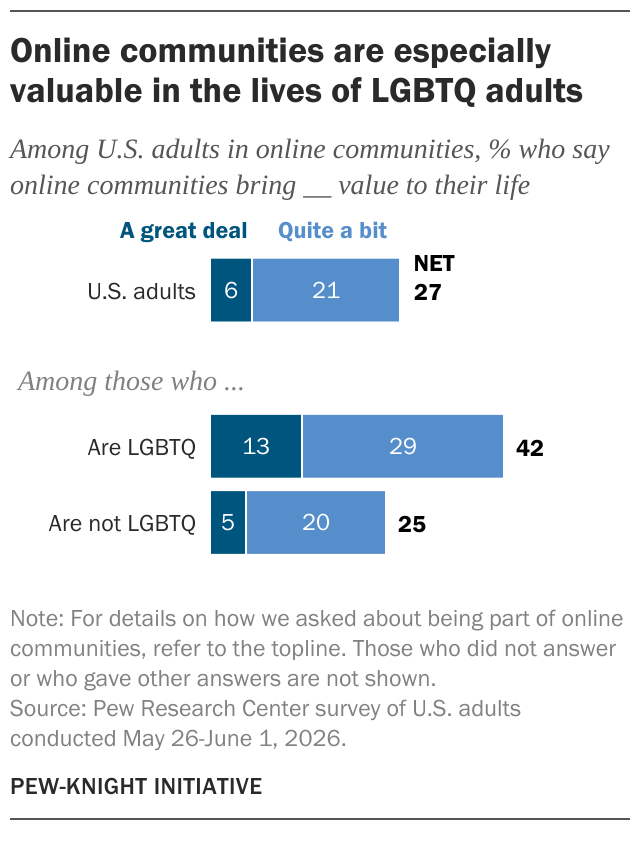
In an era where the digital landscape serves as both a public square and a private retreat, the role of online communities has become a defining feature of the modern social experience. For LGBTQ Americans, these virtual spaces have evolved from niche forums into essential infrastructure for personal growth, social support, and cultural engagement. According to a new, comprehensive survey from the Pew Research Center, conducted under the auspices of the Pew-Knight Initiative, LGBTQ individuals are not only more likely to participate in online communities than their non-LGBTQ counterparts, but they are also significantly more likely to derive profound personal value from these connections.
The Digital Landscape: A Statistical Overview
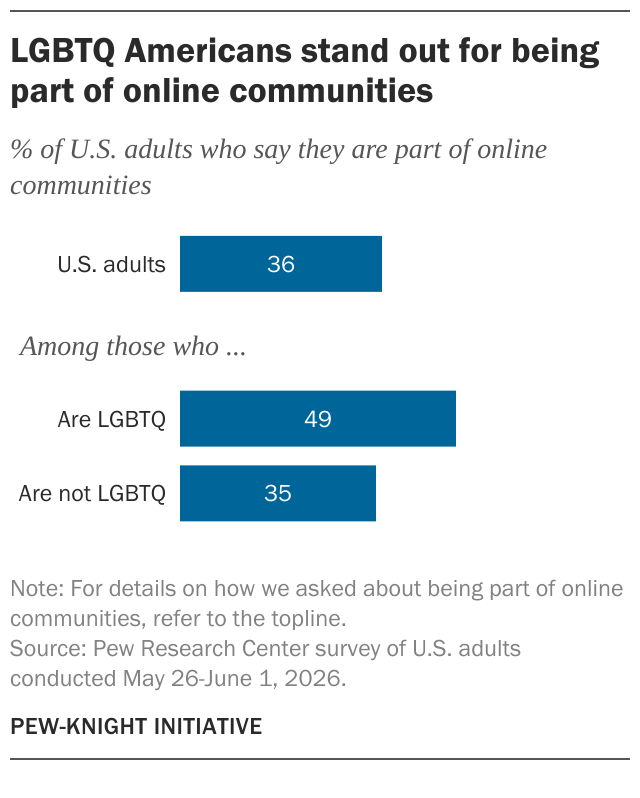
The data, drawn from a nationally representative survey of 9,750 U.S. adults conducted between May 26 and June 1, 2026, reveals a distinct divide in how different segments of the population engage with the internet. Roughly half (49%) of LGBTQ adults identify as members of at least one online community—a figure that stands in stark contrast to the 35% of non-LGBTQ adults who report the same.
This discrepancy is not merely a matter of frequency; it is a matter of intent and impact. For the purposes of this study, "online communities" were broadly defined to encompass a wide spectrum of digital interaction, including social media groups, specialized discussion forums, collaborative video gaming environments, and group messaging platforms. While the general public uses these spaces for a variety of reasons, the survey indicates that for LGBTQ users, these spaces serve as vital conduits for identity affirmation and social belonging.
A Brief Chronology of Queer Digital Spaces
To understand the significance of these findings, one must look at the history of the internet as a medium for marginalized communities. Since the inception of the World Wide Web, the digital realm has functioned as a "second home" for queer individuals.
- 1980s and 90s: The Bulletin Board Era: Long before the rise of modern social media, early adopters in the LGBTQ community utilized Usenet groups and local bulletin board systems to find peers in an era where offline physical spaces were often inaccessible, stigmatized, or unsafe.
- The 2000s: The Rise of Web 2.0: With the advent of platforms like LiveJournal, MySpace, and early message boards, niche queer subcultures moved into more accessible digital territory, allowing for broader networking across geographical boundaries.
- 2010s: Mainstream Integration: The normalization of the internet led to the creation of massive, decentralized spaces where LGBTQ individuals could organize, share news, and find support, effectively bridging the gap between isolated individuals and a global community.
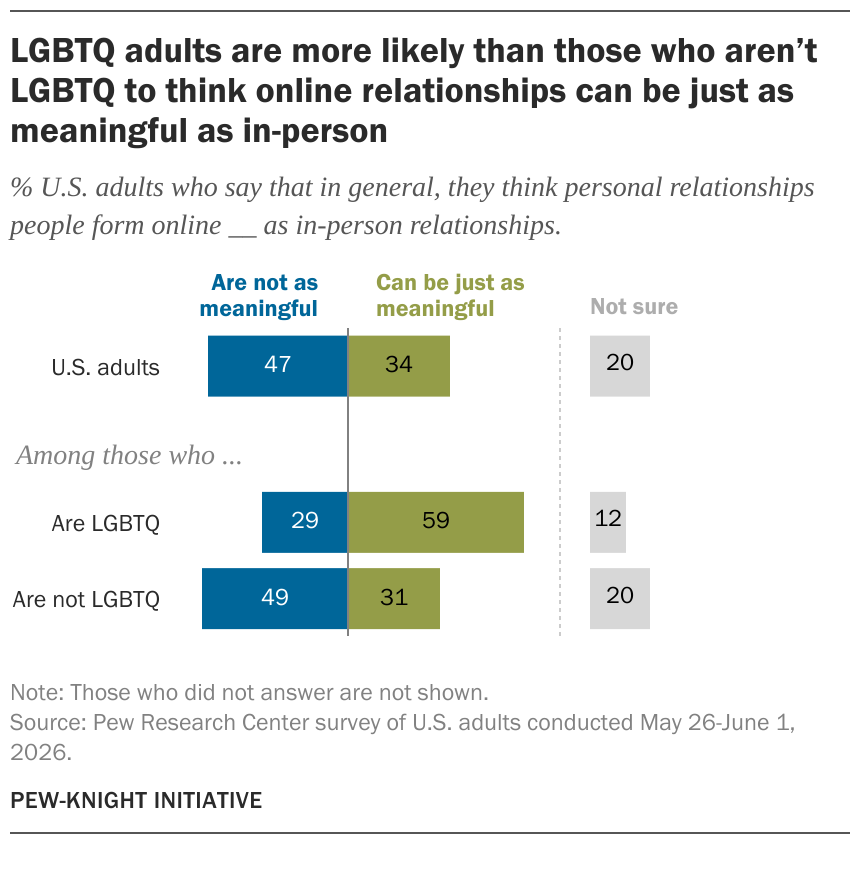
- 2026 and Beyond: The Modern Era: As today’s research highlights, the internet is no longer just a "place to go" but a primary environment for building meaningful, long-term personal relationships, with 59% of LGBTQ adults asserting that online relationships can be just as meaningful as those formed in person.
The Value Proposition: Why LGBTQ Users Lean In
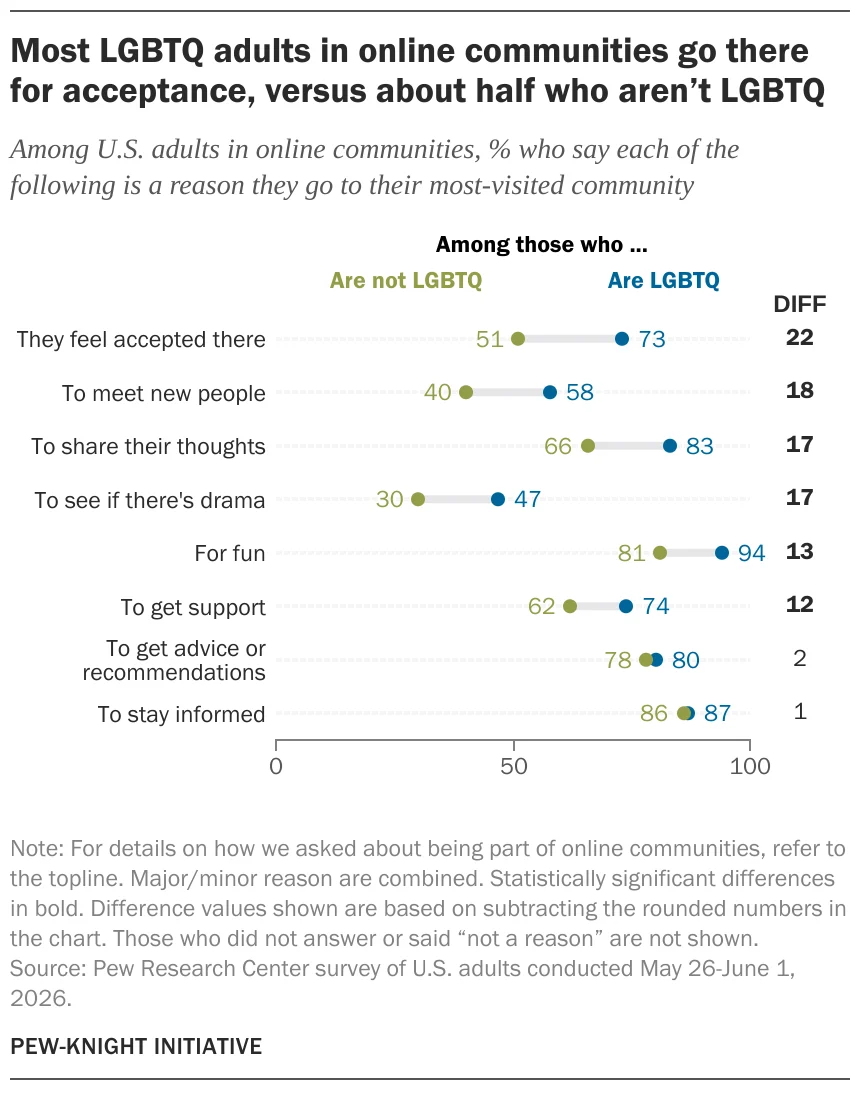
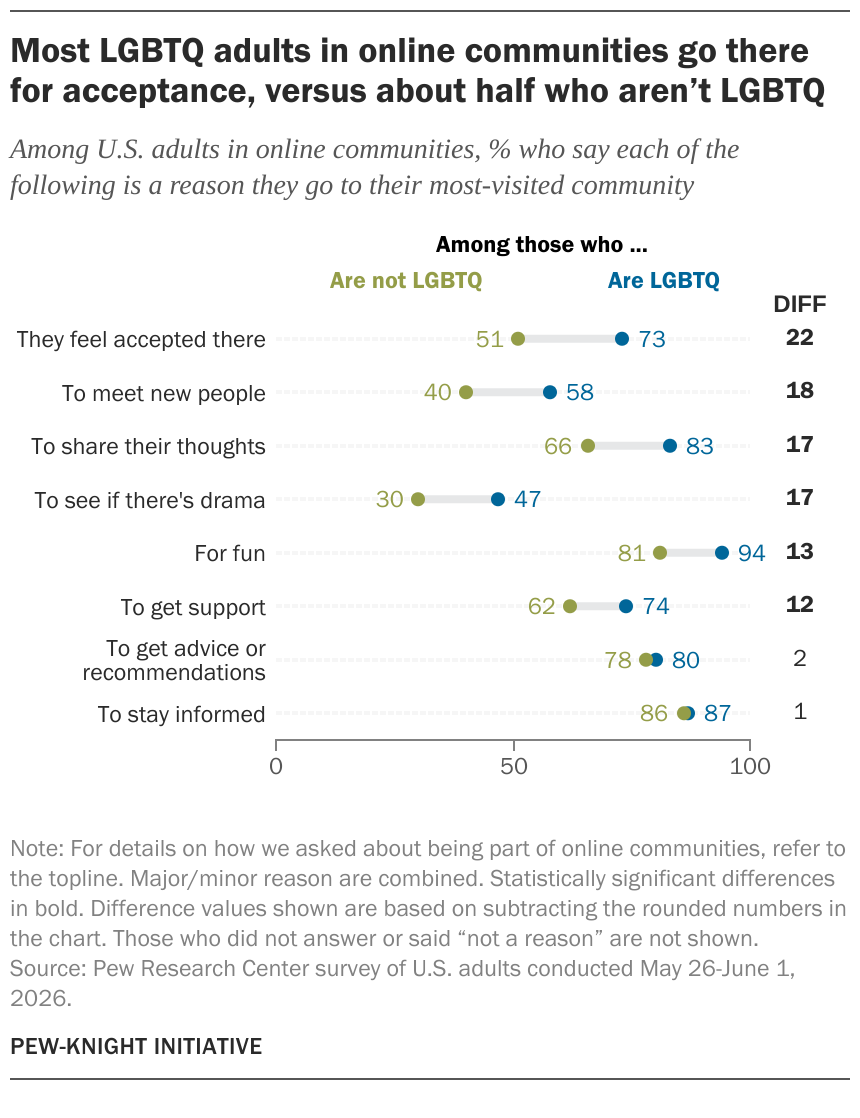
The survey provides a granular look at the motivations driving this high level of engagement. When asked why they frequent their most-visited online community, the differences between LGBTQ and non-LGBTQ respondents are statistically significant.
The Quest for Acceptance
The most striking finding is the role of acceptance. Nearly three-quarters (73%) of LGBTQ adults in online communities report that they visit these spaces because they feel accepted there. Among non-LGBTQ users, that number drops to 51%. This 22-percentage-point gap underscores the reality that for many queer individuals, digital environments provide a "safe harbor" where they can express their authentic selves without the fear of judgment or discrimination that may persist in their physical neighborhoods or workplaces.
Beyond Socializing: Support, Humor, and Intellectual Exchange
The utility of these spaces extends well beyond validation. LGBTQ participants report higher levels of engagement across almost every category measured:
- Sharing and Expression: 83% of LGBTQ users go online to share their thoughts, compared to 66% of their peers.
- Social Connectivity: 58% use these spaces to meet new people, a significantly higher rate than the 40% of non-LGBTQ users.
- Humor and Engagement: Nearly 94% of LGBTQ users cite "having fun" as a primary reason for their participation.
- Support Systems: Three-quarters (74%) of LGBTQ adults use these communities to find support, compared to 62% of non-LGBTQ adults.
Interestingly, this trend holds true even when adjusting for age and other demographic variables, suggesting that the "queer digital experience" is a distinct phenomenon driven by a unique set of social and psychological needs.
The Dual-Edged Sword: When Communities Fail
While the benefits are clear, the survey does not shy away from the darker side of online participation. For all their potential for connection, digital spaces can also become sites of toxicity. The survey reveals that LGBTQ adults are more likely to have abandoned an online community due to negative experiences.
When asked why they left a community, 57% of LGBTQ respondents cited harassment as a primary factor, compared to 41% of non-LGBTQ respondents. Similarly, 57% of LGBTQ individuals left because they "did not feel they belonged," against 44% of their non-LGBTQ counterparts. This suggests that while these spaces are often more welcoming, they are also more volatile. The higher threshold for what constitutes a "safe space" means that when those environments turn hostile, the impact on LGBTQ users is felt more acutely.
Implications for Policy and Platform Design
The findings from the Pew-Knight Initiative carry significant weight for stakeholders ranging from policymakers to platform architects.
- Platform Governance: If digital spaces are increasingly becoming the primary "community center" for LGBTQ individuals, platforms have a heightened responsibility to implement robust anti-harassment policies. The high rate of users leaving due to toxicity suggests that current moderation tools may be failing those who need these spaces most.
- Mental Health and Inclusion: The data confirms that for many, these online relationships are not "parasocial" or "lesser"—they are deeply meaningful, personal connections. Health professionals and community organizers should consider the role of digital social groups in combatting the loneliness and social isolation that often disproportionately affect marginalized groups.
- Research Continuity: As the internet continues to evolve, so too must our understanding of how identity shapes navigation. Future research should investigate how emerging technologies—such as VR, decentralized social networks, and AI-driven community tools—might further reshape the landscape of queer connection.
Conclusion
The data is clear: for LGBTQ Americans, the internet is far more than a tool for information retrieval or entertainment. It is a vital, intentional space for identity formation and community building. By providing a platform for acceptance that is often absent in the physical world, online communities are serving a function that is essential to the well-being of the LGBTQ population.
As society continues to grapple with the intersection of technology and civil society, the experiences of these users will remain a crucial indicator of the internet’s success. The challenge for the future lies in maintaining these digital sanctuaries—ensuring that the same platforms that foster such profound connection do not simultaneously allow for the erasure of the vulnerable through unchecked harassment and exclusionary practices.
For further reading, including the full survey methodology and comprehensive data tables, please refer to the official reports published by the Pew Research Center under the Pew-Knight Initiative.