Main Facts
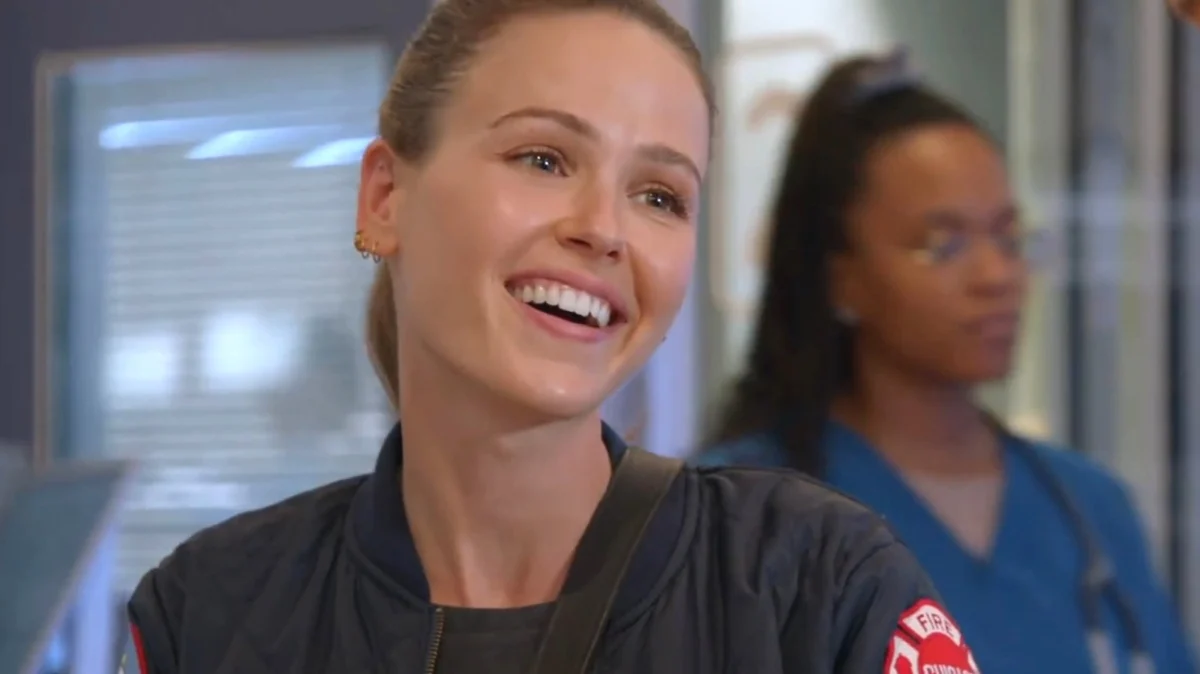
Jocelyn Hudon has firmly established herself as one of television’s most dynamic rising stars, transitioning smoothly from the idyllic, early-20th-century Canadian frontier to the high-stakes, fast-paced world of emergency services in downtown Chicago. For millions of viewers, Hudon is currently recognized as the spirited and quirky paramedic Lyla "Lizzie" Novak on NBC’s long-running procedural juggernaut, Chicago Fire. Stepping into the series during its landmark 11th and a half season following the sudden and surprising departure of fan-favorite Kara Killmer, Hudon’s vibrant portrayal quickly captivated audiences. Her undeniable chemistry with the cast and her unique comedic timing earned her a well-deserved promotion to series regular ahead of Season 13.
However, long before she was pulling patients from burning wreckage and navigating the treacherous waters of Firehouse 51, Hudon was anchoring her own television universe. The actress played the lead role in When Hope Calls, the historic first spin-off of Hallmark’s most successful and enduring television franchise, When Calls the Heart. Playing the role of Grace Chandler—an orphan-turned-orphanage director dedicated to helping others in the fictional town of Brookfield—Hudon showcased the emotional depth and approachable charm that would ultimately pave the way for her success in network television.
Today, Hudon is not only a permanent fixture on Chicago Fire but has also expanded her footprint across Dick Wolf’s sprawling One Chicago universe. Her character made crossover appearances in Chicago Med in 2025 and Chicago P.D. in 2026, signaling a rare and successful multi-show integration. Yet, the path from leading a Hallmark streaming platform’s pioneering project to anchoring a multi-camera network drama is a story marked by strategic career shifts, industry transitions, and the unpredictable nature of modern television production.
Chronology of a Rising Career
The Hallmark Roots and the Birth of a Franchise (2018–2019)
The trajectory of Jocelyn Hudon’s career took a significant turn in late 2018 when she, alongside co-star Morgan Kohan, was introduced during the Season 6 Christmas special of Hallmark’s juggernaut western drama, When Calls the Heart. Based on the beloved book series by Janette Oke, When Calls the Heart had already captured the hearts of millions since its premiere in 2014, establishing itself as the crown jewel of Hallmark’s scripted programming.
In the 2018 holiday special, Hudon and Kohan debuted as long-lost orphan sisters, Lillian and Grace, who experience an emotional adult reunion in the town of Hope Valley. This narrative arc served a dual purpose: it delighted core fans of the mothership series while acting as a backdoor pilot for a brand-new television property.
The resulting series, When Hope Calls, officially launched in 2019. It followed Lillian and Grace as they relocated to the burgeoning town of Brookfield to run an orphanage, dedicated to giving disadvantaged children a second chance at life. While managing the day-to-day operations of the orphanage and facing the economic and social struggles of the era, the sisters also navigated complex romantic entanglements. Hudon’s performance as Grace Chandler established her as a capable, empathetic lead who could shoulder the dramatic and emotional demands of a weekly period drama.
The Streaming Experiment and Industry Shifts (2019–2021)
The distribution strategy behind When Hope Calls marked a watershed moment for Crown Media Family Networks (the parent company of Hallmark). While When Calls the Heart commanded a traditional cable audience on the Hallmark Channel, When Hope Calls was deployed as a flagship exclusive for the company’s fledgling streaming service, Hallmark Movies Now (later rebranded as Hallmark+).
The primary objective of the streaming-first release was subscriber conversion—enticing devoted fans of the franchise to cross the digital divide and pay for a standalone subscription. However, the performance metrics of this strategy remained opaque. Hallmark chose not to publicly release viewership or subscriber growth reports for the platform, leaving industry analysts to guess at the streaming venture’s profitability.
Recognizing the untapped potential for traditional linear viewership, Hallmark eventually brought the series over to its main cable network. But the landscape for When Hope Calls shifted dramatically when Great American Family (GAF), a rival family-friendly media enterprise spearheaded by former Hallmark executives, acquired the rights to the show for a second season. This acquisition culminated in a highly anticipated Christmas special in 2021, breathing temporary new life into the frontier drama.
The Departure and Diversification (2021–2024)
The transition of When Hope Calls to Great American Family brought significant behind-the-scenes hurdles, primarily driven by scheduling conflicts and the changing availability of its core cast. At the conclusion of Season 1, Hudon’s character, Grace, embarks on a journey to England to assist a character named Helen in locating her grandfather.
When production on the 2021 GAF Christmas special commenced, Hudon was unavailable to reprise her role due to prior commitments and shifting professional horizons. To accommodate her absence, writers explained Grace’s absence off-screen, stating that she had permanently relocated to London to establish a new orphanage overseas.
Rather than anchoring herself to a single franchise, Hudon embarked on an extensive period of artistic diversification. Over the next few years, she built a remarkably varied resume across cable, broadcast, and streaming platforms. Her guest-starring and recurring credits spanned critically acclaimed and high-profile series alike, including appearances on Fox’s first-responder procedural 9-1-1 and FXX’s comedy series Dave. This period of prolific guest work allowed Hudon to hone her range, transitioning effortlessly from high-stress dramatic thrillers to sharp comedic timing.
Entering the One Chicago Family (2024–Present)
The defining milestone of Hudon’s television career arrived in 2024 when she cast her lot with NBC’s Chicago Fire. Joining a show deep into its historic run is notoriously difficult for any actor, let alone one tasked with filling the void left by a beloved veteran like Kara Killmer, whose character, Sylvie Brett, had been a cornerstone of the series for over a decade.
As paramedic Lyla "Lizzie" Novak, Hudon did not attempt to replicate her predecessor. Instead, she injected the firehouse with a distinct energy characterized by a quirky disposition, lightning-fast wit, and an underlying resilience that resonated instantly with viewers. The audience’s enthusiastic reception forced the hand of the production team; by Season 13, Hudon was officially elevated to a series regular.
Her integration into the greater television landscape expanded further in 2025 and 2026, when her character crossed operational lines to make cameo and guest appearances in sister series Chicago Med and Chicago P.D. For Hudon, Chicago Fire represents the first time in her career that she has secured a long-term television home, solidifying her status from a promising guest star into a foundational pillar of modern network television.
Supporting Data and Analytical Metrics
To fully understand the magnitude of Jocelyn Hudon’s career trajectory, it is helpful to examine the scale, longevity, and structural metrics of the properties that have defined her journey.
Comparative Metrics of Hudon’s Major Projects
| Show Title | Network / Platform | Years Active / Aired | Character Played | Key Professional Milestone |
|---|---|---|---|---|
| When Calls the Heart | Hallmark Channel | 2014–Present | Grace Chandler (Guest) | Introduced the spin-off concept via a backdoor pilot. |
| When Hope Calls | Hallmark Movies Now / GAF | 2019–2025 | Grace Chandler (Lead) | First-ever streaming spin-off for the network; led Season 1. |
| 9-1-1 | Fox / ABC | Various | Various Guest Roles | Demonstrated adaptability across major network emergency dramas. |
| Dave | FXX | Various | Various Guest Roles | Expanded comedic range in critically acclaimed basic cable comedy. |
| Chicago Fire | NBC | 2024–Present | Lyla "Lizzie" Novak | Promoted to series regular in Season 13; anchored franchise continuity. |
| Chicago Med / P.D. | NBC | 2025–2026 | Lyla "Lizzie" Novak | Achieved rare cross-franchise integration across the One Chicago brand. |
The Streaming-to-Linear Pipeline
The migration of When Hope Calls from Hallmark’s proprietary streaming service to Great American Family serves as a case study in modern media rights management. When Hallmark launched Hallmark Movies Now, the platform lacked the massive subscriber base of giants like Netflix or Amazon Prime Video. Using When Hope Calls as a carrot for subscriptions was an early blueprint for platform-exclusive content strategies.
However, the eventual sale to GAF highlights the economic realities of niche streaming services. When platform growth plateaus or parent companies pivot their monetization strategies, intellectual property often finds new life through third-party acquisitions. For Hudon, this corporate shuffle meant her character was written out via an expedition to England, inadvertently freeing her up to pursue the diverse guest roles that ultimately caught the eye of Dick Wolf’s casting directors.
Official Responses and Public Statements
Throughout her career transitions—from the quiet plains of Brookfield to the bustling chaos of Chicago emergency rooms—Jocelyn Hudon has maintained a characteristically understated approach to public relations. Unlike many actors who issue extensive press statements or emotional social media farewell letters upon leaving established roles, Hudon’s departure from When Hope Calls was remarkably quiet. No formal press release or public statement accompanied her exit from the frontier drama, allowing the narrative device of her character’s relocation to London to speak for itself.
Industry executives and showrunners, however, have been far more vocal about her impact. When Hudon was promoted to series regular on Chicago Fire, executive producers and network heads pointed to her immediate chemistry with the ensemble cast and the organic way audiences embraced Novak’s eccentricities. In promotional interviews leading up to Season 13, Hudon expressed immense gratitude for the welcoming nature of the Chicago Fire set, noting the unique challenge of stepping into a seasoned production where the cast and crew have worked together for over a decade.
“When you join a family that has been tight-knit for eleven and a half seasons, you expect a learning curve,” industry insiders noted of the transition. Yet Hudon’s background in fast-paced guest spots on shows like 9-1-1 provided her with the exact brand of adaptability needed to hit the ground running with heavy medical jargon, stunt coordination, and high-intensity dramatic timing.
Implications for the Television Industry
Jocelyn Hudon’s career path from Hallmark period pieces to NBC procedural dramas offers several broader implications for contemporary television casting, streaming strategies, and actor career longevity.
1. The Breakdown of Genre-Specific Casting Silos
Historically, actors who established themselves within family-friendly, wholesome cable networks like Hallmark or Great American Family often faced typecasting hurdles when attempting to break into gritty network procedurals, streaming dramas, or edgy comedies. Hudon’s career dismantles this outdated paradigm. By moving seamlessly from 1916 Brookfield to modern-day Chicago, she demonstrates that classical training in period romance and emotional sincerity translates directly into the high-stakes emotional gravity required by first-responder dramas.
2. The Evolution of the "Backdoor Pilot" and Streaming Spinoffs
The history of When Hope Calls illustrates the experimental nature of late-2010s streaming strategies. As traditional cable networks scrambled to build proprietary subscription apps, they utilized established linear intellectual property to drive digital traffic. While the long-term success of that specific streaming experiment remains ambiguous, it proved that loyal fanbase communities are willing to follow characters across platforms. Hudon’s involvement in this transitional era highlights how actors caught in the middle of these digital pivots must often rely on professional agility to sustain momentum when networks and streaming rights change hands.
3. The Enduring Power of the Network Procedural
In an era dominated by short-order streaming seasons (often consisting of just 6 to 10 episodes a year), actors frequently bounce from project to project without finding stability. Hudon’s landing spot on Chicago Fire—a massive 22-episode-per-season network procedural—provides a masterclass in career stabilization. Furthermore, her integration into the broader One Chicago ecosystem (Chicago Med and Chicago P.D.) underscores the unique power of the Dick Wolf television model. For a rising actor, entering this universe does not just mean a job on one show; it means securing a recurring presence across an entire media franchise, ensuring long-term visibility in front of millions of weekly broadcast viewers.
As Jocelyn Hudon continues to save lives on the streets of Chicago, her journey from a frontier orphan in a Hallmark spin-off to a premier network television staple serves as an inspiring blueprint of versatility, resilience, and strategic career growth in an ever-changing entertainment landscape.