
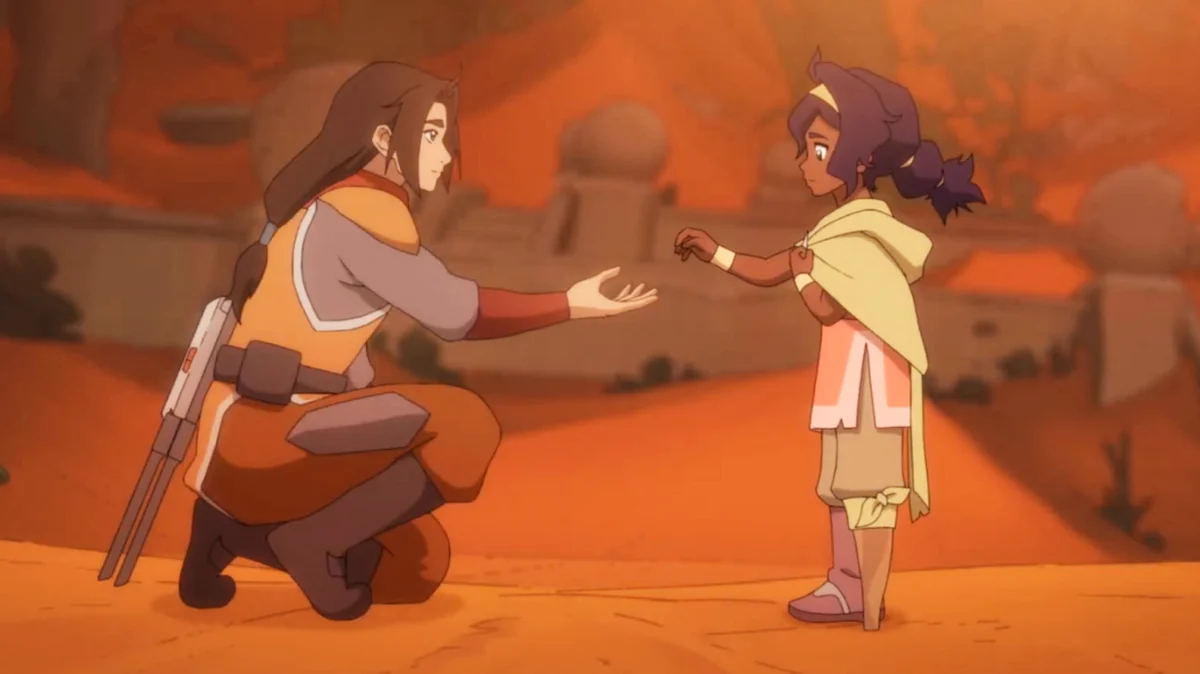
The world of elemental bending is expanding once more. During a high-energy panel at San Diego Comic-Con this past Thursday, Paramount+ electrified the fandom by unveiling the first official teaser trailer for Avatar: Seven Havens. The upcoming animated series, which serves as the latest expansion of the sprawling Avatar universe, is officially slated for a global premiere on Friday, October 9.
For followers of the franchise, this announcement represents the most significant narrative shift since the conclusion of The Legend of Korra. By pushing the timeline further into the future, creators Michael DiMartino and Bryan Konietzko are poised to explore the consequences of a world that has moved beyond the industrial advancements of Republic City into a state of total structural collapse.
Main Facts: A New Avatar in a Broken World
Avatar: Seven Havens is a 26-episode animated event that promises to challenge the very mythology of the Avatar cycle. Following the lineage established by Aang and Korra, the series introduces a new protagonist: a young Earthbender who finds herself burdened with the title of Avatar during a period of unprecedented global instability.
According to the official series synopsis, the world of Seven Havens has been irrevocably altered by a "devastating cataclysm." Unlike previous iterations of the Avatar, who were celebrated as beacons of hope and peace, this new Avatar is perceived by the remnants of humanity as a harbinger of doom. The narrative hook—that the Avatar is viewed as "humanity’s destroyer, not its savior"—marks a dark, psychological pivot for the franchise.
The core conflict involves the protagonist and her long-lost twin brother, who must navigate a landscape where both human factions and vengeful spirits are hunting them. Their objective is to secure the "Seven Havens," the final remaining strongholds of civilization, before the world falls into absolute chaos.
Chronology: From Aang to the Era of Havens
To understand the weight of this new series, one must look at the progression of the Avatar timeline:
- The Era of Aang: Avatar: The Last Airbender (2005–2008) established the foundation of the world, detailing the Hundred Year War and the return of the Air Nomads’ legacy.
- The Era of Korra: The Legend of Korra (2012–2014) modernized the world, introducing industrialization, political ideologies (equalism, fascism, and anarchy), and the bridging of the spirit and physical worlds.
- The Interregnum: Following the events of The Legend of Korra, the world underwent a period of rapid advancement followed by the mysterious "cataclysm" alluded to in the Seven Havens teasers.
- The Era of Seven Havens (Current): The new series begins in a post-apocalyptic setting, shifting the tone from nation-building to survivalism.
The creative team has spent years meticulously planning the transition from the relatively optimistic tone of the original series to the gritty, high-stakes environment found in Seven Havens. By bridging the gap between established lore and a completely original, fractured reality, DiMartino and Konietzko are betting that the audience is ready for a more mature, serialized epic.
Supporting Data: Production and Voice Talent
The sheer scale of Avatar: Seven Havens is reflected in its ambitious 26-episode order, which suggests a deep, multi-arc narrative structure designed for long-form bingeing. Paramount+ has spared no expense in assembling a diverse and talented voice cast to anchor this new chapter.
The Ensemble Cast
- Saheli Khan as Pavi (The New Avatar)
- Aishu Devan as Nisha
- Akshay Khanna as Karthik
- Major Curda as Jae
- Sakina Jaffrey as Agam
- Darren Barnet as Daemin
- Dianne Doan as Zi
- Dee Bradley Baker (a franchise veteran) as the dual characters Geet and Ruhi.
The inclusion of Dee Bradley Baker, known for voicing Appa, Momo, and Naga, signals a commitment to the "soul" of the franchise. His return, alongside a fresh ensemble, provides a tether to the past while allowing the show to evolve its tonal identity.
Official Responses: What the Creators Are Saying
During the San Diego Comic-Con panel, the atmosphere was electric. Michael DiMartino and Bryan Konietzko expressed their excitement regarding the creative freedom afforded to them by the Paramount+ partnership.
"We wanted to challenge the very premise of what an Avatar is," Konietzko noted during the Q&A session. "In the past, the Avatar was a bridge between worlds. In Seven Havens, the bridge is burned. The question isn’t just ‘can the Avatar save the world?’ but rather, ‘is the world worth saving in its current state?’"
DiMartino added, "This is the most ambitious story we’ve ever told. We aren’t just looking at the four nations anymore; we are looking at the remnants of everything. The stakes are personal, physical, and metaphysical all at once."
Implications: A New Direction for the Franchise
The release of Avatar: Seven Havens carries significant implications for the future of animated storytelling on streaming platforms.
1. The Shift to Darker Themes
For years, the Avatar franchise has been praised for its ability to handle mature themes—war, grief, and political corruption—within a PG-rated framework. Seven Havens appears to be pushing these boundaries further. By positioning the protagonist as an antagonist in the eyes of the public, the series explores the "burden of destiny" in a way that feels more akin to modern prestige drama than traditional children’s television.
2. World-Building as a Genre
The "Seven Havens" concept itself is a masterstroke in world-building. By confining the characters to seven distinct, defensible locations, the writers have created a "ticking clock" scenario. This structure allows for a tighter, more focused narrative compared to the globe-trotting nature of previous series. It forces the characters to grapple with scarcity, resource management, and the fragility of peace.
3. The Paramount+ Strategy
Paramount+ is clearly positioning the Avatar franchise as a cornerstone of its content library. By scheduling the premiere for October 9, the platform is aiming to capture the lucrative Q4 streaming market. The success of this series could dictate the viability of future spin-offs, including potential live-action adaptations of this specific era.
4. Expanding the Magic System
With a "young Earthbender" at the center, fans are already speculating on the evolution of Earthbending. If the world is "shattered," how does that impact the terrain? Does the cataclysm affect the connection to the Spirit World? The teaser trailer hints at new forms of bending and a reimagined relationship with the spirits that could fundamentally change the franchise’s combat and mystical systems.
Conclusion: The Horizon Awaits
As we approach the October 9 premiere, the anticipation is palpable. Avatar: Seven Havens is not merely a nostalgia play; it is a bold, forward-looking step into a world that feels both familiar and terrifyingly new.
The success of The Last Airbender and The Legend of Korra was built on the back of character growth and moral complexity. If the teaser is any indication, Seven Havens will double down on those strengths, offering fans a narrative that is as emotionally resonant as it is action-packed.
Whether you are a lifelong fan who grew up with Aang, or a newcomer ready to step into a world of elemental mystery, Seven Havens invites you to witness the birth of a new cycle. The Avatar is coming, but they are not the savior you expect. They are the catalyst for a world that must either rebuild or fade into history.
Will you be watching on October 9? The conversation has only just begun. As the Seven Havens look toward their uncertain future, the rest of us will be waiting with bated breath to see if the cycle can truly be restored—or if a new, darker balance must be struck.