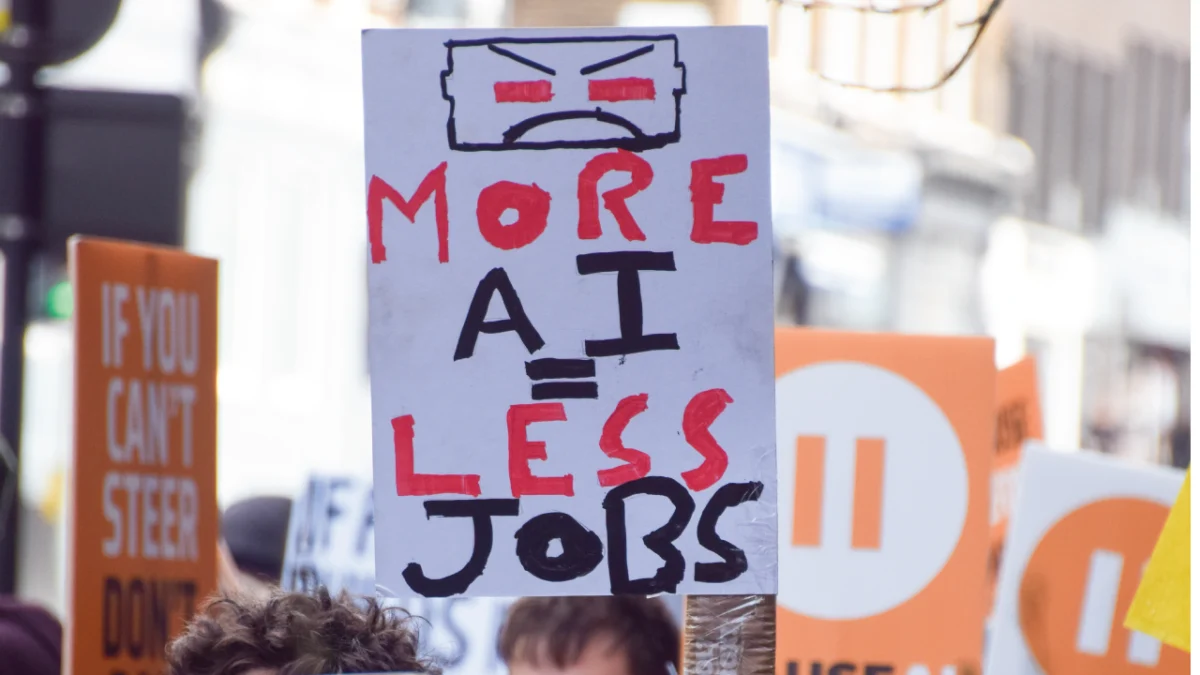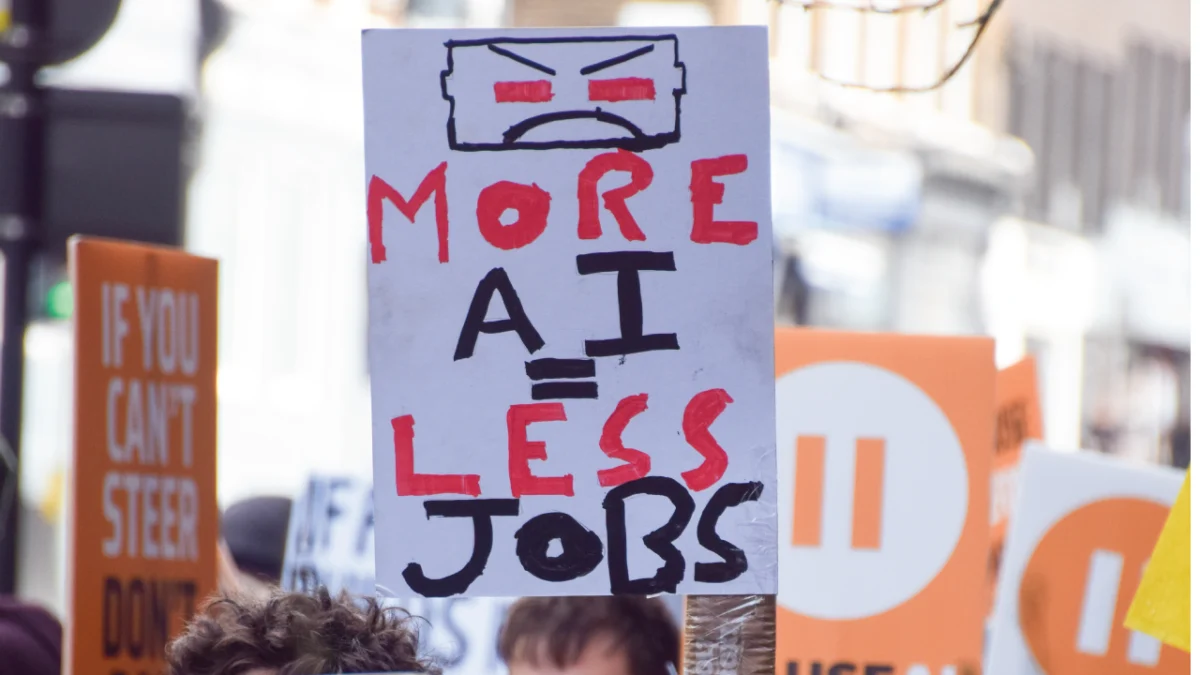
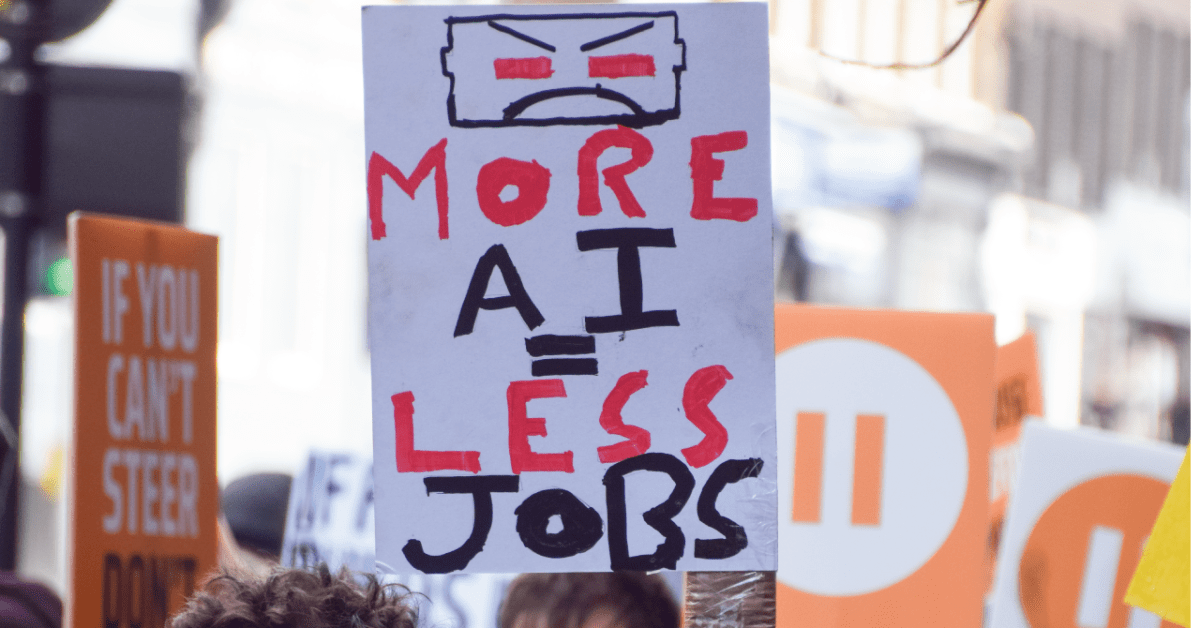
As artificial intelligence (AI) rapidly transitions from theoretical computer science to an ubiquitous infrastructure shaping daily commerce, communication, and governance, a profound psychological divide is emerging worldwide. While policymakers, tech executives, and venture capitalists debate innovation velocities and productivity gains, ordinary citizens are wrestling with a much more visceral anxiety.
According to a sweeping international study conducted by the Pew Research Center, anxiety regarding the disruptive economic and social consequences of AI has become a dominant global sentiment. Surveying more than 42,000 adults across 37 nations, the findings reveal a world gripped by widespread uncertainty, growing apprehension regarding employment security, and deep-seated fears that rapid technological advancement will exacerbate existing societal inequalities.
Main Facts: The Global Consensus on AI Anxiety
The Pew Research Center’s comprehensive dataset paints a nuanced yet sobering picture of public sentiment toward generative and automated artificial intelligence. Across almost every metric, excitement about technological breakthroughs is heavily tempered by the fear of negative socio-economic repercussions.
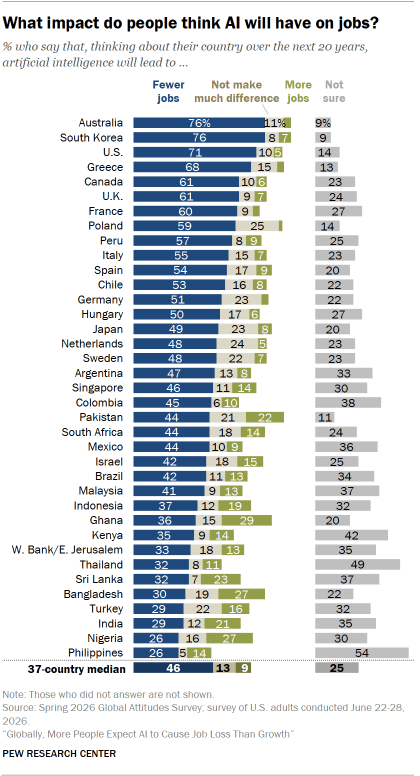
- Job Loss Dominates Public Fear: In 34 of the 37 countries surveyed, a clear majority of respondents believe that AI will result in fewer jobs rather than more jobs over the next two decades.
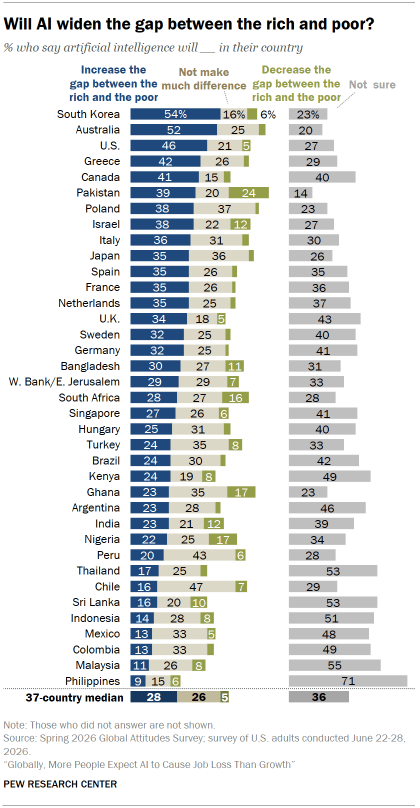
- Wealth Inequality Concerns: On balance, respondents are significantly more likely to predict that AI will widen the wealth gap between the rich and the poor rather than narrow it, with very few anticipating that the technology will foster equitable economic distribution.
- The Paradox of Awareness: While general curiosity exists, genuine enthusiasm is scarce. A median of 37% of respondents across all surveyed nations report feeling more concerned than excited about the rise of AI in daily life, while 41% report a mixed sentiment of being equally concerned and excited. Only a tiny fraction report being primarily excited.
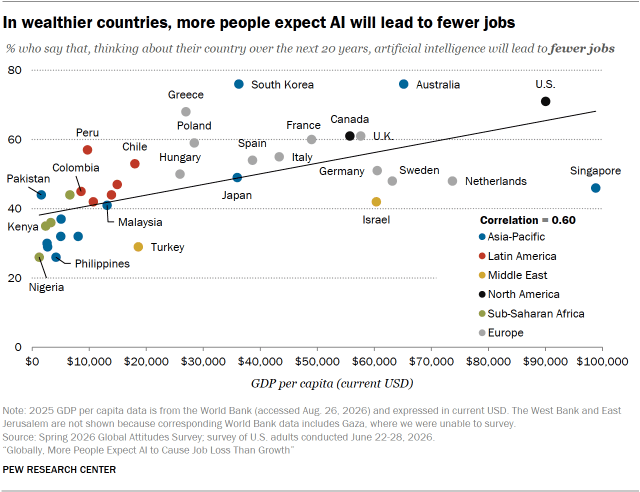
- The Wealthy Nation Paradox: Apprehension does not scale inversely with development; rather, economic anxiety surrounding AI is often highest in some of the world’s most affluent nations, where citizens are hyper-aware of white-collar and cognitive displacement risks.
Chronology: Tracking the Evolution of Public Sentiment
To understand how rapidly public opinion on artificial intelligence has deteriorated, it is necessary to examine the timeline of survey data collected by institutional researchers leading up to the 2026 findings.
2021–2023: The Early Wave of Generative AI Curiosity
Following the public release of transformer-based language models and early consumer-facing generative AI tools, initial surveys in the United States and select Western nations displayed a mix of novelty, cautious optimism, and widespread ignorance. While tech experts heralded a new industrial revolution, the general public largely viewed AI as an incremental software upgrade rather than an existential threat to labor markets. Older populations during this period were consistently the most fearful, largely driven by unfamiliarity with digital tools.
2024: The Realization of Labor Displacement
By 2024, as corporations began integrating automation into customer service, software engineering, writing, and creative arts, public perception experienced a sharp pivot. Longitudinal data from the United States revealed that anxiety over job losses began climbing rapidly, particularly among younger cohorts entering the workforce who realized that entry-level knowledge work was uniquely vulnerable to language models.
2025: International Expansion of Skepticism
Expanding its polling footprint to 25 countries, the Pew Research Center documented that systemic economic anxiety regarding AI was not an isolated American phenomenon. High-income and upper-middle-income countries across Europe and the Asia-Pacific region began registering high levels of public distrust, linking the rise of automated systems directly to corporate cost-cutting measures and stagnant wages.
Early to Mid-2026: The Current Global Landscape
Between February 8 and May 13, 2026, the Pew Research Center executed its largest international study to date, surveying 42,151 individuals across 37 nations. Supplemental U.S. surveys were conducted in February and June 2026. This comprehensive mapping captured a permanent shift: apprehension had not only solidified in wealthy economies but was actively accelerating across diverse demographic groups, bridging generational divides that previously separated tech-savvy youth from anxious seniors.
Supporting Data: Deep Dive into the Numbers
The quantitative metrics gathered by researchers lay bare the structural nature of public distrust.
1. The Employment Outlook
In wealthy nations characterized by high GDP per capita, expectations of mass layoffs are striking. Approximately seven-in-ten adults in Australia, South Korea, and the United States predict that AI will lead to a net loss of jobs over the next 20 years. In the U.S. specifically, this metric has climbed 7 percentage points over a two-year tracking window.
Interestingly, while middle-income nations express concerns, they also feature much higher rates of uncertainty. Around 40% of adults in certain developing or middle-income economies admitted they were unsure how AI would impact their national employment landscape, pointing to an educational and informational gap between industrialized tech hubs and emerging markets.
2. The Widening Wealth Gap
When queried about macroeconomic equality, respondents across nearly all surveyed regions feared plutocratic consolidation. Around four-in-ten adults or more in countries such as South Korea, Australia, the United States, Greece, and Canada stated that AI would actively accelerate the divergence between the ultra-wealthy and the working class. Conversely, in 29 of the 37 nations, fewer than 10% of respondents believed AI would successfully reduce economic inequality.
3. Demographic Fault Lines: Age, Gender, and Ideology
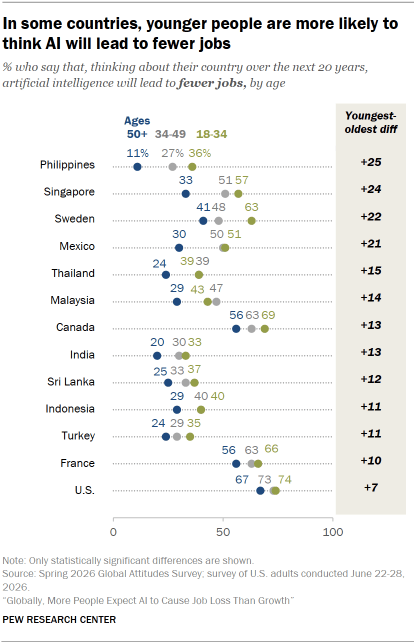
- The Youth Shift: Traditionally, older adults harbored the deepest suspicions toward new technologies. However, the 2026 data reveals a striking reversal. In high-income countries like Canada, France, Singapore, and Sweden—as well as middle-income nations like India and Indonesia—young adults (ages 18 to 34) are significantly more likely than older generations to worry about AI-induced job loss. In the U.S., the share of young adults who are primarily concerned rather than excited jumped from 40% to 55% between 2024 and 2026, effectively erasing the generational gap in apprehension.
- The Gender Divide: In 11 primarily high-income nations, women are measurably more likely than men to express deep-seated anxiety regarding AI job displacement. In France, for instance, women outpaced men by a 10-percentage-point margin in predicting negative employment outcomes.
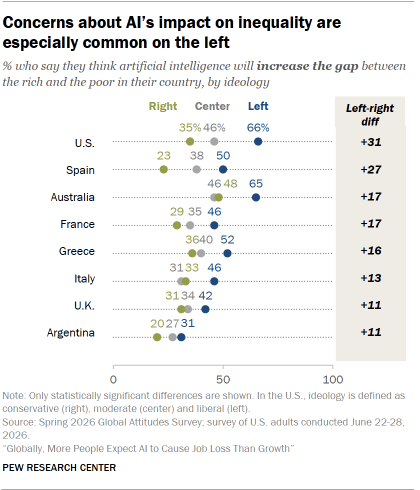
- Political Ideology: Political polarization heavily influences how citizens perceive the societal risks of AI. In eight of the 28 countries where political self-identification was measured, left-leaning respondents were markedly more likely than right-leaning individuals to argue that AI will expand the rich-poor divide. In the United States, self-described liberals were a staggering 31 points more likely than conservatives to link AI advancement with catastrophic wealth inequality.
Official Responses and Institutional Reactions
As global public sentiment hardens against the unchecked expansion of automated technologies, institutional bodies, labor unions, and political leaders are being forced to respond.
Regulatory Pushback in Europe and Asia
Governments that previously championed digital transformation are pivoting toward aggressive oversight. Following coordinated protests outside major tech hubs—such as demonstrations observed outside OpenAI’s London offices in early 2026—parliamentary leaders in the European Union have fast-tracked enforcement mechanisms within the EU Artificial Intelligence Act. These regulations increasingly target algorithmic transparency, workplace surveillance, and automated hiring practices designed to bypass human oversight.
Labor Unions Demand Protections
Labor organizations worldwide have incorporated AI-specific safeguards into collective bargaining agreements. In South Korea and Australia—nations where over 70% of the populace fears systemic unemployment—labor federations are demanding mandatory worker retraining clauses, veto powers over algorithmic management systems, and severance taxes for companies that replace human workforces with proprietary software models.
Corporate Public Relations Campaigns
In response to plunging public trust, major technology conglomerates have launched massive global advocacy campaigns. These initiatives attempt to reframe AI not as a replacement for human labor, but as a "co-pilot" designed to enhance productivity and eliminate mundane tasks. However, these corporate narratives appear to be struggling against the visceral economic realities faced by workers witnessing rapid downsizing in media, administrative, and software development sectors.
Implications: What This Means for the Future of AI
The widespread crystallization of public anxiety carries profound implications for the trajectory of technological adoption, sociopolitical stability, and democratic governance.
1. Political Backlash and Populism
When a supermajority of citizens in affluent nations believe that a technological revolution will actively impoverish them or widen the gap between classes, the issue ceases to be merely technical and becomes intensely political. Populist political movements are uniquely positioned to weaponize these economic fears, potentially driving protectionist legislation, heavy digital taxation, or outright bans on specific forms of automated labor.
2. The Danger of Public Alienation
The stark disconnect between Silicon Valley’s techno-optimistic narrative and Main Street’s deep-seated dread threatens to create a legitimacy crisis for digital innovation. If everyday citizens view AI strictly as an instrument of oligarchic wealth extraction, social license for further research and infrastructure development—such as massive data center construction and energy grid strains—will rapidly erode.
3. Strategic Imperatives for Policymakers
The data underscores an urgent need for structural economic safety nets. As younger generations—the future backbone of the global workforce—express the highest levels of despair regarding their economic futures, governments can no longer treat AI policy as a niche subsection of industrial strategy. Policymakers must proactively address worker retraining, tax structures that do not disproportionately penalize human labor relative to capital investment, and robust social welfare frameworks capable of withstanding the shocks of a transforming global economy.