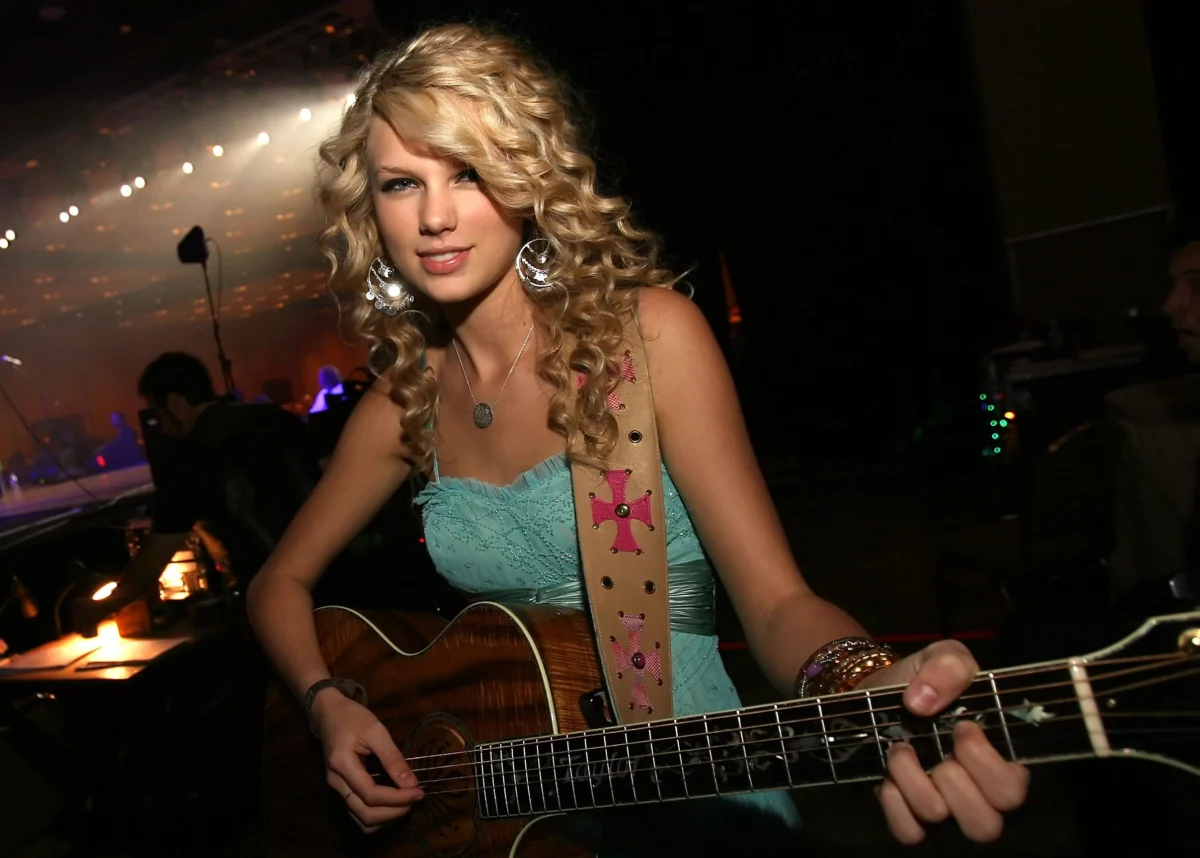
October 24, 2026 — Today marks the 20th anniversary of the release of Taylor Swift, the eponymous studio album that quietly introduced a 16-year-old Pennsylvania native to the music industry. Two decades removed from its quiet launch, the record is now recognized as a watershed moment—a tectonic shift that forever altered the landscapes of country music, mainstream pop, and global youth culture.
Yet, looking back from the vantage point of October 2006, the notion that this teenage singer-songwriter would one day become the undisputed titan of the modern music world was entirely unthinkable. Back then, Swift’s newly minted team was desperately cold-calling journalists, struggling to secure press coverage, and fighting an uphill battle to convince conservative country radio programmers to take a chance on a young artist who checked precisely zero of the traditional boxes for commercial success.
Main Facts: The Legacy of a Modest Beginning
When Taylor Swift arrived on shelves on October 24, 2006, under the newly minted, virtually furniture-free Big Machine Records, the contemporary musical ecosystem looked radically different. The boy-band wave had receded, leaving a vacuum that was slowly being filled by emerging female soloists. However, the Nashville establishment remained fiercely walled-off from pop crossovers, deeply skeptical of teenage acts, and outright hostile to the idea that a young woman could write her own authentic material.
Swift defied every single one of these industry dogmas:
The Writer: She wrote or co-wrote every track on her debut album, scoring major solo-written hits like "Our Song"—a track penned in the ninth grade for a high school talent show.
The Sound: Her style was intensely conversational, eschewing theatrical vocal gymnastics in favor of diary-entry specificity.
The Marketing: Eschewing traditional gatekeepers, Swift and her mother built her foundational fanbase organically through MySpace, grassroots networking, and relentless touring.
Today, Taylor Swift stands as the bedrock of a multi-billion-dollar empire that has amassed hundreds of millions of album and singles certifications worldwide. While Swift herself has notably forgone a heavily publicized corporate deluxe reissue for the 20th anniversary—leaving the celebration entirely in the hands of her dedicated fanbase, the Swifties—the historical weight of the record remains undeniable. It initiated a paradigm shift, permanently resetting expectations for how open, confessional, and self-authored pop superstars would be required to be.
Chronology: The Making of a Phenom (2003–2008)
To understand the magnitude of Swift’s 20-year milestone, one must trace the timeline of her ascent from an ambitious pre-teen to a Grammy-nominated crossover sensation:
Pre-2004: At age 11, Swift and her mother fly to Nashville, relentlessly knocking on doors along Music Row with a demo CD of karaoke tracks. At 13, she signs a development deal with RCA Records, eventually moving her family to Hendersonville, Tennessee.
2004 (Age 14): Recognizing that RCA expects her to record outside material and wait her turn, Swift walks away from the prestigious label. Concurrently, she becomes the youngest songwriter ever signed to Sony/ATV Publishing.
Late 2005: Swift signs with Scott Borchetta’s fledgling, pre-furniture independent startup, Big Machine Records.
October 24, 2006: Her self-titled debut album is released. She spends hours hand-stuffing promotional CDs into envelopes alongside her mother and label employees.
Early 2007: Swift begins gaining traction on the country charts with singles like "Tim McGraw" and "Teardrops on My Guitar."
January 2008: At the height of her initial crossover push, she sits down for an extensive, largely unpublished interview at an In-N-Out Burger in Universal City, California. Later that year, she earns a Best New Artist Grammy nomination and secures her status as a bona fide industry force.
Supporting Data: Unearthing the 2008 In-N-Out Q&A
In January 2008, just as Teardrops on My Guitar was beginning to breach the Top 40 airplay charts, an extensive interview was conducted with an 18-year-old Taylor Swift at a Universal City In-N-Out Burger. While only a few hundred words made it into print at the time, the full transcripts offer a remarkable window into her mindset at the dawn of her global fame.
The In-N-Out Transcript Excerpts
Since you’re not from around here, when was your first In-N-Out experience?
Swift: My first In-N-Out Burger experience was probably about a year ago. I became addicted, and it’s a deep love. It runs deep.
You have two songs charting — "Our Song" is huge at country, and "Teardrops on My Guitar" is just starting to give you some of your first top 40 airplay. Was it tough to decide which to do for Leno?
Swift: Whichever one is No. 1. For Me, it was kind of a no-brainer to play "Our Song," because it just got its sixth week at No. 1 on the country charts… But when there’s a choice for me, I usually pick the one that’s higher up on the charts. I’m gonna milk this No. 1 for all it’s worth.
There are probably people who are still suspicious because of your age, that you are really writing the songs… but looking at which ones you wrote by yourself, no one can look at "Our Song" and doubt that you’re a songwriter.
Swift: Thank you. I’m actually really thrilled that that’s the song that was my first No. 1, because it kind of says something. I’ve always wanted that respect from the songwriting community in Nashville, and this year I was lucky enough to get the NSAI songwriter artist of the year award…
How did you have the courage to walk up to record labels when you were 12 or 13 and jump right into the music industry?
Swift: It’s because I knew I could never feel the kind of rejection that I felt in like middle school… I hadn’t had the most perfect social life in middle school, so I guess it got me ready for the real world, in a sense. What separated me was that on the weekends, all of the friends that I had were starting to party already… And I just was never into that. What I was doing on weekends was going to singer/songwriter nights, and playing guitar for people, and sneaking into karaoke bars.
Everyone talks about who passed on the Beatles. It would be hard to be in that position, of being one of the A&R people who passed on you.
Swift: A&R people have the hardest job… So I’m never gonna look back on people who didn’t sign me when I was 13 or 14 or 15 and go "Ha — check it out." Because I wouldn’t be here if they hadn’t passed on me. We wouldn’t be where we are.
Official Responses and Industry Reflections
The music industry’s initial reaction to Taylor Swift was a masterclass in institutional underestimation. Record executives at major Nashville labels were petrified of backing a teenage soloist, largely because no teenager had achieved sustained success in country music since LeAnn Rimes a decade prior.
Furthermore, the conventional wisdom of the mid-2000s dictated that young artists must be vessels for professional songwriting teams. Swift’s insistence on writing her own material—often autobiographical, highly specific narratives detailing high school heartbreaks and teenage alienation—was viewed by old-guard gatekeepers as a commercial liability.
However, industry leaders quickly pivoted as the numbers rolled in. Executives who once passed on her development deals later conceded that timing and circumstance were everything. Scott Borchetta’s gamble on a 10-person independent label with no office furniture paid off exponentially, proving that an artist connecting directly with fans via emerging digital platforms like MySpace could bypass traditional gatekeeping entirely.
Implications: How "Debut" Built the Blueprint for Modern Pop
Two decades later, the ramifications of Taylor Swift extend far beyond the parameters of mid-2000s country-pop crossover economics. The album established a foundational blueprint that continues to define the modern music industry:
The Rise of the Autograph-Centric Fan Relationship: Swift’s dedication to four-and-a-half-hour post-show meet-and-greets established an unprecedented standard of artist-to-fan intimacy, transforming casual listeners into fiercely loyal communities.
The Weaponization of Personal Narrative: By refusing to file down the specific names, dates, and emotional scars in her lyrics, Swift dismantled the sanitized pop-star archetype, paving the way for an entire generation of confessional singer-songwriters.
Ownership and Creative Independence: Her early battles to write her own music and retain control over her creative vision foreshadowed her later industry-shaking decisions regarding master catalog ownership and re-recordings.
As we celebrate twenty years of Taylor Swift, the album stands not merely as a nostalgic time capsule of acoustic guitars and cowboy boots, but as the opening chapter of a cultural phenomenon that reshaped the global entertainment landscape forever.