

In the ever-evolving landscape of modern celebrity, few figures have occupied as much cultural real estate as Lena Dunham. Since her breakout with the seminal HBO series Girls—a show that defined the anxieties, narcissism, and ambition of a generation—Dunham has existed in a state of constant public scrutiny. Now, in 2026, with the release of her latest memoir, Famesick, Dunham is shifting the narrative, moving away from the "voice of a generation" label to something more introspective and perhaps more urgent: a warning about the transactional nature of fame and the necessity of personal autonomy.
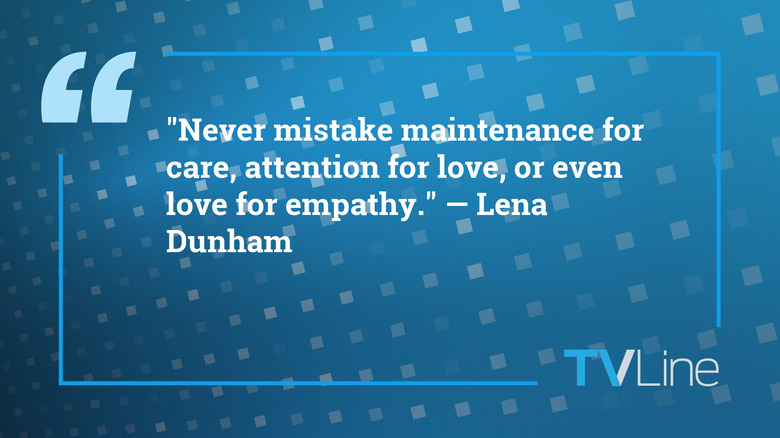
At the heart of this reflection is a quote that has resonated deeply with readers and critics alike: "Never mistake maintenance for care, attention for love, or even love for empathy."
Main Facts: The Anatomy of a Hard-Won Lesson
The quote, pulled from the pages of Famesick, serves as a cornerstone for Dunham’s current philosophical outlook. It represents a pivot point in her career—a transition from the person who sought validation through creation and public approval to someone who is actively disentangling her self-worth from her professional output.
In the memoir, Dunham dissects the "golden handcuffs" of Hollywood. She explores how the industry, the press, and even her closest associates often conflated her utility—her ability to produce content, generate headlines, and create profitable television—with genuine personal affection. The distinction she draws is stark: "maintenance" is what you do for a machine or a commodity, whereas "care" is reserved for a human being. By highlighting this discrepancy, Dunham is inviting her audience to re-examine their own relationships, urging them to distinguish between being "useful" and being "valued."

Chronology: From ‘Girls’ to ‘Famesick’
To understand the weight of this reflection, one must look at the trajectory of Dunham’s career:
- 2010: Dunham gains critical acclaim for the independent film Tiny Furniture, establishing her signature style of raw, uncomfortable, and deeply personal storytelling.
- 2012–2017: The era of Girls. Dunham becomes a household name, a lightning rod for cultural debate, and an undeniable force in television. The show is later recognized as one of the best of the 21st century.
- 2018–2024: Following the conclusion of Girls, Dunham navigates a complex period of writing, directing, and acting, including Sharp Stick and Catherine Called Birdy. During this time, she faces intense public scrutiny, often serving as a focal point for debates regarding the ethics of representation and the burdens of public persona.
- 2025: Dunham co-creates the Netflix series Too Much, starring Meg Stalter, marking a return to the ensemble-driven, character-focused work that defined her early success.
- April 2026: Publication of Famesick. The memoir is released to a climate that is finally ready to reckon with the toxicity of celebrity culture. It acts as a retrospective of her early fame and a blueprint for her future.
Supporting Data: The ‘Goose and the Golden Egg’ Analogy
Perhaps the most visceral portion of Famesick involves a candid recollection of a conversation with her father during the peak of Girls. It serves as the primary evidentiary support for her assertion that professional success is often mistaken for genuine care.
Dunham recounts her father describing her as "the goose that lays the golden egg." While the metaphor is classic, his delivery was chillingly pragmatic. He warned her that the industry does not "protect" the goose because it loves the goose; it protects the goose because it needs the eggs. The implication is devastating: should the creative output cease, the protection—the "maintenance"—evaporates.
This professional realization parallels the psychological toll of fame. When one’s value is tied to productivity, any disruption in that productivity feels like a existential threat. Dunham’s memoir provides a cautionary tale for any creative professional: when you allow your career to become the sole source of your identity, you become vulnerable to a market that treats you like an asset rather than a human being.

Official Responses and Public Reception
The reception to Famesick has been polarized but undeniably significant. Critics have noted that while Dunham’s earlier work was often viewed as a "performance of self," Famesick feels like a "dismantling of self."
In interviews, including a notable profile in the New York Times, Dunham has been open about the "pathological need" to express herself, a drive that she acknowledges often fed into her own exploitation. Her peers in the industry have praised the book for its honesty regarding the "maintenance" required by modern stardom—the PR, the social media presence, and the constant need to remain "relevant."
Public figures and fellow creators have echoed her sentiments regarding the confusion between "attention" and "love." In an age where digital engagement is the primary currency, Dunham’s warning has become a rallying cry for those attempting to set digital and emotional boundaries.
The Implications: A New Era of Self-Worth
The implications of Dunham’s message extend far beyond the entertainment industry. Her words provide a framework for navigating modern life, where professional and personal spheres are increasingly blurred.
Redefining Relationships
The distinction between "love" and "empathy" is perhaps the most profound part of her quote. Empathy requires an understanding of another’s internal state—a true "feeling with" someone. Love, in its healthiest form, involves the pursuit of the other’s good. If a relationship is based on attention, it is inherently performative. If it is based on maintenance, it is inherently transactional. Dunham’s call to action is to seek out environments and people that provide genuine empathy, rather than just the superficial attention that comes with success.
The Cost of Performance
Dunham’s reflection on being a "young woman" in the public eye—the feeling of "dancing joyfully" until you hit your head—captures the inevitable collision between youthful idealism and the rigid, often cruel structures of the world. Her memoir suggests that the path to adulthood is not found in maintaining the image of the "goose that lays the golden egg," but in realizing that you are allowed to stop laying the eggs and simply exist.
Mental Health and Authenticity
Dunham’s admission of living with "a healthy dose of guilt, shame, and self-hatred" serves as a reminder that fame is not a cure for internal struggle. By addressing these feelings alongside her professional success, she challenges the "success equals happiness" narrative that is often projected onto celebrities. Her focus on how physical pain and fame both "contract the self" highlights the isolating nature of being perceived rather than being known.
Conclusion: The Path Forward
Lena Dunham’s Famesick is more than a memoir; it is a document of survival. By deconstructing the myths of her own celebrity, she has provided a roadmap for others to identify where they are being "maintained" rather than "cared for."

As we look at her current work, such as the critically lauded Too Much, we see a more mature artist—one who has internalized these lessons. She is no longer just the "voice of a generation"; she is an individual who has successfully reclaimed her own narrative. For the reader, the lesson is clear: check the foundations of your own life. Ensure that the attention you receive is not mistaken for the love you deserve, and ensure that the maintenance you perform for your career never costs you the care you owe yourself.
In the final analysis, Dunham’s evolution serves as a testament to the fact that while we cannot control how the world perceives us, we have total agency over how we value ourselves. And that, in itself, is the most important lesson of all.