Main Facts: The Revelation Behind a Multi-Million-Dollar Franchise’s Weirdest Concept
For decades, fans of Bethesda Game Studios’ sprawling fantasy epic, The Elder Scrolls, have marveled at the franchise’s labyrinthine, high-concept lore. Among the most bizarre and heavily debated elements of this universe are "Dragon Breaks"—temporal anomalies where time shatters, events occur simultaneously, and logical continuity dissolves into metaphysical chaos.
However, according to former Bethesda writer and designer Kurt Kuhlmann, one of the most defining narrative pillars of the multi-billion-dollar franchise was not born from a grand, multi-year master plan, but rather from a mundane workplace accident.
Speaking on the FRVR Podcast, Kuhlmann revealed that the foundational concept of the franchise’s most famous Dragon Break—"The Warp in the West"—stemmed from what he is "100% convinced" was simply a typo in an internal document. What began as a miskeyed date on an early development timeline snowballed into an ingenious narrative workaround, cementing a legacy of metaphysical storytelling that continues to captivate role-playing game (RPG) fans to this day.
Chronology: From a Clunky Sequester of Dates to Metaphysical Lore
To understand the weight of Kuhlmann’s revelation, one must look back at the developmental history of Bethesda’s early catalog and the structural hurdles of translating player choice across generational hardware and sequels.
1. The Elder Scrolls II: Daggerfall and the Multi-Ending Dilemma (1996)
Released in 1996, The Elder Scrolls II: Daggerfall was a monumental achievement in PC gaming scope, featuring a massive open world and a deeply branching narrative. Crucially, Daggerfall featured six distinct, mutually exclusive endings. Players could choose to hand over control of the ancient, reality-warping golem known as the Numidium to various factions—the Blades, the Underking, the King of Worms, or the regional kingdoms of the Iliac Bay.
From a traditional game development perspective, writing a sequel to a game with entirely contradictory conclusions poses a massive headache. Standard industry practice requires a studio to declare one ending as the "canon" timeline, effectively invalidating the choices made by a large portion of the player base.
2. The Internal Timeline Typo (Late 1990s)
According to Kuhlmann, during the era following Daggerfall, an internal development timeline was drafted by the team. Somewhere within this document, a catastrophic clerical error occurred.
"There was this timeline that someone had made… and there was this big gap in time," Kuhlmann recalled on the podcast. "And I’m 100% convinced that, in reality, in our world, that was a typo. Someone just typed a date wrong in the timeline, skipped like 3,000 years or whatever by accident."
3. Michael Kirkbride and the Birth of the Dragon Break
Rather than simply correcting the error, legendary Morrowind writer and creative force Michael Kirkbride saw artistic potential in the chronological fracture. Seizing upon both the accidental time gap and the logistical nightmare of Daggerfall‘s six distinct endings, Kirkbride proposed a radical, lore-friendly solution: what if the contradictory endings all happened at the same time?
"Mike was like, ‘No, what we’re gonna do: What if all of them happened, and you got Numidium, and it was all crazy metaphysical stuff. So why not?’" Kuhlmann explained.
This brainwave gave birth to the "Warp in the West"—an official historical event in Tamriel where time broke for several days, allowing every possible ending of Daggerfall to occur simultaneously. All factions got what they wanted, the geopolitical landscape of northwestern Tamriel was entirely rewritten overnight, and the fabric of mortal time was fundamentally ruptured.
4. Expansion into Morrowind and Beyond (2002–2006)
While original Daggerfall and Arena designer Ted Peterson later penned the in-game historical text The Warp in the West for The Elder Scrolls IV: Oblivion, Kirkbride and Kuhlmann institutionalized the concept of the Dragon Break in 2002’s critically acclaimed The Elder Scrolls III: Morrowind.
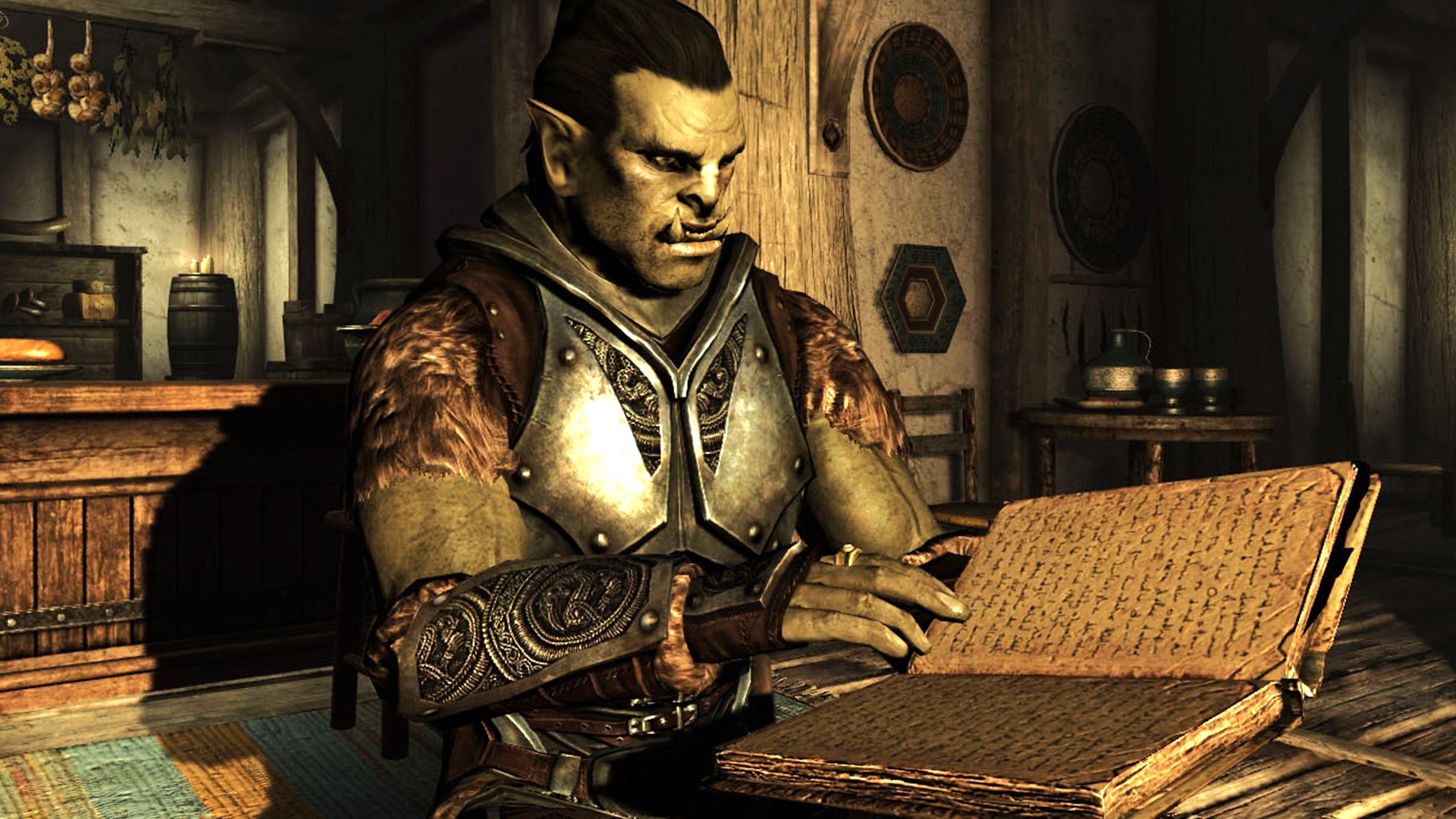
Kirkbride contributed the cryptic, philosophical text "Where Were You When the Dragon Broke?" while Kuhlmann authored "The Dragon Break Re-Examined." These in-game books expanded the localized anomaly of Daggerfall into a universal rule of the cosmos, occurring whenever reality could no longer reconcile competing historical truths.
Supporting Data: The Mechanics of Managing RPG Continuity
The challenge Bethesda faced with Daggerfall is a microcosm of a broader, systemic issue within the video game industry: how do developers preserve player agency across long-running franchises where sequels must progress the timeline?
| Game / Franchise | Sequela Approach to Canon | Result / Narrative Solution |
|---|---|---|
| The Elder Scrolls II & III (Bethesda) | Multiple mutually exclusive endings. | The Warp in the West (Dragon Break): Declared that all endings happened simultaneously through temporal warping. |
| Divinity: Original Sin 2 & Divinity 2 (Larian Studios) | Pre-existing lore overridden by new narrative arcs. | Retconning past events entirely to fit a fresh creative vision, often prioritizing current gameplay over strict chronological purity. |
| Mass Effect Trilogy (BioWare) | Cumulative save-state imports. | Directly tracking player choices across games, resulting in an exponentially complex web of narrative branches that ultimately bottlenecked into controversial standardized conclusions. |
Kuhlmann noted that when he approached his own contributions to Dragon Break lore, he attempted to introduce a layer of historiographic ambiguity. Rather than leaning purely into cosmic, metaphysical mumbo-jumbo, he wanted to frame the confusion as a product of human error, political bias, and flawed record-keeping.
However, true to form, Kuhlmann’s text "The Dragon Break Re-Examined" subtly referenced events in Morrowind‘s future as though they were already in the past, transforming the skeptical historiographic critique into yet another layer of time-bending meta-commentary.
Official Responses and Industry Perspectives
The revelation has struck a chord within the gaming community, shining a light on the organic, seat-of-the-pants creative processes that often shape multi-billion-dollar intellectual properties.
Bethesda Studios has historically maintained a protective stance over its crown jewels, closely guarding the development history and canon of The Elder Scrolls as the studio transitioned from a niche PC RPG developer into a cultural behemoth under the Zenimax and Microsoft umbrellas. While Todd Howard and the core leadership team have long praised the deep, idiosyncratic mythology crafted by writers like Kirkbride and Kuhlmann, the granular details of how these ideas originated have rarely been detailed with such candor.

Industry analysts and veteran developers have frequently pointed to Bethesda’s "fuck it, we ball" creative philosophy as both a blessing and a curse. By refusing to be overly constrained by rigid continuity, writers are empowered to embrace absurd, high-concept solutions to mundane development problems. This loose framework allows for a mythos where in-game books contradict one another, unreliable narrators are the standard, and historical facts are subjective—a design choice that inadvertently mirrored postmodern historiography.
Implications: The Legacy of "Timey-Wimey" Storytelling in Modern RPGs
The accidental genesis of the Dragon Break carries significant implications for how modern role-playing games approach world-building and narrative continuity.
1. The Death of Strict Canon
In an era where franchises like Mass Effect, The Witcher, and Dragon Age grapple with the immense logistical weight of carrying save files and world states across decades-long development cycles, Bethesda’s solution offers a liberating alternative. Instead of spending millions of dollars and countless development hours constructing intricate branching pathways that inevitably funnel players into narrow corridors, developers can utilize meta-narrative devices to absorb contradictions.
2. Empowering the "Unreliable Narrator"
By treating reality as malleable within the lore, Bethesda gave its writers license to embrace mythological storytelling. In Tamriel, history is not a static list of dates, but a battlefield of competing religious interpretations and political propaganda. The Dragon Break ensures that no single player’s playthrough is rendered definitively "wrong" by a sequel; instead, every contradictory player choice can theoretically coexist in a state of quantum superposition until the narrative demands otherwise.
3. Fan Culture and Lore-Crafting
Perhaps the most lasting impact of the Dragon Break is its effect on community engagement. Because official sources frequently embrace paradoxes, temporal fractures, and unreliable documentation, the Elder Scrolls fan community has cultivated one of the most vibrant, analytical lore-crafting cultures in gaming history. Theories regarding C0DA, chim, and the Anuad thrive precisely because Bethesda’s foundational text was jump-started by a humble clerical error.
As Bethesda moves forward with the long-awaited development of The Elder Scrolls VI, the legacy of Kurt Kuhlmann, Michael Kirkbride, and an anonymous typist from the mid-1990s serves as a powerful reminder: sometimes, the greatest innovations in art and game design do not arrive via meticulous planning, but through the courage to embrace a happy accident.