While the American experience is often viewed through the prism of national politics or socioeconomic status, a new, comprehensive analysis from the Pew-Knight Initiative suggests that our physical surroundings—whether urban, suburban, or rural—play a quiet yet profound role in how we participate in public life.
The study, which surveyed over 5,000 U.S. adults in late 2025, reveals that while the broad strokes of civic engagement remain consistent across the country, the "texture" of that participation varies significantly depending on one’s zip code. From the ways we volunteer to how we express political allegiances, our communities act as both stage and script for our civic involvement.

The Four Faces of Civic Participation
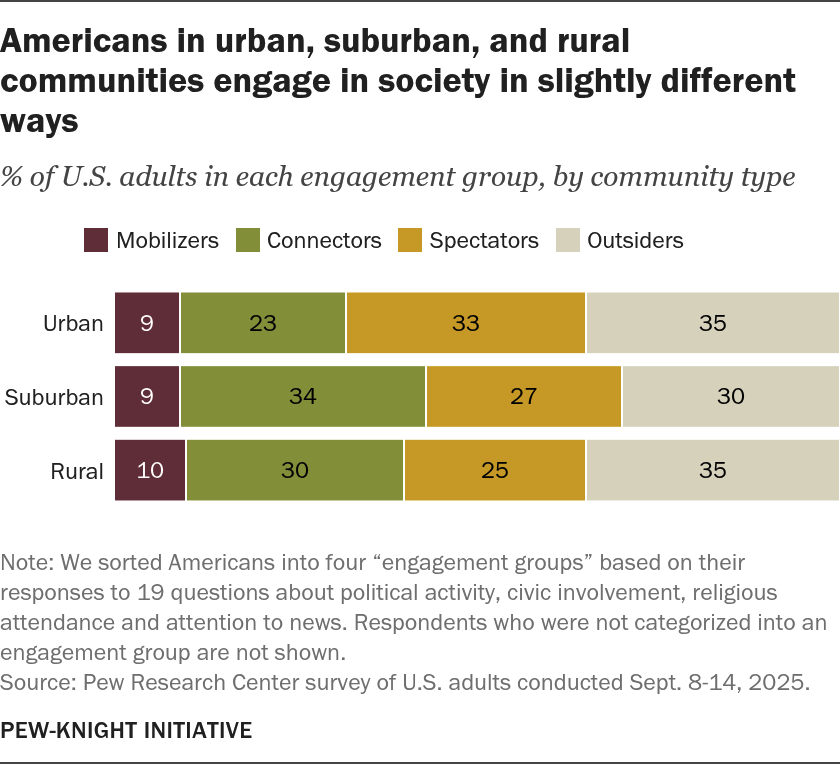
To understand these nuances, researchers at the Pew Research Center categorized Americans into four distinct "engagement groups" based on 19 different metrics, including news consumption, religious activity, and political participation:
- Mobilizers: The "all-in" group. They are highly active across every measured category. They represent a small, dedicated slice of the population, appearing at roughly equal rates in urban (9%), suburban (9%), and rural (10%) areas.
- Connectors: These individuals are deeply embedded in their communities through volunteering and group membership but are notably less inclined toward aggressive political action. They are most common in the suburbs.
- Spectators: Engaged primarily as observers, this group follows the news closely but rarely crosses the threshold into active civic participation. They are most prevalent in urban centers.
- Outsiders: Representing roughly one-third of the population across all geographic settings, these individuals report the lowest levels of engagement in civic, political, and social life.
A Chronology of Civic Engagement: The 2025 Landscape
The data, collected between September 8 and 14, 2025, captures a snapshot of the American public in the wake of a turbulent political cycle. Because many of the survey questions focused on activities performed over the "past 12 months," the results reflect the lingering influence of the 2024 presidential election and the subsequent administrative transitions.
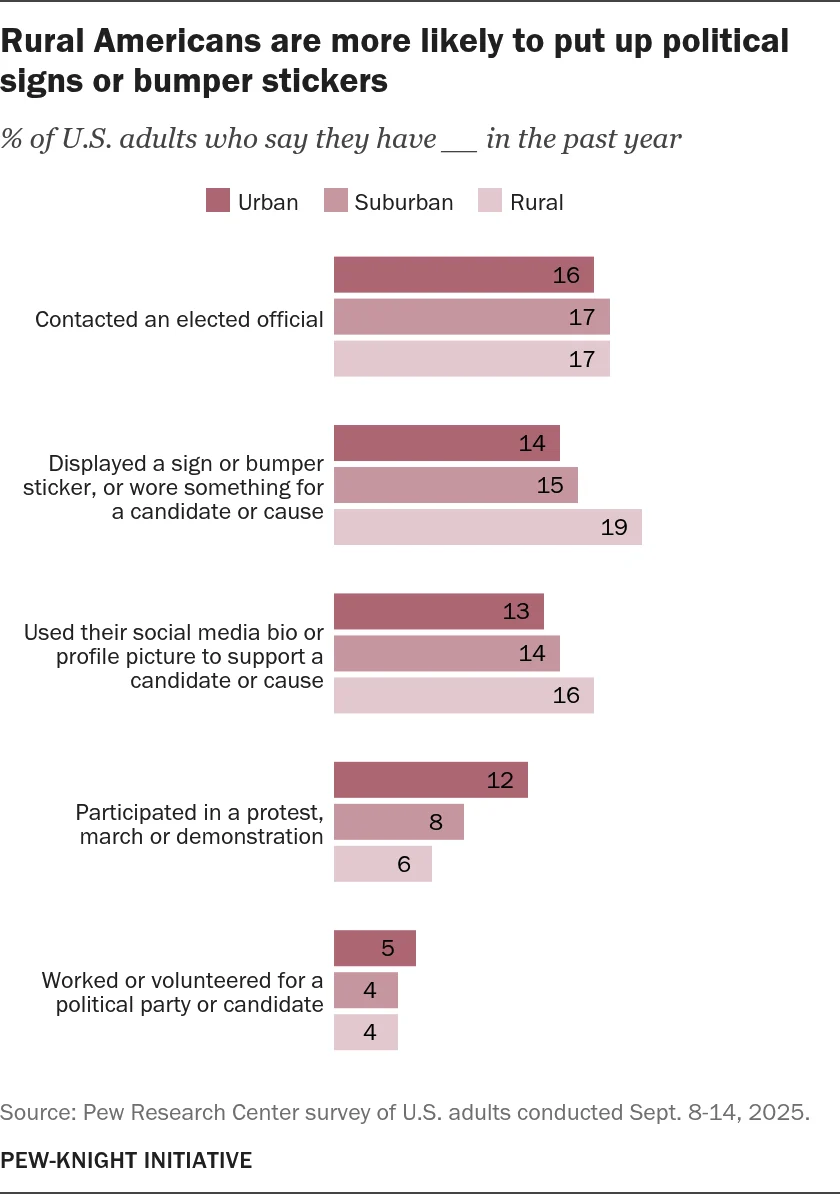
Throughout 2025, the national mood was heavily influenced by ongoing policy debates and, notably, the "No Kings" protests that erupted earlier in the year. This specific event provides a critical marker for the data: the higher propensity for urban dwellers to participate in marches or protests during 2025 is directly linked to the urban-Democratic tilt of city centers, where these demonstrations were most concentrated.
Supporting Data: Where We Live, How We Act
The divide between urban, suburban, and rural life is often overstated, but the data highlights specific, statistically significant variances in behavior.

The Suburban "Connector" Advantage
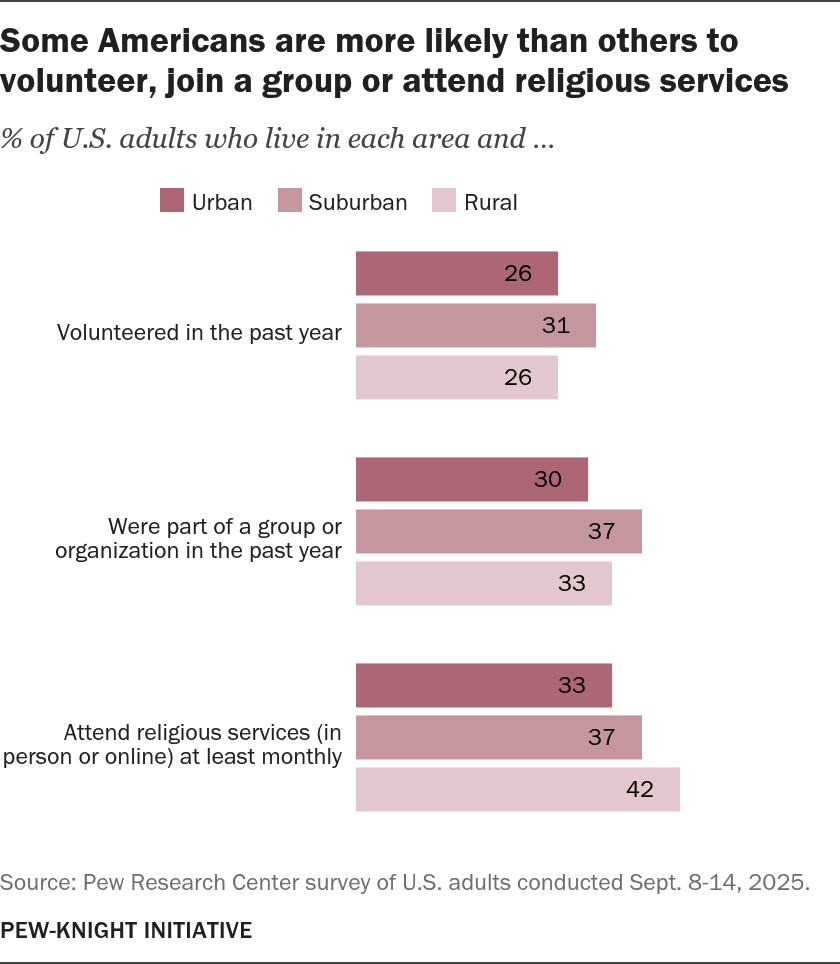
Suburban residents emerge in this study as the most likely to be "Connectors." They are more prone to volunteering and joining local organizations compared to their urban or rural counterparts. Roughly 31% of suburbanites reported volunteering in the past year, compared to 26% in both urban and rural areas. This suggests that the suburban environment—often defined by school districts, homeowners’ associations, and community leagues—may provide a more structured framework for local, non-political engagement.
The Rural Commitment to In-Person Interaction
One of the most striking findings is the nature of the groups to which people belong. While urbanites are more likely to participate in groups that meet primarily online, rural residents are significantly more anchored in face-to-face interaction. Sixty-three percent of rural members of organizations report that their groups interact in person, compared to 57% of suburbanites and only 47% of urbanites. This points to a "community-of-place" model in rural America that relies on physical proximity, whereas urban engagement is increasingly digitized.

The Religious Tapestry
Religious engagement remains a powerful differentiator. Rural Americans are the most likely to attend services (at least monthly) and exhibit higher rates of prayer. This high level of religious participation serves as a bedrock for rural civic life, often filling the space where secular organizational life might otherwise exist.
Political Expression: Signs vs. Streets
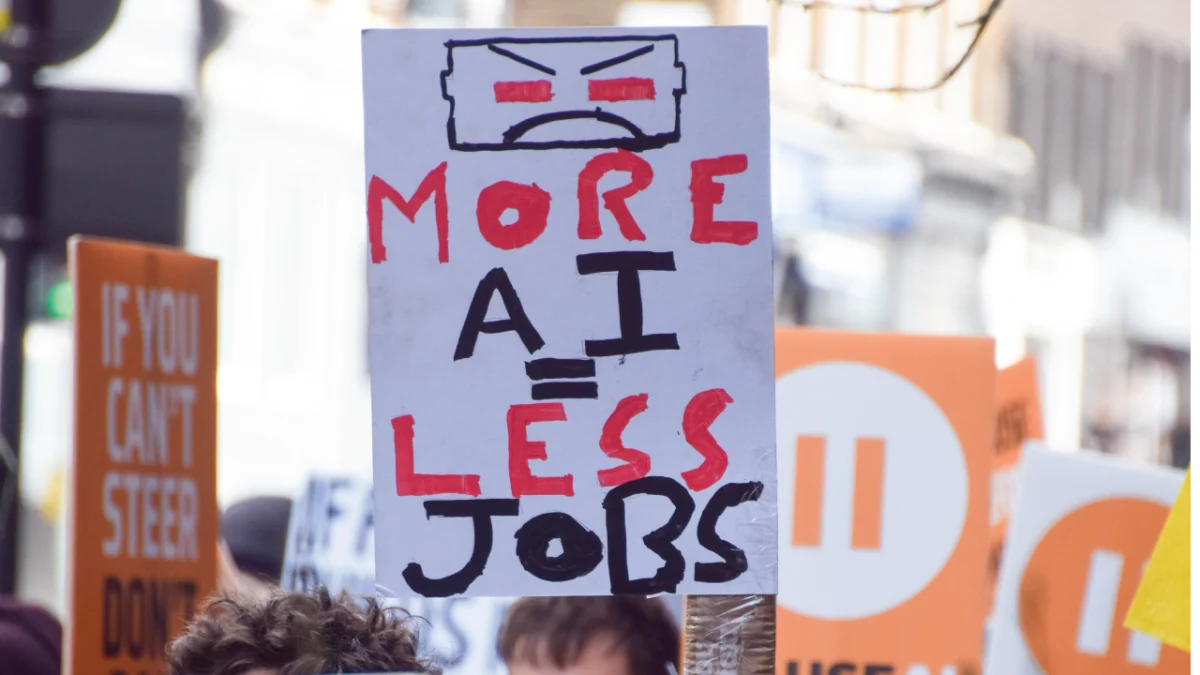
Political action, while consistent in frequency, takes different forms. Urban residents were more likely to attend a protest or march in 2025—a trend heavily influenced by demographic concentrations of political parties. Conversely, rural residents were more likely to display their politics through physical mediums, such as yard signs or bumper stickers. This illustrates a divergence in political communication: one group prefers collective, public assembly, while the other leans toward individual, symbolic display.

Official Perspective: The Pew-Knight Initiative’s Mission
The Pew-Knight Initiative is a collaborative effort between the Pew Research Center and the Knight Foundation, designed to move beyond the traditional "red vs. blue" narrative. By mapping how information is absorbed and how identities are formed, the initiative seeks to understand the health of the American democratic ecosystem.
"People participate in public life in different ways," the researchers note. "By studying these behaviors together rather than in isolation, we can see the full picture of how Americans interact with their communities." The researchers emphasize that these trends are not merely products of geography but are deeply intertwined with the social infrastructure available in each setting.

Implications for the Future of American Community
What does this mean for the future of our democracy? Several key implications arise from this data:
- The Digital-Physical Divide: As urbanites increasingly turn to digital spaces for community interaction, the traditional "town square" model is evolving. This may have long-term consequences for the sense of local belonging in cities compared to the persistent in-person culture of rural areas.
- The Resilience of Suburban Volunteering: The suburban penchant for volunteering suggests that the "local organization" remains a critical, albeit under-researched, component of American stability. Policies aimed at fostering civic health should consider how to replicate this infrastructure in areas where it is currently lacking.
- The "Outsider" Challenge: With roughly 30% to 35% of the population classified as "Outsiders" regardless of geography, the primary challenge for civic leaders is not just about geography—it is about inclusion. Reaching those who feel disconnected from political, social, and news ecosystems is a universal problem that transcends the urban-rural divide.
- Context Over Geography: Ultimately, the study confirms that geography is not destiny. While location provides a backdrop, the individual’s personal engagement group—whether they are a Mobilizer or a Spectator—is a more accurate predictor of their behavior than their zip code.
As the country continues to navigate a landscape defined by rapid technological change and shifting political realities, understanding these subtle geographic variations is essential. The American civic experience is not a monolith; it is a varied, complex, and deeply rooted practice that looks very different depending on where the participant stands.
By recognizing these differences, we gain a clearer picture of how to strengthen the ties that bind us, ensuring that whether in a bustling metropolis or a remote rural town, the practice of citizenship remains a vibrant and essential part of the American experience.