In the early months of 1776, as the American colonies stood on the precipice of a radical transformation, Thomas Paine penned the clarion call that would define a revolution: “We have it in our power to begin the world over again.” Nearly 250 years later, as the United States approaches its semiquincentennial, those words resonate with an uncanny, modern urgency. We live in an era defined by rapid-fire technological shifts, geopolitical volatility, and the omnipresent reach of artificial intelligence. Yet, in this age of digital noise, the need for historical context has never been more profound.
As we look toward the future, it is increasingly clear that history is not merely a record of the past—it is a compass for the present.
The Evolution of Historical Storytelling
The landscape of historical engagement has undergone a metamorphosis. For centuries, the transmission of our collective story was limited to elite academic circles or dense, inaccessible tomes. Today, history is everywhere. It lives in the immersive digital architecture of documentaries, the intimate cadence of podcasts, the viral potential of short-form video, and the meticulously reconstructed exhibitions that bring the past into the light of day.
This democratization of history has shifted the narrative lens. We are no longer limited to the "great man" theories of history that once dominated our textbooks. Instead, we are witnessing a vibrant reclamation of marginalized voices—stories of individuals and communities long left out of traditional accounts are finally finding their place in the national consciousness. This diversification of storytelling is not just a trend; it is a correction that provides a more accurate, inclusive, and, ultimately, more human understanding of our shared trajectory.
A Chronology of Media: Reaching People Where They Are
The instinct to preserve and communicate history has always been tethered to the technological advancements of the era. Understanding this evolution reveals that the "mission" of history has remained constant, even as the "medium" has shifted.
The Pamphlet Age (1776)
Thomas Paine’s Common Sense was perhaps the first true example of American mass media. It was cheap to produce, simple in its prose, and designed for maximum circulation. By being read aloud in taverns, churches, and encampments, it bypassed the gatekeepers of colonial society, effectively turning history into a participatory act.
The Broadcast Era (1930s–1960s)
In the 20th century, Franklin D. Roosevelt harnessed the reach of the radio to broadcast his "Fireside Chats." During the dual traumas of the Great Depression and World War II, the radio became a lifeline, allowing the leader of the nation to speak directly into the homes of ordinary citizens. Following this, the advent of television revolutionized the medium again. When Walter Cronkite delivered reports on the Vietnam War or the nation watched the grainy, flickering images of the moon landing, history transitioned from something we read about to something we collectively felt.
The Digital Democratization (Present Day)
We now reside in the era of the individual storyteller. With the proliferation of smartphones and high-speed internet, the power of media has been decentralized. Podcasts, YouTube channels, and digital archives have stripped away the barriers to entry. Today, history is a conversation, not a lecture. It is a collaborative, global effort where the stories being surfaced are redefining the very parameters of what we consider "American history."
The Human Connection: From Global Events to Personal Windows
While grand narratives capture our attention, it is the personal windows into the past that secure our devotion. History is not exclusively the product of monumental figures or battlefields; it is forged in the quiet, unseen moments when individuals choose to meet the challenges of their time.
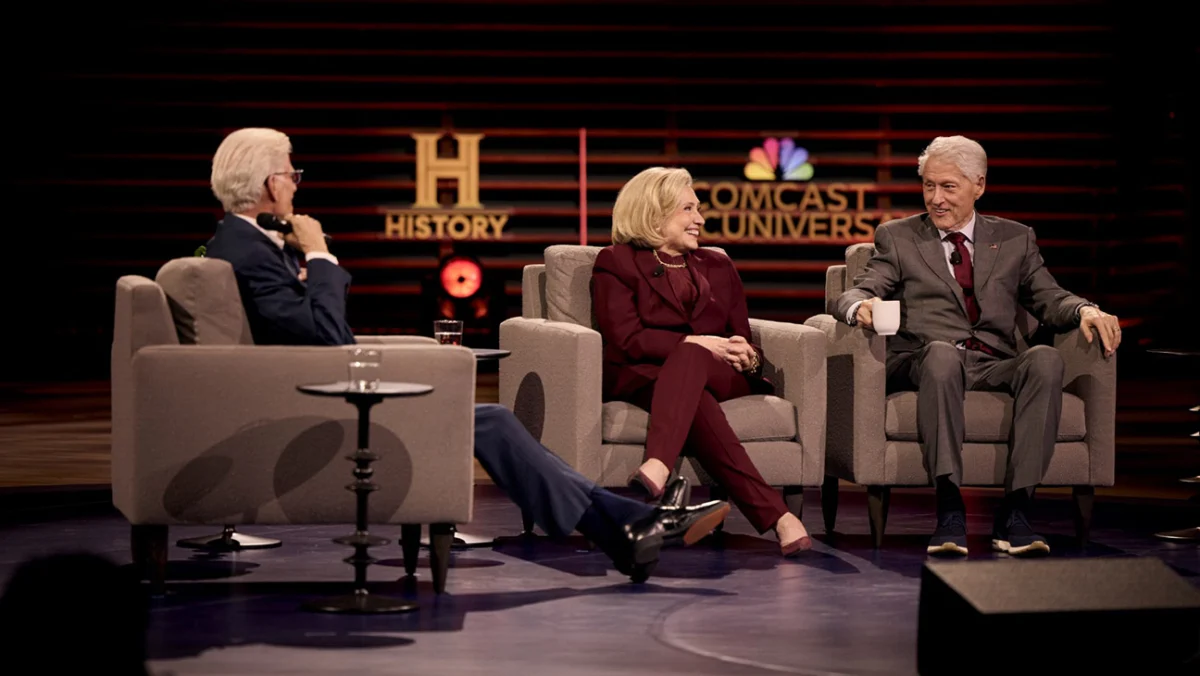
A poignant example of this occurred recently in Philadelphia during the "HistoryTalks" event, which served as a precursor to America’s 250th-birthday celebrations. Among the attendees was George Olson, a 99-year-old veteran of the U.S. Navy. At 18, Olson survived a harrowing kamikaze attack during the Battle of Okinawa—he is believed to be the last living survivor of his ship’s crew.
When he stood before 1,500 people, the room was suspended in a rare moment of collective reverence. As tears welled in his eyes, he spoke of the decades-long weight of surviving when so many of his brothers-in-arms did not. This was not a textbook lesson; it was a visceral connection to the past. It served as a powerful reminder that history is, at its core, a human endeavor. It is the story of human resilience, of the choices made in the face of impossible odds, and of the enduring legacy of those who stepped forward when their country needed them most.
Implications: The Corrective Power of the Past
Many observers today describe our current environment as "uniquely uncertain." The rise of AI, global economic instability, and intense political polarization can indeed feel like a landscape for which there is no map. However, history offers a critical corrective to this sense of doom.
Looking back allows us to realize that every generation has faced its own "unprecedented" moment. Whether it was the chaos of the Civil War, the existential threat of the World Wars, or the rapid industrialization of the Gilded Age, societies have consistently faced periods of intense, disorienting change.
Studying these eras is not an exercise in nostalgia; it is an exercise in perspective. It reveals that progress is rarely linear. It is often messy, jagged, and filled with setbacks. Yet, the persistent ingenuity and resilience of the human spirit have consistently carried societies forward toward horizons that were once deemed impossible.
The Call to Action for the Next Generation
As we approach the 250th anniversary of the United States, we find ourselves at an inflection point. The tools at our disposal—our technological reach, our ability to connect, and our capacity to record and share information—are unparalleled in human history.
However, technology alone cannot provide meaning. We require the right storytellers to navigate the noise. We need voices that can synthesize the complex data of our past and translate it into wisdom for the future. We must continue to invest in the storytelling formats that reach people where they are—whether that is through a high-budget documentary, an educational podcast, or a classroom digital module.
History has always had an audience; the human drive to understand where we come from is a fundamental trait of our species. What history requires now is an active commitment to truth and a willingness to look at the darker corners of our past with the same intensity as our triumphs.
As the President and Chairman of A+E Global Media, my focus remains on this mission: to bridge the gap between the past and the present. The story of our nation—and the broader story of humanity—is still being written. We have it in our power, as Paine suggested, to begin the world over again. But to do so effectively, we must honor the context, the lessons, and the human lives that paved the way for the moment we now occupy. The past is not behind us; it is the foundation upon which we build the next 250 years.
Paul Buccieri is the president and chairman of A+E Global Media, the parent company of the History Channel. He is a leading advocate for the use of modern media to preserve and distribute historical narratives to a global audience.