
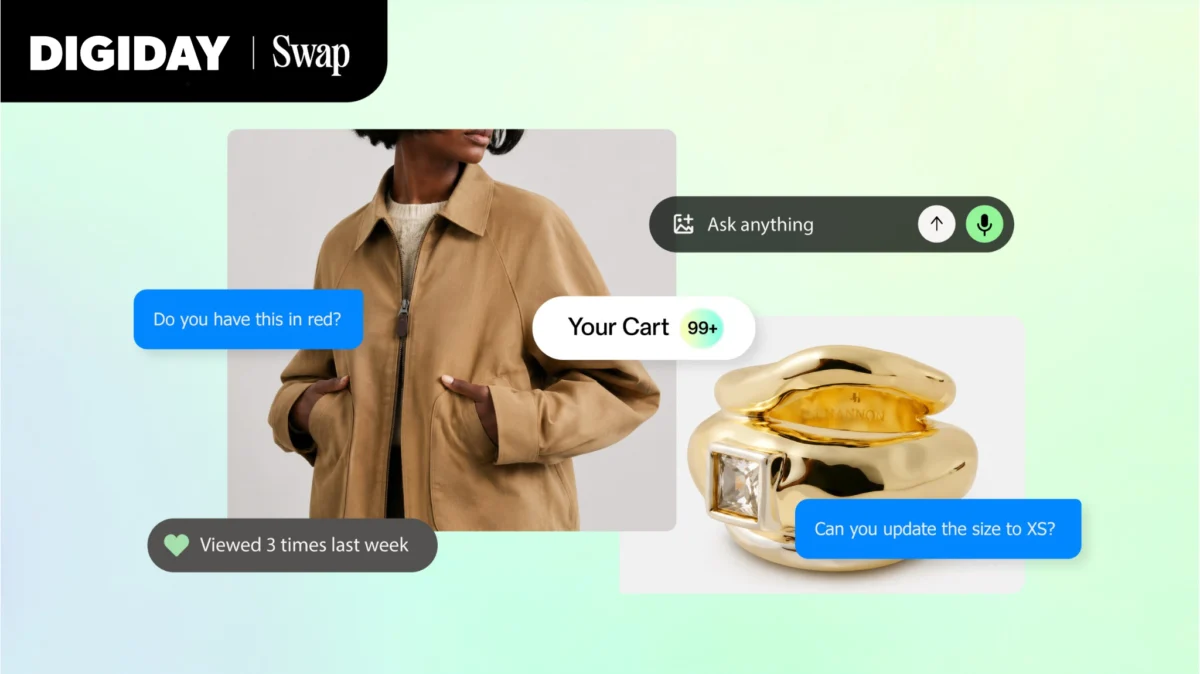
The digital storefront, once the undisputed king of e-commerce, is facing an existential crisis. For over two decades, the "grid-and-checkout" model—a static collection of product pages, search bars, and linear shopping carts—has defined how we buy online. However, as Artificial Intelligence transitions from a novelty to an essential utility, a new paradigm has emerged: Agentic Commerce.
This shift represents a fundamental transformation in the consumer journey. No longer are shoppers merely browsing through static catalogs; they are engaging in fluid, conversational experiences where AI agents act as personal shoppers, brand consultants, and checkout assistants simultaneously. A new State of the Industry report, sponsored by Swap, highlights that this is not a futuristic theory, but a 2026 reality that is reshaping global retail economics.
The Shift Toward Intelligent Discovery
The entry point for modern e-commerce has moved from the search engine to the AI assistant. Consumers are increasingly relying on LLM-powered interfaces to discover products, evaluate options, and navigate the complex process of decision-making.
According to recent Salesforce data, AI and autonomous agents were responsible for driving 20% of all retail sales during the 2025 holiday season, accounting for a staggering $262 billion in consumer spend. This surge has forced brands and retailers to stop viewing AI as a mere customer service tool and start treating it as the primary interface for the entire shopping journey.
"Most people hear ‘agentic commerce’ and think about the discovery moment: how does my brand show up when someone asks an AI what jacket to buy?" says Juan Pellerano-Rendon, Chief Marketing Officer at Swap. "That’s a real and important question to surface in LLMs, but it’s only the entry point. A real agent doesn’t just surface a product and hand the consumer off to a static website. It understands context, it asks questions, and it remembers your history. That continuity is what changes the economics."

Chronology of an E-Commerce Revolution
The rapid adoption of agentic commerce can be traced through a clear trajectory of technological evolution over the past 24 months:
- Early 2025: The rise of "AI-assisted discovery" begins as Google and Amazon integrate advanced AI features, such as "Help Me Decide" and virtual try-on, directly into their platforms.
- Mid-2025: Retailers begin experimenting with off-site agents, using LLMs to drive traffic from platforms like Perplexity and ChatGPT directly to their stores.
- Late 2025: Brands move beyond simple chatbots, deploying "agentic storefronts"—AI-native interfaces that exist on their own domains (.ai) that can handle complex logic, inventory lookups, and personalized styling recommendations.
- 2026 (The Current State): Agentic commerce moves from early adoption to strategic priority. Organizations are now shifting infrastructure to prioritize data readiness and conversational UX as the primary drivers of growth.
Data-Driven Insights: The Survey Findings
To understand the velocity of this shift, Glossy and Swap surveyed 80 brand, retailer, and agency respondents. The data reveals a industry in the midst of a massive pivot:
- Ubiquity of Adoption: 90% of respondents are already using some form of AI to enhance the shopping experience.
- The Rise of the Agentic Storefront: 71% of respondents have optimized their e-commerce sites to be fully discoverable by AI agents. Currently, 40% are actively deploying dedicated agentic storefronts, with another 23% planning to do so within the year.
- The "Discovery Gap": The transition is not without friction. More than 1 in 5 respondents reported a noticeable decline in traditional upper-funnel search traffic, signaling that the SEO-first era is giving way to an AI-first era.
- Core Objectives: Among those investing in agentic tools, the primary goals are clear: increased conversion rates (57%), improved personalization (56%), and better brand discovery (62%).
The Mechanics of the Agentic Storefront
Unlike a traditional website, an agentic storefront functions as a living, breathing entity. It utilizes a vast array of data sources—from core product attributes and real-time inventory to emotional sentiment captured in past customer interactions.
For instance, the jewelry brand Pandora launched an AI agent named "Gemma," designed to mimic the nuance of an in-store associate. Gemma doesn’t just display products; it engages in emotionally driven conversations about gifting and relationships, narrowing down choices based on the specific story the customer is trying to tell. This capability represents a massive departure from the "filter-by-size-and-price" model of traditional web design.
Pellerano-Rendon emphasizes that this shift is about more than just aesthetics; it is about infrastructure. "Traditional e-commerce generates click data," he notes. "An agentic storefront generates conversation: what a customer asked for, how they described what they wanted, and what they rejected. That signal is infinitely richer than a click."

Overcoming Barriers: The Cost and Complexity Debate
Despite the clear benefits, the transition is not without hurdles. Organizations cite data requirements (57%) and the difficulty of measuring Return on Investment (57%) as the leading challenges.
For many, the fear of the "unknown" remains a barrier. However, proponents argue that the metrics already speak for themselves. Early adopters of agentic storefronts are reporting, on average, a 2x increase in conversion rates, a 3x increase in time spent on-site, and a 20% reduction in returns.
"The data we’re already seeing tells us consumers do prefer the better option when they have access to it," Pellerano-Rendon says. "The question for brands isn’t whether to make the shift. It’s whether to make it early enough to matter."
For non-adopters, the primary barriers are cost and bandwidth. Yet, as the technology matures, these costs are expected to stabilize. The industry consensus is that "perfect data" is not required to start; rather, the priority should be the ownership of the customer relationship and the data generated by these interactions.
Future Implications: The $1 Trillion Opportunity
The implications for the future of retail are profound. McKinsey research suggests that by 2030, agentic commerce could generate up to $1 trillion in U.S. retail revenue, with global projections reaching as high as $5 trillion.
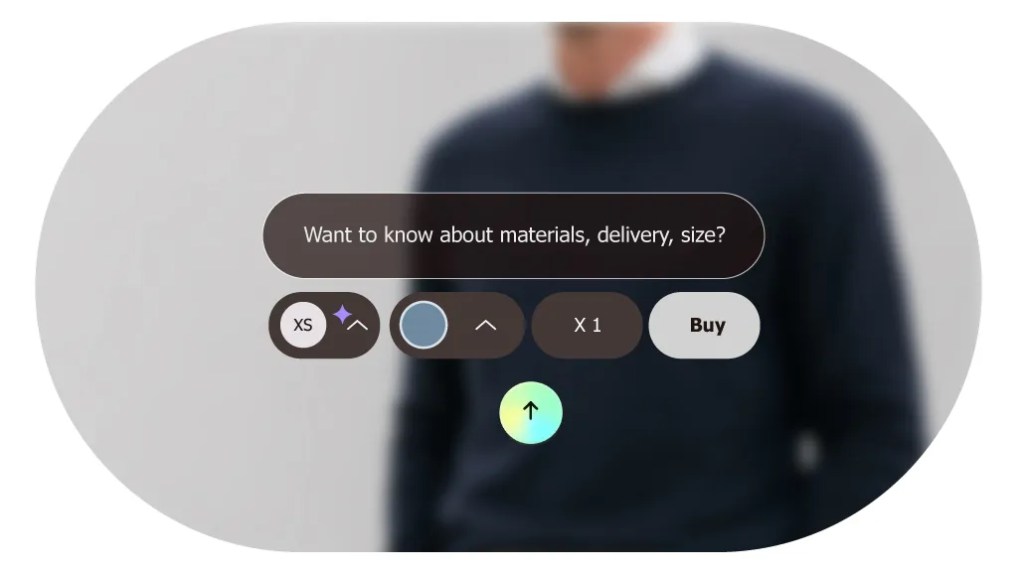
This transformation is likely to split the market into two categories: the early movers who have built proprietary, data-rich agentic experiences, and the "everyone else" who remain tied to the static web. As the "mall directory" style of website begins to feel obsolete to the modern consumer, the brands that fail to adapt risk becoming invisible to the AI agents that are increasingly acting as the gatekeepers of commerce.
"Commerce is shifting faster than it has at any point in the last two decades," concludes Pellerano-Rendon. "The static website had a remarkably long run. What replaces it will be shaped by the brands willing to move before the mainstream catches up. The opportunity isn’t just to adopt a new channel; it’s to define what modern commerce looks like for your category before someone else does."
About Swap Commerce
Founded in 2022 by Sam Atkinson and Zach Bailet, Swap has established itself as a pioneer in the agentic commerce space. By replacing traditional, static websites with immersive, agent-led experiences, the platform facilitates a seamless journey from initial discovery to final purchase. Supporting over 800 brands, Swap provides the critical infrastructure for cross-border trade, inventory management, and global tax compliance, empowering merchants to scale in the age of AI.