The digital landscape of video delivery is currently defined by an insatiable demand for scale. As global audiences migrate from traditional broadcast to internet-based delivery, Content Delivery Networks (CDNs) have become the critical plumbing of the modern internet. One year ago, Google Cloud made waves by positioning its Media CDN as a formidable contender in the high-stakes video streaming market, leveraging the sheer magnitude of its global fiber network.
Today, that offering has evolved from a nascent service into a sophisticated, enterprise-grade ecosystem. By prioritizing operational tooling, architectural flexibility, and cost predictability, Google is signaling a transition from "network-as-a-service" to a comprehensive "broadcast-as-a-service" model.
The Core Transformation: From Capacity to Capability
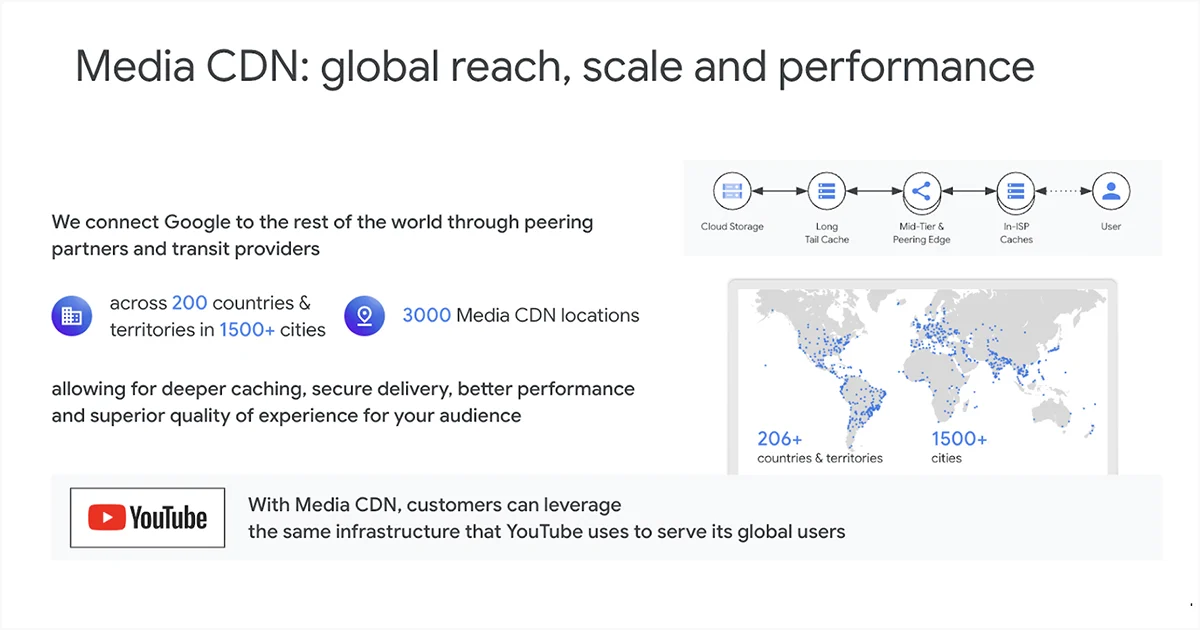
When Google first introduced its Media CDN to the broader market, the value proposition was straightforward: leverage the same infrastructure that powers YouTube to deliver third-party content. While the technical backbone remains unchanged, the last twelve months have seen a pivot toward addressing the nuanced pain points of Tier-1 media broadcasters.
The evolution of Google’s Media CDN is a response to the "streaming wars," where the margin for error during a live sporting event—such as the Super Bowl or the FIFA World Cup—is effectively zero. To compete, Google has focused on three pillars: architectural efficiency, developer-friendly integration, and proactive broadcast management.
Chronology: A Year of Aggressive Expansion
To understand where Media CDN is going, we must look at how it has matured since April 2025:
- Q2 2025 (Initial Positioning): Google launches its focused media-delivery initiative, emphasizing the use of its massive private network to bypass the public internet, thereby reducing jitter and latency for video content.
- Q3–Q4 2025 (Capacity Surge): Recognizing the strain placed on networks by major global sporting events, Google triples its total delivery capacity by integrating dedicated Media CDN infrastructure with its massive YouTube edge footprint.
- Q1 2026 (Operational Maturity): The focus shifts to the "Broadcast Operating Center" experience. The introduction of Monitoring as a Service (MaaS) signals a move to support the human element of streaming—the NOC (Network Operations Center) teams.
- Q2 2026 (Commercial Optimization): Google rolls out monthly savings plans, acknowledging that large-scale enterprise customers require the budget predictability that pure pay-as-you-go models often fail to provide.
Supporting Data: Why "Hairpinning" is the Enemy
At the heart of the latest technical updates is a concerted effort to solve the "hairpinning" problem. In traditional CDN architectures, if a requested file is not found in the regional edge cache, the server must fetch it from a distant origin, sending data back and forth across long distances. This adds significant latency and egress costs.
Addressing Performance Bottlenecks
Google’s introduction of Flexible Shielding is a direct technical intervention against this inefficiency. By adding shield regions in South Africa, the Middle East, and the U.S., Google is allowing content to be cached closer to the edge, significantly reducing the "back-to-origin" trip.
Key technical metrics updated this year include:
- Segment Size Increase: By jumping from 10MiB to 25MiB, Google is catering to the industry’s shift toward high-bitrate 4K and 8K HDR content, which requires larger buffer segments for optimal playback.
- Protocol Interoperability: Support for
HEADrequests and multi-part range requests ensures that Google’s CDN can now seamlessly interact with a wider variety of legacy and cloud-native storage buckets, reducing the friction for engineers migrating to the platform.
Official Responses and Strategic Shift
While specific internal performance metrics are often kept behind closed doors, the strategic narrative coming from Google Cloud leadership is clear: the focus is no longer on "having the biggest network," but on "having the most reliable broadcast toolset."
In industry briefings, representatives have emphasized that the goal is to provide a "broadcast-grade" environment. For broadcasters, the shift toward a monthly committed-use discount model is perhaps the most significant change. By moving away from purely usage-based pricing, Google is inviting long-term partnerships with major streaming services that need to forecast their infrastructure costs with high precision.
The Implications: What This Means for the Industry
The maturing of Google’s Media CDN carries significant weight for the streaming industry at large.
1. The Death of the "Black Box" CDN
Historically, CDNs functioned as black boxes—content went in, and users hoped it came out in high definition. Google’s new Monitoring as a Service (MaaS) is an attempt to turn that box into a dashboard. By providing real-time visibility into origin performance and end-user metrics, Google is empowering broadcasters to act as their own network engineers. This reduces reliance on vendor support during high-pressure events.
2. The Commercial Tug-of-War
With the introduction of enterprise savings plans, Google is directly challenging incumbents like Akamai and Cloudflare. The industry is moving toward a multi-CDN strategy where broadcasters split traffic across multiple providers to ensure redundancy. Google’s improved interoperability—specifically its focus on handling diverse storage configurations—makes it much easier for a broadcaster to add Google as a "second CDN" without needing to re-engineer their entire origin workflow.
3. The Future of Live Events
The next phase for Media CDN will likely involve AI-driven predictive scaling. As traffic patterns become more volatile, the ability to "pre-warm" caches based on predicted viewership surges will become the gold standard. If Google can integrate its proprietary AI models into its CDN monitoring tools, it could move from a reactive model to a predictive one, where the network anticipates a spike before the first viewer even logs in.
Critical Challenges Ahead
Despite these advancements, the platform is not without its hurdles. Expanding capacity is one thing; maintaining performance consistency across emerging markets remains another. While the new shield regions in the Middle East and Africa are a major step forward, the "last mile" delivery in regions with developing internet infrastructure remains a challenge that no CDN can solve alone.
Furthermore, as the platform adds more "broadcast-grade" features, the complexity of the configuration increases. Google must ensure that its user interface and documentation keep pace with these features so that the barrier to entry doesn’t become a barrier to adoption for mid-sized media companies.
Conclusion: A Platform Reaching Adulthood
One year ago, Google’s Media CDN was a promising experiment in leveraging internal network scale. Today, it is a robust, competitive, and feature-rich platform that understands the specific, high-pressure requirements of the modern broadcaster.
The move toward Flexible Shielding, the adoption of predictable pricing models, and the rollout of proactive monitoring tools indicate that Google has listened to the market. While the ultimate test will be how these systems handle the next generation of global, record-breaking live events, the trajectory is unmistakable. Google is no longer just providing the pipes; they are providing the operating system for the future of global television.
For the streaming industry, this represents a welcome shift toward higher standards of transparency, performance, and commercial flexibility. As the lines between internet video and traditional broadcast continue to blur, the tools being built by Google today will likely form the foundation of the entertainment experiences of tomorrow.