In an era where generative AI has commoditized general information, the value of unique, hard-won expertise is paradoxically reaching an all-time high. While ChatGPT can synthesize a generic marketing plan in seconds, it lacks the "secret sauce" of a seasoned professional: the specific, battle-tested frameworks that actually drive results.
Kelly Sinclair, a prominent marketing strategist, suggests that the next frontier for consultants, coaches, and course creators is not just teaching people what to do, but building the systems that allow them to do it. By leveraging the "Bot Squad" model, experts are transforming static digital courses into dynamic, AI-powered implementation engines that don’t just inform—they execute.
The Shift: From Education to Implementation
For years, the digital economy has been defined by the "information product"—the ebook, the video course, or the webinar. However, data from Thinkific’s 2025 study reveals a sobering reality: traditional course completion rates hover between a meager 10% and 20%. The reason is rarely a lack of motivation; it is a lack of momentum. Clients often hit "implementation friction"—the dreaded blank page or the technical hurdle that stops them from turning theory into practice.
When AI tools are integrated into these learning environments, completion rates climb to 70% to 80%. This is the power of the "Bot Squad"—a collection of specialized, interconnected AI tools that guide a user through a multi-step workflow. By automating the tedious aspects of execution, experts allow their clients to focus on high-level strategy, while the AI handles the heavy lifting of the process.
Identifying Opportunities: The Four Diagnostic Pillars
Not every business process is ripe for AI transformation. To identify where an AI tool will deliver the most ROI for your clients, consider these four diagnostic markers:
- The Repetition Trap: Where do you find yourself answering the same questions, providing the same feedback, or explaining the same concept repeatedly? These areas are prime candidates for an automated, customized AI interface.
- The Implementation Gap: Where do clients typically drop off after receiving your advice? If they know the "what" but struggle with the "how," an AI tool can bridge the gap, providing real-time, iterative guidance.
- The "Skip Zone": Every professional has a segment of their methodology that clients deem "optional" or "too difficult," even though it is essential for success. AI can lower the barrier to entry, removing the intimidation of a blank page and turning a "heavy lift" into a manageable task.
- The Confidence Gap: Sometimes, clients possess the skills but lack the certainty to execute. A tool that offers validation, critique, or step-by-step reinforcement can provide the psychological safety needed to move forward.
The IPO Framework: Structuring Your Intellectual Property
To build an effective AI tool, one must move beyond "prompt engineering" and into the realm of structured architecture. Kelly Sinclair advocates for the IPO Framework, which ensures that tools remain user-agnostic while producing highly personalized outcomes.
- Input (The Client’s Variable): The foundation of the tool. This includes the data, context, or specific hurdles the client provides. It is the "raw material" that the AI will transform.
- Process (The Expert’s Value): This is where the magic happens. It consists of three elements: a clearly defined goal, precise instructions (the "system prompt"), and the training resources. By feeding the AI transcripts from your coaching sessions, your proprietary frameworks, and examples of successful outputs, you embed your unique "lens" into the machine.
- Output (The Deliverable): Whether it is a pitch deck, an audit report, or a content calendar, the output must be defined in advance. Your design choices for the Input and Process phases should be reverse-engineered from this desired final result.
Real-World Applications: Three Case Studies
The efficacy of the IPO framework is best observed in practice.
- Moxie (Messaging Strategy): Michelle, a communications expert, developed a bot that automates voice-of-customer research. By feeding raw customer interviews into the tool, the bot extracts patterns and generates high-conversion marketing copy, bypassing weeks of manual analysis.
- Valerie the Visibility Auditor: Kelly Sinclair’s own tool, Valerie, monitors a client’s weekly activities and evaluates them against an ROI framework. It serves as an objective "coach," redirecting clients toward high-impact tasks like podcasting and networking, rather than busywork.
- PR Coaching Bots: Nicole, a journalist and PR expert, created a three-stage bot squad. The first bot crafts a messaging guide; the second identifies ideal media targets based on that guide; and the third generates personalized, human-sounding pitches.
The Delivery Architecture: Build, Rent, or Code?
Once the framework is ready, the creator must decide on the delivery mechanism. Each has distinct implications for scalability and security.
1. Custom GPTs (The Prototype)
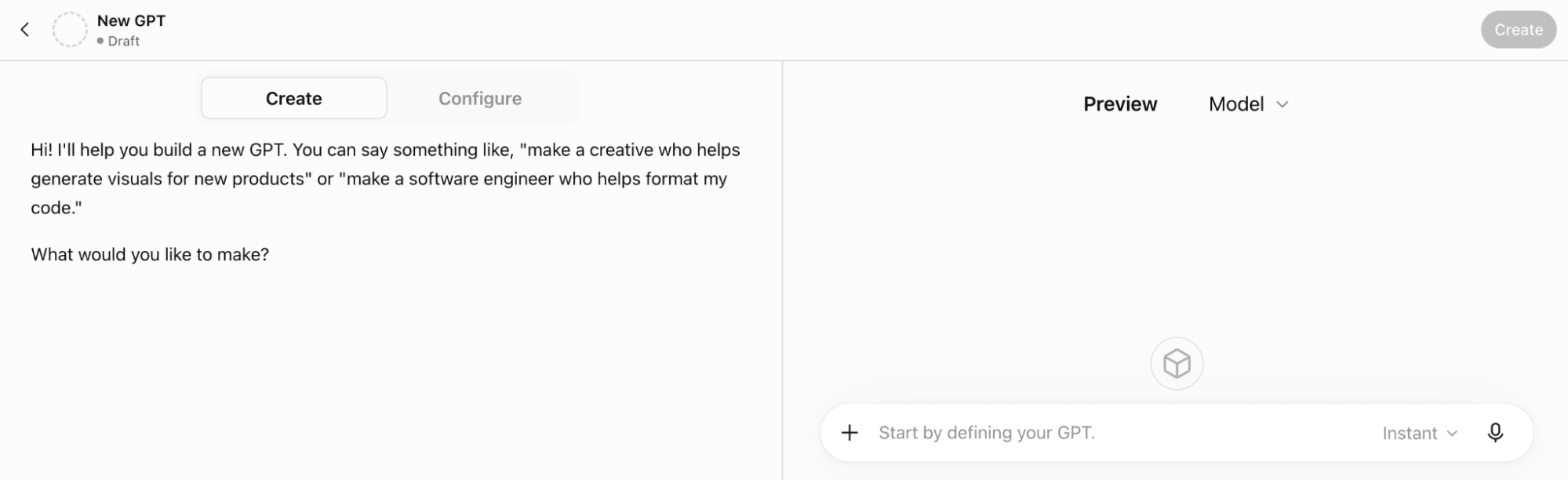
Building within the ChatGPT interface is the fastest way to validate an idea. It is conversational, low-cost, and requires zero technical overhead. However, it is inherently siloed. Managing access for a large client base is cumbersome, and reliance on OpenAI’s platform means you are subject to their frequent, sometimes disruptive, model updates.
2. Claude Skills (The Workflow Orchestrator)
Claude’s "Skills" offer a more robust, multi-agent approach. They allow for complex, multi-step workflows to function within a single window. Furthermore, these skills are increasingly portable, meaning the framework can be deployed across various platforms. This approach is ideal for subscription-based models, as the expert can push updates to the "skill" as their methodology evolves.
3. Standalone Software (The Scaled Solution)
For those aiming to build a true SaaS business, platforms like Lovable or custom-coded solutions offer the ultimate control. This route requires a focus on multi-tenancy—ensuring that Client A’s data is never exposed to Client B. While this is the most resource-intensive path, it offers the greatest security, brand control, and long-term asset value.
Implications for the Expert Economy
The transition to AI-powered tool suites carries profound implications for the consulting industry. We are moving toward a hybrid model where "human-in-the-loop" services become the premium offering, while the "implementation layer" is handled by proprietary AI.

Experts who successfully adopt this model can expect to:
- Increase Retention: By providing tools that clients use daily, you transition from a "one-off" course provider to an essential part of their workflow.
- Scale Revenue: You no longer trade time for money on the foundational, repetitive aspects of your consulting.
- Improve Client Outcomes: As seen in the 70–80% completion rates, the presence of AI tools ensures that your wisdom is actually applied rather than just consumed.
Testing: The Non-Negotiable Final Step
Because AI is non-deterministic, testing is the most critical phase. Developers must stress-test their bots against a wide array of user inputs to ensure the output remains within the "expert standard." It is not enough to build a tool that works under perfect conditions; you must build one that handles the "messiness" of real-world data without breaking your established frameworks.
As the market for expert-backed AI matures, the winners will not necessarily be those with the most complex code, but those with the most coherent methodology. By packaging your expertise into a repeatable, automated system, you are not just selling a tool—you are selling a more efficient version of your clients’ own success.