
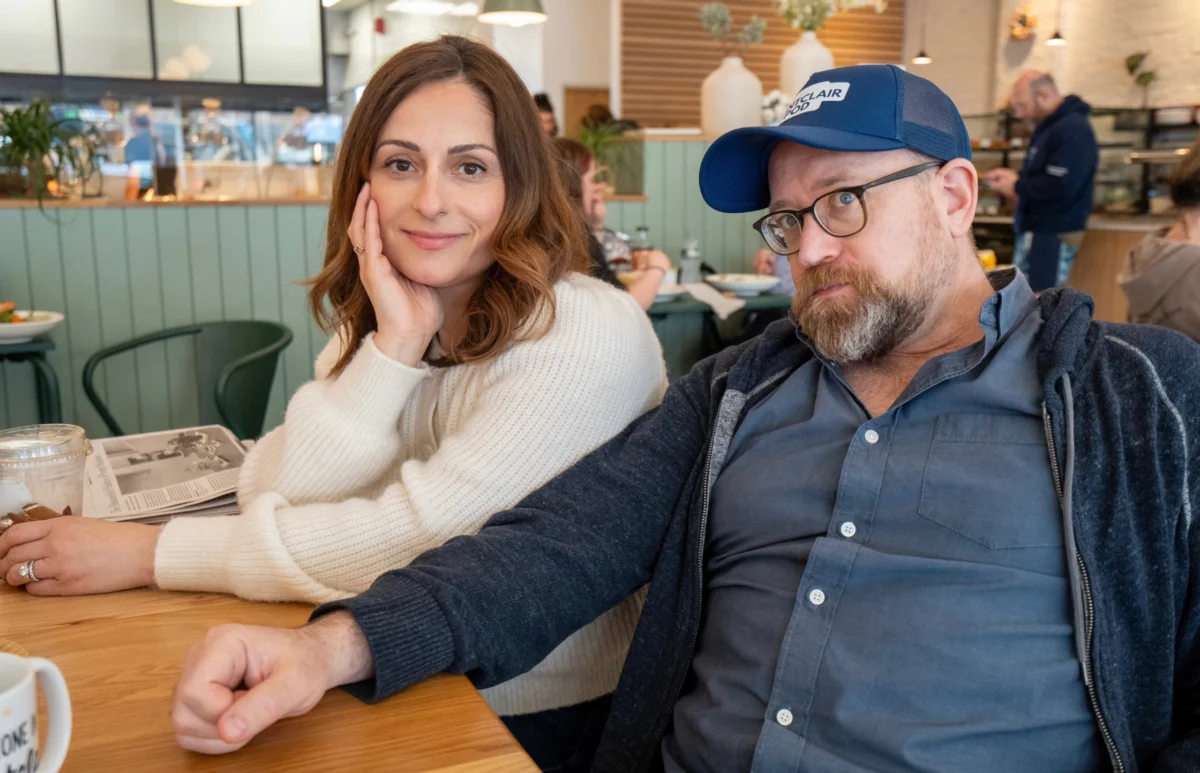
In an era where local newsrooms are shuttering at an alarming rate, leaving "news deserts" in their wake across the United States, a quiet revolution is taking place in the suburbs of New Jersey. The Montclair Pod, a hyperlocal podcast helmed by two Columbia Journalism School alumni, has emerged as an unlikely powerhouse, proving that the appetite for community-centric accountability is not only alive but commercially viable. By turning the microphone toward the granular, often messy realities of suburban governance, hosts Farnoosh Torabi and Michael Schreiber have transformed from observers into the town’s most influential media figures.
The Catalyst: A Budgetary Bombshell
The ascent of The Montclair Pod was solidified during a routine interview in September of last year. Ruth B. Turner, the superintendent of schools in Montclair—an affluent, commuter-heavy enclave just 45 minutes by train from Manhattan—sat down with the hosts to discuss the new academic year.
Montclair had been grappling with a public school budget deficit, initially reported to be approximately $11 million. However, during the candid, conversational atmosphere of the podcast, Turner let slip a figure that stopped the hosts in their tracks: the actual deficit was closer to $18 million.
For Torabi and Schreiber, both of whom have children in the district, the realization was immediate. "We broke that news," Torabi recalls, "and it went wild." The disclosure did more than just clarify a ledger; it ignited a town-wide firestorm. The subsequent debates over tax hikes versus state loans, and the involvement of high-profile political figures like New Jersey Governor Mikie Sherrill, cemented the podcast as the town’s de facto nerve center. The show moved beyond gossip, becoming a primary source for critical civic discourse.
Chronology: From ‘Gabby’ Beginnings to Civic Pillar
The journey of The Montclair Pod began eighteen months ago, not as a hard-hitting investigative unit, but as a community experiment.
- The Inception: Both Torabi and Schreiber, who possess deep roots in professional media—Torabi as a personal finance expert and podcast host, and Schreiber as a media operations consultant—sought a way to engage with their new home. They initially planned for a limited run of 12 episodes, aiming for something "gabby and gossipy."
- The Pivot: As they began covering local dining, transportation, and school board politics, they realized the town was hungry for substance. The "gossip" evolved into a consistent drumbeat of accountability journalism.
- The Expansion: The show began booking heavy hitters, including U.S. Senators Cory Booker and Andy Kim, alongside the aforementioned Governor Sherrill.
- The Recognition: The podcast’s influence was formally recognized when it secured a Signal Award for "Best Local News Podcast," a testament to its production quality and community impact.
Supporting Data: The Economics of the Niche
The success of The Montclair Pod challenges the pervasive narrative that local news is a dying business model. To date, the show has garnered nearly 70,000 downloads and boasts over 2,000 dedicated subscribers.
Perhaps more impressively, the show has generated $80,000 in revenue in just a year and a half. Crucially, this revenue was driven almost entirely by organic demand; local businesses approached the hosts directly for sponsorship opportunities. Torabi estimates that with a dedicated sales team, the operation could easily reach "mid-six figures annually."
These figures offer a blueprint for what the hosts call "Montclair-ish" towns—communities with populations between 30,000 and 100,000, median household incomes hovering around $125,000, and a highly engaged, educated populace. From Boulder, Colorado, to Bethesda, Maryland, and Evanston, Illinois, the hosts see a replicable model that leverages low barriers to entry and high community stakes.
The Competitive Landscape and Official Responses
The rise of any influential media entity often creates friction with incumbents. In Montclair, this tension is palpable. The hosts note a growing cold shoulder from the Montclair Local, the town’s traditional print-based news outlet. According to Torabi, the paper’s reporters no longer appear on the podcast, leading to what she describes as "uncomfortable" encounters at local events.
Liz George, publisher of the Montclair Local, has characterized this tension as "manufactured friction," attributing the lack of collaboration to simple scheduling conflicts. This dynamic underscores a broader struggle in the media industry: the transition from traditional, legacy-based reporting to the agile, personality-driven digital models that define the modern era.
Despite this, the ecosystem in Montclair remains robust. The town is still served by outlets like TAPinto Montclair, the Montclair Patch, and the Jersey Bee, as well as niche newsletters like Andrew Rice’s My Montclair Education, which tracks the budget crisis via Substack. As Torabi succinctly puts it, "There’s room, guys. The more the merrier."
Implications for the Future of Local Journalism
The success of The Montclair Pod serves as a counter-narrative to the collapse of legacy media outlets like the Star-Ledger and the Jersey Journal. While those papers have suffered from the high overhead costs of print plants and shrinking advertising budgets, Torabi and Schreiber advocate for a "flywheel" model.
In this structure, the podcast serves as the core engine, from which short-form social media clips, deep-dive newsletters, and YouTube segments are spun off. This creates a multi-platform presence that maximizes engagement without the crushing overhead of traditional print journalism.
Furthermore, the hosts emphasize a shift in mindset for aspiring journalists. While top-tier media jobs in major metros remain the dream for many, the "riches in the niches" are found in local communities. The work of informing a citizenry about their school budget, their local transit, and their municipal elections is arguably more vital than ever.
A Watchdog with a Heart
Perhaps the most significant takeaway from the Montclair experience is the evolution of the journalist’s relationship with their beat. Traditionally, journalists are trained to maintain an objective distance—a "view from nowhere." Torabi challenges this, admitting she is deeply invested in the success of the town.
"I don’t know if, as journalists, we can say we want something to succeed, but I want this town to succeed, and if that’s my bias, so be it," she said. This emotional investment is clearly reciprocated by the community, who regularly approach the hosts at the grocery store or during local festivals to discuss the latest episode.
As the town moves toward a forensic audit of its finances this summer, the podcast continues to provide the necessary scrutiny to ensure the process remains transparent. While some residents still hold onto theories of corruption or malfeasance regarding the missing millions, the hosts remain committed to the evidence.
"We would love to break that story," Torabi said with a smile. "If you’re holding on to some information, or you have sources, you need to come out with that."
Ultimately, The Montclair Pod is more than a show; it is an experiment in civic participation. By proving that a well-produced, hyper-focused, and financially sustainable media outlet can become the heartbeat of a community, Torabi and Schreiber have provided a beacon of hope for local news nationwide. In a digital age that often isolates us, they have successfully brought the town square back to life—one episode at a time.