Main Facts
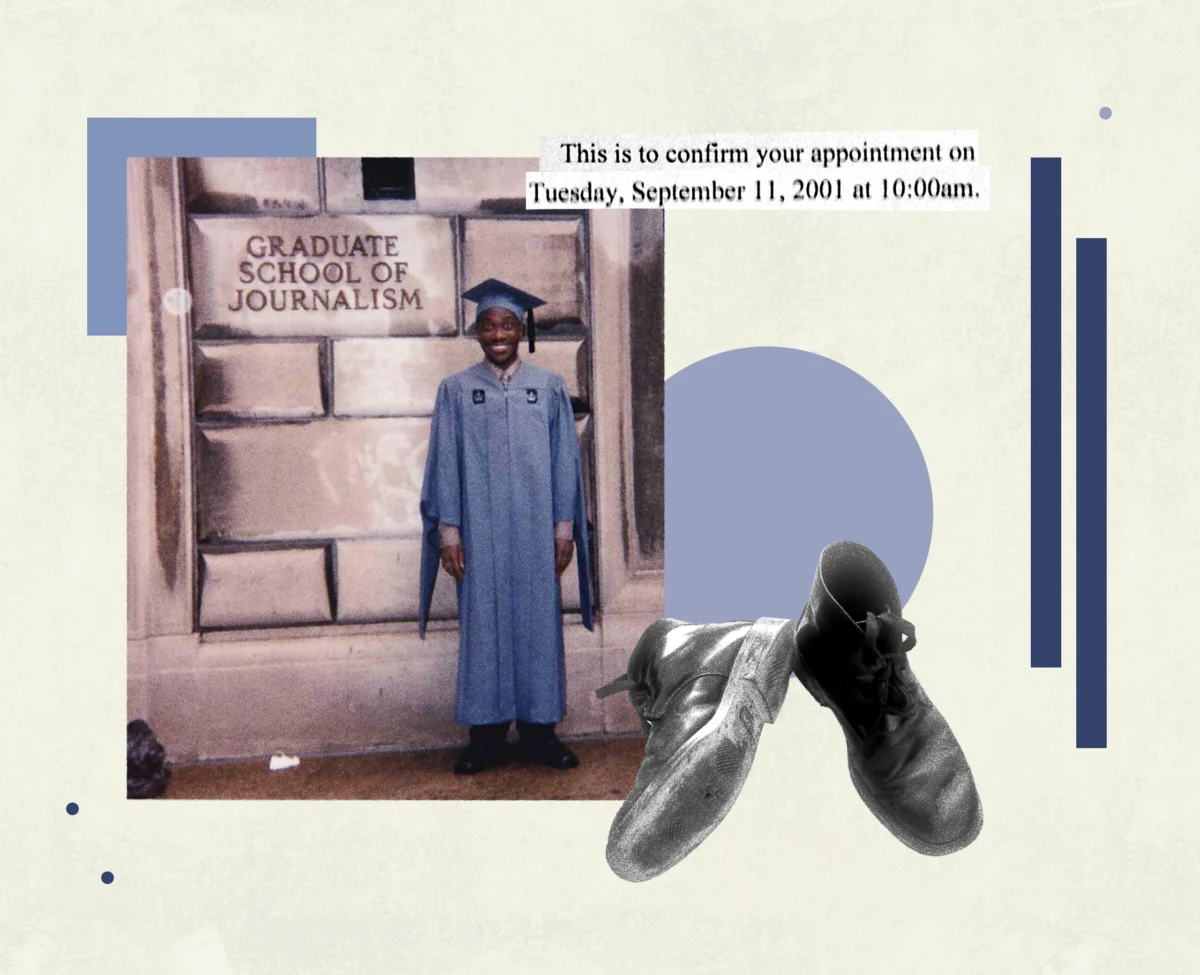
Twenty-five years after the morning of September 11, 2001, the physical relics of that day have largely been swept away, archived, or enshrined in museums. Yet, for Nicholas Boston, a tenured professor of media studies at the City University of New York (CUNY) Lehman College, one artifact remains stubbornly undiscarded: a pair of black chukka boots. Stored carefully in a plastic bag, their soles are still dusted with the microscopic, toxic ash of the collapsed World Trade Center towers.
Boston’s personal chronicle of September 11 is inextricably bound to the harrowing genesis of his career in journalism. On that crisp autumn morning, a young Boston—a member of the Columbia Journalism School Class of 1999, the final cohort of the twentieth century—stepped out of his Upper Manhattan apartment to attend a job interview for an entry-level reporter position at a Madison Avenue office building.
What followed was a convergence of historical trauma and professional transformation. The unfolding terrorist attacks, which ultimately claimed nearly 3,000 lives across New York City, Arlington, Virginia, and Somerset County, Pennsylvania, shattered the American illusion of invulnerability. For Boston, the attacks simultaneously ruptured the traditional pipelines of the media industry, halted the economic momentum of the dot-com boom, and permanently altered the nature of reporting, press discourse, and public memory.
Chronology: A Day Unraveled
To understand how September 11 reshaped the media landscape, one must retrace the harrowing chronology of that Tuesday morning through the eyes of a bewildered, ambitious young journalist navigating a city descending into chaos.
Pre-Dawn and the Transit North
Before stepping onto the street, Boston had already heard fragments of a terrifying report: a plane had struck the World Trade Center. Vague and heavily distorted details rippled through the city. As he boarded the subway, the journey toward his interview south of Midtown was repeatedly interrupted. At every stop, the train conductor made increasingly desperate announcements, terminating the line further and further away from the financial epicenter of lower Manhattan. The faces of fellow passengers mirrored a collective, mounting dread.
The Madison Avenue Interrupted Interview
Upon reaching the Midtown office building at 10:00 AM, the receptionist delivered a chilling update: "A plane crashed into the Pentagon."
Guided into a windowless conference room, Boston sat in solitude until the deputy editor arrived, shaken. The staff had been watching live television feeds of the devastation in the adjacent newsroom. They attempted to proceed with the interview, but the weight of the unfolding disaster rendered the professional formality absurd. The editor suggested moving directly to an editorial test.
Before the test could begin, the editor returned, visibly paler and more stunned than before: neither the South Tower (which fell at 9:59 AM) nor the North Tower (which fell at 10:28 AM) was still standing. The interview was aborted indefinitely.
Ground Zero and the Improvised Desperation
Rather than retreating home, Boston connected with a close friend and former classmate from the Columbia Journalism School who was working for a local paper nearby. Together, they walked toward the plume of smoke and the devastation of the Financial District.
Every surface in lower Manhattan was soon coated in a thick, pale-gray, cakey powder—buildings, lampposts, street signs, and pavement. Amid the confusion, Boston and his friend encountered ordinary citizens displaying extraordinary, desperate resourcefulness. Near City Hall, they watched workers crammed onto the back of a flatbed truck hammering sheets of wood to beams, manufacturing makeshift stretchers to take down to the smoldering ruins of Ground Zero.
At approximately 5:20 PM, the adjacent 7 World Trade Center collapsed, signaled by a deep, subterranean rumbling that prompted Boston to remark to his companion, "This isn’t over yet."
The Symbolic Closure
As night fell, the two journalists retreated north, reaching Canal Street by 7:00 PM. Law enforcement had already erected emergency barricades that would restrict unauthorized entry to Lower Manhattan for months. Seeking a semblance of normalcy, Boston steered his friend toward his favorite magazine store on Broadway at Broome Street, only to find it shuttered. In hindsight, Boston recognizes that futile errand as an act of psychological defense—a way to postpone sorrow through the delusion of routine. The locked doors of the magazine shop also served as an early, grim augury for the print media industry: the accelerating decline of print sales and the impending constriction of the traditional publishing world.
Supporting Data: The Shifting Sands of the Media Workforce
The professional shockwaves of 9/11 hit an American media ecosystem that was already undergoing profound structural churn. The late 1990s and early 2000s marked the chaotic twilight of the dot-com boom, driving a generation of young digital-native reporters into "Silicon Alley" and web-based publications.
Prior to his J-school graduation, Boston’s career trajectory had already intersected with this volatile digital shift. Months before the attacks, he had worked at a financial-journalism website headquartered in the Trinity Building at the mouth of Wall Street—a mere ten-minute walk from the World Trade Center. He had subsequently left for another dot-com venture, only to be laid off when the Web 1.0 bubble burst. Had he remained at his previous post, he would have been at the epicenter of the attack zone on the morning of September 11.
The attacks froze media hiring nationwide. The Madison Avenue publication never rescheduled Boston’s interview. Instead, economic necessity and a shifting sense of civic purpose led him to accept a position as communications director for a nongovernmental organization focused on environmental justice—ironically, one of the first advocacy groups to publicly raise alarms regarding the toxic environmental and health impacts of the disaster on rescue workers and lower Manhattan residents.
Subsequent stints at the New York Observer and Condé Nast exposed Boston to the deep fractures within legacy print media. These post-9/11 labor market realities planted the academic seeds that eventually led him back to university under a full-ride scholarship to study the emerging digital paradigms of media aspiration for his doctorate.
Official Responses and the Evolution of Press Discourse
In the immediate aftermath of September 11, official government and press responses were defined by a unified, patriotic fervor and an unprecedented consolidation of national narrative. The Bush administration’s framing of the "War on Terror" was largely amplified and unquestioned by a mainstream media striving to comfort a grieving nation.
However, over the subsequent quarter-century, the press discourse surrounding 9/11 underwent a significant, phased evolution:
- The Immediate Era (2001–2010): Media coverage focused heavily on human interest stories, heroism, national security imperatives, and the grief of direct survivors and victims’ families.
- The Critical Era (2010–2020): Media analysis expanded to scrutinize government overreach, the erosion of civil liberties via the PATRIOT Act, the failures of intelligence agencies, and the protracted, complicated legacies of the wars in Iraq and Afghanistan.
- The Historical Era (2020–Present): For modern media scholars and their students, September 11 has transitioned from a living memory of visceral trauma into a historical event.
As a professor teaching media survey courses, Boston has observed a distinct generational shift in how students engage with the topic. For the first fifteen years following the attacks, classrooms were frequently heavy with despair and personal testimonies of loss. In recent years, however, student engagement has shifted from emotional mourning to staid, objective historical contemplation.
Implications: The Future of Journalism in a Post-9/11 World
The legacy of September 11 extends far beyond geopolitics and urban architecture; it fundamentally reshaped the sociological architecture of the journalism profession.
Historically, graduates of elite institutions like the Columbia Journalism School would cut their teeth in smaller, regional media markets before attempting to break into major metropolitan hubs like New York City. The late-90s digital expansion, accelerated and traumatized by the events of 9/11, short-circuited these traditional career pipelines. The subsequent rise of social media, algorithmic news distribution, and the gig economy completed the decentralization of the newsroom.
Furthermore, the physical destruction of lower Manhattan’s media infrastructure served as an early warning for an industry that would soon face systemic economic contraction. The closure of print shops, independent magazine stores, and local bureaus mirrored the broader vulnerabilities of a press corps forced to adapt to perpetual crisis reporting.
Today, as journalism navigates an era defined by artificial intelligence, widespread institutional distrust, and economic precarity, the lessons of September 11 remain vital. They remind us of the indispensable role of the on-the-ground reporter—those who, armed with little more than a notebook, a flip phone, and boots caked in the dust of history, bear witness when the world as we know it collapses.