
A comprehensive new study from the Pew Research Center, conducted between February and May 2026, reveals a significant transformation in the geopolitical landscape. As the world moves further away from the acute isolationism of the COVID-19 pandemic era, global public opinion toward China has experienced a notable, albeit uneven, rebound. The findings, based on interviews with 45,658 respondents across 37 nations, suggest that China’s international image is strengthening—a trend driven as much by the perception of Beijing’s rising influence as by the concurrent, documented decline in the international standing of the United States.
The State of Play: Main Findings
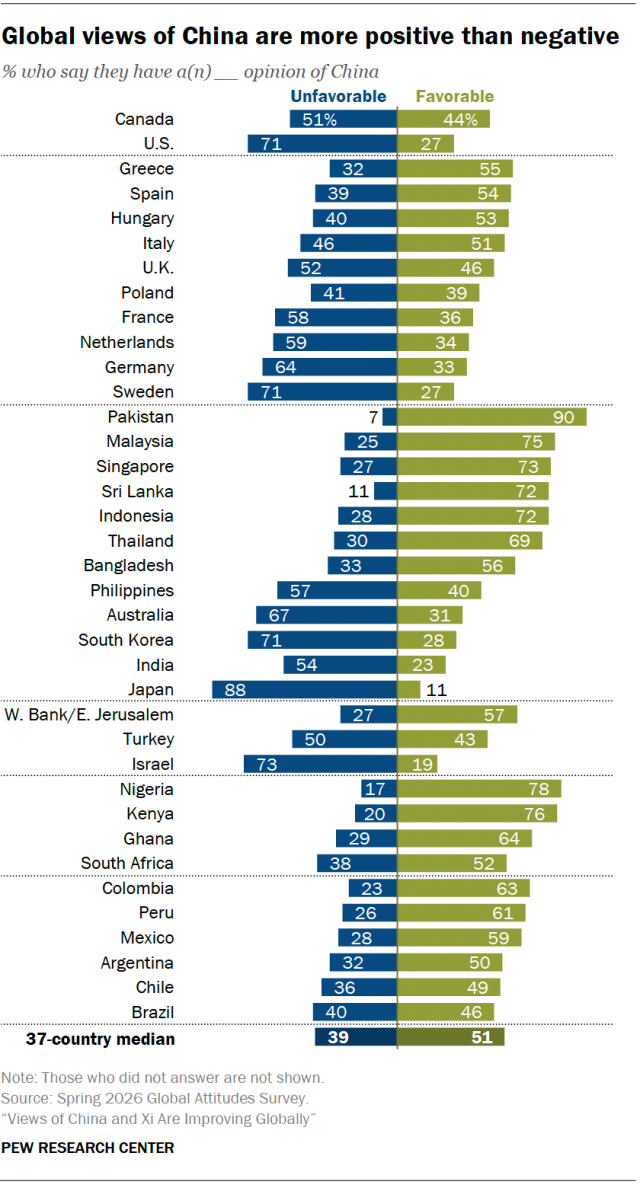
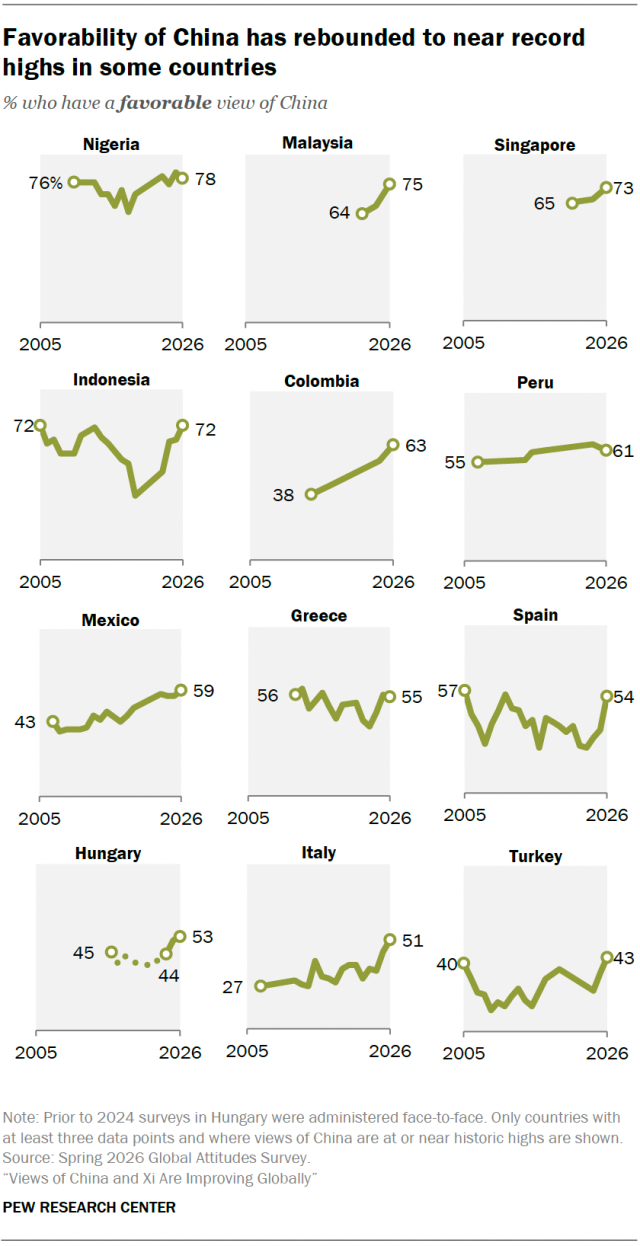
The 2026 data indicates a median of 51% of respondents across the 37 surveyed countries hold a favorable view of China, compared to 39% who view it unfavorably. This represents a significant recovery from the historic lows observed during the height of the global pandemic.

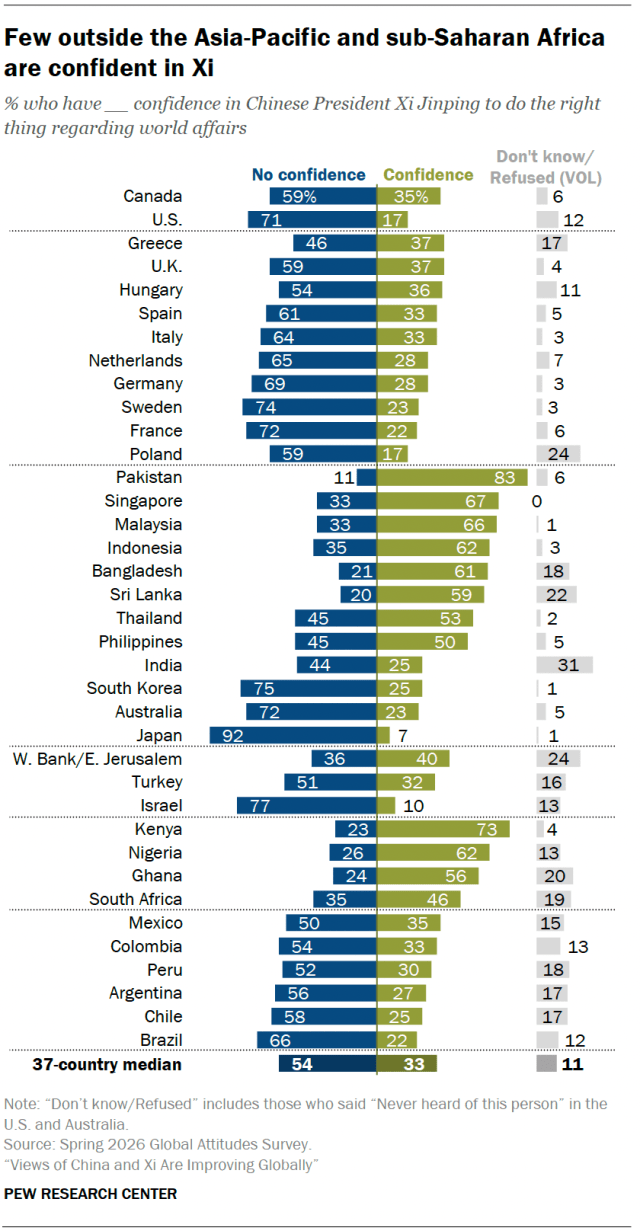
Perhaps most striking is the comparative metric between the two global superpowers. In a stark reversal of historical trends, China is now viewed more favorably than the United States in 25 of the 37 countries surveyed. Furthermore, confidence in Chinese President Xi Jinping to "do the right thing regarding world affairs" now eclipses confidence in U.S. President Donald Trump in 22 countries. This shift underscores a growing skepticism toward U.S. foreign policy and a relative stabilization of China’s global reputation, particularly in the Global South.
A Chronological Perspective: From Pandemic Lows to 2026
To understand the current climate, one must look back at the early 2020s. Following the global outbreak of COVID-19, China’s reputation plummeted globally, fueled by uncertainty regarding the virus’s origins and broader concerns about its assertive foreign policy. For several years, public opinion polls across Europe, North America, and parts of the Asia-Pacific showed record-high hostility toward Beijing.
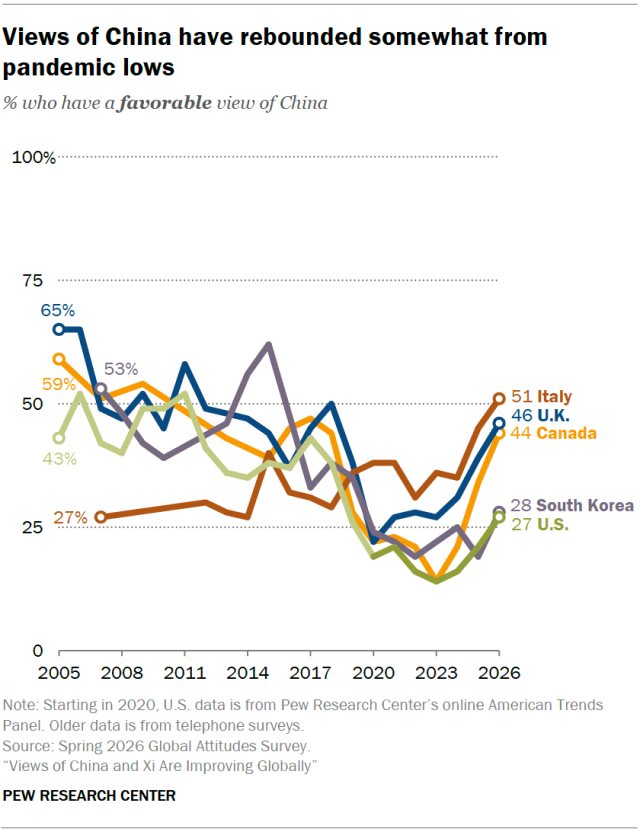
However, the period from 2024 to 2026 has marked a steady, if not dramatic, correction. In Italy, for instance, favorability toward China has climbed to 51%—a 20-point increase since 2022 and the highest level seen in nearly two decades. Similarly, Spain has witnessed a 17-point surge, marking the first time since 2011 that Spanish public opinion of China has shifted into net-positive territory.
Conversely, some nations have seen a marked cooling of relations. Israel, which once recorded a 66% favorability rating for China in 2019, has seen that figure crater to just 19% in 2026. This precipitous drop reflects growing frustration with Beijing’s perceived lack of constructive engagement in Middle Eastern peace processes.
Supporting Data: The Wealth and Geography Divide
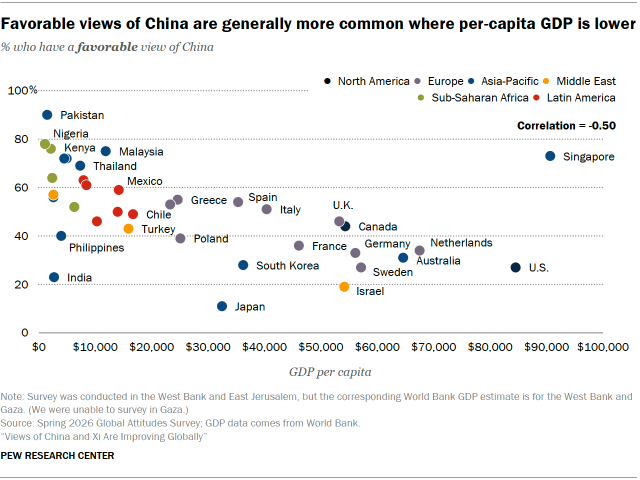
The research highlights a distinct correlation between a nation’s economic status and its perception of Beijing. Wealthier nations, particularly those in the G7 and parts of the Asia-Pacific (such as Japan, Australia, and South Korea), remain deeply skeptical of China. In these developed economies, concerns regarding human rights, economic competition, and regional security remain at the forefront of public discourse.
Conversely, middle-income nations—particularly those in sub-Saharan Africa and parts of Latin America—have increasingly embraced China’s economic overtures. This is not coincidental. China’s "zero-tariff" policies for African nations and its role as a primary financier for infrastructure projects in countries like Argentina, Pakistan, and Indonesia have cultivated a more favorable image.
The data also reveals a generational and ideological split. Across most countries, younger respondents—those under 35—are statistically more likely to view China favorably than their older counterparts. Additionally, those who identify with the political left tend to hold more positive views of Beijing, while those on the right are generally more critical.
The "Personal Freedoms" Gap
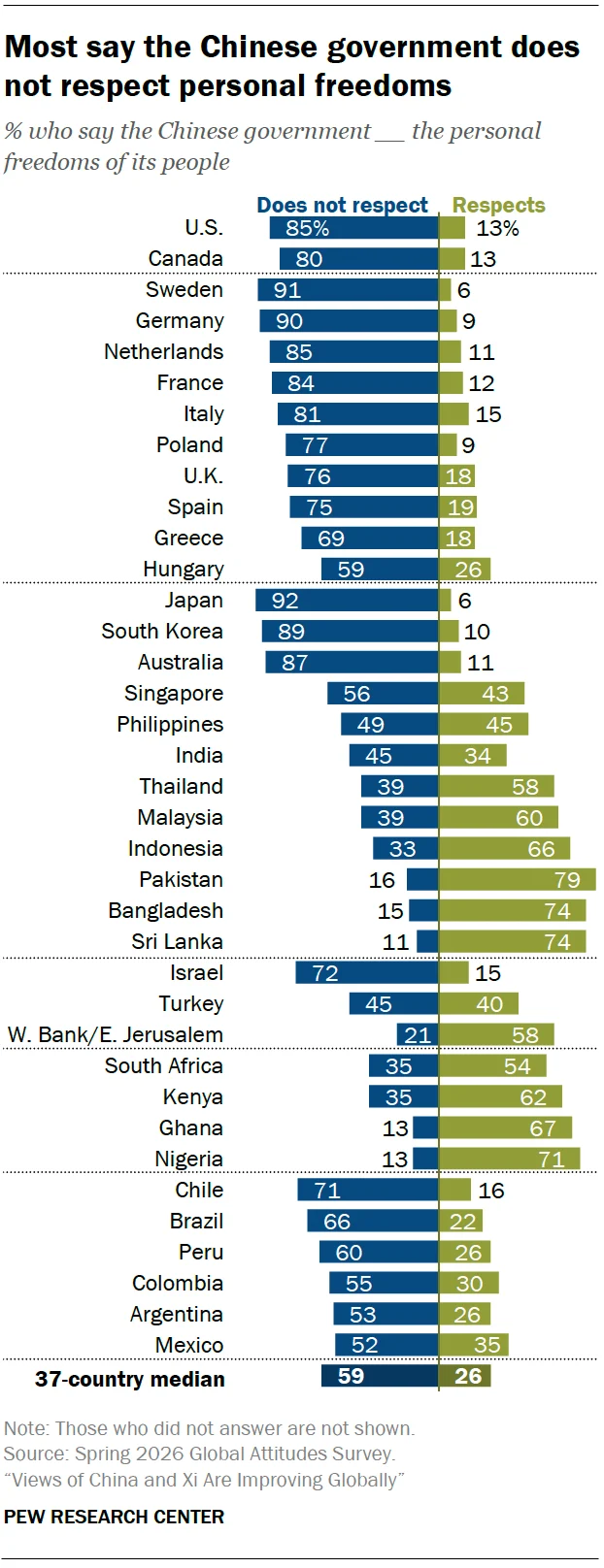
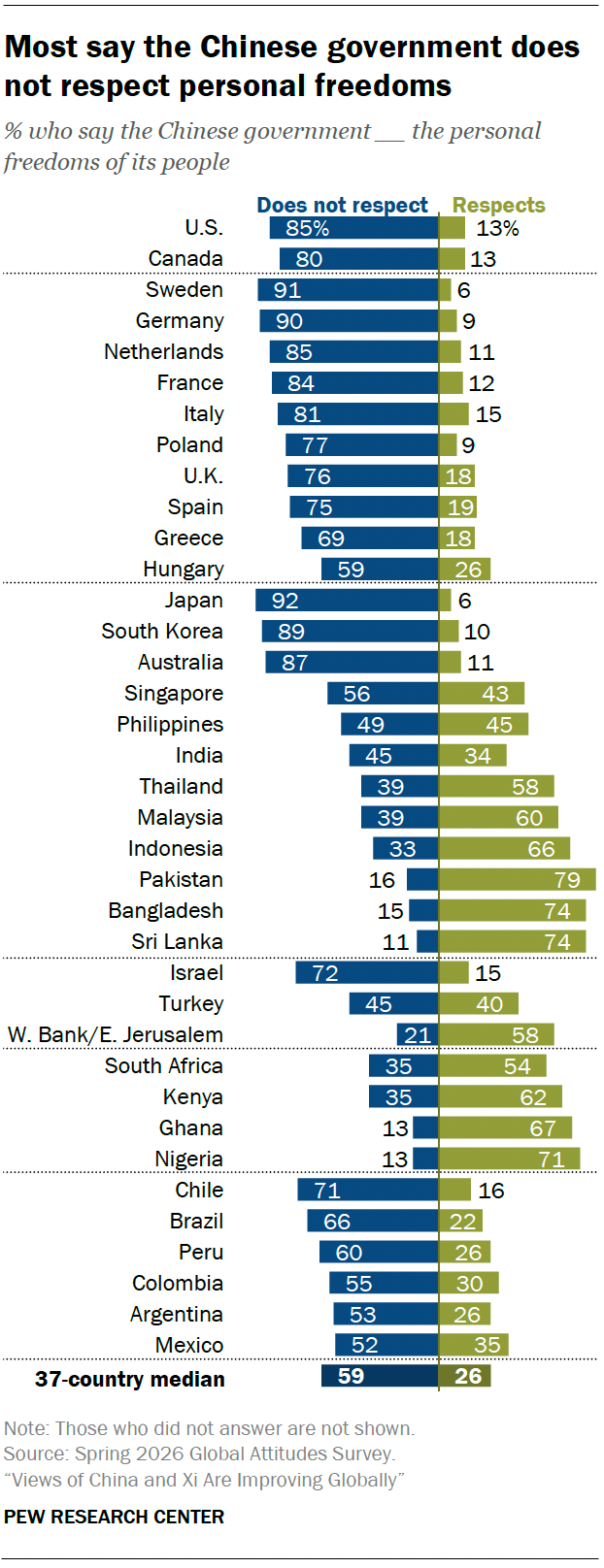
Despite the improvement in China’s overall favorability, a critical vulnerability remains: the perception of its governance. When asked whether the Chinese government respects the personal freedoms of its citizens, the global consensus is overwhelmingly negative.
In 26 of the 37 countries, clear majorities or pluralities believe Beijing suppresses individual liberties. This sentiment is most pronounced in North America, Western Europe, and developed Asian nations. While there is a slight uptick in some countries regarding this perception, it remains a significant hurdle for China’s "soft power" efforts. It is notable, however, that even in this category, some respondents are beginning to draw unfavorable comparisons between the Chinese government and the current U.S. administration, as trust in American democratic institutions also faces international erosion.
Strategic Implications: China in the Middle-Income World
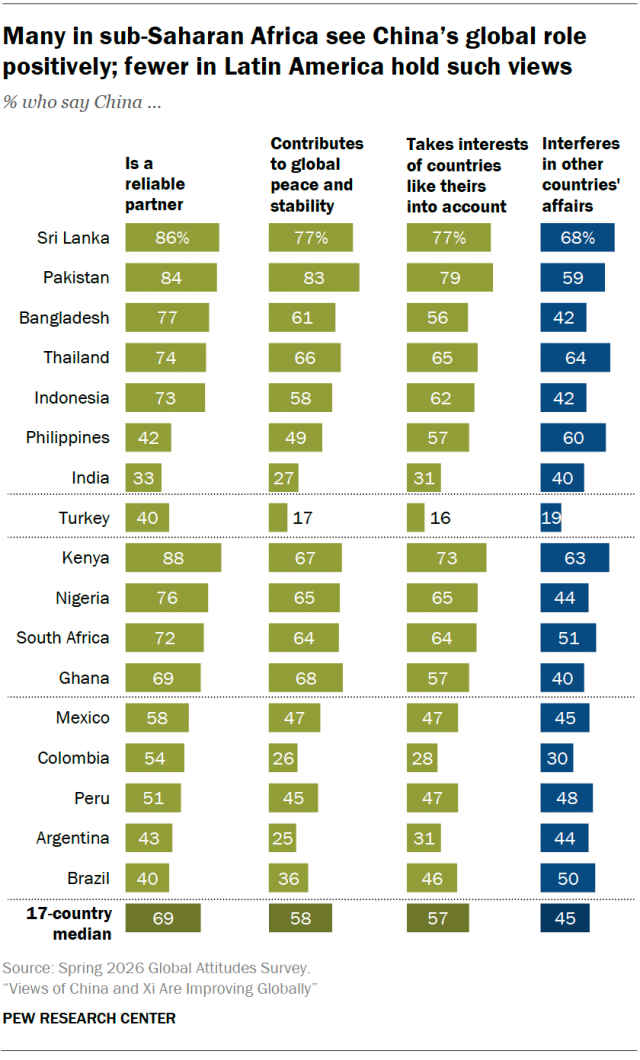
The study dedicated specific attention to 17 middle-income nations where China has focused its diplomatic and economic resources. The findings suggest that Beijing’s long-term strategy of building "economic and security ties" is yielding dividends.
In these regions, China is increasingly viewed as a reliable partner. In countries like Kenya and South Africa, public sentiment suggests that Beijing is becoming more adept at framing its international policy as one that accounts for the interests of developing nations. While the perception of "foreign interference" remains a nuanced issue—with some countries still wary of China’s influence—it is critical to note that in all 17 of these middle-income countries, the public is now more likely to view the U.S. as an "interferer" than they are to view China through that same lens.
Official Responses and Geopolitical Context
While the Chinese government has not issued a formal "response" to this specific Pew report, state-aligned media and official rhetoric have consistently emphasized the "win-win" nature of the Belt and Road Initiative and other economic frameworks. By positioning itself as a champion of "multipolarity," Beijing has successfully tapped into the frustrations of nations that feel marginalized by Western-led institutions.
For Washington, the implications are profound. The Pew data suggests that the U.S. is losing the battle for the "hearts and minds" of the Global South. As the U.S. navigates its own internal political volatility and a shift toward more protectionist policies, China has filled the void, offering consistent (if sometimes controversial) investment and diplomatic support.
Conclusion: A World in Transition
The 2026 Pew Research Center findings do not suggest that China has achieved global hegemony or universal admiration. Rather, the report paints a picture of a world where traditional alliances are being tested by new economic realities.
The rise in positive sentiment toward China is a complex phenomenon, built on a foundation of tangible economic engagement and the strategic exploitation of declining U.S. soft power. However, the pervasive global concern regarding individual freedoms suggests that China’s image remains fragile. As the decade progresses, the competition for global influence will likely depend on which power—the U.S. or China—can better reconcile its domestic governance with the aspirations and anxieties of the international community.
For policymakers and global observers, the message is clear: the global order is no longer defined by a simple dichotomy of "democracy vs. autocracy" in the minds of the public. Instead, it is increasingly defined by questions of economic utility, reliability, and the perceived fairness of the international system. In this volatile environment, China has successfully carved out a stronger, more resilient position than it held just a few short years ago.