
In the evolving landscape of digital finance, prediction markets have emerged as a significant, albeit controversial, force. By allowing participants to place wagers on the outcomes of real-world events—ranging from election results and central bank interest rate decisions to the winners of sporting championships—these platforms have moved from niche interest to mainstream financial curiosity. As of April 2026, the combined monthly trading volume on the industry’s two titans, Polymarket and Kalshi, neared a staggering $24 billion, signaling a massive influx of capital into the “prediction economy.”
But who are the individuals behind these billions of dollars in volume? To answer this, the Pew Research Center conducted an extensive analysis of 11,989 active Polymarket wallets, tracking their activity over a six-week window from May 7 to June 19, 2026. The findings offer a rare glimpse into the habits, motivations, and financial outcomes of the typical prediction market participant, revealing a ecosystem defined by high-frequency activity, distinct topical silos, and varying degrees of financial success.
The Anatomy of a Prediction Market Trader
The stereotype of the prediction market user might suggest a high-rolling professional investor or a sophisticated data scientist. However, the data reveals a more nuanced reality. The "typical" user is someone who engages with the platform sporadically but consistently. During the six-week study period, the median user executed 46 trades, typically spread across 10 distinct days.
The financial footprint of these trades is surprisingly modest. The average trade value was just $6.50, suggesting that for the majority of users, Polymarket functions less as a serious hedge fund alternative and more as a low-stakes platform for recreational forecasting.
A Spectrum of Activity
While there is a "median" user, the platform is characterized by extreme heterogeneity. The data shows a "long tail" of participation:

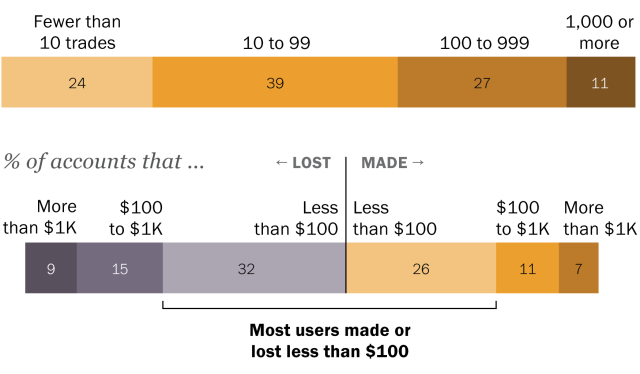
- The Casual Participant: Approximately 24% of the accounts analyzed placed fewer than 10 trades over the entire six-week period.
- The Power Users: At the opposite end of the spectrum, 11% of accounts were highly active, placing 1,000 trades or more. These individuals essentially treat the market as a full-time endeavor, contributing disproportionately to the overall volume.
Financial Outcomes: Profit, Loss, and Equilibrium
One of the most compelling questions surrounding prediction markets is whether they function as a wealth-generation tool or a form of entertainment-driven gambling. The study suggests that for most participants, the answer is neither—at least in the short term.
During the six-week window, the average trader experienced a net loss of less than $2. This remarkable proximity to the "break-even" point suggests that the market is highly efficient or that the costs associated with trading (such as potential fees or the spread) effectively neutralize minor gains. A full 58% of traders either gained or lost less than $100, reinforcing the idea that for the majority, the financial stakes remain relatively low.
However, the volatility inherent in these markets cannot be ignored. While the average user remained stable, the extremes were significant. Roughly 7% of users walked away with a profit exceeding $1,000, while 9% suffered losses of over $1,000. These figures highlight the inherent risk of prediction markets, where, unlike traditional index funds, the outcome of a trade is often binary—a "winner-take-all" scenario where the margin for error is razor-thin.
Topical Silos: How Users Choose Their Bets
Polymarket hosts a diverse range of event categories, but the vast majority of liquidity is funneled into three primary sectors: sports, politics, and cryptocurrency. The study found that users are rarely generalists. The median trader focused approximately 75% of their activity on a single topic, and 24% of users restricted their betting to one category exclusively.
Sports vs. Politics vs. Crypto
Trading behavior changes significantly depending on the focus area.
- Sports Traders: These are the most active participants, with a median of 69 trades over the six-week period. They also tend to place larger bets, averaging $9 per trade.
- Crypto Traders: This group showed a median of 59 trades, but with a much smaller average trade size—typically under $4. This suggests a demographic that may be more inclined toward "micro-betting" on volatility within the crypto space.
- Politics Traders: Interestingly, those focused on political events were the least active, with a median of only 13 trades. While political markets often capture the most media attention, the lower frequency of trades suggests that political betting is more "event-driven"—users enter the market when a major debate or primary occurs, then retreat until the next cycle.
The "Power User" Phenomenon
The 11% of users who executed 1,000 or more trades represent the backbone of market liquidity. When comparing these "power users" to the rest of the cohort, several distinct characteristics emerge.
First, these users are significantly more likely to engage in "market making" behavior—placing multiple bets on the same event to hedge risk or capitalize on small price fluctuations. They are also more likely to be multi-topic traders, as they seek out any available liquidity across the platform to keep their capital deployed. Their presence is a double-edged sword; they provide the liquidity that allows the market to function, but they also create a professionalized environment that can make it difficult for the casual, low-stakes user to compete.
Implications for the Future of Forecasting
The rise of prediction markets carries significant implications for how we view information and truth. Proponents argue that these markets aggregate the "wisdom of the crowd," providing more accurate forecasts for election outcomes or economic metrics than traditional polling or expert analysis.
However, the Pew Research Center’s data serves as a cautionary tale. If the market is dominated by a small group of high-frequency traders, is it truly reflecting the "wisdom of the crowd," or is it simply reflecting the biases and strategies of a specific, hyper-active sub-demographic?
Regulatory and Ethical Considerations
The growth of these platforms has not gone unnoticed by regulators. As these markets continue to integrate into the financial mainstream, the potential for manipulation, the classification of these platforms as "gambling" versus "financial instruments," and the protection of retail participants will remain at the forefront of policy debates.

The fact that the typical user is making trades as small as $6.50—often in USDC, a stablecoin—underscores that this is a digital-native ecosystem. It is built on blockchain infrastructure, which allows for 24/7, global, and relatively anonymous participation. This creates a regulatory "wild west" that differs fundamentally from the highly regulated environments of the New York Stock Exchange or major sportsbooks.
Conclusion: A New Era of Speculation
The data gathered between May and June 2026 suggests that the prediction economy is not yet a replacement for traditional financial markets, but rather a parallel, experimental space. It is a place where information is commodified, where opinions are turned into assets, and where the thrill of the "correct call" drives engagement as much as the potential for profit.
As we look toward the future, the central challenge for platforms like Polymarket will be to maintain that liquidity while ensuring a safe, transparent, and fair environment for all participants. Whether these markets will eventually provide a reliable barometer for global events or remain a high-stakes playground for a tech-savvy minority remains to be seen. For now, the prediction market stands as a testament to our enduring human desire to quantify the future—and to put our money where our mouth is.
Methodological Note: This analysis was conducted using the Polymarket user activity API. The study sampled 16,836 accounts that placed trades on 10 high-volume events, ultimately focusing on 11,989 active wallets. Data was collected 15 times between May 7 and June 19, 2026. For a full breakdown of the methodology and data limitations, please refer to the Pew Research Center’s technical appendix.