July 9, 2026
As the American media landscape undergoes a period of profound transformation, the intersection of regulation, technology, and public perception has reached a critical inflection point. From the regulatory halls of the Federal Communications Commission (FCC) to the digital frontiers of artificial intelligence, the very definition of "news" is being tested, debated, and redefined.
Main Facts: The FCC and the "Equal Time" Dilemma
The tension between traditional broadcast regulation and modern talk-show formats has culminated in a high-stakes inquiry into the American Broadcasting Company (ABC). Earlier this year, the FCC initiated an early review of ABC’s broadcast licenses, a move that has sent ripples through the media industry. At the heart of this investigation is the network’s flagship program, The View.
The FCC is scrutinizing whether The View has adhered to the "equal time rule," a longstanding federal requirement mandated by the Communications Act of 1934. The rule stipulates that broadcast stations must provide equivalent airtime and opportunities to all legally qualified candidates for public office. If a station grants airtime to one candidate, it must offer the same to opposing candidates to ensure a balanced democratic process.
Recent analyses, including those conducted by Semafor, indicate that since the FCC’s inquiry became public, The View has significantly altered its booking practices. Notably, the program has refrained from hosting guests who are currently campaigning in competitive midterm races. This strategic retreat suggests a cautious approach to regulatory compliance as the network faces mounting pressure from federal overseers.
Chronology: A Timeline of Regulatory and Cultural Shifts
The current controversy did not emerge in a vacuum. It is the result of years of evolving media consumption habits and shifting political sensitivities:
- 1934: The Communications Act is signed into law, establishing the "equal time" provision to ensure that broadcast airwaves—a public resource—are not used to unfairly tip the scales in political elections.
- 2025: The Pew Research Center publishes an exhaustive study exploring how Americans define "news." The findings reveal that there is no singular consensus; rather, the definition is highly subjective, influenced by the topic, the perceived credibility of the source, and the individual viewer’s personal identity and political leanings.
- April 2026: The FCC announces an early review of ABC’s broadcast licenses, directly citing concerns regarding compliance with the equal time rule in the context of personality-driven political programming.
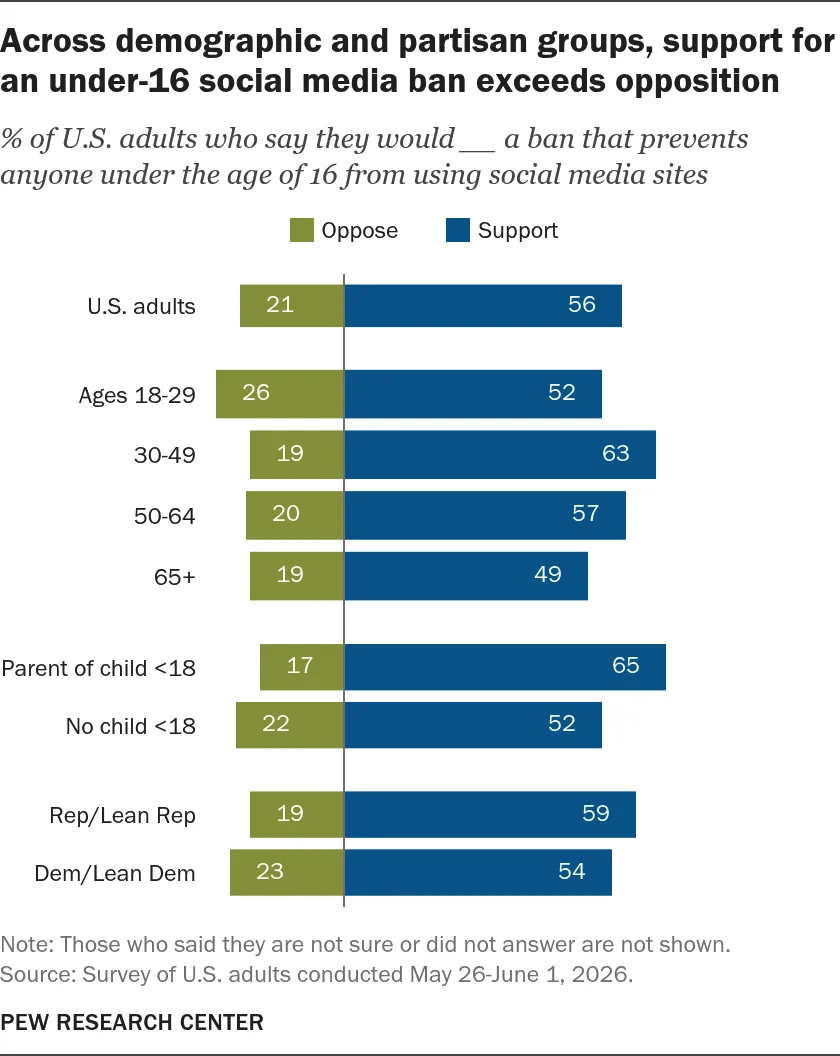
- May–June 2026: Public opinion polling conducted by the Pew Research Center highlights broad bipartisan support for social media restrictions for minors, reflecting a wider societal desire for increased oversight of information ecosystems.
- July 2026: Reports emerge confirming that The View has throttled back on political candidate bookings, signaling a de facto response to the ongoing regulatory investigation.
Supporting Data: The Erosion of Trust and Shifting Perspectives
The challenges facing broadcast networks are mirrored by a broader decline in institutional trust. According to data from the Pew-Knight Initiative, the American public’s relationship with local news outlets is in flux. Historically, local news served as a bipartisan bedrock of information, trusted by both Republicans and Democrats alike. That consensus is fracturing.
The recent analysis published in Nieman Lab notes that trust in local news is in decline. Furthermore, the perceived importance of these outlets to the health of local communities has diminished. This trend suggests that as news consumption becomes increasingly fragmented and personalized, the "community-serving" model of broadcast journalism is losing its grip on the public consciousness.
Additionally, the debate over social media regulation provides a window into the public’s desire for structural change. A July 2026 survey found that 56% of U.S. adults support a ban on social media for children under 16, while only 21% oppose it. This support crosses party lines: 59% of Republicans and 54% of Democrats favor such restrictions. The data suggests that when the public perceives a threat—whether it be the influence of big tech or the perceived bias of political talk shows—the appetite for regulation increases significantly.

Official Responses: The Battle Over "Bona Fide" Status
The core of the dispute between ABC and the FCC lies in the categorization of content. ABC has remained steadfast in its defense, arguing that the FCC has historically classified The View as a "bona fide news program." Under the regulatory framework, programs that meet this definition are exempt from the strict requirements of the equal time rule, allowing them to host political figures without being tethered to the rigid scheduling requirements imposed on traditional news reporting.
The FCC, however, appears to be testing the limits of this exemption. By ordering an early license review, the Commission is signaling that the lines between entertainment, political commentary, and hard news have become dangerously blurred. The Commission’s investigation implies that if a show’s primary output is political discourse, the label of "news program" may no longer be a sufficient shield against the requirements of fair and balanced coverage.
Implications: The AI Factor and the Future of Voting
As the industry grapples with the definition of news, a new challenge looms: the role of artificial intelligence in the democratic process. Voters are increasingly turning to AI chatbots for guidance on election decisions, often because they find the current media landscape overwhelming or difficult to navigate.
While many AI companies have implemented guardrails to prevent their chatbots from offering political opinions, users are increasingly finding ways to bypass these filters. The convenience of these tools is undeniable, yet it raises serious questions about accuracy and manipulation. In a 2024 Pew Research survey, 51% of Americans predicted that AI would have a negative impact on U.S. elections over the next two decades, compared to only 9% who viewed the potential impact as positive.
The implications are clear: as traditional gatekeepers like broadcast networks face stricter oversight, the vacuum is being filled by automated, algorithm-driven sources of information that lack the human accountability and editorial standards of traditional newsrooms.
Conclusion: A Landscape in Transition
The convergence of the FCC’s investigation into ABC, the decline of trust in local news, and the rapid adoption of AI for political information gathering presents a complex challenge for American democracy.
The struggle to define what constitutes "news" is not merely an academic exercise; it is a fundamental battle over who controls the narrative in an era of extreme polarization. Whether it is through the enforcement of the equal time rule or the regulation of AI, the overarching goal remains the same: ensuring that the public has access to reliable, balanced, and accountable information.
As we look toward the midterm elections and beyond, the media industry will need to reconcile its traditional roles with the demands of a changing digital landscape. For now, the "briefing" on the state of the nation’s information ecosystem is one of caution—a reminder that in the absence of a shared definition of truth, the structures that underpin our civic life become increasingly fragile.
The Briefing is compiled by the research staff at the Pew Research Center. For further information on these topics, visit the Center’s ongoing studies on journalism, media, and technology.