In the rapidly evolving landscape of digital marketing, local SEO has transitioned from a checklist of directory submissions to a complex, AI-driven ecosystem. For small businesses and global brands alike, the "map pack" is no longer the sole objective; instead, the focus has shifted toward relevance, conversational intent, and the mastery of the customer journey.
To cut through the industry noise, we sat down with Bill Ross, a veteran of the SEO world with over 20 years of experience managing strategies for some of the world’s most recognizable brands. In this deep dive, we explore how the rise of AI is changing search, why vanity metrics are a trap, and how businesses can future-proof their local presence.
The Fundamentals: Building a Foundation in a Modern Era
For a brand-new business, the prospect of competing in a crowded local market can be daunting. Ross argues that while the temptation is to jump straight into advanced schema markup or complex technical audits, success begins with a disciplined focus on the basics.
"It’s not always difficult to do, but it can be time-consuming," Ross explains. "Knowing what not to do is more important than knowing what to do."
The Hierarchy of Local Success
- Google Business Profile (GBP) Optimization: This remains the single most important asset for local businesses. It is not enough to simply claim a profile; it must be treated as a living, breathing extension of your customer service.
- Consistency Across Platforms: Discrepancies in name, address, and phone number (NAP) data across the web can confuse search algorithms.
- Real-World Signal Integration: Proving your business is "real" requires more than digital data. It requires high-quality imagery, consistent review management, and local engagement.
Strategic Citation Management and Link Building
When resources are finite, how does a business decide which citations—or directory listings—are actually worth the effort?
"It comes down to strategy," says Ross. "Tools like Moz Local can handle the boilerplate citations every business needs to ensure accuracy. Beyond those, you have to be surgical. The value of a citation depends entirely on your geographic target and your industry."
Prioritizing Local Backlinks
Link building in the local context has shifted away from mass-distribution tactics toward hyper-local authority. Ross prioritizes opportunities based on three tiers:
- Tier 1: Geographic Relevance. Links from local newspapers, regional news outlets, and community publications are the gold standard. They signal to search engines that your business is a pillar of the local community.
- Tier 2: Industry Authority. Niche-specific publications carry significant weight because they signal topical expertise.
- Tier 3: The "Interview" Strategy. Getting featured in local podcasts or digital interviews is an underutilized tactic. It creates a natural, high-authority backlink while establishing the business owner as a local thought leader.
The Pitch: Businesses often fail at link building because they treat it like spam. Ross notes, "Whatever you’re pitching has to be genuinely worthy of being published. If your story isn’t interesting, a $99 press release service won’t move the needle. If you don’t have something worth talking about, you need to rethink your market positioning."
Measuring What Matters: Moving Beyond Vanity Metrics
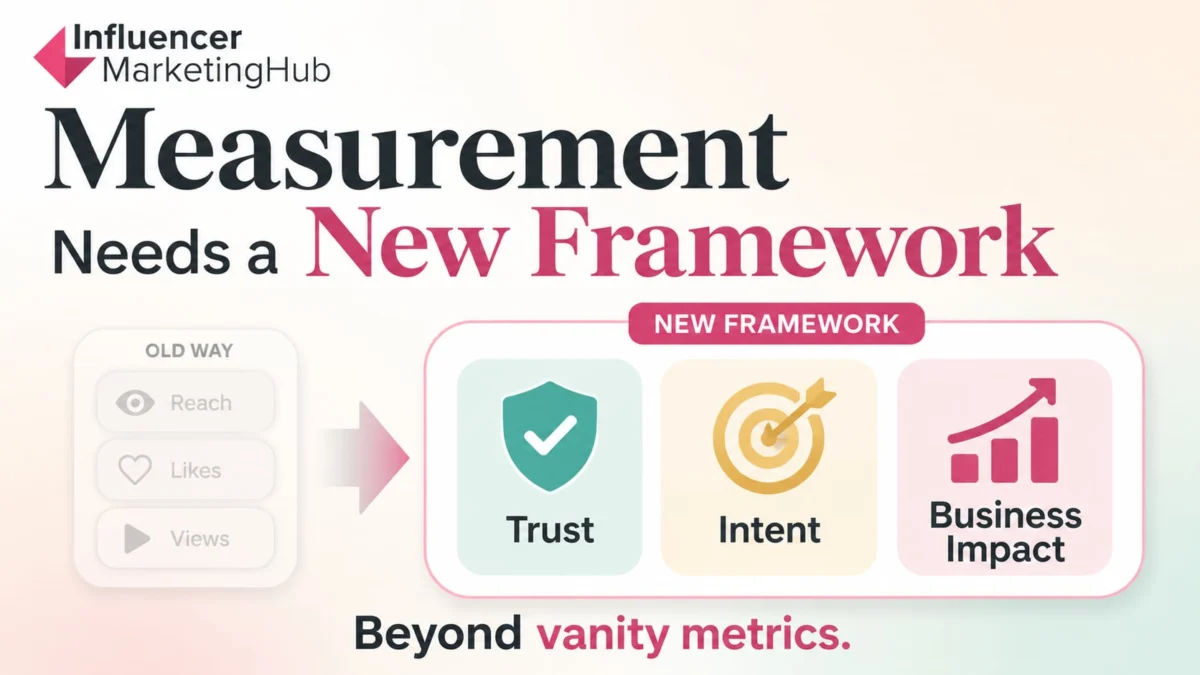
A major pitfall in modern SEO is the reliance on "vanity metrics"—rankings, impressions, and likes. While these metrics can be useful for directional analysis, they are not the end goal.
"You’re really looking for conversions," Ross emphasizes. "Whether it’s a lead form submission, a newsletter signup, or a phone call, you need to be able to track it and tie it back to a real action."
Utilizing Google Business Profile Analytics
Many business owners overlook the goldmine of data hidden in their Google Business Profile dashboard. Beyond basic traffic stats, the platform provides:
- Direct conversion tracking: Seeing how many users click the "call" or "directions" button.
- Keyword Intelligence: By scrolling to the bottom of the analytics section, businesses can see the exact search queries that triggered their listing to appear. This data is invaluable for shaping future content strategies.
The "Experience" Gap: Why Traditional SEO Fails
One of the most profound insights from our discussion is that modern SEO is becoming indistinguishable from general user experience (UX) design.
"You can earn top rankings, but if the user lands on a poorly designed website with weak content, or calls you and doesn’t feel like you’re trying to help them, they lose trust," says Ross. "That erodes your rankings because high bounce rates and low click-throughs from search results tell Google that you aren’t the best answer for the user."
In short, your offline and online experiences must match. If your digital presence promises premium service but your website is broken or your phone manners are lacking, the algorithm will eventually notice the lack of engagement and drop your rankings.
Service-Based vs. Location-Based Businesses
Service-area businesses (SABs) face a unique hurdle: they lack the physical "storefront" that Google uses as a primary trust signal.
To overcome this, Ross recommends:
- Freshness Signals: A dormant GBP is a death sentence. Keep the feed updated with new photos, project updates, and active review responses.
- Targeted Location Pages: Create specific pages for the areas you serve, but exercise restraint. "Don’t target every neighborhood under the sun," Ross warns. "Testing has shown that trying to blanket a massive region with low-quality location pages can actually trigger a penalty."
The AI Revolution: Searching in Natural Language
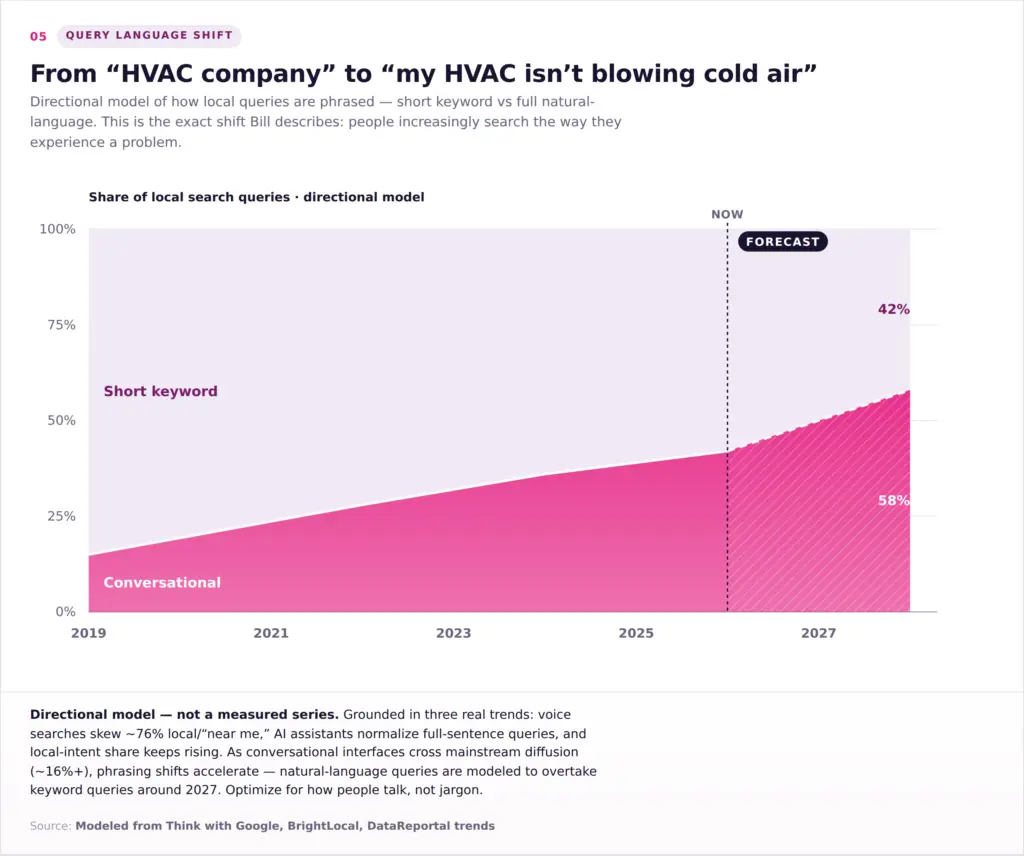
The most significant shift currently underway is the transition from "keyword-based" search to "conversational" search. As AI-driven search (like Google’s AI Overviews) becomes more prevalent, the way we structure content must change.
"Fewer people will search for ‘HVAC company,’" Ross predicts. "They will search the way they experience the real world: ‘My HVAC system is making a noise; it’s hot upstairs but cool downstairs.’ Your content needs to answer these specific, long-tail problems."
Implications for the Future
- AI as an Answer Engine: These systems pull data from the open web to provide summaries. Local SEO remains vital because it feeds these AI systems. If your content is the most authoritative and helpful, the AI will cite your business.
- The "Zero-Click" Reality: A growing percentage of searches end without a click to an external website. This makes the information displayed directly on your Google Business Profile more critical than ever.
- Authenticity Wins: As AI generates more generic, mediocre content, brands that provide genuine, human-centric answers to local problems will stand out.
Conclusion: A Fluid Strategy for a Changing Landscape
There is no "silver bullet" in local SEO. The strategy must be agile and fluid. Ross recommends a cadence of reviewing data monthly and adjusting strategies quarterly.
"Not everything works the same way for every business," Ross concludes. "You have to be willing to experiment, look at the data, and pivot. If you’re focusing on real, tangible conversions and solving genuine problems for your local customers, you’re already ahead of 90% of your competition."
For those looking to refine their approach, the mandate is clear: Stop chasing rankings and start chasing relevance. Build a brand that people talk about, optimize for the questions they actually ask, and ensure that every digital touchpoint reflects the quality of your physical business.
Bill Ross is a seasoned SEO strategist and the founder of Emulent Digital Marketing. For more insights on the future of search, you can follow his work on LinkedIn or Instagram.