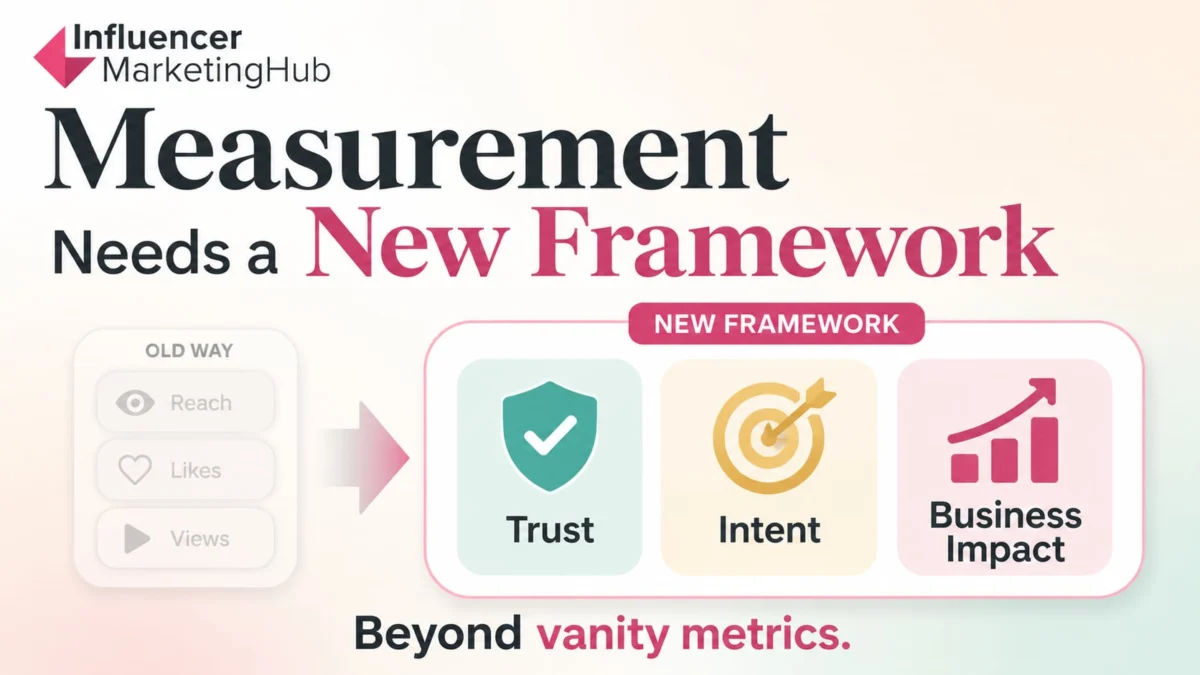
As the creator economy matures into 2026, the industry has reached a critical inflection point. For years, brands have relied on a relatively static set of platform-provided metrics—views, completion rates, and likes—to determine the success of influencer partnerships. However, as creator programs transition from experimental line items to core pillars of integrated marketing strategy, these "vanity" metrics are proving increasingly inadequate.
The consensus among industry leaders is clear: the current measurement framework is broken. By treating every piece of content as a monolith, brands are failing to capture the true business impact of their investments. To thrive in 2026, organizations must move beyond the dashboard and adopt a layered, intent-based approach to attribution.
The Measurement Crisis: Why Standard Metrics Fail
The fundamental flaw in modern influencer marketing evaluation is the application of a "one-size-fits-all" scorecard. When a brand measures a top-of-funnel awareness video—designed to build brand affinity—using the same KPIs as a bottom-of-funnel shoppable post, the data inevitably becomes misleading.
"The problem isn’t that platform metrics are wrong," says Paula Bruno, founder and CEO of Intuition Media Group. "The problem is that they are being used out of context. When teams evaluate a narrative endorsement using the same rigor as a quick product demo, they walk away with incomplete conclusions. We are effectively penalizing brand-building content for not being transactional, which fundamentally misunderstands the role that creator-led storytelling plays in the modern customer journey."
This misalignment leads to the "performance trap." Teams often double down on high-click-through content while abandoning the long-term, high-equity partnerships that actually drive brand loyalty and organic search growth.
A Layered Measurement Stack: A New Framework
To rectify this, leading agencies are shifting toward a "Layered Measurement Stack." This methodology does not discard platform data but rather contextualizes it within a three-tier hierarchy of intent and impact.
Layer 1: Distribution and Attention (The Foundation)
This layer captures the basic performance of content delivery. Metrics such as impressions, reach, and completion rates are essential for answering the foundational questions: Did the content travel? Did the audience stay? These metrics remain the baseline for determining if an influencer has effectively "captured" attention in a saturated feed.
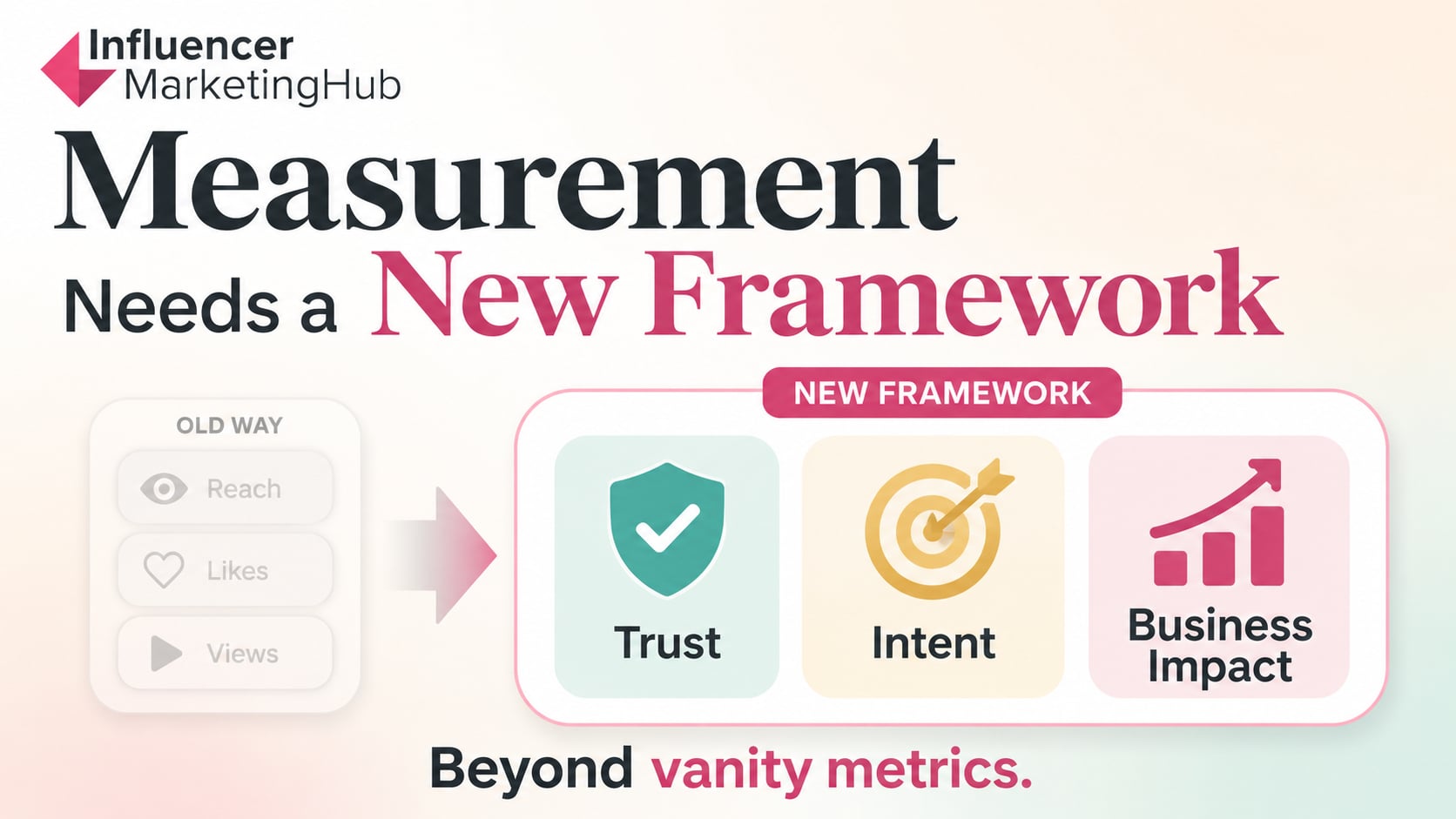
Layer 2: Intent Signals (The Engagement Depth)
This layer moves beyond passive interaction. By prioritizing "high-friction" engagement—such as saves, shares, and specific audience tags—brands can gauge genuine consumer interest. Data shows that saves and shares are significantly more reliable predictors of future purchasing behavior than likes, particularly in educational or endorsement-heavy content. These actions indicate that the consumer has moved from a "scroller" to an "advocate" or "potential buyer."
Layer 3: Business Impact (The ROI Engine)
This is the layer where most brands struggle, yet it is where the most significant value is generated. This layer tracks off-platform outcomes, including:
- Branded Search Lift: Increases in organic search volume for the brand or product name following a campaign.
- Retailer Query Spikes: Data from e-commerce platforms regarding product searches.
- Attributed Conversions: Sales that occur outside the direct influence of a UTM link, often attributed through multi-touch attribution modeling.
The Rise of AI-Driven Discovery and Its Implications
Perhaps the most significant force disrupting traditional measurement in 2026 is the rapid adoption of AI-driven search. Consumers are increasingly turning to Large Language Models (LLMs) to solve problems, compare products, and seek recommendations before they ever land on a brand’s website or a retail store.
Recent industry data indicates that over 50% of U.S. consumers now utilize AI tools as a primary stage of their shopping research. In this environment, the AI acts as a curator, synthesizing existing high-quality content from the creator ecosystem.
For brands, this shift has two profound implications:
- Content as "Training Data": A brand’s presence in the creator ecosystem effectively becomes the "training data" for AI search engines. If a product is not being discussed or demonstrated by trusted voices, the AI is unlikely to recommend it to a user.
- Decoupled Attribution: Conversion no longer happens on a linear path. A consumer might view a creator’s review, ask an AI about the product weeks later, and then purchase it via a third-party retailer. Traditional platform dashboards will miss this entire connection, making it appear as if the creator content had "zero impact."
Strategic Segmentation: Matching Intent to Metrics
To effectively measure performance in this new landscape, brands must adopt a strategy of custom success criteria. Every influencer partnership must be categorized by its primary role in the funnel:
- Awareness Content: Success is measured through brand sentiment analysis, share-of-voice improvements, and long-term recall metrics. These pieces should not be penalized for lower conversion rates.
- Performance Content: Success is measured through conversion rate, cost-per-acquisition (CPA), and return on ad spend (ROAS).
- Endorsement/Trust Content: Success is measured through community-building signals, such as saved posts and community-driven dialogue.
By tying measurement to the specific intent of the content, marketing teams can stop "comparing apples to oranges" and begin to understand the actual contribution of their creator programs to the bottom line.
A Chronology of the Measurement Evolution
The trajectory of creator marketing measurement over the last decade has been one of increasing sophistication:
- 2015–2018 (The Wild West): Brands focused primarily on "Likes" and "Follower Count." Success was largely superficial.
- 2019–2022 (The Performance Pivot): The rise of affiliate links and trackable conversion pixels. The industry became obsessed with direct-response attribution.
- 2023–2025 (The Fragmentation): With the rise of short-form video and algorithmic feeds, direct attribution became harder. Many brands lost their way, struggling to justify influencer spend in a non-linear path to purchase.
- 2026 (The Layered Maturity): The current shift toward holistic, multi-layered measurement that accounts for AI, brand equity, and long-term search value.
Implications for Global Brands
The shift toward a more honest, layered measurement framework is not merely a tactical change—it is a strategic necessity for any brand that wants to remain competitive in 2026.
For the C-suite, this means moving away from the demand for instant, platform-provided "ROI" for every dollar spent. It requires investing in sophisticated data modeling that can track brand lift, search intent, and community health alongside direct sales.
Furthermore, this evolution empowers brands to build deeper, more sustainable relationships with creators. When creators are judged on the specific, valuable roles they play in a brand’s strategy—rather than arbitrary vanity metrics—the partnership becomes more authentic and more effective.
As Paula Bruno notes, the goal is to build "creator ecosystems that compound." In the current landscape, this means acknowledging that the most valuable influencer content is often the stuff that acts as a quiet, consistent engine for brand discovery and trust, long after the initial post has faded from the algorithm’s view.
Conclusion: The Path Forward
The measurement framework of 2026 is not more complex than its predecessors; it is simply more honest. By acknowledging that creator content serves different purposes—from driving initial awareness to fueling AI discovery and, ultimately, converting sales—brands can finally bridge the gap between creative storytelling and hard business results.
The teams that will win in the coming years are those that stop asking "What do the numbers say?" and start asking "What are the numbers telling us about the consumer’s journey?" In an era defined by AI discovery and shifting platform dynamics, the ability to read between the lines of the dashboard will be the ultimate competitive advantage.