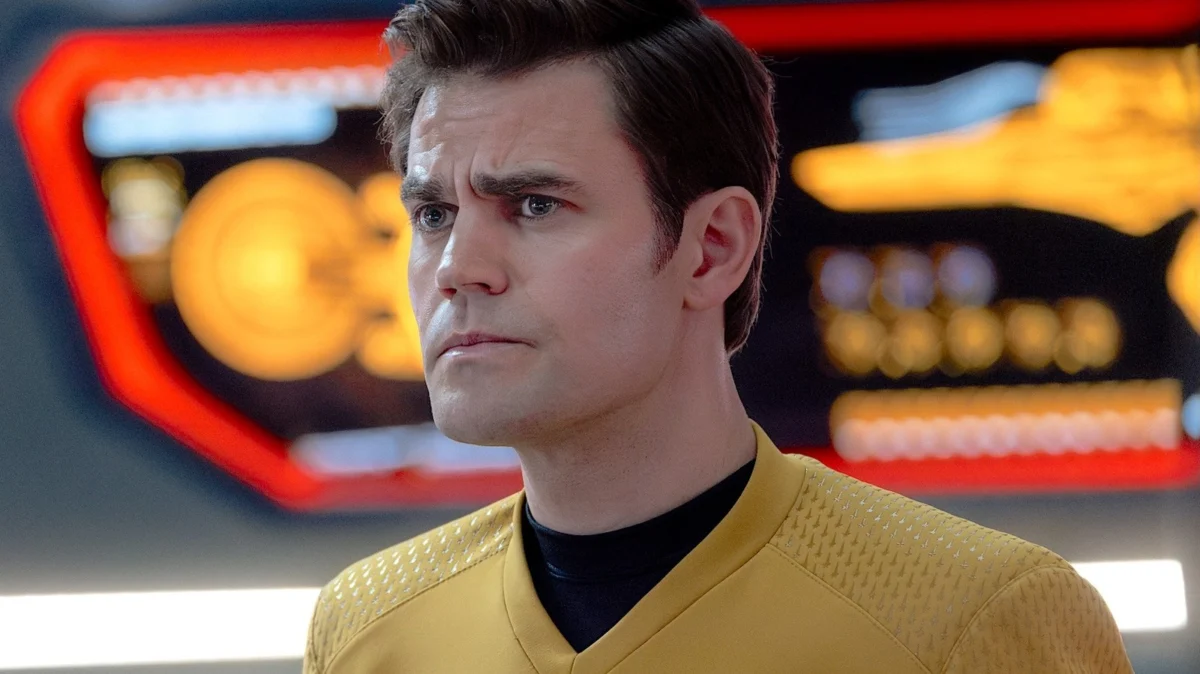
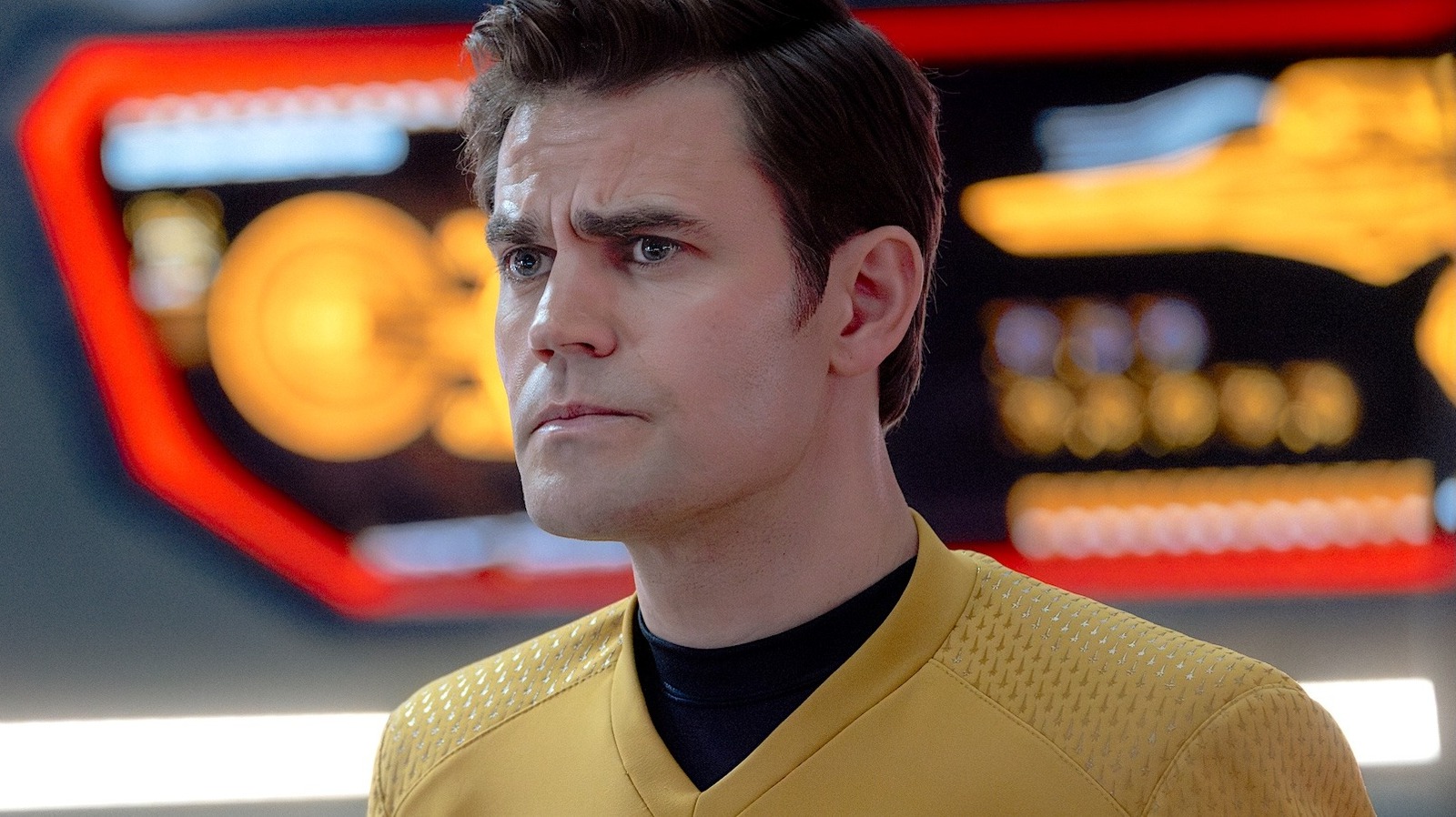
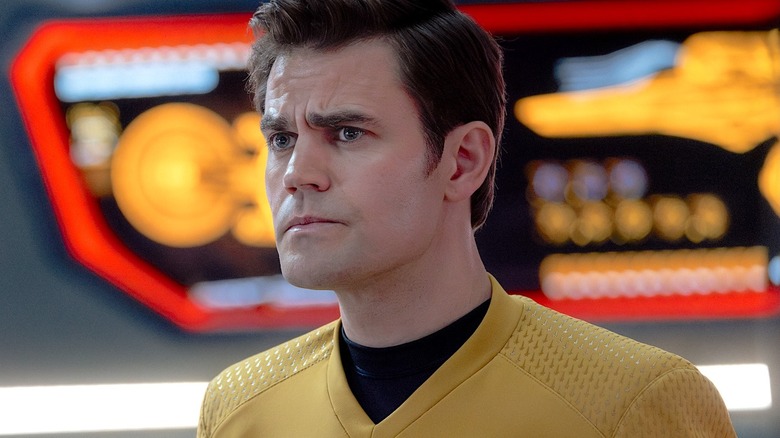
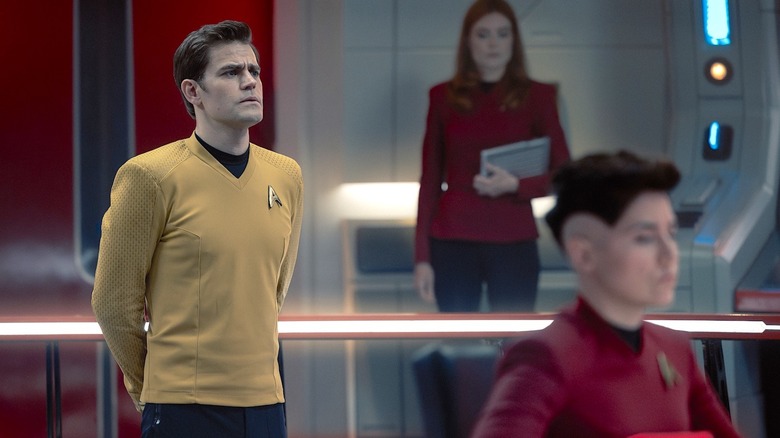
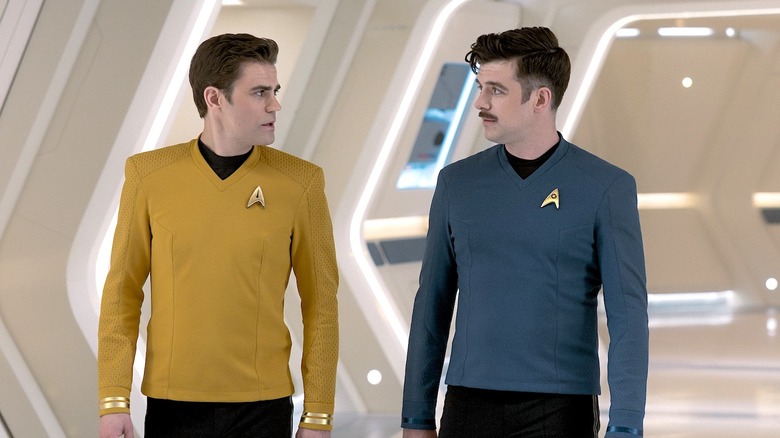
James T. Kirk is inching closer to the iconic commander immortalized by William Shatner, but the road to the Captain’s chair is paved with ideological clashes, psychological weight, and profound tests of character. In a recent pivotal episode of Paramount+’s Star Trek: Strange New Worlds (Season 4, Episode 8), Kirk found himself thrust into the role of acting first officer aboard the USS Enterprise while Captain Christopher Pike was deployed on a high-stakes away mission.
The temporary command dynamic quickly devolved into a high-tension crisis when a bitter, vengeful Starfleet admiral named Reeger—portrayed with layered intensity by Scandal alumnus Joe Morton—stepped aboard to take command. Admiral Reeger’s personal vendetta against a cloaked Romulan vessel threatened to cross moral and ethical boundaries, as he prepared to sacrifice an entire inhabited planet to satisfy his thirst for retribution. Furthermore, Reeger harbored a deeply personal grudge against Kirk’s late father, George Kirk, whom he unfairly branded as a coward who avoided combat.
For Paul Wesley, who brings a fresh yet reverent interpretation to the legendary Starfleet officer, this narrative milestone stands as his favorite installment of the season. In an exclusive interview, Wesley dissected Kirk’s tactical brilliance, his psychological battle against a compromised superior officer, and what awaits the fandom as Star Trek: Strange New Worlds barrels toward its impending, highly anticipated final season.
Chronology: A Masterclass in Tactical Defiance and Family Legacy
The events of the episode unfolded against the backdrop of escalating interstellar tensions. With Captain Pike absent, Kirk’s leadership was tested almost instantaneously. Wesley notes that Kirk’s intuition—his metaphorical "Spidey-sense"—began tingling the moment Admiral Reeger stepped onto the bridge.
Rather than blindly following the orders of a superior officer—a pitfall common among green recruits—Kirk trusted his gut. This internal suspicion was compounded by the revelation of Reeger’s past service alongside George Kirk. Reeger attempted to psychologically dismantle the young lieutenant by painting his father as an officer who sidestepped valor when the stakes were highest.
Rather than breaking Kirk, the confrontation forced him to reevaluate his own lineage. While Kirk had always viewed his father with a degree of uncertainty regarding his career achievements, this crucible allowed him to separate institutional rumor from truth. Discovering that his father was, in fact, an unsung hero provided Kirk with the internal validation necessary to envision himself in the center seat.
The climax of the episode arrived during a high-stakes standoff on the bridge. Backed into a corner by Reeger’s mad pursuit of destruction, Kirk executed a textbook, high-risk bluff: he announced that he had reconfigured the ship’s phasers to trigger a catastrophic chain reaction if fired, effectively holding the Enterprise hostage to save the innocent planet below. It was a masterclass in lateral thinking, echoing the foundational ethos of the legendary Kobayashi Maru scenario.
Supporting Data: Behind the Scenes with Joe Morton and Sam Kirk
Bringing this narrative arc to life required a delicate balance of familial dynamics and powerhouse guest-star chemistry. Throughout the episode, Kirk bounced his suspicions off his brother, Sam Kirk. Though oil and water in terms of temperament—Sam representing a more accepting, less ambitious worldview, while Jim burned with relentless drive—their dynamic offered a grounding anchor for the narrative.
However, the dramatic heavy lifting of the episode occurred during the face-to-face confrontations between Wesley and veteran actor Joe Morton. Preparing to share the screen with an actor of Morton’s caliber required a rigorous approach.
"I knew when we did our table read, I was like, ‘OK, alright, I’ve got to really nail this,’" Wesley recalled. "This guy is so locked in, a theater actor. You know he’s going to show up. He’s going to have his A-game. There’s going to be no B.S., and I’m not going to embarrass myself out there."
Morton’s portrayal avoided the traps of one-dimensional villainy. Through subtle vulnerabilities—including visible emotional weight when discussing the psychological toll of his military career—Morton imbued Admiral Reeger with a tragic justification that resonated not only with the characters on screen, but with the cast watching from the sidelines.
Official Responses and Creative Insights: Bridging the Gap to The Original Series
As the series approaches its final chapter, the transition of Paul Wesley’s Kirk into the swaggering, hyper-confident commander recognized from Star Trek: The Original Series remains one of the franchise’s most closely monitored character arcs. Wesley acknowledges that Kirk is not yet the finished article seen in the Shatner era, but each trial—such as the psychological chess match with Reeger—serves as a stepping stone.
Reflecting on the overarching journey, Wesley emphasized that the forthcoming final season will dramatically pivot in tone:
A More Serious Tone: With a shortened final run of six episodes, the creative team has consciously shifted away from sprawling, fantastical standalone adventures in favor of a tightly focused, high-stakes narrative conclusion.
Expanding the Legacy Cast: The final season will introduce iconic figures such as Dr. Leonard "Bones" McCoy and Hikaru Sulu, deepening the connective tissue to The Original Series.
Chemistry and Ensemble Power: Wesley noted that capturing the electric chemistry reminiscent of Leonard Nimoy and the original cast was a privilege, creating an authentic desire among the actors to explore their intertwined destinies.
Implications: The High-Stakes Conclusion of Strange New Worlds
The confirmation that Star Trek: Strange New Worlds will conclude with an abbreviated sixth-episode final season has sent ripples through the global Trekkie community. Far from feeling rushed, the creative constraints have forced the writers to deliver a laser-focused culmination to the prequel narrative.
The implications for Paul Wesley’s James T. Kirk are particularly profound. Wesley teased that the final episodes will feature a major, shocking twist directly tied to Kirk’s ultimate psychological formation:
"Kirk goes through something very important that allows us to understand why he is who he is. I can’t possibly say what it is, because it’s such a huge thing. But just suffice it to say that… people are going to be shocked."
As Paramount+ prepares to close the book on this celebrated iteration of the Enterprise crew, the evolution from an instinctive, probing lieutenant to the definitive Starfleet captain is reaching its zenith. For fans watching weekly, the journey has proven that the making of a legend is found not just in the victories, but in the moral courage it takes to stare down your own commanders when the soul of Starfleet hangs in the balance.