The landscape of professional sports broadcasting is undergoing a seismic shift, yet for the average fan, the experience has become increasingly disconnected. As major leagues trade the ubiquity of traditional cable and broadcast television for the high-stakes world of streaming exclusivity, the friction between content providers and the realities of public consumption is becoming impossible to ignore.
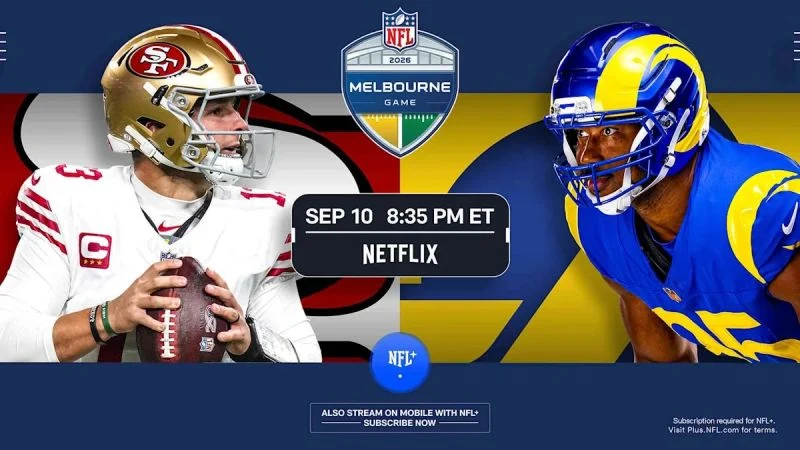
This tension reached a boiling point during the most recent Netflix-exclusive NFL game hosted in Australia. While the league and its streaming partner hailed the event as a landmark moment in global sports distribution, the reality on the ground—specifically in hospitality settings—suggests a significant disconnect between modern distribution strategies and the social nature of sports fandom.
The Hospitality Gap: When Exclusivity Becomes Exclusion
For many, the NFL experience is synonymous with the "third space"—the bars, restaurants, and hotel lobbies where fans congregate to share the collective highs and lows of a game. However, the move toward platform-exclusive streaming has effectively marginalized these venues.
At a major Hilton hotel property during the recent Australia-based matchup, eight televisions in the bar and lobby area remained dark regarding the game. Despite the event being a marquee NFL production, the venue lacked the infrastructure, licensing, or simple user-interface capability to access the specific platform hosting the broadcast. This is not an isolated inconvenience; it is a systemic failure. When a game is siloed behind a subscription service that requires individual logins, high-speed authentication, and specific hardware, the communal experience of sports is stripped away.
The "convenience" of streaming, often touted by tech executives, vanishes when a fan is forced to retreat to a private hotel room to watch a game that was once a staple of public gathering spaces.
Technical Realities: The Friction of Global Streaming
Even for those equipped with the necessary hardware—such as a Fire TV Stick—the transition to global streaming is fraught with technical hurdles. During the Australia game, testing in a stable environment with 78 Mbps download speeds revealed a functional but underwhelming experience.
While the 1080p stream provided a clear picture, the absence of HDR was a notable omission for a global flagship event. More concerning were the persistent audio sync issues, characterized by inconsistent levels and jarring transitions. Social media platforms were quickly flooded with similar complaints, confirming that these were not localized glitches but systemic Quality of Experience (QoE) issues.
While isolated incidents are expected in any massive-scale digital broadcast, the stakes for Netflix are uniquely high. As the company attempts to manage a global footprint spanning over 200 countries, the technical infrastructure must account for varying regional bandwidth, server load distribution, and device compatibility. When the "world’s most popular streaming platform" struggles with audio synchronization during a high-profile NFL broadcast, it raises questions about whether the current streaming architecture is truly ready to replace the stability of satellite and terrestrial broadcast signals.
The Myth of the "Most Streamed Game"
Perhaps the most contentious aspect of the current streaming era is the manipulation of viewership metrics. Netflix has frequently labeled its NFL broadcasts as the "most streamed games in history," a claim that warrants deep skepticism.
The industry suffers from a lack of transparency regarding how these figures are calculated. Unlike the era of Nielsen’s traditional linear measurement, Netflix does not break out viewership numbers exclusive to its platform. The Average Minute Audience (AMA) figures cited in press releases are often a composite of:
- Fast National Live + Same Day data from Nielsen.
- Out-of-home viewing (bars, restaurants, etc.).
- Local market broadcast station data (where applicable).
- Mobile and web-based traffic from the Netflix application.
- NFL+ mobile viewership data provided by the league.
When Netflix calls the 2025 Lions/Vikings game the "most streamed," the lack of a clear, standardized definition makes the statement functionally meaningless. Are they measuring concurrent streams? Unique logins? Total reach over the duration of the broadcast? Without a transparent methodology, these figures serve as marketing collateral rather than journalistic data.
Furthermore, historical context reveals that previous Christmas Day games—which benefited from broader distribution channels—often outperformed these "streaming-first" events in total AMA. The goalposts for success are constantly moving, making it impossible for analysts to compare the health of the sport across different seasons.
The Crisis in Viewership Measurement
The industry is currently facing a "measurement malaise." As distribution becomes fragmented, the standard tools for tracking audience engagement have become obsolete.
The complexity is compounded by the fact that even traditional broadcasters are scrambling to adapt. NBC Sports, for instance, overhauled its reporting methodology for the 2026/2027 season. Previously relying on a proprietary blend of "Total Audience Delivery"—which combined Nielsen’s Big Data and panel measurements with Adobe Analytics—the network has now reverted to a more traditional Nielsen-led approach, supplemented by additional auditing.
This shift underscores a broader trend: no one is quite sure how to count an audience anymore. When methodologies shift annually, the data ceases to be a reliable longitudinal record. We are effectively comparing apples to oranges, and then claiming that the new fruit is "the biggest ever" without providing a scale.
The Implications: A Sport at a Crossroads
The migration of the NFL to streaming platforms is driven by the promise of massive advertising revenue and direct-to-consumer data harvesting. However, the implications for the future of the league are profound:
- Erosion of Public Access: As games leave the "public square" of bars and lobbies, the cultural footprint of the NFL risks shrinking. If you cannot walk into a local establishment and see the game on the wall, the event loses its status as a "must-watch" cultural touchstone.
- Platform Fatigue: Consumers are increasingly burdened by "subscription fatigue." Requiring a dedicated subscription for a singular game, or a specific set of games, creates a barrier to entry that alienates casual fans.
- The Reliability Gap: For sports, timing is everything. The latency and buffering issues inherent in streaming—even at high speeds—create a "spoiler effect" where fans on social media or in proximity to traditional feeds see scores seconds before the streamer does. This destroys the communal thrill of a live touchdown.
Conclusion: The Need for Standardized Transparency
The move toward streaming is likely irreversible, driven by the economic imperatives of tech giants and the league’s desire for direct digital engagement. However, the current "wild west" approach to both broadcast quality and audience measurement is unsustainable.
For the NFL to maintain its status as the premier American sport, it must address the friction points of the fan experience. This includes establishing universal standards for streaming quality, ensuring commercial establishments can reliably access these games, and, crucially, adopting a transparent, third-party audited system for reporting viewership.
As it stands, the current strategy treats the fan as a data point rather than a participant in a cultural ritual. If the NFL continues to prioritize the platform over the public, it risks turning the most watched sport in the country into an exclusive, buggy, and fragmented experience that no longer feels like a "national pastime." The numbers may look good on a slide deck in a boardroom, but in the hotel bars and living rooms of the world, the message is clear: the current model is missing the mark.