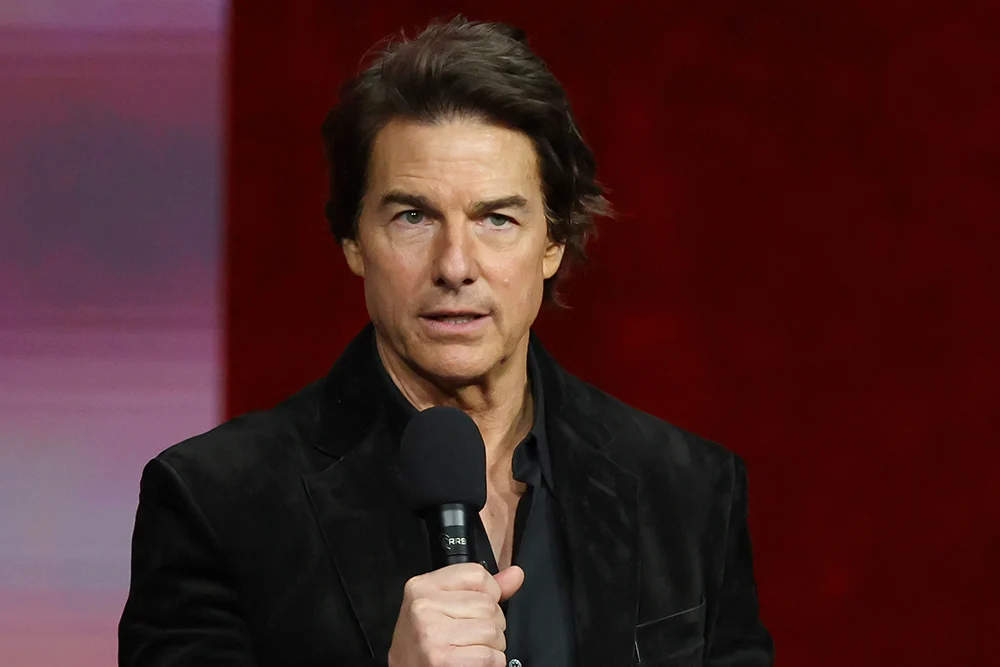
LONDON — Amid an industry-wide reckoning over the rapid rise of artificial intelligence, Hollywood stalwart Tom Cruise remains resolutely optimistic about the future of cinema. Speaking at an intimate and reflective BAFTA “Life in Pictures” conversation in London on Monday night, the global box-office titan doubled down on his belief that audiences will always crave authentic human connection and tangible craftsmanship on the silver screen.
The evening offered a rare, comprehensive retrospective of Cruise’s illustrious four-decade career. From his breakout roles in iconic 1980s and ’90s films like Top Gun, Jerry Maguire, and Magnolia, to his death-defying, blockbuster-defining stewardship of the Mission: Impossible franchise, Cruise proved that his passion for the cinematic arts burns as brightly today as it did when he first stepped in front of the camera.
Yet, much of the conversation gravitated toward the horizon—addressing both the technological anxieties facing modern filmmakers and his hotly anticipated upcoming dramatic turn in Alejandro G. Iñárritu’s Digger.
Main Facts
The central thesis of Cruise’s remarks in London was a firm endorsement of humanity over algorithms. Invited by moderator and broadcaster Edith Bowman to discuss the shifting landscape of entertainment, Cruise addressed the looming shadow of artificial intelligence in filmmaking. Interestingly, this is a theme his own franchise has confronted head-on; 2025’s Mission: Impossible — The Final Reckoning famously features an rogue, omnipotent AI system as its primary antagonist.
When asked how these technological disruptions will ultimately impact the industry, Cruise didn’t flinch.
“Here’s the thing: There is nothing like human,” Cruise stated unequivocally.
The actor emphasized that his fierce advocacy for the theatrical experience is rooted in the communal power of cinema. While acknowledging the coexistence of streaming platforms—clarifying, “I have nothing against streaming or anything like that”—he maintained that watching a movie in a crowded theater is fundamentally “a different art form” that cannot be replicated at home on a couch.
Beyond his philosophical defense of cinema, Cruise generated significant buzz by offering new details about his upcoming collaboration with The Revenant director Alejandro G. Iñárritu. In Digger, slated for an October 2 theatrical release via Warner Bros., Cruise stars as a wealthy oil tycoon. The role requires a staggering physical transformation: the actor is virtually unrecognizable, wearing a fat suit and heavy prosthetics that he revealed initially demanded a grueling six-hour application process every day on set.
Chronology of a Career: Looking Back to Move Forward
To understand Cruise’s unwavering faith in the theatrical medium, one must examine the trajectory of his legendary career. Monday’s BAFTA retrospective walked the audience through the milestones that cemented his status as one of the last true movie stars of the 20th century.
- The 1980s Breakthrough: Cruise burst onto the international scene with star-making turns in Risky Business (1983) and Tony Scott’s high-octane naval aviation epic Top Gun (1986). These early roles established his trademark blend of charismatic bravado and intense physical commitment.
- The 1990s Critical Acclaim: Transitioning from pure action star to dramatic heavyweight, Cruise earned widespread critical acclaim and Academy Award nominations for his work in Oliver Stone’s Born on the Fourth of July (1989), Cameron Crowe’s romantic comedy-drama Jerry Maguire (1996), and Paul Thomas Anderson’s sprawling ensemble drama Magnolia (1999).
- The 2000s–Present Franchise Pioneer: In 1996, Cruise launched the Mission: Impossible franchise as a producer and star. Over the next three decades, he systematically pushed the boundaries of practical stunt work, culminating in a sequence of films that single-handedly revitalized global box offices in the post-pandemic era—most notably with 2022’s mega-hit Top Gun: Maverick.
- The Future Horizon (2025–2026): With Mission: Impossible — The Final Reckoning and his dramatic pivot in Iñárritu’s Digger, Cruise continues to balance pulse-pounding action with prestige auteur-driven cinema.
Supporting Data: The Resurgence of the Theatrical Box Office
Cruise’s bullish stance on movie theaters is not merely sentimental; it is backed by recent, hard data that defies the doom-and-gloom narratives surrounding the exhibition sector.
During the BAFTA conversation, Cruise pointed directly to the monumental success of the summer box office as proof of the medium’s enduring vitality. The summer season shattered all-time industry records, pulling in a staggering $4.76 billion globally between May 1 and Labor Day.
This historic financial milestone underscores a broader consumer shift: when studios deliver compelling, high-craftsmanship storytelling, audiences still turn out in droves to experience it collectively.
Furthermore, Cruise’s own track record speaks volumes. Top Gun: Maverick grossed nearly $1.5 billion worldwide in 2022, largely attributed to word-of-mouth praise driven by its heavy reliance on practical effects and real jet-cockpit footage rather than green-screen CGI. For Cruise, these numbers are empirical evidence that viewers possess an innate radar for authenticity.
Official Responses and Industry Reactions
Cruise’s comments arrive at a critical juncture for Hollywood. Over the past several years, studio executives, tech firms, and labor unions (such as SAG-AFTRA and the WGA) have engaged in fierce debates regarding the ethical and economic implications of generative AI in scriptwriting, voice cloning, digital likeness replication, and visual effects.
While major studios are aggressively exploring AI tools to streamline production costs and reduce post-production timelines, creative talent has pushed back, demanding legal protections and the preservation of human authorship.
Cruise’s perspective bridges the gap between technological inevitability and artistic integrity. He acknowledged the reality of the changing landscape without surrendering to despair:
“You know, it is coming and it’s going to happen,” Cruise admitted regarding the proliferation of AI.
However, his prescription for creatives facing this existential wave is refreshingly straightforward: “Keep creating.”
By prioritizing projects that demand intense physical and emotional vulnerability—such as sitting in a makeup chair for six hours to embody a complex oil tycoon in Digger—Cruise leads by example, signaling that the ultimate defense against artificial replication is radical, unmistakable human effort.
Implications for the Future of Cinema
The implications of Cruise’s BAFTA manifesto extend far beyond ticket sales and casting notices. As artificial intelligence grows more sophisticated, the line between reality-based filmmaking and synthetic generation will inevitably blur. This raises profound questions about the value of art in the 21st century.
- The Premium on Authenticity: If AI can generate convincing digital imagery in seconds, the sheer human labor, risk, and dedication required to execute practical stunts or grueling physical transformations will become a premium luxury commodity. Audiences may increasingly value a film not just for how it looks, but for how it was made.
- Auteur Collaborations: Cruise’s pivot to working with visionary directors like Alejandro G. Iñárritu on Digger demonstrates that even the world’s biggest action star recognizes the necessity of artistic risk-taking. Describing the script as “the most original film and one of the most moving films I’ve ever seen,” Cruise is positioning himself at the intersection of high-concept Hollywood entertainment and uncompromising arthouse prestige.
- The Communal Imperative: Cruise’s emphasis on the theatrical experience reinforces the idea that going to the movies is a cultural ritual. As long as filmmakers continue to craft stories designed to be shared in the dark among strangers, the fundamental social utility of cinema will remain secure against the isolating pull of digital algorithms.
As Digger prepares to hit theaters via Warner Bros. on October 2, and as audiences continue to process the rapid evolution of entertainment technology, Tom Cruise’s message remains a guiding light for the industry: embrace the future, but never lose sight of our shared humanity.