A high-profile conflict has erupted between the tech sector and the entertainment industry, pitting newly minted trillionaire Elon Musk against prominent Hollywood creatives. The dispute centers on director Christopher Nolan’s highly anticipated cinematic adaptation of Homer’s epic poem, The Odyssey. Musk, a vocal critic of what he characterizes as "woke" casting decisions in contemporary cinema, has launched a public crusade against Nolan’s film, culminating in a vow to render the theatrical release obsolete using artificial intelligence.
Musk announced that before the end of 2026, his proprietary artificial intelligence platform, Grok—developed by his company xAI—will produce a "historically accurate" and "true to the art of Homer" feature-length version of The Odyssey. To demonstrate the tool’s potential, Musk shared a three-minute, AI-generated scene adapted from the ancient Greek epic, which was generated by a user utilizing Grok’s video synthesis capabilities.
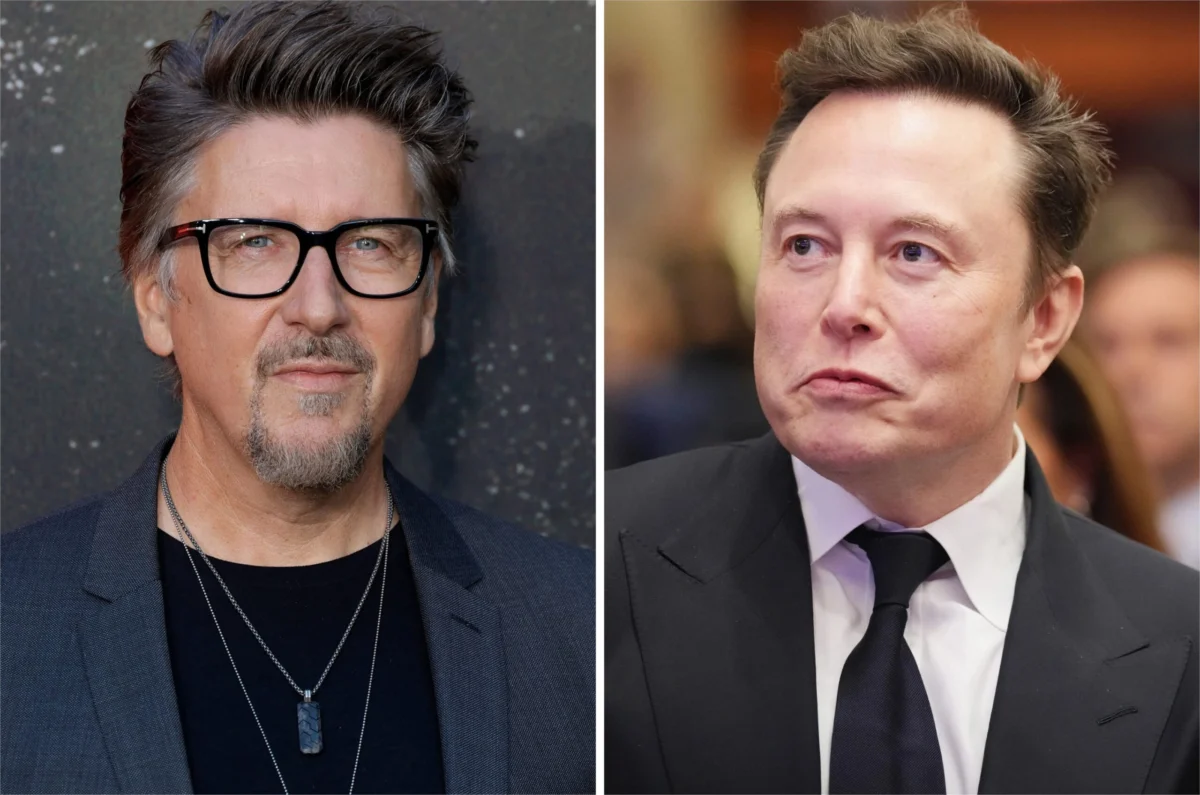
The tech mogul’s declarations have drawn swift and severe condemnation from established film directors. Most notably, Scott Derrickson—known for directing Marvel Studios’ Doctor Strange and the acclaimed horror film The Black Phone—publicly rebuked Musk on Musk’s own social media platform, X (formerly Twitter). Derrickson dismissed Musk’s artistic credentials, asserting that the billionaire lacks a fundamental understanding of the cinematic medium and that his opinions on creative arts are "worthless."
Despite Musk’s concerted efforts to organize an online boycott, Nolan’s The Odyssey, which stars Matt Damon, has achieved historic commercial success. The film opened to a massive $264 million worldwide during its debut weekend, proving that the online backlash has had little to no impact on mainstream audience turnout.
Chronology of the Conflict
The ideological and creative battle over The Odyssey has developed over several months, marked by casting announcements, social media broadsides, and the eventual theatrical release of the film.
[March 2026] ------------------> [Summer 2026] ---------------> [July 2026]
Musk attacks Nolan's casting;     Nolan's "The Odyssey"         Musk shares Grok AI clip;
labels director "anti-White"     premieres to $264M globally   Derrickson issues public rebuke
Phase 1: The Casting Controversies (March 2026)
The tension began in the spring of 2026 during the film’s pre-production and marketing phases. Christopher Nolan, celebrated for his commitment to historical scale and high-concept filmmaking, revealed an ensemble cast that featured diverse casting choices for mythological figures.
In March, Musk initiated a series of public attacks against Nolan on X. The primary target of his criticism was the casting of Academy Award-winner Lupita Nyong’o as Helen of Troy, a character traditionally depicted in Western art as European. Musk accused Nolan of abandoning his artistic integrity to appease award voting bodies, writing that "Chris Nolan is an anti-White racist" who made the casting choice because "he wants the awards." Musk declared the decision an "insult" to the legacy of Homer.
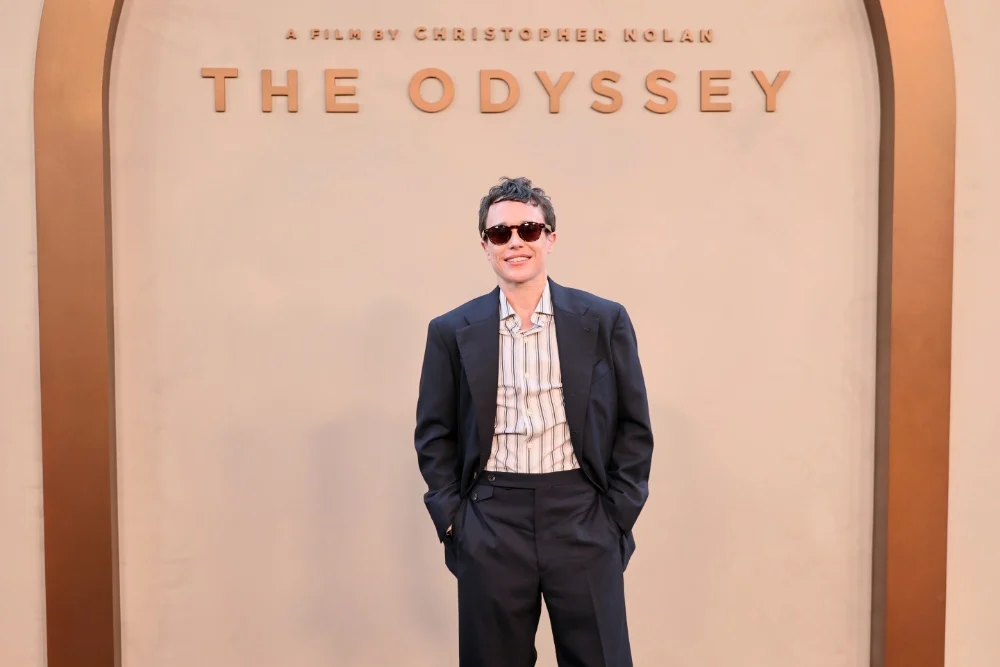
Simultaneously, Musk targeted actor Elliott Page, who was cast in the role of Sinon—the Greek soldier who convinces the Trojans to bring the wooden horse inside their city walls. Musk amplified and reposted online commentary that mocked the transgender actor’s masculinity, integrating the film’s promotional campaign into broader cultural and political grievances.
Phase 2: The Theatrical Triumph (Summer 2026)
Despite the digital campaign aimed at undermining the film’s credibility, Nolan’s The Odyssey premiered in theaters worldwide to critical acclaim and exceptional commercial performance. Driven by the star power of leading man Matt Damon and Nolan’s reputation for grand-scale IMAX filmmaking, the movie defied online boycott efforts, securing a historic $264 million global opening weekend.
Phase 3: The AI Counter-Offensive and Industry Response (July 2026)
Faced with the film’s undeniable box-office success, Musk pivoted from standard criticism to technological competition. In July 2026, he shared a three-minute clip of an AI-generated scene depicting a sequence from The Odyssey. The clip, created by an independent user using xAI’s Grok tool, was presented by Musk as a proof-of-concept. He pledged that Grok would deliver a full-length, "historically accurate" film of the epic before the end of the year.
This declaration prompted an immediate defense of traditional filmmaking from the creative community. On July 22, 2026, director Scott Derrickson posted a direct response to Musk on X, writing:
"Clearly @elonmusk doesn’t know shit about cinema & he stopped reading in his 20s. His opinions on art are worthless."
Supporting Data and Context
Box Office Performance of The Odyssey
The financial performance of Nolan’s film indicates a stark disconnect between vocal social media campaigns and general audience behavior.
Metric
Detail
Global Opening Weekend
$264 million
Primary Cast
Matt Damon, Lupita Nyong’o, Elliott Page
Director
Christopher Nolan
Screening Status
Sold out months in advance in major metropolitan markets
Nolan’s adaptation has joined the ranks of his most successful intellectual properties, performing on par with blockbusters like Oppenheimer and Inception. Industry analysts note that premium formats, such as IMAX 70mm, have remained entirely booked, demonstrating that audiences continue to prioritize the communal, high-fidelity theatrical experience over digital alternatives.
Musk’s History of Cinematic Grievances
This is not the first instance of Musk utilizing his platform to campaign against major Hollywood releases that do not align with his ideological preferences.
Barbie (2023): Musk criticized Greta Gerwig’s fantasy-comedy for its feminist themes, mocking its critique of patriarchy. Despite his comments, the film grossed over $1.4 billion worldwide.
Snow White (Disney): Musk joined conservative commentators in targeting Disney’s live-action reimagining of Snow White, starring Rachel Zegler, criticizing the modernization of the classic fairy tale.
The Odyssey (2026): Musk’s current campaign represents an escalation, moving from criticizing existing projects to attempting to actively replace them with generative AI content.
Official Responses
The Creative Community’s Defense
Scott Derrickson’s public statement represents a broader sentiment within the Directors Guild of America (DGA) and the wider creative ecosystem. Filmmakers have increasingly expressed alarm over the rise of generative AI, viewing it as both an existential threat to labor and a degradation of artistic quality. Derrickson’s critique directly targeted Musk’s intellectual and cultural authority, suggesting that the tech billionaire’s reliance on algorithmic generation betrays a lack of engagement with literature and art history.
The Technical Feasibility of Grok’s "Full-Length Movie"
While Musk has promised a feature-length film by the end of 2026, AI researchers and industry experts remain highly skeptical of the claim. Present-day generative video tools struggle with:
Temporal Consistency: Maintaining the same facial features, lighting, and clothing across different shots and scenes.
Narrative Coherence: Sustaining a complex, emotionally resonant narrative over a standard 90-to-120-minute runtime.
Audio-Visual Integration: Synchronizing realistic dialogue, ambient sound design, and orchestral scoring without human intervention.
Representatives from xAI have not released a technical roadmap detailing how they plan to overcome these hurdles to produce a cohesive, feature-length film within the promised timeframe.
Implications
The Paradox of "Historical Accuracy" in Myth
Musk’s insistence on a "historically accurate" version of The Odyssey has been met with amusement by literary scholars. Homer’s The Odyssey is an ancient work of mythological fiction, featuring supernatural elements such as the cyclops Polyphemus, sirens, wrathful Greek deities, and sea monsters like Scylla and Charybdis.
Scholars point out that attempting to apply modern racial classifications and standards of "historical accuracy" to a Bronze Age mythological narrative is anachronistic. Furthermore, the casting of Lupita Nyong’o—a Kenyan-Mexican actress—as Helen of Troy is consistent with the theatrical tradition of prioritizing performance over literal historical representation, a convention that dates back to the origins of drama itself.
The Intersection of AI and the Culture Wars
This conflict highlights a new frontier in the ongoing debate over artificial intelligence. Rather than merely serving as a tool for efficiency, generative AI is increasingly being positioned by tech executives as a weapon in cultural conflicts. By promising an AI-generated alternative to Nolan’s film, Musk is attempting to establish a precedent where audiences who disagree with a studio’s creative or casting choices can simply generate their own ideological alternatives.
Hollywood’s Labor and Creative Sovereignty
The clash between Derrickson and Musk underscores the unresolved tensions of the post-2023 strike era in Hollywood. Creative unions remain highly protective of intellectual property and human likeness rights. Musk’s promotion of user-generated AI films based on existing properties raises complex questions regarding copyright infringement, fair use, and the ethical sourcing of training data for AI models like Grok.
As the year progresses, the industry will be watching to see if xAI can deliver on Musk’s promise, and whether the resulting product will be embraced as a legitimate artistic achievement or dismissed as a technological novelty.