By Hardware Desk
Published: November 2025
Main Facts: The Feature Divide and the Workaround
When Nvidia formally introduced Multi Frame Generation (MFG)—an advanced, AI-driven leap forward in frame-rate smoothing capable of generating up to five synthetic frames for every natively rendered one—it was heralded as a generational milestone. First hitting the scene in early 2025, the technology promised buttery-smooth motion that pushed high-refresh-rate displays to their absolute limits.
There was just one massive catch for the PC gaming community: Nvidia chose to restrict higher-tier MFG modes (specifically 3x, 4x, 5x, and 6x) exclusively to its RTX 50-series (Blackwell) graphics cards. For owners of the still-powerful RTX 40-series (Ada Lovelace) hardware, the message was clear and frustratingly proprietary—upgrade your card, or miss out.
However, where there is a rigid corporate boundary, the PC modding community finds a workaround. Through a combination of software tinkering, the open-source ReShade HDR Installer (RHI), and custom profile overrides, enterprising users have found a way to bypass Nvidia’s hardware locks. It is now entirely possible to enable up to 4x Multi Frame Generation on an RTX 40-series card, bringing the bleeding-edge smoothness of the latest hardware generation to older GPUs without requiring users to track down an elusive RTX 5090 at MSRP.
Of course, this method is entirely unofficial. It requires wading into waters where drivers are spoofed, anti-cheat mechanisms can be inadvertently tripped, and hardware is pushed far beyond what its architectural designers originally intended.
Chronology: The Evolution of Frame Generation and the RTX 50-Series Lock
To understand why this community workaround is generating so much buzz, it helps to look at the timeline of Nvidia’s frame generation technology:
- September 2022: Nvidia launches the RTX 40-series architecture alongside DLSS 3, introducing the original 2x Frame Generation feature. This relied on Optical Flow Accelerators built into the Ada Lovelace silicon to synthesize one intermediate frame for every rendered frame.
- January 2025: Nvidia debuts the RTX 50-series (Blackwell). Alongside the new hardware comes Multi Frame Generation (MFG), expanding capabilities to 4x, 5x, and 6x modes.
- Early 2025 (Post-Launch): Hardware analysts and consumers quickly realize that MFG is strictly hardcoded to the RTX 50-series driver stack, shutting out millions of RTX 4070, 4080, and 4090 owners.
- Late 2025: Open-source developers release tools like the ReShade HDR Installer (RHI) and specialized mods (such as RTX 40 MFG and OptiScaler), allowing users to override Nvidia profile checks and force dynamic multi-frame generation onto older architectures.
Supporting Data: Architectural Realities and Performance Caveats
Why did Nvidia restrict MFG to the RTX 50-series in the first place? According to the company, it isn’t merely a marketing ploy to force upgrades—though that certainly plays a role. There are fundamental hardware differences at play.
The RTX 50-series silicon includes dedicated architectural enhancements explicitly designed to manage multiple generated frames simultaneously:

- AI Management Processor (AMP): A dedicated coprocessor that handles the overhead of generating multiple sequential AI frames without bogging down the main graphics pipeline.
- Flip Metering: A sophisticated display-pacing technology that ensures both rendered and generated frames are delivered to the monitor with minimal jitter.
Older RTX 40-series GPUs lack these specific blocks of silicon. As Nvidia CEO Jensen Huang noted when discussing the prospect of bringing newer AI tech to legacy architectures, doing so is "within the realm of possibility" but would "require a fair amount of engineering."
The Cost of Extra Frames: Smearing and Latency
More frames do not automatically translate to a better gaming experience. Early adopters testing 4x MFG on RTX 40-series cards have reported significant caveats:
- Input Latency: Even with frame-rate limiters enabled, injecting up to four synthetic frames introduces noticeable input lag. In fast-paced competitive titles, this delay can make the game feel sluggish, regardless of how high the frame counter reads.
- Visual Artifacts: At 4x and higher settings, fast-moving UI elements, camera pans, and complex particle effects can suffer from "smeary" frames or ghosting as the AI struggles to accurately predict pixel movement across multiple fabricated intervals.
Consequently, tech reviewers strongly advise restricting these hacked MFG tests to single-player, slower-paced titles where visual fluidity outweighs razor-sharp competitive responsiveness.
Official Responses and Industry Stance
Nvidia has maintained a cautious, if predictable, stance regarding unofficial modifications of its proprietary software stacks.
Company representatives have repeatedly emphasized that DLSS and its associated frame generation suites are optimized specifically for the hardware pipelines they accompany. Official documentation stresses that attempting to run advanced MFG features outside of supported hardware environments can lead to instability, driver crashes, and unpredictable rendering artifacts.
Furthermore, game publishers have weighed in indirectly through their security software. Because tools like RHI, OptiScaler, and driver profile overrides inject DLL files directly into a game’s directory, they frequently trigger kernel-level anti-cheat engines used in modern multiplayer games. While single-player titles are generally safe from bans, running these mods in online environments carries a severe risk of account suspension.
Implications: What This Means for PC Gamers and Hardware Longevity
The ability to force 4x Multi Frame Generation onto RTX 40-series cards carries several profound implications for the PC hardware ecosystem:
1. Extended Lifespan for Ada Lovelace GPUs
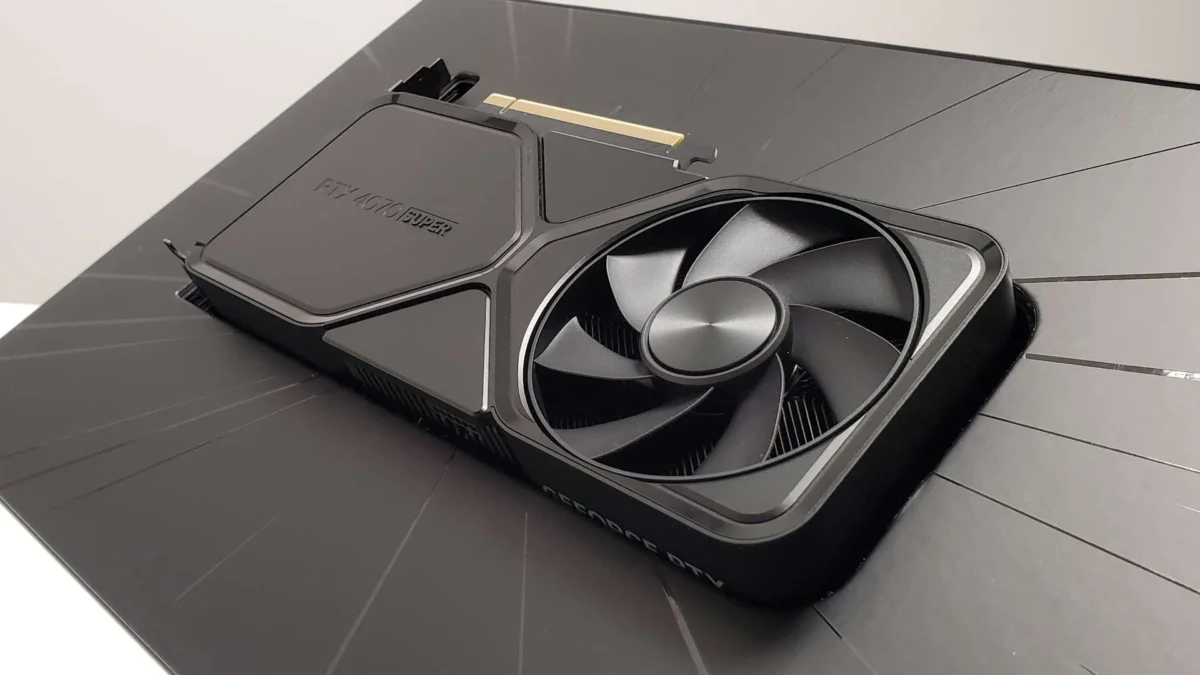
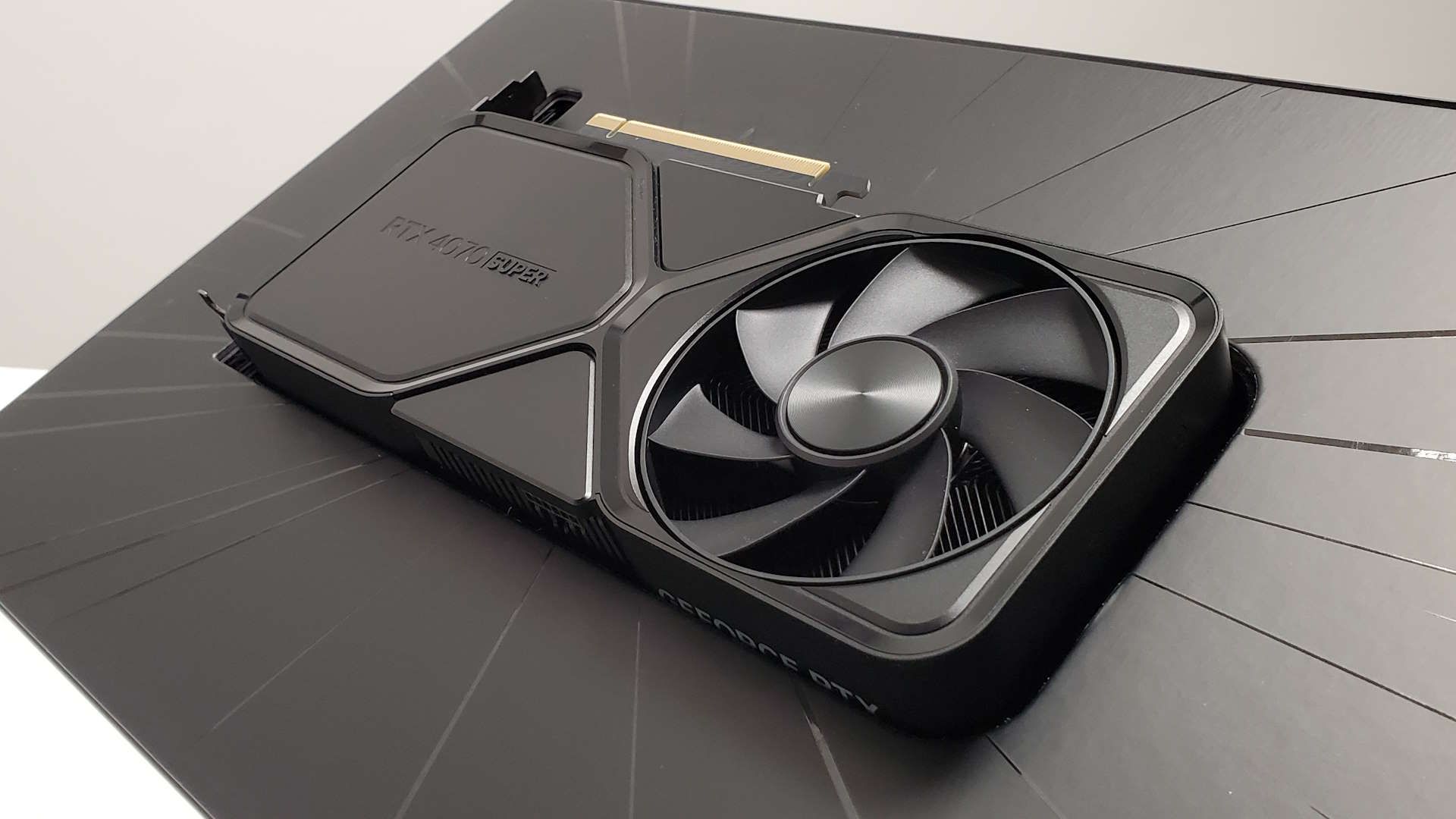
The RTX 40-series—featuring powerhouse cards like the RTX 4070 Super and RTX 4080—remains more than capable of handling modern rasterization and ray-tracing workloads. By unlocking modern frame-generation features via software mods, users can artificially extend the competitive lifespan of hardware that cost thousands of dollars just a couple of years ago. It proves that software locks are often arbitrary barriers rather than absolute hardware impossibilities.
2. The Dangers of "Spec-Sheet Inflation"
As high frame rates become heavily reliant on AI interpolation rather than raw rasterized performance, the definition of a "smooth" gaming experience is shifting. Pushing 4x or 6x frame generation can make games look like they are running at 200+ frames per second on paper, but the underlying latency tells a different story. This trend risks prioritizing inflated spec-sheet numbers over genuine responsiveness.
3. Increased Scrutiny on Proprietary Lock-In
Nvidia’s strategy of locking software features behind generational barriers has long drawn criticism from enthusiasts. Community-driven bypasses like RHI serve as a direct rebuke to artificial obsolescence, demonstrating that PC gamers will actively dismantle software restrictions when they feel feature sets are being withheld for commercial leverage rather than technical necessity.
Step-by-Step Guide: How to Enable 4x MFG on an RTX 40-Series Card
Disclaimer: The following procedure involves unofficial mods and driver overrides. Proceed at your own risk. It is strongly recommended to test these steps exclusively in offline, single-player games to avoid anti-cheat bans.
Step 1: Download the ReShade HDR Installer (RHI)
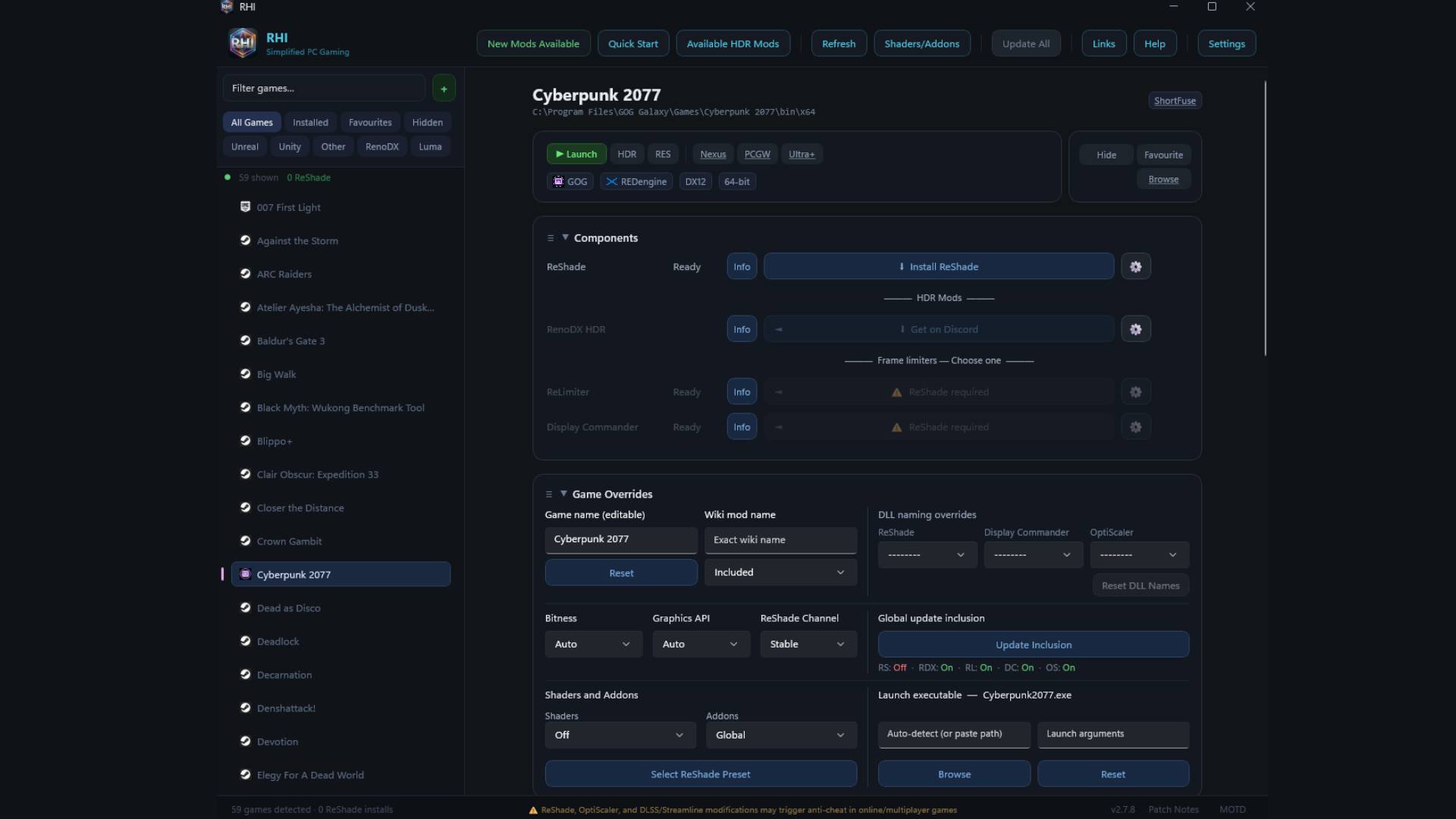
Head over to the official GitHub repository for the ReShade HDR Installer (RHI). Download and install the software, which automates the integration of post-processing injectors and utility mods.
Step 2: Select Your Target Game
Launch RHI. The application will automatically scan your system and import your installed games.
- Crucial Note: Verify that the game you choose natively supports Nvidia DLSS Multi Frame Generation by checking Nvidia’s official compatibility list. Stick to single-player titles to avoid triggering anti-cheat systems.
Step 3: Install the Required Mods
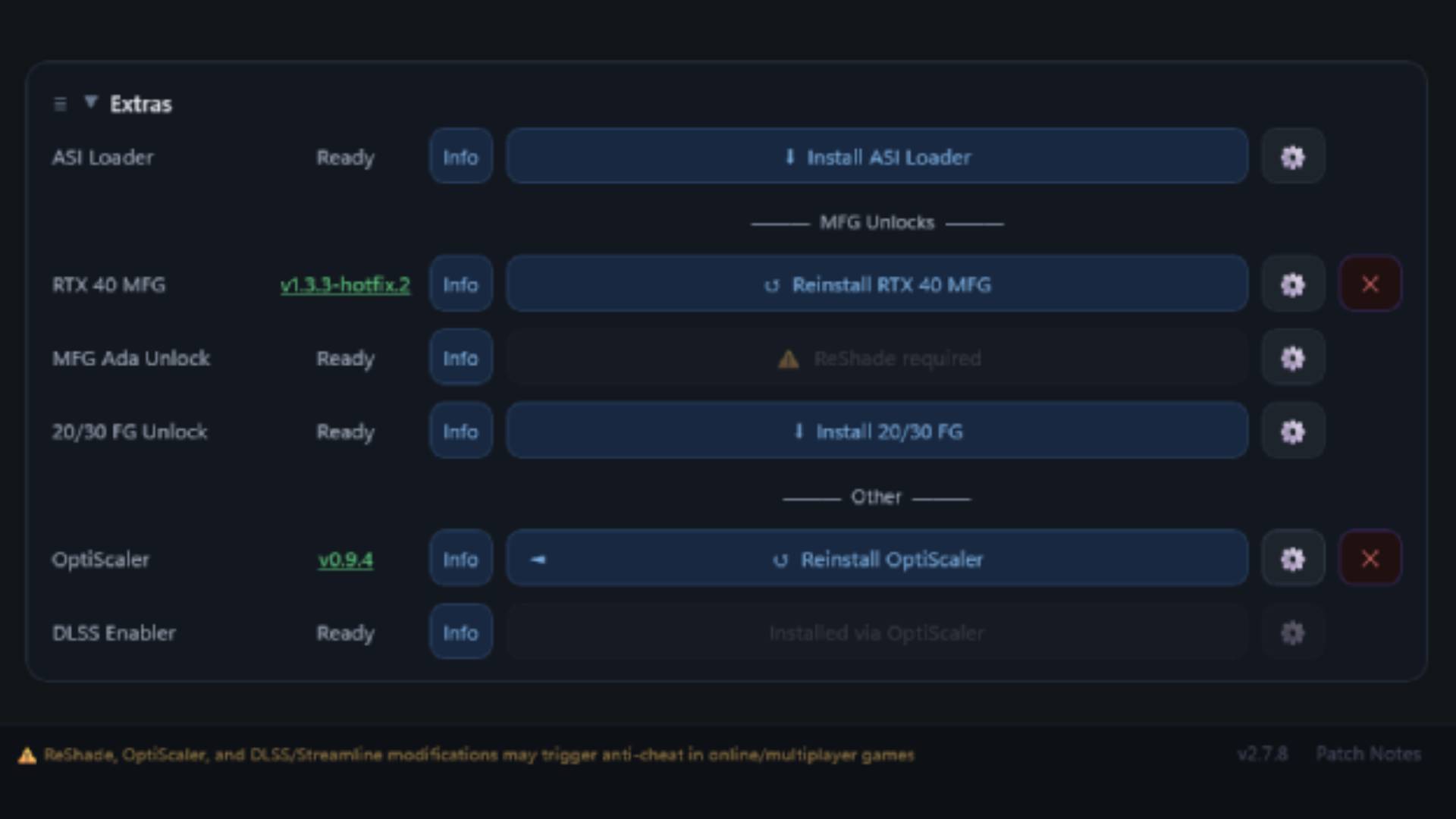
Click on your chosen game within RHI’s left-side panel. Scroll to the bottom of the module list and select to install:
- RTX 40 MFG
- OptiScaler
Allow the installer a few seconds to unpack and place the necessary files into your game directory.
Step 4: Override Nvidia Profiles
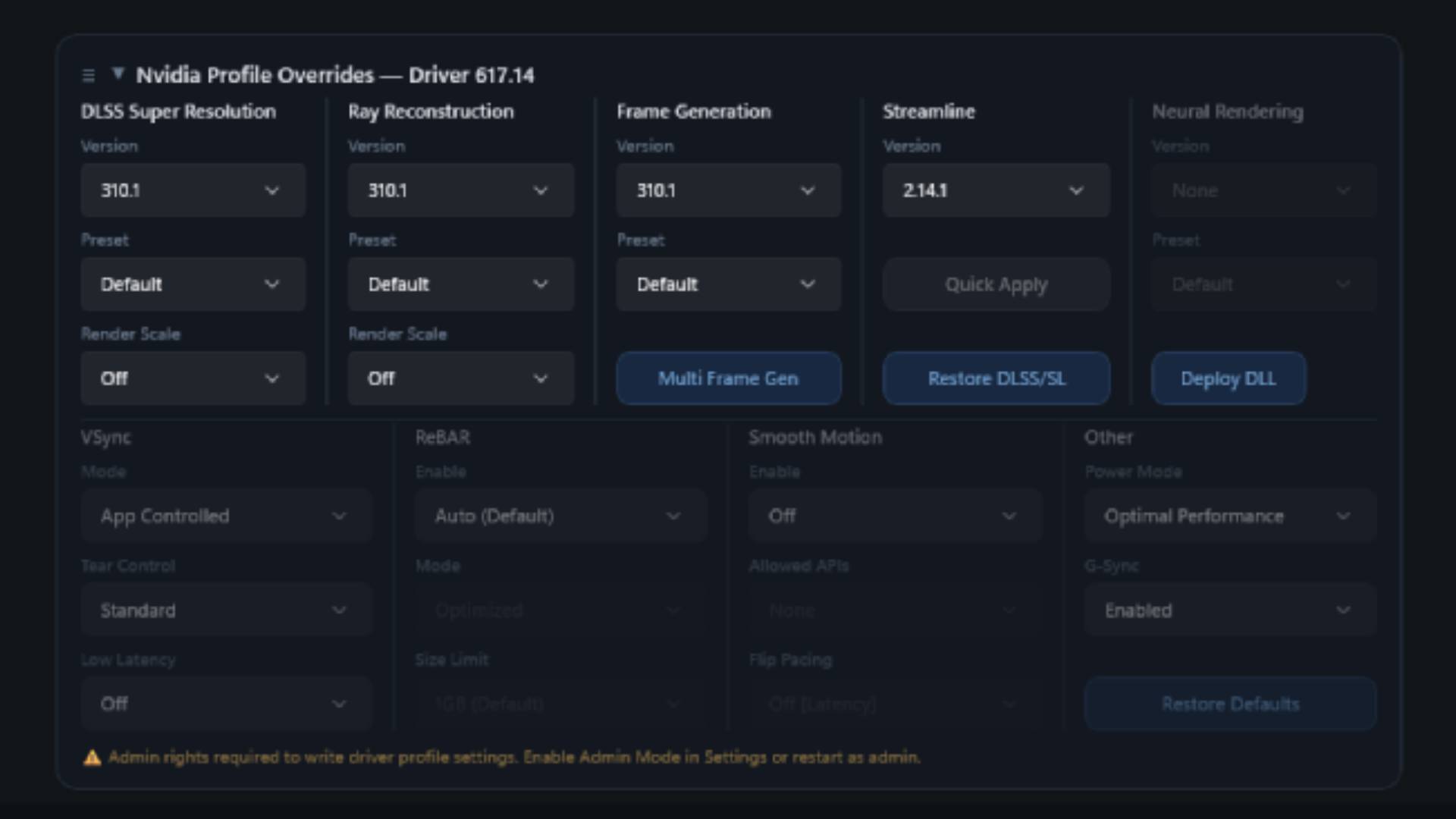
Scroll back up to the Nvidia Profile Overrides section within RHI.
- Click the blue button labeled Multi Frame Generation.
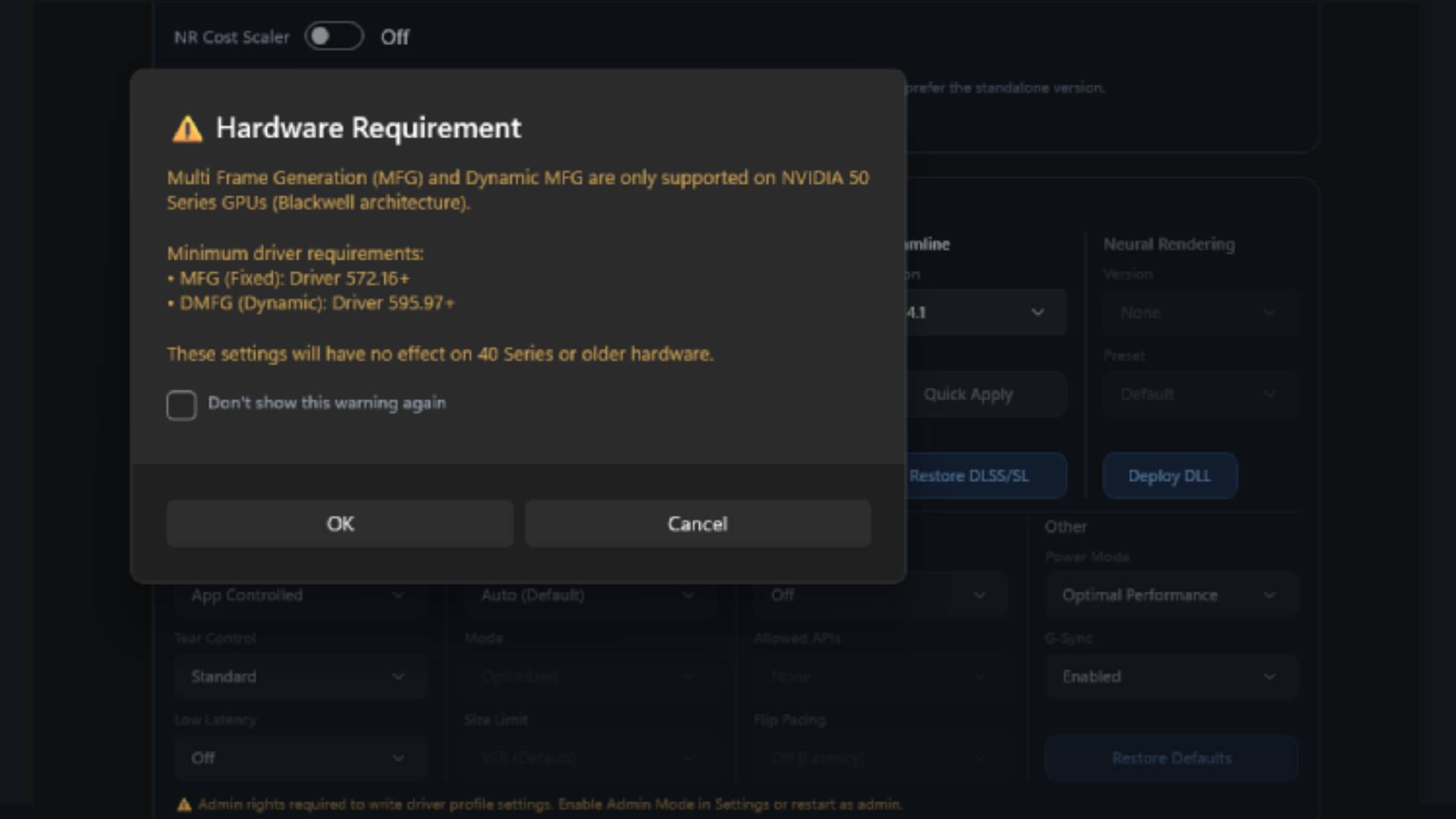
- A warning dialog will pop up stating: "Multi Frame Generation (MFG) and Dynamic MFG are only supported on Nvidia 50 Series GPU (Blackwell architecture)." Click OK to bypass this warning.
- A secondary configuration box will appear with three dropdown menus:
- Set FG to Dynamic.
- Set Frame Count to Up to 4x.
- Set Target Frame Rate to Off.
Step 5: Launch and Verify
Save your settings, launch your game, and navigate to its native graphics settings menu to enable DLSS Frame Generation.
Because some games do not explicitly display a "4x MFG" toggle when forced via profile overrides, use an overlay application like Nvidia FrameView to monitor your metrics and confirm that multi-frame generation is actively running on your RTX 40-series GPU. Enjoy your newly injected—if technically rebellious—frames!