Main Facts: A Beloved Franchise Makes Its European Debut
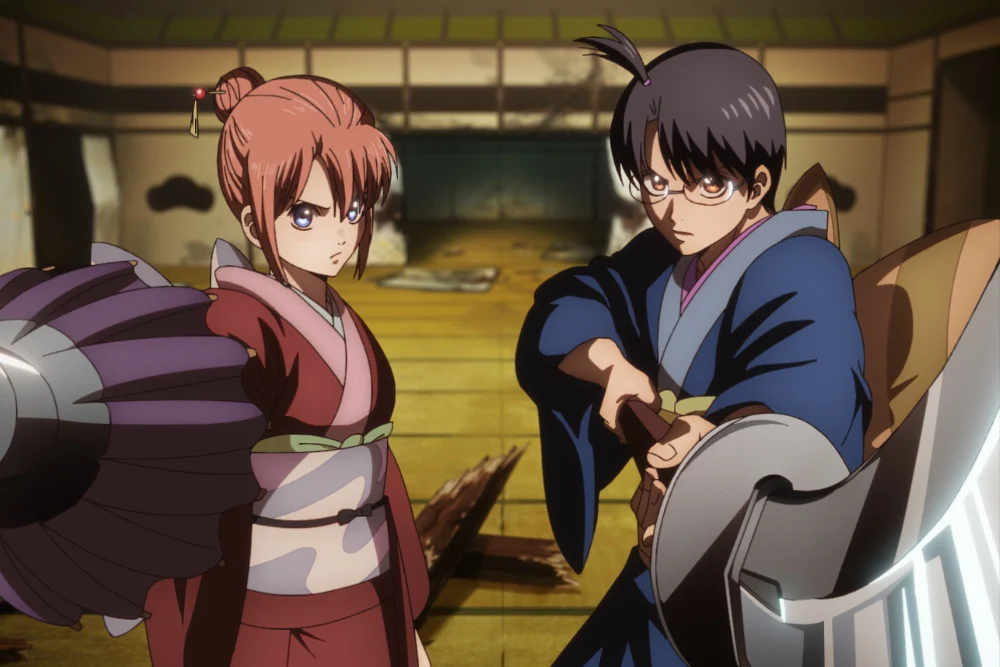
The vibrant, chaotic, and genre-defying world of Gintama has officially taken a monumental step onto the international stage. Gintama: Yoshiwara in Flames, the latest feature-length iteration of Hideaki Sorachi’s legendary manga and anime franchise, recently made its high-profile European preview at Lucca Comics and Games—Europe’s largest comic and gaming convention. The screening served as a prelude to its highly anticipated theatrical release in Italy, marking a significant milestone for a series that has spent nearly two decades cultivating a fiercely loyal global fanbase.
Originally conceived as a manga by Sorachi and published in Weekly Shōnen Jump, Gintama is set in an alternative, science-fiction-infused version of late-Edo-period Tokyo. In this universe, Earth has been brutally invaded by the Amanto, a coalition of alien species that has subjugated humanity and banned the carrying of swords. Amidst this societal upheaval, the idiosyncratic freelance samurai Gintoki Sakata and his steadfast companions navigate a series of bizarre odd-job missions, blending breakneck action, biting satire, and surprisingly profound emotional beats.
The source material ultimately spawned a massive 367-episode television anime series alongside three previous theatrical feature films. Gintama: Yoshiwara in Flames marks the fourth cinematic outing for the franchise. However, this production is far more than a simple recap; it is a meticulously crafted cinematic reimagining of one of the manga and anime’s most revered narrative arcs.
To discuss the grueling yet rewarding process of translating the television titan into a cinematic spectacle, Variety sat down with director Naoya Andé and producer Ryo Nakamuray during their triumphant appearance at Lucca Comics and Games. The resulting conversation shed light on the technical hurdles, creative liberties, and logistical marvels required to bring Yoshiwara’s fiery revival to life.
Chronology: From Manga Panels to a Global Cinematic Phenomenon
To understand the weight of Gintama: Yoshiwara in Flames, one must trace the winding historical trajectory of the franchise:
- The Manga Era (2003–2019): Hideaki Sorachi launches Gintama in the pages of Weekly Shōnen Jump. Over a 16-year run, the series becomes a cultural touchstone, famous for its meta-commentary, fourth-wall breaks, and seamless transitions between gut-busting comedy and sprawling dramatic arcs like "Yoshiwara in Flames."
- The Television Adaptations (2006–2018): Animated by Sunrise, the television adaptation spans multiple seasons and 367 episodes. While the television format successfully adapted the "Yoshiwara in Flames" storyline, structural and budgetary limitations of weekly broadcasting meant that certain dramatic elements—such as the literal destruction of the subterranean pleasure district—were scaled back.
- The Cinematic Offshoots: Prior to the current film, the franchise made three successful leaps to the big screen (Gintama: The Movie, Gintama: The Movie: The Final Chapter: Be Forever Yorozuya, and Gintama: The Very Final), proving that fans were more than willing to follow the characters into theaters.
- February 2025 (Japanese Theatrical Premiere): Driven by strict production deadlines, the initial version of Gintama: Yoshiwara in Flames premieres in Japan. While celebrated by fans, the creative team recognizes that several visual sequences fall short of their ultimate vision.
- September 2025 (The Revised Cut): Capitalizing on the home-video release window, director Naoya Andé spearheads a massive revision project, completely retouching over 200 shots to realize the definitive version of the film.
- Late 2025 (European Preview at Lucca): The film arrives in Italy for its European premiere at Lucca Comics and Games, introducing the newly polished cut to international audiences and opening doors for broader Western distribution.
Supporting Data: Production Scale, Technical Innovation, and Global Collaboration
The production of Gintama: Yoshiwara in Flames is a masterclass in modern international animation logistics. Moving from a television standard to a cinematic widescreen format required a total overhaul of the creative pipeline.
Embracing the CinemaScope Format
When asked about the approach to modernizing the franchise without alienating longtime fans, director Naoya Andé emphasized the deliberate choice of framing. Recognizing that the narrative was action-heavy, the production team utilized the CinemaScope ultrawide ratio. This allowed the camera to maintain a slightly more distant perspective from the subjects, granting viewers a wider field of view to fully appreciate the intricate background designs and the sprawling, atmospheric world of Yoshiwara.
Technological Leaps Across a Five-Year Gap
The production team faced a unique temporal hurdle: the television anime had concluded five years prior to the commencement of the film’s development. According to Andé, this half-decade gap allowed animation technology to make unprecedented leaps forward. The creators heavily leveraged these technological advancements—particularly the sophisticated integration of 3D animation environments—to give the film a spatial depth and fluidity impossible to achieve during the television era. Furthermore, a completely fresh musical score was composed to elevate the auditory landscape, ensuring that the theatrical experience felt distinct from its small-screen predecessor.
A Cross-Border Production Ecosystem
The expansive scope of the film’s credits reveals a staggering international collaborative effort. The end titles feature dozens of specialized animation studios stretching across Asia, including facilities in China, Indonesia, and Vietnam. Managing such a sprawling, decentralized workforce requires rigorous division of labor. Producer Ryo Nakamuray explained that tasks are segmented according to each studio’s specialized strengths—some teams focusing strictly on character design, while others excel in choreography and action sequences. Each satellite studio operates under a designated team leader, maintaining a synchronized pipeline through constant cross-continental communication and oversight.
Official Responses: The Creative Team on Burned Towns and Cultural Humor
Unleashing the Flames of Yoshiwara
One of the most striking creative divergences between the original television adaptation and the new film involves the physical fate of the setting itself. In the original TV run, despite the arc bearing the title "Yoshiwara in Flames," budgetary and narrative constraints meant the iconic underground city did not actually burn to the ground.
When planning the cinematic adaptation, Andé consulted producer Takashi Maekawa—who had also worked on the original television series—to ask a definitive question: Are we actually going to burn the town this time?
Maekawa’s response was an unequivocal affirmation: "Yes, this time we’re going to burn everything." This collective creative decision allowed the team to lean into the cinematic medium’s capacity for grand-scale destruction, delivering the fiery catharsis that manga readers had yearned for years to see visualized.
Perfecting the Art of Post-Release Polish
The decision to release a theatrical cut in February only to subsequently retouch over 200 shots for the home video and international release in September highlights an uncompromising pursuit of perfection.
"We released the version in February because we had a deadline to respect and the film was finished and ready to be released," Andé explained. "But we also knew that there were shots which weren’t perfect and could be improved, and so when we had the opportunity, we went back and perfected them. We were very proud of the film we released in February, but with the opportunity of the DVD release, we decided to go back and work again on the film and we retouched over 200 shots."
Navigating the Minefield of Meta-Humor
Gintama is globally celebrated for its irreverent wit, relentless fourth-wall-breaking, and dense layers of pop-culture meta-humor. However, translating this specific brand of comedy across cultural and linguistic barriers is notoriously difficult.
Addressing how the team handled this challenge, Andé revealed a subtle comedic philosophy: "Humor is very difficult to do, and especially to translate culturally. It’s very, very difficult to do. We had one director who worked principally on that. What we figured out was that it was best not to present the humor to the audience as this bit is really funny, but rather have the characters themselves joke between themselves, and the audience could listen in and enjoy the humor." This organic approach prevents the comedy from feeling forced, preserving the naturalistic chemistry of the core cast.
Implications: What Yoshiwara in Flames Means for the Future of Gintama
The enthusiastic reception of Gintama: Yoshiwara in Flames at Lucca Comics and Games carries profound implications for the franchise and the broader anime industry in Europe.
For years, feature-length anime theatrical releases in Western markets were largely restricted to massive industry juggernauts like Studio Ghibli, Demon Slayer, or Dragon Ball. By bringing Gintama directly to Europe’s largest comic convention ahead of an Italian theatrical rollout, the production team has signaled a growing confidence in the Western market’s appetite for long-running, lore-heavy titles that cater to dedicated, mature audiences.
Furthermore, the film’s success demonstrates the viability of the "hybrid" production and revision model. By utilizing initial theatrical runs to secure momentum while leveraging home-video windows to execute massive visual overhauls—such as the 200-shot retouching process—creators can balance tight industry deadlines with artistic integrity.
As Gintama: Yoshiwara in Flames continues its journey across European cinemas, it proves that Gintoki Sakata and his band of misfits still hold an irreplaceable place in the hearts of global fans. By combining state-of-the-art 3D animation, a truly international collaborative framework, and an uncompromised fidelity to Hideaki Sorachi’s chaotic vision, the creative team has ensured that the fires of Yoshiwara will burn brightly on the big screen for years to come.