The promise of the streaming revolution was simple: bypass the bloated, high-priced bundles of traditional cable television in favor of lean, affordable, and flexible digital alternatives. For years, "cord-cutting" was the rallying cry of the digital consumer. However, a seismic shift in the pricing structure of major live linear streaming services suggests that the digital frontier is beginning to look remarkably like the legacy landscape it sought to replace.
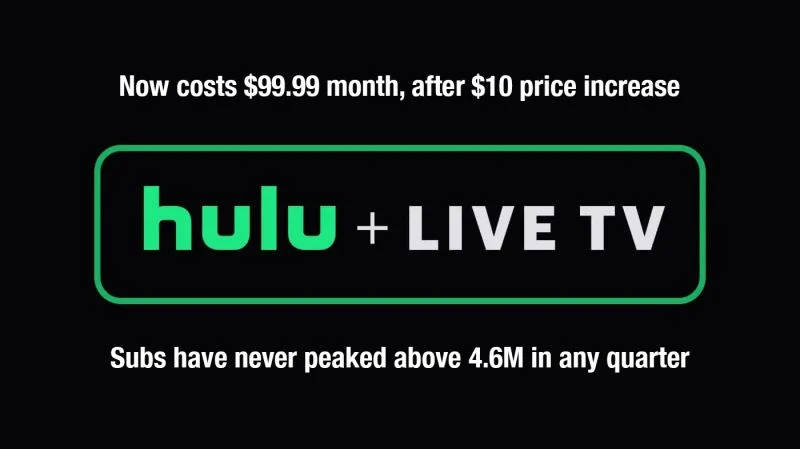
Disney has officially pushed its Hulu + Live TV subscription into triple-digit territory, with the service now costing $100 per month. For those seeking the ad-free SVOD experience paired with live linear channels, the price has climbed to $109.99. This latest $10 hike serves as a sobering milestone, marking the moment when digital streaming services have officially surpassed the cost of many traditional cable bundles, effectively nullifying the original economic incentive for switching.
The Chronology of Cost: From Disruption to Inflation
To understand the magnitude of this shift, one must look back at the inception of Hulu + Live TV. When the service launched in May 2017, it arrived as a market disruptor. With a starting price point of $40 per month, it provided a robust alternative for sports fans and news junkies who wanted access to broadcast networks and cable staples without the contractual shackles of a multi-year cable agreement.
In just nine years, that price has more than doubled. This rapid inflation stands in stark contrast to the trajectory of traditional pay-TV bundles, which, while still expensive, have not seen their pricing velocity match that of the streaming sector.
A Timeline of the Escalation:
- May 2017: Hulu + Live TV debuts at $40/month, positioning itself as the premier "skinny bundle."
- 2019–2021: Frequent incremental increases occur as the service adds more regional sports networks and entertainment channels, pushing the price toward the $60–$70 range.
- 2022–2023: As Disney pushes for profitability across its direct-to-consumer segment, price hikes become more aggressive, moving the service toward the $80 threshold.
- 2024–2025: The "triple-digit era" arrives. With the latest $10 increase, the standard live tier hits $100, while the ad-free premium tier reaches $109.99.
This trajectory reflects a fundamental change in strategy. Early streaming services were subsidized by massive capital injections from parent corporations aiming for market share at any cost. Today, the focus has shifted entirely toward Average Revenue Per User (ARPU) and profitability, leaving the consumer to bear the weight of content licensing fees and corporate margin expectations.
Stagnant Growth: The Data Behind the Decline
While prices have soared, subscriber growth has hit a metaphorical brick wall. The narrative that live linear streaming is a high-growth sector is increasingly undermined by the cold reality of the data.
In the first quarter of 2021, Disney reported that Hulu + Live TV commanded approximately 4 million subscribers. Fast forward four years to the fourth quarter of fiscal 2025, and that number has inched forward to only 4.4 million. This represents a period of profound stagnation. During these four years, the service never peaked above 4.6 million in any given quarter.
This data reveals a critical failure in the "cord-cutting" value proposition. As the price gap between streaming and cable narrows, the churn rate for these services increases. Consumers are increasingly treating live streaming as a utility—switching on for a specific season of sports or a particular event and canceling as soon as that window closes. The "stickiness" that cable companies once enjoyed through long-term contracts is entirely absent, and the high price point is now driving the very consumers the service hoped to capture back toward either cheaper SVOD-only services or, in some cases, back to promotional cable deals.
The Strategic Pivot: Is Disney Preparing for an Exit?
Perhaps the most significant development in this saga is Disney’s decision to stop breaking out Hulu + Live TV subscriber numbers in its quarterly earnings reports. By burying these figures—often grouping them with other segments or obscuring the granular detail—Disney is signaling a lack of long-term commitment to the live linear product as a standalone pillar.
Speculation is mounting that Disney is laying the groundwork to eventually wind down Hulu + Live TV entirely. This theory is bolstered by the recent leadership shuffle in the industry. In July, Alisa Bowen, who served as the President of Disney+, departed to become the CEO of Fubo—a direct competitor in the live linear space.
This move suggests a potential consolidation play. If Disney chooses to exit the live linear streaming space, it would likely look to partner with or offload its subscriber base to an existing platform like Fubo. By offloading the logistical burden of managing live linear infrastructure—which is notoriously expensive due to carriage fees and complex regional sports network agreements—Disney could refocus its efforts entirely on its core strength: high-margin, on-demand content distribution through Disney+ and Hulu’s SVOD library.
Implications: The Return of the "Bundle"
The current situation carries massive implications for the future of media consumption. We are currently witnessing the death of the "Skinny Bundle" era.
1. The Death of the Cost-Savings Myth
For years, consumers were told that streaming was cheaper. That is no longer the case. When one factors in the cost of high-speed internet, plus a $100 live streaming subscription, plus the inevitable costs of secondary subscriptions (like Netflix, Max, or Amazon Prime), the "cord-cutter" is often paying more than they would for a traditional cable bundle. The "unbundling" process has ironically led to a state of "re-bundling," where consumers pay for multiple disparate services that eventually equal the price of a traditional cable package.
2. The Sports Conundrum
The primary driver of these price hikes is sports. Live sports are the last bastion of true linear television, and rights holders like the NFL, NBA, and MLB continue to demand astronomical fees. Streaming services, in their desperation to maintain a competitive library, have agreed to these costs, passing the bill directly to the subscriber. This has created a bifurcated market: a high-cost tier for sports fans and a low-cost tier for those willing to wait for on-demand content.
3. The Shift in Corporate Strategy
The transition from a "growth-at-all-costs" model to a "profit-at-all-costs" model has fundamentally altered the relationship between streamers and their users. Disney’s move to $100 per month is a test of price elasticity. They are betting that their core user base is "locked in" and unlikely to churn despite the massive price jump. If they are wrong, the service will likely be sold off or shuttered, marking a quiet end to a massive corporate experiment.
Conclusion: What Lies Ahead for the Consumer?
As we look toward the future, the landscape of digital entertainment will likely become even more fragmented. If Hulu + Live TV continues to scale back or eventually merges into a different model, the consumer will have fewer options for centralized, live television.
The $100 price tag is more than just a number; it is a signal that the "Golden Age of Streaming" as a cheap, consumer-friendly alternative to cable is effectively over. For the average household, the path forward involves a more careful curation of services. The days of subscribing to everything are coming to a close, replaced by a "subscription carousel" where consumers rotate through services based on the specific content they want to consume that month.
Ultimately, the failure of the Hulu + Live TV growth trajectory serves as a cautionary tale for the industry. You cannot promise the benefits of cable without the economies of scale that cable providers once leveraged. By chasing the short-term revenue gains of higher subscription fees, streaming giants may be inadvertently accelerating the very decline of the live linear model they once sought to revolutionize. The consumer, now smarter and more discerning, is beginning to vote with their wallet—and it remains to be seen if $100 a month is a bridge too far for the modern cord-cutter.