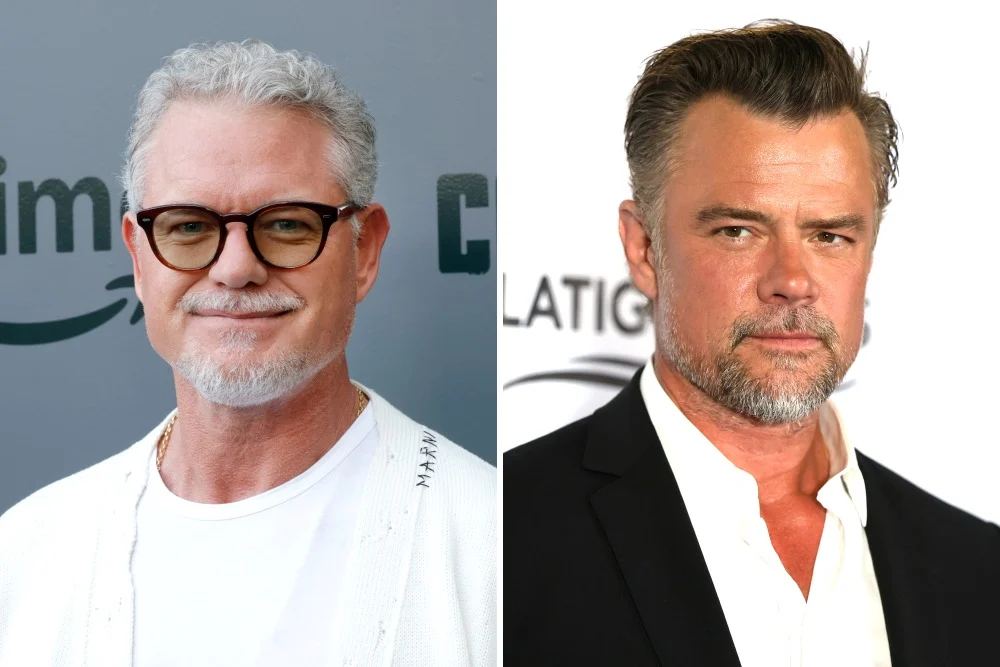
Hollywood sets are frequently romanticized as glamorous, tightly knit communities where creative minds come together to manufacture movie magic. However, the high-pressure environment, grueling schedules, and intense physical demands of television production can occasionally push actors to their absolute limits. This reality is laid bare in the posthumously-released memoir by the late actor Eric Dane, titled My Book of Days: A Memoir in Moments.
Among the many reflections, career retrospectives, and personal anecdotes contained within the book, one particular revelation has sent shockwaves through entertainment media: a violent physical altercation between Dane and actor Josh Duhamel on the set of the hit NBC drama series Las Vegas. The incident, long kept quiet behind the scenes of the 2000s television landscape, highlights the intersection of physical vulnerability, intense method-acting techniques, and the volatile dynamics of network television production.
The Core Conflict: A Herniated Disc, a Broken Promise, and a Boiling Point
The confrontation occurred during Dane’s guest-starring stint in the second season of Las Vegas, which ran on NBC for five seasons from 2003 to 2008 and was headlined by Duhamel alongside legendary screen actor James Caan. At the time of his appearance in 2004, Dane was quietly suffering from severe physical agony due to a herniated disc in his neck.
Understanding his physical limitations, Dane approached the show’s lead actor prior to filming a mandatory physical confrontation scene to establish boundaries and protect his fragile health.
"We’re about to film a fight scene. I ask the lead, Josh Duhamel, to please not grab me by the tie during the scene. He promises me he won’t," Dane writes in his memoir.
Despite the explicit agreement, the production environment quickly derailed. According to Dane, the moment the director yelled "Action," Duhamel instinctually grabbed his tie. The physical consequence was immediate and agonizing.
"Fire rips through my neck. I go, ‘Whoa, whoa, whoa, we have to stop.’ He apologizes, I grunt from the pain, and then, take two. He pulls on my tie again," Dane recalls.
Following the second infraction, Dane’s patience wore thin. He turned to a member of the production staff, delivering a stern warning: "You better rein in your boy." Duhamel subsequently offered an apology, attributing the repeated infraction to getting "caught up in the moment."
However, any resolution was fleeting. As cameras rolled on the third take, Duhamel once again grabbed the tie. Pushed past his breaking point by the excruciating pain, Dane snapped. He ripped off his suit coat, hurled an insult, and charged at his co-star with his fists raised. Because the cameras never stopped rolling and the director failed to yell "cut," Dane’s explosive retaliation was fully captured on film, leaving him publicly cast as the hotheaded aggressor of the nasty set-side incident.
A Chronological Look at the Rise of Two Stars
To fully understand the gravity of the clash on the Las Vegas set, it is necessary to examine where both actors stood professionally and personally at that specific juncture in their careers.
The Mid-2000s Landscape: Pre-Fame Struggles
- Pre-2004: Eric Dane was a familiar face on television, building a steady resume through guest-starring roles on popular sitcoms and dramas such as Roseanne and Married… with Children, alongside recurring appearances on Charmed and Gideon’s Crossing.
- 2004: Dane appears as a guest star in two episodes of Las Vegas, battling debilitating neck pain while trying to secure his footing in prime-time television.
- 2006: Just two years after the Las Vegas incident, Dane lands the defining television role of his career: Dr. Mark "McSteamy" Sloan on ABC’s medical phenomenon Grey’s Anatomy, instantly propelling him to global stardom.
- 2003–2008: Josh Duhamel anchors Las Vegas as Danny McCoy, a former U.S. Marine turned casino security executive, cementing his status as a primetime leading man.
Method Madness: Josh Duhamel’s Perspective on the Era
While Dane’s memoir paints a picture of a frustrating, painful professional environment, context regarding Duhamel’s behavior on set has surfaced from the actor himself. Earlier this year, speaking on In Depth with Graham Bensinger, Duhamel opened up about the psychological toll his early career roles took on him, admitting that he could be exceptionally difficult to work with during that era.
To authentically portray complex characters—such as Danny McCoy, a veteran returning from the Iraq War dealing with heavy psychological trauma and PTSD—Duhamel confessed that he leaned heavily into intense method-acting practices. He routinely went to "pretty extreme places in my head" to stay in character.
"When I got on set, people would be like, ‘Whoa, what the fuck is wrong with this dude?’" Duhamel revealed during the interview. Explaining his immersion tactics, he added: "I was on the show Las Vegas, and in the second season my character had gotten deployed to Iraq and he came back and he had seen some shit, and he was in a real dark place… That was the only way I knew how to do it, was to get into this place and stay there. [I] didn’t talk to anybody. I was just, sort of, in it."
This total psychological immersion had a palpable chilling effect on the production. Duhamel acknowledged that his intense detachment alienated his peers: "People didn’t want to be around me. And people would, sort of, avoid me and it scared people a little bit, including me."
This psychological isolation helps contextualize why Duhamel may have repeatedly ignored Dane’s boundaries during the stunt. Caught deep within the aggressive, hyper-vigilant headspace of a traumatized marine, the lines between fiction and reality, choreography and impulse, blurred dangerously.
Accountability, Reconciliation, and Maturity
Despite the hostility of the past, Dane’s memoir does not end on a vengeful note. Instead, My Book of Days: A Memoir in Moments showcases a mature, self-reflective actor looking back at his own flaws with a clear perspective. Rather than purely casting blame on Duhamel’s intense acting methods or lack of attentiveness, Dane openly owns his part in escalating the situation to physical violence.
Reflecting on the aftermath in the pages of his memoir, Dane writes:
"Josh and I have seen each other since and we’re cool. But I want to say it again. Josh, I was wrong. I should’ve walked away. I’m sorry, dude."
This public mea culpa underlines a mutual reconciliation that took place long before the book’s publication. Both actors, having matured through decades in the demanding entertainment industry, appear to have put the 2004 incident firmly behind them.
Broader Implications for Industry Standards
Incidents like the one detailed by Eric Dane bring vital industry practices into sharp focus, offering broader implications for modern television and film production:
- Stunt Safety and Actor Protection: The clash emphasizes the critical need for strict adherence to physical boundaries on set. When an actor explicitly communicates a medical vulnerability—such as a herniated disc—production teams and fellow cast members must prioritize physical safety over dramatic impulse.
- The Evolution of Method Acting: Duhamel’s candid admissions regarding his past behavior highlight a growing industry conversation about the psychological limits of method acting. Modern sets increasingly utilize intimacy coordinators, fight directors, and mental health professionals to ensure that heavy emotional or physical work does not cross professional boundaries or compromise the safety of the cast and crew.
- The Power of Posthumous Memoirs: As a final literary gift to fans, My Book of Days: A Memoir in Moments allows Dane to control his own narrative, offering a raw, unfiltered, and ultimately accountable look at the human beings behind the television screens.
Ultimately, what began as a painful, volatile clash on a casino-themed soundstage nearly two decades ago stands today as a testament to the high-stakes pressures of television acting—and the enduring power of accountability, growth, and forgiveness among peers.