Many midlife professionals and business owners operate under a pervasive, limiting myth: that YouTube is a playground for the young, the hyper-energetic, and the naturally charismatic. They look at the platform—a digital landscape dominated by rapid-fire editing and trending personalities—and conclude that their window of opportunity has long since closed.
However, YouTube growth strategist Ty Myers argues the exact opposite. In a comprehensive breakdown co-created with Michael Stelzner, Myers posits that the platform is actually moving toward a "specialization era." The creators who succeed are not necessarily the loudest; they are the ones who can solve a specific problem for a specific person. For professionals with decades of experience in sales, consulting, or education, this transition is not just possible—it is a natural evolution of their existing expertise.
Main Facts: The New Rules of YouTube Engagement
The fundamental shift in YouTube strategy is the move from "broadcasting to the masses" to "targeting the specific." Myers emphasizes that YouTube is not a social network; it is a sophisticated search and recommendation engine.
- The Clarity Mandate: Ambiguity is the primary cause of channel stagnation. A channel that attempts to appeal to everyone inevitably fails to resonate with anyone.
- The Pre-Production Priority: Most creators fail because they lead with production. Successful channels dedicate roughly 60% of their time to research and strategy—specifically, identifying what an audience is already searching for—before a camera is ever turned on.
- The Algorithm as a Reader: The YouTube algorithm is a text-processing engine. It analyzes transcripts, titles, and thumbnails to understand the "avatar" of the viewer. If your messaging is specific, the algorithm acts as a precision tool, delivering your content to the exact person looking for your solution.
Chronology: The Four-Phase Growth Framework
To move from obscurity to a sustainable, revenue-generating presence, Myers suggests a structured four-phase roadmap.
Phase 1: Mission and Avatar Definition
Before creating a single video, you must define the "Why." Are you looking to generate leads, establish thought leadership, or sell a specific product? Once the mission is set, you must define the "Avatar"—the singular person you are speaking to. You must map out their fears, desires, and the specific obstacles preventing them from reaching their desired outcome.
Phase 2: The "Reps" Phase
Many professionals, accustomed to high levels of competence in their previous careers, fall into the trap of perfectionism. Myers advises against this. The first 15 videos are essentially "reps"—practice sessions designed to help you find your voice, get comfortable with the camera, and understand your workflow. Perfectionism is a barrier to entry; consistency is the path to growth.
Phase 3: The Pivot to Quality
Once the initial "reps" are complete and the workflow is established, the focus shifts to strategic analysis. This involves studying the platform as a distribution system rather than a creative outlet. Creators should analyze what works in their niche, looking for patterns in successful titles, thumbnail designs, and content structures.
Phase 4: Scaling and Monetization
Finally, the creator pivots from simple content production to a conversion model. This is where the YouTube channel shifts from being a cost center (time and effort) to a revenue engine, utilizing both explicit and subtle calls-to-action (CTAs) to move viewers into paid coaching, consulting, or product funnels.

Supporting Data: Why Strategy Outperforms Production
The data surrounding YouTube success reveals a stark reality: content quality is secondary to content packaging. Myers notes that 80% of a video’s success is determined by the topic, title, and thumbnail.
If you invest 10 hours a week into YouTube, Myers recommends a strict time allocation: 6 hours for pre-production (researching trends, testing titles, and sketching thumbnails) and only 4 hours for the actual production and editing.
The "Outlier" Research Method
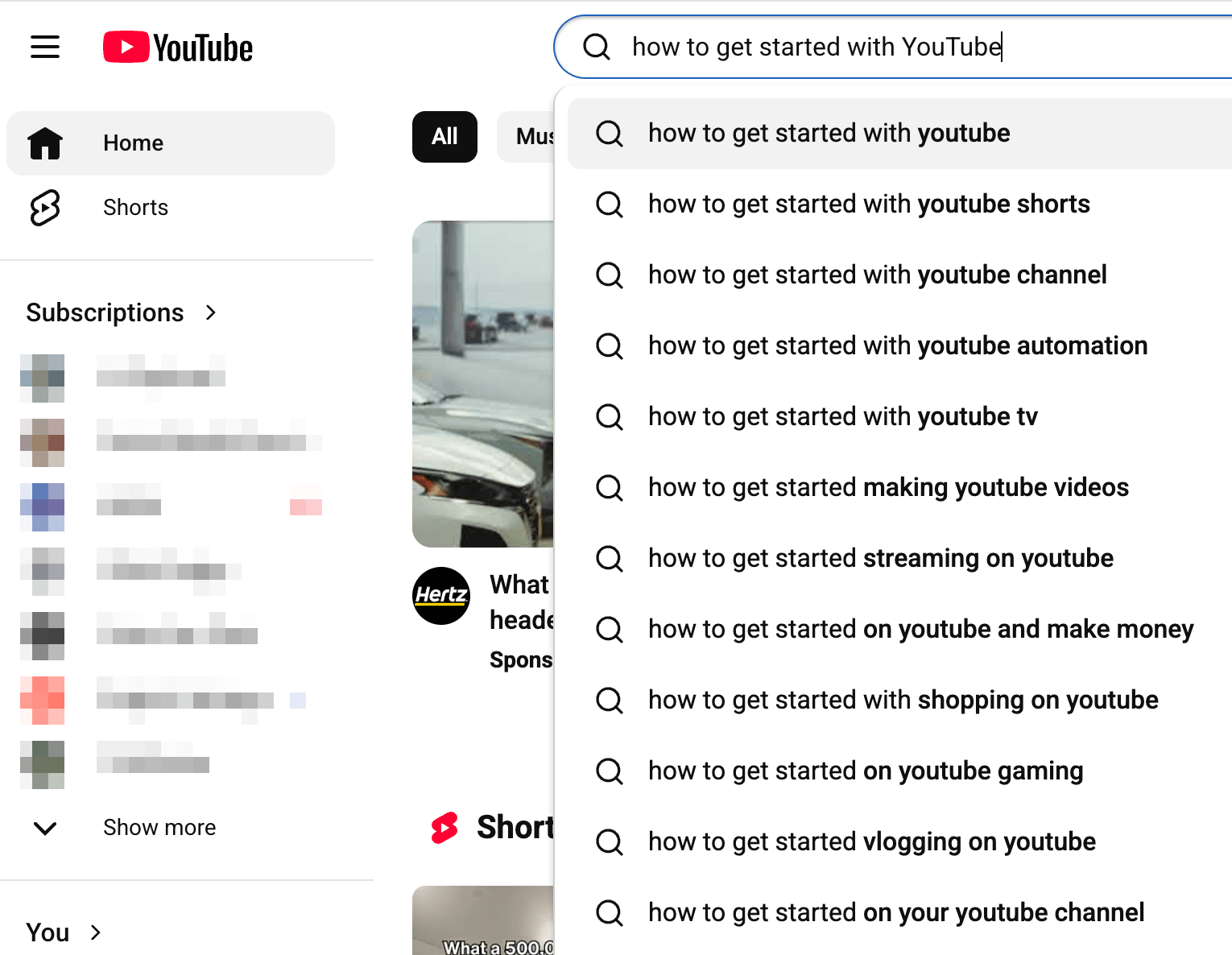
Using tools like VidIQ and YouTube’s native autocomplete feature, creators can validate ideas before filming. By analyzing the "view trajectory" of competitor videos, one can identify which topics have lasting demand versus those that were merely fleeting trends.
For instance, consider the case of "Ask PawPaw," a channel that struggled while focusing on generic financial advice. By pivoting to a high-demand, specific niche—tiny home shed conversions—and leveraging the "outlier" model (emulating successful formats while using unique personal experience), the channel saw massive growth. This proves that success on YouTube is often found by aligning your unique perspective with established, proven audience interests.
Official Guidance: Mastering the Hook and the Loop
The "hook" is the most critical element of the production phase. According to Myers, the first 15–30 seconds must achieve three things:
- Call out the viewer: Directly address the specific person the video is for.
- The Curiosity Gap: Introduce a counterintuitive statement or question that forces the viewer to stay to find the resolution.
- Credibility: Briefly establish why the creator is the authority on this subject.
Beyond the hook, the "session duration" is the key metric for YouTube’s recommendation system. To optimize this, Myers recommends abandoning traditional outro music or "thanks for watching" segments. Instead, the video should end by seamlessly transitioning into a question that can only be answered by the next video in the series. This creates a "loop," keeping the viewer on the platform longer and signaling to YouTube that your channel provides high value.
Implications for Business Growth
The most significant implication of this strategy is that YouTube is no longer just for "content creators"—it is a premier tool for business professionals.
From Views to Revenue
For many, the goal is not to become a "YouTuber" dependent on AdSense revenue. Instead, the goal is to become an authority in a specific field.

- Explicit CTAs: Placing a mid-roll mention of your services provides a direct path for viewers to transition into clients.
- Subtle Signals: Referencing real-world client experiences during your content serves as "social proof." When a viewer hears you discuss how you solved a specific problem for a client, they stop viewing you as a content creator and start viewing you as a solution provider.
Equipment as a Friction Point
Finally, the barrier to entry regarding technology is lower than ever. Myers, who filmed over 100 videos using an iPhone 15 and a $300 Shure MV7+ microphone, argues that excessive gear is often a distraction.
"Audio is non-negotiable," Myers notes. "Poor audio is the fastest way to lose a viewer." However, beyond a quality microphone and natural window lighting, the complexity of your setup should not be a deterrent. The "production quality" that matters is the quality of the insight, not the resolution of the camera.
Conclusion: The Time to Start is Now
The "latecomer" advantage is real. Professionals who start today bring years of industry-specific knowledge, nuanced perspectives, and high-value problem-solving skills that younger, less experienced creators often lack. By applying this systematic, research-driven framework—focusing on the avatar, mastering the pre-production process, and leveraging the algorithm—any business owner can transform their YouTube channel into a sustainable, high-impact asset that drives consistent revenue for years to come.
As the digital economy continues to favor those who provide clear, actionable solutions, the YouTube platform remains one of the most powerful, and underutilized, engines for professional growth. Whether you are in sales, consulting, or specialized industry leadership, your next client may well be watching a video you haven’t even filmed yet.