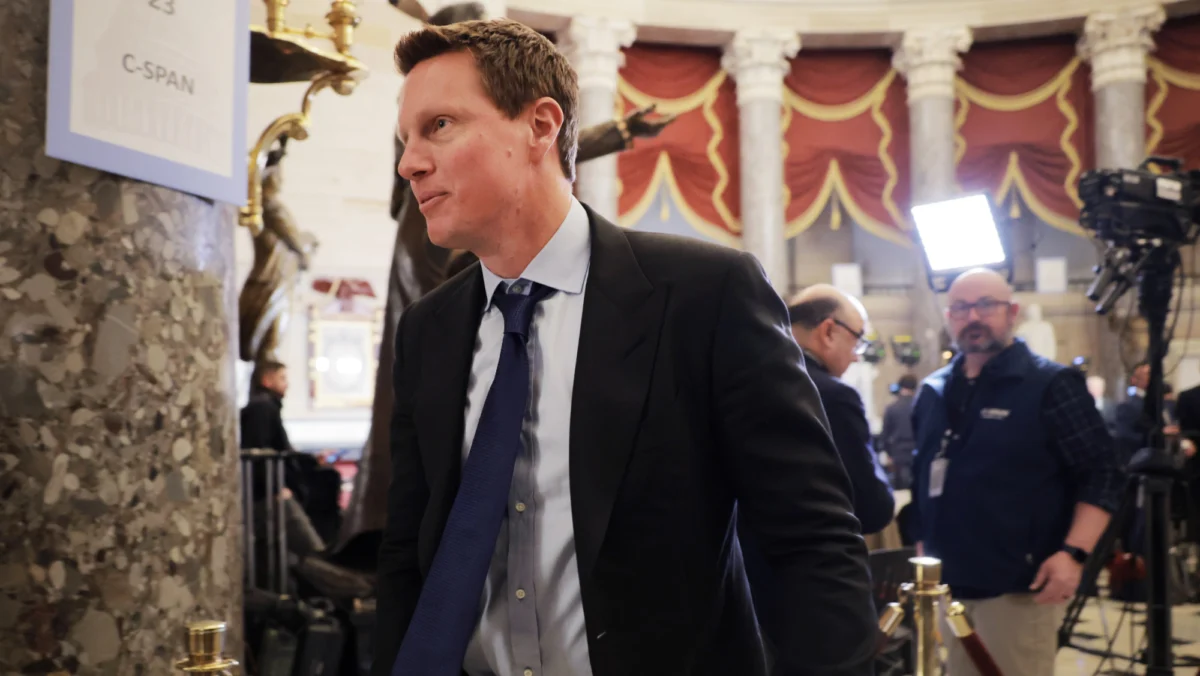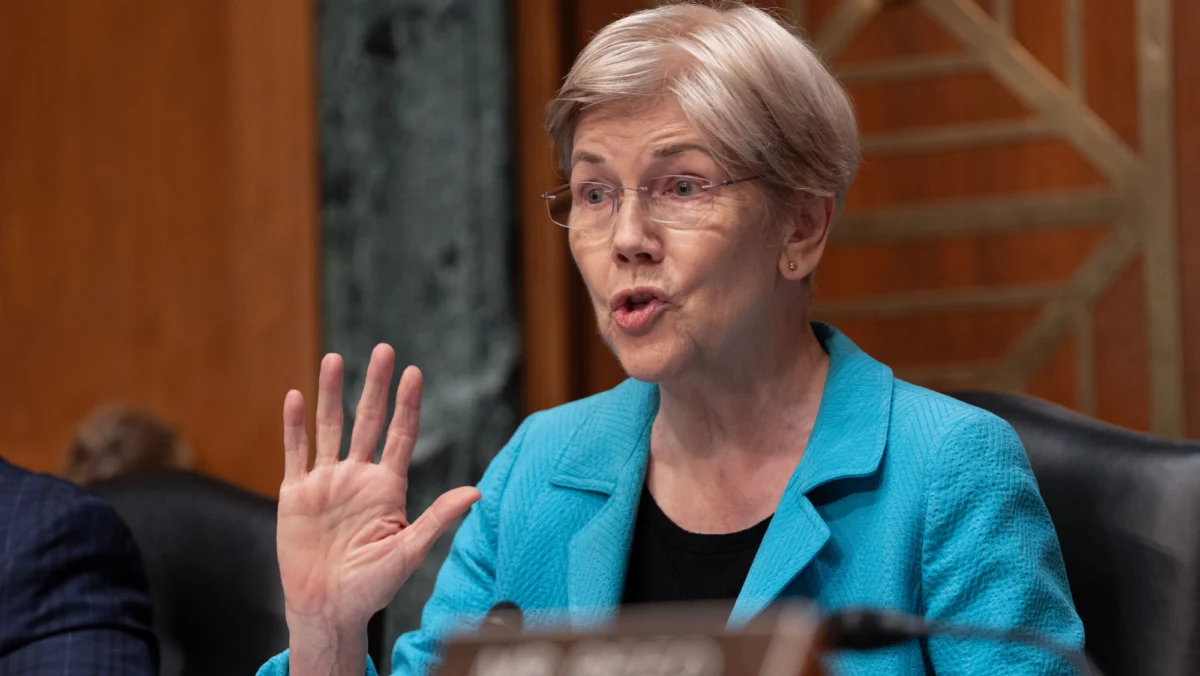
In a high-stakes escalation of regulatory oversight, a coalition of Democratic lawmakers, spearheaded by U.S. Senator Elizabeth Warren and U.S. Representative Becca Balint, has issued a formal demand for the Department of Justice (DOJ) to conduct a strictly "impartial" and rigorous review of Fox Corp.’s proposed $22 billion acquisition of the streaming giant Roku. The letter, dispatched on July 16 to Stanley E. Woodward, Associate Attorney General within the DOJ’s Antitrust Division, signals deep-seated concerns regarding the potential for political interference and the emergence of "backroom dealmaking" that could fundamentally alter the landscape of American media.
The Core Conflict: A Changing Television Ecosystem
The proposed $22 billion acquisition of Roku by the Lachlan Murdoch-led Fox Corp. represents one of the most significant vertical integration attempts in modern media history. By absorbing Roku—a platform that serves as a primary gateway to streaming content for approximately 100 million U.S. households—Fox is poised to shift from a traditional broadcaster to a dominant gatekeeper of digital television.
For critics, the deal is not merely a corporate expansion; it is an existential threat to competition. The lawmakers argue that the merger creates an inherent conflict of interest. As the owner of both the content-creation apparatus (Fox) and the distribution pipeline (Roku), the combined entity would possess the technical and strategic incentive to prioritize Fox-affiliated programming. This "steering" mechanism could effectively marginalize competitors, limit consumer choice, and exert upward pressure on subscription costs for the average American household.
A Chronology of Consolidation and Concern
The current outcry arrives at the tail end of a frantic period of media consolidation that has seen the traditional television ecosystem essentially dismantled and reassembled by a handful of titans. To understand the gravity of the Fox-Roku move, one must look at the recent timeline of the industry:
- The Disney-Fubo-Hulu Integration: The landscape began shifting drastically when Disney moved to consolidate its streaming assets, including a controlling stake in the Fubo ecosystem combined with the expansive reach of Hulu + Live TV.
- The Skydance-Paramount Convergence: The industry was further shaken by the high-profile merger between Paramount and Skydance, a deal that signaled the end of the traditional studio era for many legacy brands.
- The Warner Bros. Discovery Ambitions: Concurrent with these shifts, the ongoing push for a Paramount-Warner Bros. Discovery merger has kept regulatory bodies in a state of constant, high-pressure evaluation.
- The July 16 Letter: In response to this rapid succession of deals, Senator Warren and Representative Balint moved to intervene, formally notifying the DOJ that the "pattern" of consolidation has reached a breaking point where transparency is no longer optional.
Supporting Data: Why Roku is the "Crown Jewel"
The concern over the Fox-Roku deal is grounded in the sheer ubiquity of the Roku platform. Unlike traditional cable boxes, Roku has evolved into a "living room operating system." Data from market analysts suggests that the platform’s control over the interface—the "prime real estate" of the home screen—gives it unprecedented power to dictate what viewers watch.
- Market Reach: Roku currently serves over 100 million households. If Fox gains control of this interface, they gain a direct line to nearly a third of the U.S. population.
- Algorithmic Preference: Critics fear that "search neutrality" will be sacrificed. By adjusting the algorithm, the merged Fox-Roku entity could ensure that Fox News, Fox Sports, and their associated streaming properties appear at the top of every search result, while competitors are buried on secondary menus.
- Data Harvesting: Roku collects massive amounts of viewing data. Combining this with Fox’s advertising engine would allow for micro-targeted content delivery that could skew the political and cultural discourse in ways that are currently opaque to regulators.
The Allegations of "Backroom Dealmaking"
At the heart of the lawmakers’ letter is a searing critique of the internal culture of the DOJ’s Antitrust Division under the current administration. The correspondence explicitly references reports suggesting that Stanley E. Woodward has encouraged department attorneys to favor settlements over full-scale litigation.
"Reporting has recently suggested that you told the attorneys in charge of enforcing federal antitrust laws that you prefer they not take cases to trial, and instead resolve issues through settlements," the letter states. Lawmakers argue that this policy of "settlement-first" is an open invitation for corporations to engage in sweetheart deals that satisfy regulatory requirements on paper while failing to protect the public interest.
This skepticism is exacerbated by what the signatories describe as a "cloud of corruption" surrounding the Trump administration. The lawmakers explicitly caution that the merger review system must not be used as a vehicle to extract political favors, warning that any failure to conduct a scrupulously impartial review would be seen as a betrayal of the department’s mandate.
Official Responses and the Stance of the DOJ
As of this writing, the Department of Justice has not issued a detailed rebuttal to the claims. However, the pressure on the DOJ is intensifying. The lawmakers’ letter concludes with a stern ultimatum: "When DOJ makes decisions based on political favoritism rather than the facts and the law, costs go up for American families."
Industry analysts note that the DOJ is in a difficult position. If they approve the deal, they face the political fallout from a coalition of powerful legislators who have already framed the merger as "corrupt." If they block it, they risk a protracted legal battle with Fox Corp.—a prospect that the lawmakers themselves are demanding, even as they acknowledge the department’s current reluctance to head to court.
Implications: The Future of Media Competition
The implications of the Fox-Roku merger extend far beyond the balance sheets of two corporations. Should this deal pass without significant divestitures or behavioral remedies, it would likely signal the final transition of the U.S. media market into a series of "walled gardens."
1. Consumer Costs and Choice
If the primary distributors of content are also the primary creators, the competitive pressure to lower prices is eliminated. Cable and streaming packages, which have already seen consistent price hikes, could see further inflation as the cost of "prime placement" on the Roku interface is passed down to the consumer.
2. The Erosion of Independent Journalism
The concern that Fox will use its control over the platform to preference its own news coverage is a significant blow to the concept of a fair media marketplace. If a platform is effectively a publisher, the protections traditionally afforded to "neutral" distribution channels may no longer apply, leading to calls for new forms of platform regulation that treat these entities as common carriers.
3. A Precedent for Future Mergers
The DOJ’s treatment of this deal will set a standard for the remainder of the decade. If the Fox-Roku acquisition is cleared with minimal friction, it will likely serve as a green light for the remaining independent players in the media space to pursue aggressive horizontal and vertical mergers. Conversely, a rigorous, trial-heavy approach would likely deter future consolidation and force companies to focus on organic growth rather than the accumulation of market power.
Conclusion: A Test of Institutional Integrity
The letter from Senator Warren and Representative Balint is more than a request for information; it is a public challenge to the independence of the federal government. By demanding a review "free from political interference," the lawmakers are holding the DOJ accountable to a standard of conduct that they believe is currently being eroded.
As the regulatory review process unfolds, the eyes of the media industry—and indeed, of the American public—will be fixed on the DOJ. Whether this merger represents the natural evolution of digital television or the final consolidation of a media monopoly remains the central question of the year. For now, the "cloud of corruption" mentioned by the lawmakers serves as a stark reminder that in the world of big media and big politics, the line between the two is increasingly becoming a blur.