In the high-stakes world of modern digital commerce, brands are pouring billions of dollars into influencer marketing. CMOs obsess over creator selection, scrutinize engagement rates, and aggressively renegotiate commission structures. Yet, despite these efforts, many programs hit a ceiling. Conversion rates remain stubbornly flat, and the promise of creator-led growth feels perpetually out of reach.
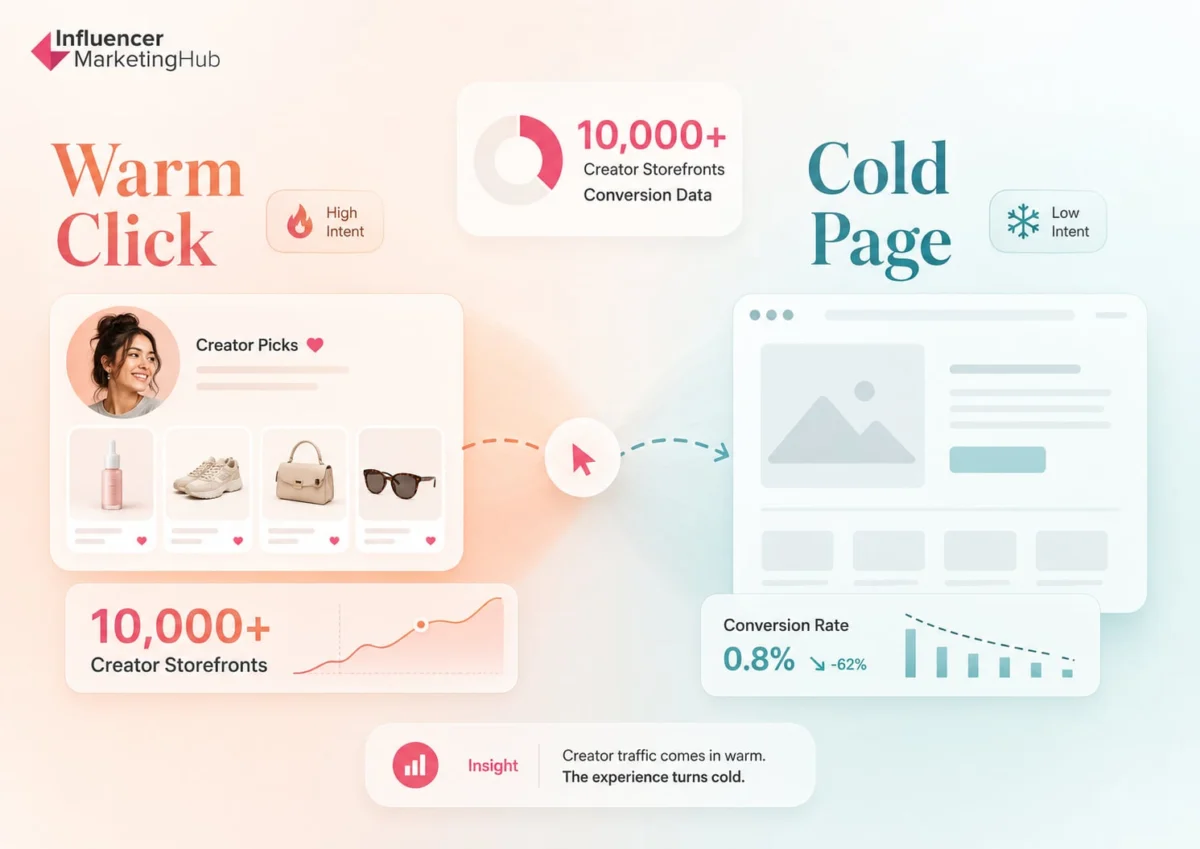
According to recent data analysis across thousands of creator programs over the past 18 months, the bottleneck isn’t the creator—it’s the destination. Brands are successfully generating "warm clicks"—traffic driven by authentic, long-term trust—only to extinguish that momentum the moment the user hits the brand’s website. This phenomenon, known as the "Warm Click, Cold Page" problem, has become the single most significant factor in underperforming creator programs.
The Anatomy of the Conversion Gap
The creator economy thrives on context. A fitness influencer, a beauty vlogger, or a home-cooking expert spends years cultivating a specific relationship with their audience. When they endorse a product, the audience isn’t just seeing an advertisement; they are receiving a curated recommendation from a trusted voice. This creates a "warm click"—the user is already mentally predisposed to purchase because the recommendation arrived within a framework of relevance.
However, once that user clicks the link, the experience often undergoes a jarring transition. They are frequently dumped onto a generic brand homepage, a cluttered product page, or a standardized discount-code landing page. This page does not recognize the source of the traffic. It lacks the voice of the creator, the context of the recommendation, and the personalized curation that triggered the initial interest.
The result is a "cold handoff." The trust that the creator spent years building is severed by a digital experience that treats the prospective buyer as a cold lead, rather than a warm referral.
Chronology of a Failed Handoff: The Path to Optimization
The evolution of creator-led commerce has moved through three distinct phases:
- The Affiliate Era (2010–2018): Brands focused solely on tracking. The primary concern was whether the affiliate link worked and if the commission was attributed to the right partner. The landing experience was an afterthought.
- The Scaling Era (2019–2023): As creator programs grew to include hundreds of partners, brands sought efficiency. They built automated systems to generate thousands of discount codes and tracking links, but they kept the landing destination static to simplify web management.
- The Experience Era (2024–Present): Forward-thinking brands have realized that the landing page is the "last mile" of the creator’s creative work. By shifting toward custom, co-branded storefronts, they are finally aligning the digital experience with the creator’s content.
Brands that have made this pivot are seeing conversion rate lifts of 30%, 40%, and in some outlier cases, as much as 214%. The shift is not about new creators or higher commissions; it is about infrastructure that honors the creator’s voice from the initial post all the way to the checkout button.
![What Conversion Data From 10,000+ Creator Storefronts Reveals [Warm Click, Cold Page Problem]](https://influencermarketinghub.com/wp-content/uploads/2026/07/5a619d4d-chatgpt-image-jul-3-2026-12_33_04-pm.jpg)
Data-Backed Evidence: Where the Growth Happens
The impact of optimizing the destination is best illustrated through the success stories of brands that have restructured their creator traffic strategy.
Cozy Earth: The Power of Context
Cozy Earth observed a 214% increase in conversion rates when they stopped sending creator traffic to generic product pages and started routing it to co-branded creator pages. Even more impressive was the 67% increase in Average Order Value (AOV). By providing a dedicated space where the creator could showcase their curated picks, the brand transformed the shopping experience from a hunt for products into a guided journey.
Healf: Scaling with 1,700+ Partners
The UK-based health and wellness marketplace, Healf, manages over 1,700 creator partnerships. By implementing a standardized but highly customizable creator-page model, they achieved a 40.8% conversion rate—a figure that significantly outpaces industry benchmarks. Their affiliate team noted that this approach didn’t just boost sales; it became a competitive advantage in talent acquisition. Creators were proud to share these custom pages, viewing them as an extension of their own personal brand.
Buttah Skin and Electro: The Revenue Shift
Buttah Skin reported a 30% jump in conversion and a 78% boost in AOV after shifting to creator-specific landing pages. Similarly, electrolyte gum brand Electro has reached a point where creator-led storefronts account for 81% of their total e-commerce revenue. These brands prove that the magnitude of the improvement varies by category, but the direction—toward greater personalization—is universal.
Why Curation Depth and Visibility Matter
What differentiates a successful creator landing page from a failed one? Two core principles emerge from the data:
1. Curation Depth Over Catalog Size
The "paradox of choice" is a well-documented psychological phenomenon. When a user arrives at a landing page with 200 products, they are forced to restart their consideration process. Conversely, pages that feature 6–15 curated products perform twice as well. The creator’s job is to act as a filter; the landing page’s job is to confirm that filter. When a creator writes a brief, personal note about each of their 10 favorite items, they provide the "final push" that the shopper needs to convert.
2. Trust Continuity through Purchase
The creator’s name, image, and voice must remain visible throughout the entire user journey. If the creator disappears once the user hits the landing page, the psychological connection fades. When the creator remains present—through their branding, their specific editorial copy, and their curated layout—the "warmth" of the click is preserved. This is the structural difference between a generic landing page optimized for conversion and a creator-led page optimized for trust.
![What Conversion Data From 10,000+ Creator Storefronts Reveals [Warm Click, Cold Page Problem]](https://s.influencermarketinghub.com/imaginary/convert?type=webp&url=https://influencermarketinghub.com/wp-content/uploads/2026/07/d15fc009-image3-1024x490.jpg)
Implications for Future Strategy
For brand managers, the message is clear: stop renegotiating commission rates until you have audited your landing experience. If your current conversion rate from creator traffic is below 2%, while your site-wide conversion is 3–4%, the issue is almost certainly the destination.
The 30-Day Test Protocol
Brands looking to rectify this should avoid massive, expensive site overhauls. Instead, run a 30-day pilot program:
- Select 5–10 active creators: Choose partners who already have strong engagement.
- Build Custom Pages: Create pages that host their curated selections and maintain their visual branding.
- Split Traffic: Direct their audience to these new pages rather than the homepage.
- Measure Success: Focus on the conversion rate, AOV, and the 30-day repeat purchase rate of the acquired cohort.
The repeat rate is perhaps the most telling metric. If a user converts but does not return, they were likely just curious. If they become a repeat customer, it signifies that the landing experience matched their expectations and deepened their relationship with the brand.
Overcoming the Operational Hurdle at Scale
The primary argument against creator-specific landing pages has historically been operational complexity. "We have 500 creators; we can’t build 500 pages," is a common refrain. However, the emergence of "Creator Commerce" platforms has changed the landscape. Modern tools allow brands to generate these pages dynamically, without requiring custom engineering tickets for every new partnership.
Brands like Crocs have demonstrated that even at high volumes, managing dedicated creator experiences is possible, with a single creator-led drop generating 350,000 sessions. This level of impact is impossible if the destination is a static, generic homepage.
Final Thoughts: The New Standard for Influencer Marketing
The era of "volume at all costs" in influencer marketing is coming to a close. The brands that will dominate in the coming years are those that prioritize the quality of the customer journey over the quantity of the traffic. By treating the landing page not as a technical utility, but as a continuation of the creator’s content, brands can bridge the conversion gap that has plagued the industry for years.
The warm click is a gift. A cold, generic landing page is a wasted opportunity. To win, brands must ensure the destination is as compelling as the journey that led the customer there.