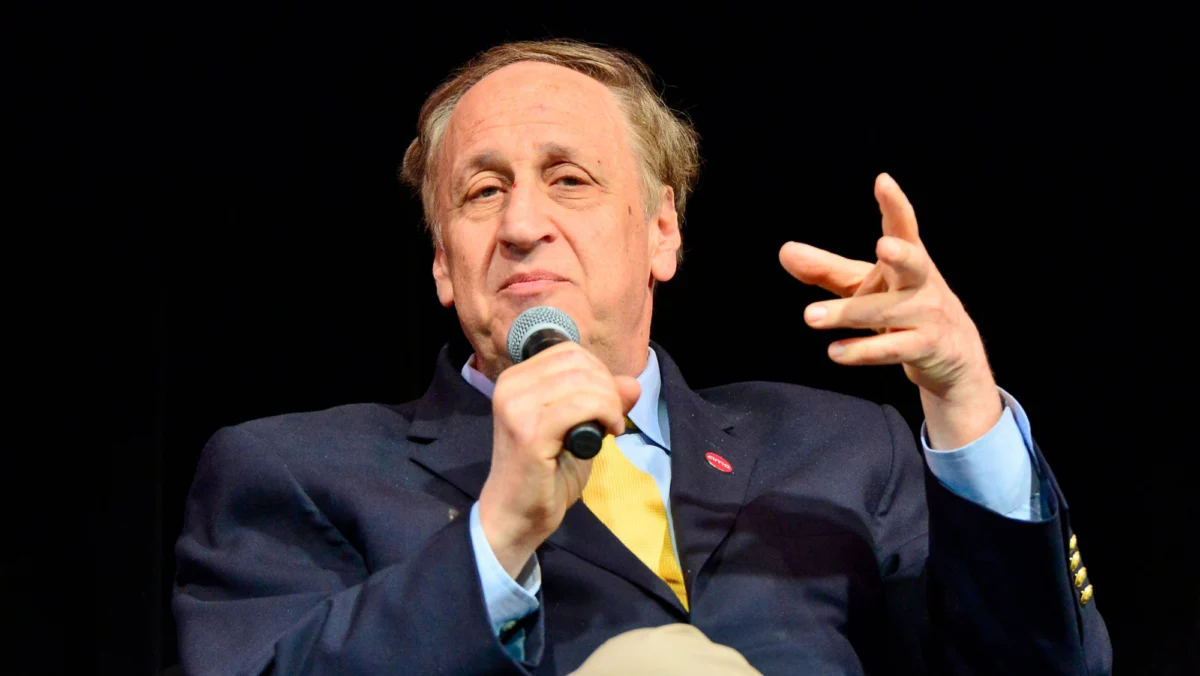
In the high-stakes world of theatrical exhibition, few executives have navigated a landscape as tumultuous as Adam Aron. As the CEO of AMC Theatres—the world’s largest movie theater chain—Aron has spent the better part of a decade steering the company through a global pandemic, the “meme-stock” phenomenon, and a constantly shifting consumer appetite for big-screen entertainment.
This week, a regulatory filing with the Securities and Exchange Commission (SEC) revealed that Aron’s total compensation for 2025 climbed to $14.97 million, a nearly 30 percent increase from his 2024 earnings of $11.3 million. While this jump signals a recovery of sorts, the figure remains significantly moderated compared to the eye-watering payouts of $23.7 million and $25.4 million he received in 2022 and 2023, respectively, during the height of the company’s retail-trading fervor.
The Compensation Breakdown: Incentivizing a Turnaround
Aron, now in his tenth year at the helm of the 860-location global powerhouse, saw his 2025 pay package structured to reflect both stability and performance-based targets. Of the $14.97 million total, $1.55 million was attributed to base salary, while $7.38 million came in the form of stock awards. The remaining $6 million was derived from the company’s non-equity incentive plan, a clear indicator that the board of directors remains focused on tying executive wealth to operational milestones.
The adjustment in compensation extends beyond the CEO. The broader AMC C-suite also saw upward revisions in their pay packages. Chief Financial Officer Sean Goodman’s compensation rose to $4.9 million, while David Ellis, the chain’s Chief Operations and Marketing Officer, saw his package climb to $2.47 million. These adjustments arrive at a critical juncture for the exhibitor, which continues to manage a significant debt load while attempting to capitalize on a resurgent box office.
A Chronology of Chaos: From Pandemic to Present
To understand the current state of AMC, one must look at the path the company has traveled over the last several years.
The Survival Era (2020–2021)
When the global health crisis shuttered cinemas worldwide, AMC found itself on the precipice of bankruptcy. Aron’s tenure during this period was defined by aggressive capital raises and a direct, often combative, engagement with the “Ape” army—the grassroots community of retail investors who turned AMC into a cultural phenomenon.
The Meme-Stock Zenith (2022–2023)
During this window, AMC became the epicenter of a market anomaly. As stock prices fluctuated wildly, the company utilized the surge in valuation to bolster its balance sheet. Aron’s compensation during these years reflected the sheer scale of the company’s survival and the subsequent volatility that characterized its equity.
The Stabilization Phase (2024–2025)
By 2024, the "meme" excitement had largely evaporated, replaced by the harsh reality of theatrical economics. 2025 proved to be a challenging year for the industry at large. Despite high-profile releases such as Disney’s Lilo & Stitch and Legendary/Warner Bros.’ A Minecraft Movie, the domestic box office stagnated, reaching only $8.87 billion. Consequently, AMC’s stock faced a grueling year, shedding roughly 58 percent of its value.
Supporting Data: The Volatility of the Box Office
The narrative of AMC’s fiscal health is inextricably linked to the health of the domestic box office. For years, skeptics have pointed to the rise of streaming services and a fragmented entertainment landscape as evidence of a "dying" medium. However, the data from the past eighteen months suggests a more nuanced reality.
While 2025 was a year of tepid growth, the trend lines have shifted dramatically in early 2026. Domestic box office grosses are currently tracking more than 10 percent ahead of 2025 figures. This rebound has been driven by unexpected successes, such as A24’s Backrooms and Focus Features’ Obsession. Furthermore, the release of Christopher Nolan’s The Odyssey has provided a much-needed shot in the arm for the industry. While industry analysts suggest that premium large-format exhibitors like IMAX may be reaping a larger share of the profits from such spectacles, AMC has undoubtedly benefited from the increased foot traffic.
The financial recovery is reflected in the company’s stock performance as well. Year-to-date, AMC shares are up 40 percent, though the stock continues to trade at a modest $2.28 per share—a far cry from the triple-digit peaks of the meme-stock era.
Official Responses and Strategic Pivots
Adam Aron remains perhaps the most outspoken CEO in the industry. Known for his defiant tone, he has consistently pushed back against those who have forecasted the death of the cinema. During an earnings call in July 2025, Aron famously took aim at “prognosticators of doom who have continued to vastly underestimate the will and the skill of AMC.”
This "will and skill" has manifested in several strategic pivots. One notable shift has been the sidelining of plans to incorporate live concert screenings into AMC’s programming. While the idea was floated during lean times to diversify revenue streams, the recent boom in theatrical attendance has allowed the company to return to its core business model: showing movies.
During the most recent earnings call, Aron highlighted the strength of the company’s current position. "More than 71 million guests visited our theaters worldwide in the second quarter, 13.5 percent more than last year, drawn by one of the most powerful and diverse film slates that we’ve seen in years," he reported. He further emphasized that AMC had successfully increased its market share, noting that domestic ticket revenues grew by approximately 11.4 percent.
Implications for the Future of Exhibition
What does this mean for the future of AMC and its stakeholders?
1. The Debt Burden
Despite the positive momentum in ticket sales, AMC remains a company under the shadow of significant debt. The ability of the C-suite to manage this leverage while investing in the theater experience—upgrading seating, laser projection, and food-and-beverage offerings—remains the primary test of Aron’s leadership.
2. The Premium Experience
AMC’s success in capturing market share suggests that audiences are still willing to pay a premium for the "theatrical experience." The resurgence of films like The Odyssey indicates that spectacle-driven cinema remains a potent draw, provided the content is compelling.
3. Executive Accountability
The move to reduce Aron’s pay from the levels of 2022 and 2023, while still offering a substantial increase over 2024, signals that the board of directors is balancing the need to retain leadership with the necessity of aligning executive compensation with long-term shareholder value. The performance-based structure of his 2025 package serves as a clear signal that the board expects continued growth as the industry stabilizes.
4. The Shift from Hype to Fundamentals
The era of the "meme-stock" has largely given way to a focus on fundamental metrics: box office growth, market share, and debt reduction. For AMC, the challenge moving forward is to sustain the momentum of early 2026 without relying on the volatile retail sentiment that once defined its market narrative.
As the industry moves forward, the relationship between Adam Aron and the cinema-going public—and the institutional investors watching AMC’s every move—remains one of the most compelling dramas in the entertainment sector. Whether the company can maintain its current trajectory will depend on the continued health of the film slate and the operational discipline of a management team that has proven its resilience, if not yet its long-term financial security.