
In the era of rapid information exchange, the rigor behind public opinion polling has never been more critical. As policymakers, journalists, and the global public seek to understand shifting international sentiments, the mechanisms of data collection—how we ask, who we ask, and how we interpret those responses—become the bedrock of our understanding. This report details the exhaustive methodological framework employed by the Pew Research Center for its Spring 2026 Global Attitudes Survey and the associated Wave 190 of the American Trends Panel (ATP).
Main Facts: The Pillars of Global Opinion Research
The Pew Research Center’s 2026 research initiative is a monumental undertaking designed to capture a nuanced snapshot of world opinion. The survey operates on a multi-modal data collection strategy, utilizing a blend of telephone, face-to-face, and online interviews. By integrating these diverse methodologies, the Center aims to reach a truly representative cross-section of the global population.
Central to this year’s analysis is the classification of respondents through standardized demographic and ideological lenses. To ensure cross-national comparability, the Center employs the United Nations’ International Standard Classification of Education (ISCED), allowing for consistent analysis of educational impact on worldviews. Similarly, economic context is provided via World Bank classifications, which categorize nations by per capita gross national income—a vital metric when comparing how citizens in high-income versus middle-income countries perceive issues like democracy, globalization, and shifting international power dynamics.

Chronology: The Lifecycle of a Survey Wave
Data integrity relies on a structured, time-bound execution. The U.S.-focused portion of this research, conducted under the banner of the American Trends Panel (ATP) Wave 190, provides a clear window into how modern high-stakes polling is executed.
- March 20, 2026: The process begins with the mailing of pre-notification postcards to potential phone participants, setting the stage for engagement.
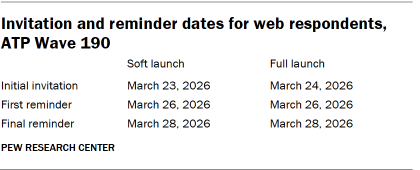
- March 23, 2026: The official field period commences. A "soft launch" is conducted for both web and phone participants to identify potential technical or logical hurdles in the questionnaire. Sixty web panelists and a small cohort of phone participants participate in this initial testing phase.
- March 24, 2026: The full launch of the survey occurs. Thousands of panelists are invited via email, SMS, and live telephone calls.
- March 23–29, 2026: The primary data collection window. During this period, researchers continuously monitor responses to ensure quality and address non-response through carefully timed reminders.
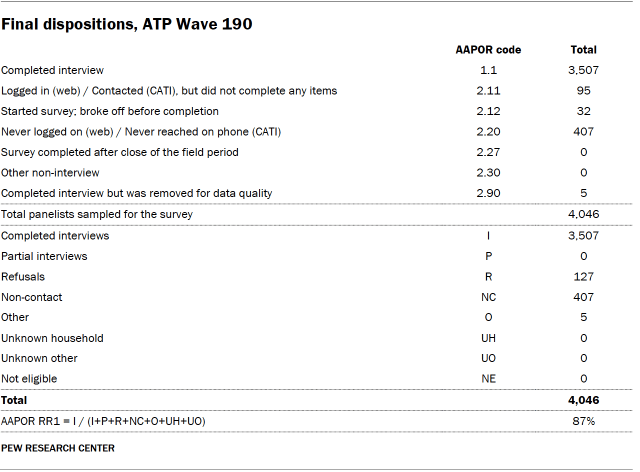
- Post-Collection: The data enters a rigorous validation phase. Researchers perform quality checks to identify "satisficing"—a phenomenon where respondents provide perfunctory answers—which led to the removal of five individuals from the final dataset for the ATP Wave 190.
Supporting Data: Ensuring Representativeness and Precision
The credibility of a survey rests on its ability to reflect the actual population, not just those who are easiest to reach. The Pew Research Center’s approach to the ATP Wave 190 is a masterclass in modern statistical weighting.
The Recruitment Protocol
Since 2018, the Center has utilized address-based sampling (ABS). By selecting households randomly from the U.S. Postal Service’s Computerized Delivery Sequence File, they cover an estimated 90% to 98% of the U.S. population. Within these households, the "next birthday" method is used to select a participant, mitigating the bias toward those who answer the phone most frequently.
Oversampling for Inclusivity
To provide precise insights into smaller demographic groups, the 2026 survey included an oversample of Muslim, Jewish, and non-Hispanic Asian adults. This is a critical methodological choice: without oversampling, these groups might be underrepresented, leading to higher margins of error. By oversampling and then "weighting back" these groups to their correct population proportions, the Center ensures that the final data is both inclusive and statistically accurate.
Weighting and Error Management
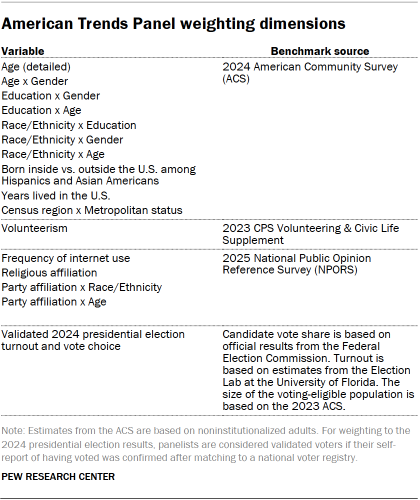
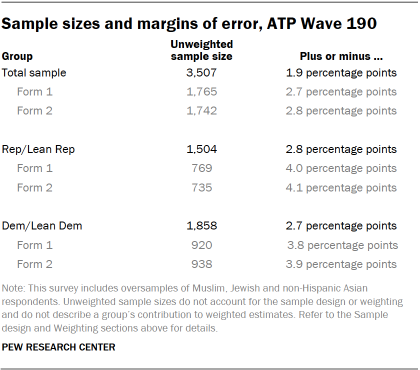
The weighting process is multi-staged. It begins with a base weight reflecting the probability of recruitment and is then calibrated against benchmarks to correct for non-response and panel attrition. Finally, weights are trimmed at the 1st and 99th percentiles to prevent outliers from skewing the results, a standard practice to reduce variance. With a final sample of 3,507 respondents, the survey boasts a margin of error of plus or minus 1.9 percentage points, providing a high degree of confidence in the findings.
Official Responses and Quality Control
The collaboration between the Pew Research Center and its partners—Gallup, Langer Research Associates, and the Social Research Centre—highlights the collaborative nature of international polling. Rigorous testing of the web interface across both PC and mobile platforms ensures that the user experience does not introduce bias.
Furthermore, the implementation of incentives—ranging from $5 to $20 depending on the difficulty of reaching specific demographics—demonstrates a commitment to high participation rates. By offering flexible rewards (checks or digital gift codes), the researchers lower the barrier to entry, which is essential for maintaining a healthy, engaged panel. The success of these efforts is reflected in the 87% survey-level response rate, a figure that is significantly higher than many industry standards.
Implications: Why Methodology Matters
The implications of this meticulous research are profound. In a world where "fake news" and "data manipulation" are common concerns, the transparency of the Pew Research Center’s methodology serves as a safeguard for public trust.
Shaping Policy and Discourse
By standardizing definitions of "ideology," "religious identification," and "economic status," the Center provides a common language for international discourse. When researchers discuss how high-income countries feel about the global order, they are speaking from a position of methodological certainty, allowing policymakers to rely on these findings when crafting foreign policy, economic strategies, or social programs.
The Evolution of Public Opinion
The shift toward address-based sampling and digital-first data collection reflects the changing habits of the global population. As traditional landline usage declines, the ability to adapt to SMS and mobile-friendly web surveys is not just a preference; it is a necessity for the survival of accurate public opinion research. The 2026 survey demonstrates that while the tools of the trade are evolving, the commitment to scientific rigor remains constant.
Addressing Bias
The Center acknowledges that no survey is perfect. By publishing their final dispositions, response rates, and data quality check procedures, they invite scrutiny. This transparency acknowledges the reality that question wording, the cultural context of respondents, and the logistical hurdles of international data collection can introduce error. By quantifying these errors, they provide the reader with the tools to interpret the findings not as absolute truth, but as a robust, statistically sound representation of human sentiment.
Conclusion
The 2026 Global Attitudes Survey is more than just a collection of charts and percentages; it is a testament to the discipline required to measure the pulse of a global society. Through the integration of advanced sampling techniques, rigorous weighting, and a commitment to transparency, the Pew Research Center provides a vital service. As we look toward the future, the lessons learned from this methodology—specifically the importance of representativeness, the necessity of oversampling underrepresented groups, and the requirement for continuous, multi-modal engagement—will serve as the blueprint for the next generation of social science research.
Whether examining the shifting tides of international relations or the internal satisfaction with democratic systems, the value of the research lies in the integrity of the process. In 2026, as in previous years, the Pew Research Center has once again set the standard for what it means to listen to the world, ensuring that when the public speaks, their voices are heard with clarity, accuracy, and depth.