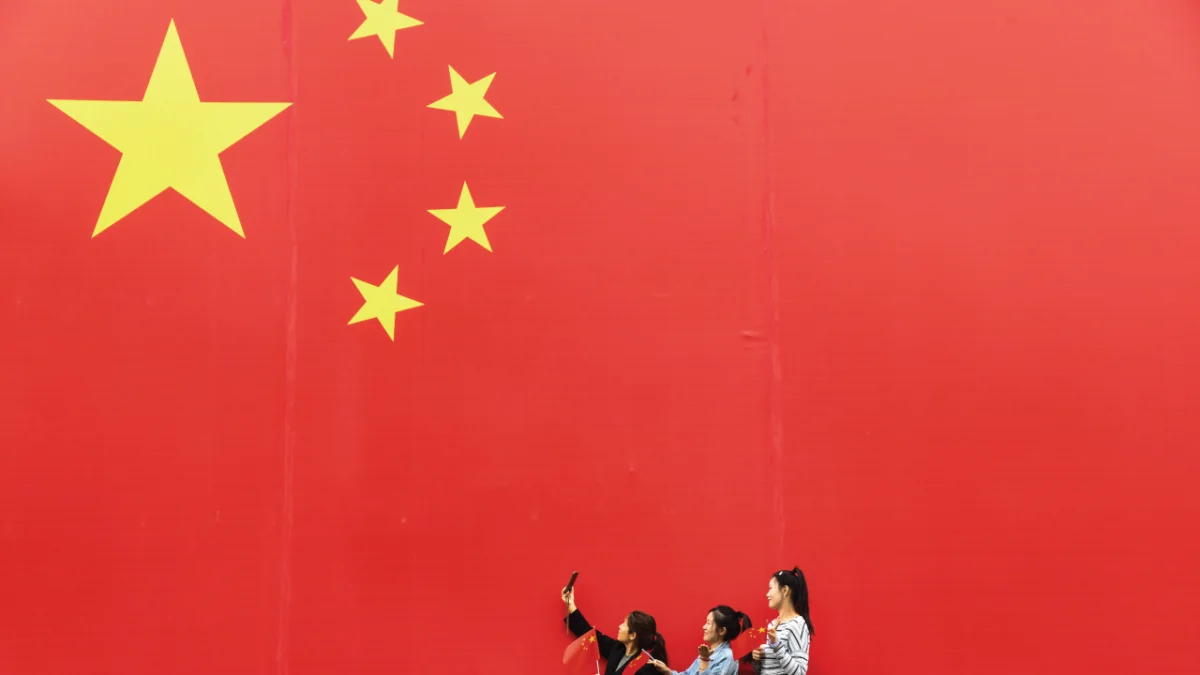
The landscape of international public opinion regarding the People’s Republic of China and its leadership remains a complex mosaic of shifting sentiments. According to the Spring 2026 Global Attitudes Survey, the world is currently navigating a period where views of China and President Xi Jinping are undergoing notable, though uneven, evolution. While geopolitical tensions persist, the survey data reveals that global perception is not monolithic; rather, it is deeply segmented by age, political ideology, and geography.
As nations recalibrate their foreign policies in an era of multipolarity, understanding these public sentiment trends is critical for policymakers and analysts alike. This report synthesizes the survey’s comprehensive findings to provide an in-depth analysis of how China is viewed across various demographics and political spectrums.
Main Facts: The Generational and Ideological Schism
The primary takeaway from the 2026 data is the widening gap between younger and older generations. Across many Western nations, younger respondents (ages 18–34) tend to express higher favorability toward China compared to their counterparts aged 50 and older. This trend suggests that the historical baggage of the Cold War and the ideological conflicts of the 20th century hold less weight for the demographic that has grown up in a digital, globalized, and multipolar world.
Simultaneously, political ideology plays a decisive role in how China is perceived. In the United States, for example, the divide between the left and the right is stark. While conservative respondents demonstrate significant skepticism, liberal respondents show slightly more nuanced, albeit still largely unfavorable, views. This ideological bifurcation is mirrored in other nations, though the intensity varies significantly based on the country’s specific economic relationship with Beijing.
Chronology: A Contextual History of Global Sentiment
To understand the 2026 findings, one must look back at the trajectory of China’s global image over the last decade.
- 2015–2018: The Era of Economic Integration. During this period, China’s reputation was primarily defined by its "Belt and Road Initiative" (BRI). Public opinion in developing nations, particularly in Latin America and Southeast Asia, was largely positive, driven by infrastructure investments and trade.
- 2019–2022: The Pandemic and Geopolitical Friction. The onset of the COVID-19 pandemic, coupled with rising trade tensions between Washington and Beijing, led to a sharp decline in China’s favorability ratings across the West. Concerns over transparency, supply chain security, and human rights became central to the discourse.
- 2023–2025: Strategic Realignments. As global supply chains began to shift, many nations adopted a "de-risking" strategy. Despite this, China’s diplomatic efforts in the Global South and its role in mediating regional conflicts began to soften some of the hardline stances previously held by international observers.
- 2026: The Current Snapshot. The latest data indicates that while skepticism remains the baseline in many developed economies, there is a visible trend of "pragmatic re-evaluation." Younger generations, in particular, are showing signs of distancing themselves from the entrenched, adversarial rhetoric of the previous generation.
Supporting Data: Parsing the Trends
The survey data provides a granular look at how specific regions and age groups perceive the Chinese state and President Xi Jinping.
The Age Factor
In the United States, 38% of 18-34-year-olds report a favorable view of China, compared to only 19% among those 50 and older. A similar, though less dramatic, trend is observed in France, where 51% of younger respondents hold a favorable view, contrasted with just 23% in the oldest demographic. This indicates a profound "generational divide" in how foreign policy is interpreted.
Conversely, in countries like South Korea, the trend is reversed or significantly muted, with younger respondents showing a high level of unfavorability toward China (78%), largely driven by regional security concerns and cultural disputes.
Ideology and Confidence in Leadership
The survey also tracked confidence in President Xi Jinping’s handling of world affairs. In Israel, the data reveals a sharp ideological split: 31% of left-leaning respondents express confidence, while that number drops to a mere 2% among right-leaning respondents.
In Germany, the trend is almost the inverse of what one might expect in the U.S. context, with 39% of right-leaning respondents expressing a favorable view of China, compared to 30% on the left. This suggests that in some European contexts, economic realism or "Realpolitik" may be driving support for China, transcending traditional left-right identity politics.
Official Responses and Diplomatic Commentary
Government spokespersons and international think tanks have reacted to these figures with varying degrees of concern and caution.
A spokesperson for the Chinese Ministry of Foreign Affairs noted that "the increasing favorability among the younger generation reflects a growing recognition of China’s contribution to global development and its commitment to a shared future." They emphasized that the "distorted narratives" often presented by Western media outlets are losing their influence over the younger demographic.
Conversely, officials in the U.S. and several EU member states have interpreted the data as a signal that "strategic communication" is required. A senior policy analyst at a Washington-based think tank remarked, "The data is not just about China; it’s about a changing global consciousness. We are seeing a generation that prioritizes economic connectivity over legacy geopolitical rivalries. If governments do not address the root causes of this generational shift, they risk losing the public mandate for their current China strategies."
Implications for Future Foreign Policy
The findings of the 2026 Global Attitudes Survey have profound implications for the coming decade of international relations.
1. The Death of the "Monolithic Consensus"
Governments can no longer rely on a unified national opinion when crafting China policy. In many countries, the government’s official stance (often hawkish) is increasingly at odds with the views of its younger, more globally connected citizenry. This creates a "diplomatic friction" where domestic political pressure may eventually force a shift toward more pragmatic or cooperative engagement.
2. The Rise of "Economic Pragmatism"
In regions like Latin America—specifically in countries like Colombia and Mexico, where favorable views of China remain high (73% and 70% respectively)—the focus is overwhelmingly on trade and investment. The survey suggests that in the Global South, China’s soft power remains tied to its economic utility. For Western nations, this implies that purely ideological opposition to China will likely fail to gain traction in developing markets.
3. The Challenge of "Ideological Polarization"
The extreme polarization in confidence toward President Xi—particularly in countries like Israel, South Korea, and the United States—suggests that China has become a "wedge issue." Political parties are increasingly using the stance on China as a litmus test for ideological purity. This creates a volatile environment where foreign policy is susceptible to the whims of domestic election cycles, making long-term diplomatic stability difficult to achieve.
4. Navigating the Digital Generation
The high favorability ratings among the 18–34 cohort in several countries suggest that digital engagement and cultural exchange are proving more effective than traditional statecraft. China’s ability to leverage social media and cultural exports has resonated with a generation that values personal connectivity over institutional legacy.
Conclusion
The 2026 Global Attitudes Survey serves as a diagnostic tool for a world in transition. While the "unfavorable" ratings for China remain high in several developed, democratic nations, the underlying currents are shifting. The generational divide is the most significant finding, suggesting that the "Cold War" frame of mind is failing to resonate with the youth.
As we look toward the remainder of the decade, the ability of nations to reconcile these shifting public sentiments with their national security and economic objectives will define the global order. Leaders must navigate this landscape with an understanding that public opinion is no longer a static background factor, but an active, driving force that will shape the future of international cooperation and competition alike. The path forward requires not just policies, but a new language of diplomacy—one that speaks to a generation that views the world not as a battlefield of ideologies, but as a network of interconnected opportunities and risks.