By Global Business Insights Desk
Published in partnership with digital media marketing reviews.
Executive Summary & Main Facts
For years, small-to-medium-sized business (SMB) owners and independent marketers viewed TikTok’s advertising ecosystem through a lens of intimidation. Steep learning curves, complex Ads Manager interfaces, and opaque algorithmic requirements often meant that running an effective campaign required specialized agency support or dedicated technical staff.
Today, that barrier to entry is crumbling. Thanks to a sweeping rollout of artificial intelligence tooling—spearheaded by TikTok’s new Agentic Hub, MCP (Model Context Protocol) integrations, Symphony Creative Studio, and Content Suite—virtually anyone can conceptualize, build, manage, and optimize high-performing TikTok ad campaigns using natural language.
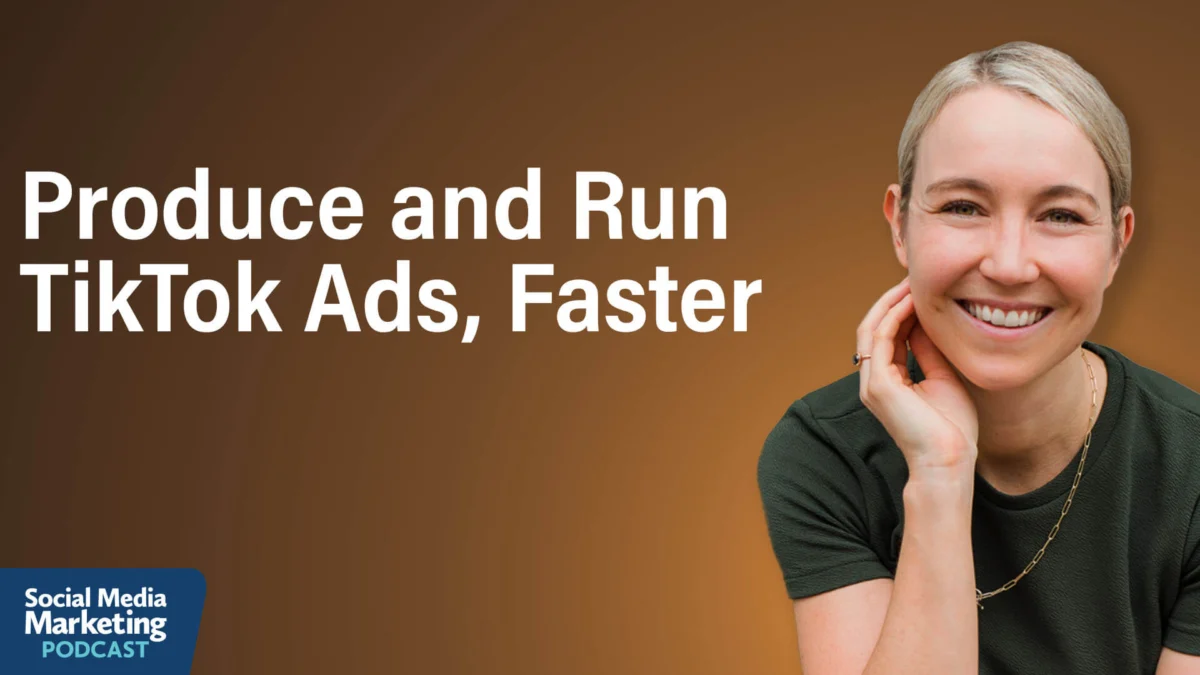
Drawing insights from short-form video expert Melissa Laurie, founder of Oysterly Media, industry conversations highlight a profound paradigm shift: AI is no longer just a brainstorming assistant; it is becoming an active operator capable of executing tasks directly inside ad platforms. However, experts caution that while these tools make ad management more accessible than ever, human oversight, strategic skepticism, and native content authenticity remain the true currency of conversion on TikTok.
Chronology of the Shift: From Manual Complexity to Autonomous AI
To understand how TikTok advertising reached its current state of accessibility, it helps to examine the evolutionary steps platform architecture has taken over recent years:
- Era 1: Native Manual Operation (The Ads Manager Monopoly). For a long time, launching an ad meant logging into TikTok Ads Manager, manually configuring pixel tracking, setting up audience parameters, managing bidding strategies, and uploading creative assets piece by piece. The process demanded deep platform-specific knowledge.
- Era 2: Fragmented AI Assistance. Early generative AI tools helped marketers write copy or brainstorm ad concepts, but bridging the gap between an AI chat window and the actual ad platform required complex, custom API integrations built by software developers.
- Era 3: The MCP Revolution (Present Day). With the introduction of TikTok for Business MCP, protocols like Model Context Protocol connect mainstream AI engines—such as ChatGPT and Claude—directly to TikTok Ads Manager. Marketers can now interact with their ad accounts using plain language.
- Era 4: Agentic Hub Ecosystem. TikTok has formalized this capability by launching the Agentic Hub, a marketplace of AI skills and tools. Rather than just offering generic prompts, platforms and developers are now loading prepackaged "skills" into AI interfaces that allow autonomous diagnosis, optimization, and real-time reporting.
Decoding the Tech: Agentic Hub, MCP, and AI Skills
The architecture driving this transformation relies on a simple analogy, as explained by Melissa Laurie: think of TikTok Ads Manager as the restaurant kitchen, the Model Context Protocol (MCP) as the waiter, and your preferred AI tool (Claude or ChatGPT) as the menu and order taker.
The Mechanics of MCP
Previously, connecting a third-party AI to an advertising platform demanded intensive coding and explicit API credentials. MCP creates a secure, two-way bridge between conversational AI and advertising dashboards.
- Read-Only Operations: Allows marketers to query performance metrics, analyze spend efficiency, and request audit reports using conversational prompts.
- Read-and-Write Operations: Enables the AI to draft campaigns, adjust ad group settings, and implement optimization recommendations directly from the chat interface.
Prepackaged AI Skills
TikTok has officially released a library of downloadable instruction sets that operate inside AI tools via the MCP server. These include:
- Viral Video Creator: Analyzes millions of daily platform data points to surface top-performing ad structures, hooks, and calls-to-action.
- Ad Group Optimizer & Account Diagnosis Co-pilots: Automatically monitor campaign health, flagging fatigue and budget inefficiencies.
- Cross-Platform Interoperability: Because these skills are modular files, a copywriting skill built for TikTok can often be cross-applied to Meta, and vice versa—marking a decisive shift away from siloed platform ecosystems.
Symphony Creative Studio and Content Suite: Scaling Content Production
While backend campaign management has grown smarter, front-end content creation has received an equally massive overhaul through TikTok’s Symphony Creative Studio and Content Suite.
Symphony Creative Studio
Symphony acts as an all-in-one video generation hub. By feeding the tool a basic brief, brand guidelines, and product imagery, Symphony leverages real-time TikTok trends and top-ad signals to generate storyboards, scripts, and finished videos.
- Where it Shines: Product-centric advertising. For e-commerce businesses, particularly in home goods and beauty, Symphony allows brands to produce hundreds of variation videos per week without relying on traditional video shoots. For instance, furniture brands can showcase dozens of distinct SKUs at a scale previously deemed impossible.
- The Human Catch: AI-generated human avatars are not yet ready for prime-time brand trust. When an artificial presenter claims, "All my friends are talking about this," consumer skepticism spikes. Consequently, successful brands utilize Symphony for inanimate product showcases or rely on hybrid models—such as capturing authentic creator footage and using AI to add dynamic visual effects (like animated graphics or "angry germs" for cleaning demonstrations). Furthermore, prompting Symphony successfully requires skilled human oversight; marketers trade physical production time for prompt-engineering and refinement time.
Content Suite and Competitive Research
Finding fresh content ideas is consistently cited as a marketer’s greatest hurdle. TikTok’s Content Suite provides a searchable library of high-performing organic and paid short-form video assets across global markets.
- Smart Search: Marketers can filter by industry categories, geographies, timelines (e.g., past 30 days), and campaign objectives.
- Strategic Ideation: Before spending capital, new advertisers can browse the library to observe what top competitors are investing in, establishing a reliable baseline for original creative development.
Supporting Data & Practical Frameworks: Crafting High-Performing Content
Even as AI lowers the barrier to entry, the sheer volume of content on TikTok means the baseline quality across the platform is rising. To stand out, marketers must master the architectural anatomy of a high-converting short-form video.
The Anatomy of a High-Performing TikTok Video
According to industry benchmarks and creative agency frameworks, viewer retention depends heavily on micro-elements structured within the first seconds:
- The First Frame: Competing against infinite entertainment on a daily commute, a video must capture attention instantly upon appearing in the feed.
- Billboard Text: Large on-screen text overlays functioning like highway billboards—instantly communicating value to a scrolling viewer who may have audio disabled.
- Opening Spoken Words: Immediate verbal hooks that reinforce the visual impact.
- The Glue: The structural connective tissue linking the hook to the middle content, preventing early drop-offs.
- Tight Middle Content: Presenting information or value points in crisp sets (ideally packs of 3 or 5 points).
- The Sharp Ending: Cutting the video abruptly rather than slowing down speech or signaling an artificial conclusion, which prompts viewers to scroll away prematurely and hurts algorithmic distribution signals.
Authenticity Over Glossy Production
Polished, overly staged commercials consistently underperform compared to organic-feeling content. Successful advertisements often mimic a friend sharing a recommendation in a natural setting (e.g., traffic noise in the background, walking through a door, or applying makeup while answering questions).
Pro Tip on AI Strategy: Never treat AI recommendations as absolute gospel. For instance, if a newly launched creative has run for only 48 hours, TikTok’s automated optimization may suggest pausing it simply because older, mature creatives have accumulated more historical traction. Marketers must exercise critical thinking, push back against AI suggestions with targeted prompts ("What is an alternative way to approach this campaign?"), and apply human judgment to campaign governance.
Official Industry Responses and Strategic Implications
The rapid integration of AI tools into daily advertising workflows has triggered profound strategic adaptations across the digital marketing landscape:
- Democratization vs. Expertise: Small business owners who previously lacked the budget for dedicated media buyers can now run baseline campaigns, analyze metrics in plain English, and scale operations independently.
- The Evolution of Agencies: Rather than rendering marketing agencies obsolete, AI tools have shifted the agency value proposition. Agencies are pivoting from manual ad-setup executors to high-level strategic advisors, creative directors, and systems architects.
- The Rise of Hybrid Workflows: Major brands are rejecting pure synthetic automation in favor of human-in-the-loop hybrid systems—leveraging human creators for authentic on-camera trust while using AI for rapid scaling, data-driven reporting, and structural optimization.
As Agentic Hubs and automated skill marketplaces continue to mature, the defining competitive edge in TikTok advertising will no longer be technical proficiency with complex ad managers, but rather the marketer’s ability to maintain brand authenticity, exercise sound strategic oversight, and guide intelligent AI agents toward high-converting creative execution.